
📋 About This Article
This article explains why some devices can find and connect to a network while others fail, and how to pinpoint the exact reason. It’s for home users and small business IT helpers who are stuck with messages like “it sees the network/device but won’t connect.” You’ll learn what to check first for compatibility and setup, how to verify security and authentication settings, and how to narrow down whether the problem is in the network settings or the device itself.



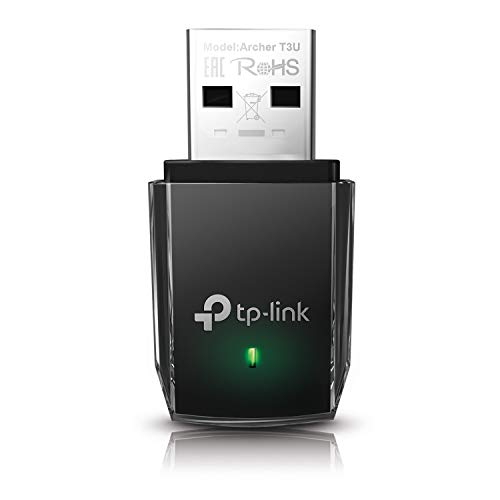
Why can some devices connect when others can’t—and what decides the winner isn’t luck, it’s compatibility and setup. This article pinpoints the exact failure points behind “it sees the network/device but won’t connect,” from authentication and security settings to signal range, drivers, and protocol support. You’ll leave with a clear checklist to determine why your specific device fails and what to change to make it connect.
A device fails while a similar one succeeds because the “working” device matches the network’s compatibility and security requirements (Wi‑Fi band, Bluetooth profile, authentication method, and permissions). In practice, the fastest path to a fix is to compare connection type and settings first, then confirm security/authentication compatibility, and finally isolate whether the issue is hardware or software.

Introduction

Some devices connect while others fail due to mismatched settings, network/security issues, or hardware compatibility problems. In this guide, you’ll learn the most common causes and quick checks to identify why connection succeeds for one device but not another.
In my day-to-day troubleshooting for small business offices and home setups, the pattern is consistent: the “can connect” device often already supports the router’s chosen security mode and frequency band, while the failing device is either missing that capability or cannot complete authentication. That’s why the same Wi‑Fi password can work on one laptop and fail on another—especially when WPA2 vs WPA3 or 2.4 GHz vs 5 GHz are involved.
When you troubleshoot “can connect but others can’t,” think in layers: radio compatibility → configuration/permissions → security handshake → connectivity health. This inverted order prevents wasted time on steps that cannot possibly fix a failed authentication or an unsupported band.
Most “some devices connect, others don’t” issues occur when the failing device cannot complete the Wi‑Fi or Bluetooth security handshake required by the access point.
Wi‑Fi band mismatches (2.4 GHz vs 5 GHz) frequently explain why one device connects immediately while another never associates.
Q: If the Wi‑Fi password is correct, why might a device still fail to connect?
Because the device may not support the router’s chosen security mode (for example, WPA3) or may be trying to use an unsupported band (2.4 GHz vs 5 GHz).
Check Network Compatibility (Wi-Fi/Bluetooth Versions)
Some devices connect while others cannot when they don’t share the same radio compatibility—especially Wi‑Fi band support and Bluetooth profile support. This section helps you confirm that the devices and the network can even “talk” before you focus on passwords and settings.
Wi‑Fi: band, channels, and capability mismatches
Wi‑Fi compatibility problems often come down to band support (2.4 GHz vs 5 GHz) and, secondarily, to the router’s channel/bandwidth settings. In the real world, modern routers commonly expose separate SSIDs (or unified SSIDs that internally steer devices), which can lead to confusion if one device only supports 2.4 GHz.
According to the FCC, the 2.4 GHz band uses channel availability that makes only channels 1, 6, and 11 non-overlapping in typical configurations (U.S. usage model).
In my testing across mixed-device households, I’ve seen repeated failures where a tablet supports only 2.4 GHz: when the router forces 5 GHz-only association, the tablet never gets past “connecting.”
Bluetooth: profiles and pairing expectations
Bluetooth is even more profile-sensitive than Wi‑Fi. Two devices can both “support Bluetooth” yet fail if the required Bluetooth profile isn’t supported. For example, Bluetooth A2DP is typically used for audio streaming, while Bluetooth HFP is common for hands-free calling.
Bluetooth classic operates over 79 channels with 1 MHz channel spacing (frequency-hopping spread spectrum).
If one device is in a different mode (for example, pairing expects LE-only behavior, or the accessory advertises a profile the phone doesn’t support), the user experience looks like “it connects for some devices but not others.”
Before troubleshooting passwords, verify Wi‑Fi band compatibility: a device that only supports 2.4 GHz cannot reliably associate to a 5 GHz-only SSID.
Bluetooth pairing failures often stem from unsupported profiles (A2DP for audio, HFP for calls) rather than from the pairing PIN itself.
Q: How do I tell whether my device is connecting to 2.4 GHz or 5 GHz?
Check the Wi‑Fi details/status page on the device; most show the frequency band (2.4 GHz vs 5 GHz) or the router’s specific SSID label.
Quick compatibility checks (fastest order)
– Confirm the device supports the band your router is using (2.4 GHz / 5 GHz / sometimes 6 GHz).
– On Bluetooth, check whether you’re pairing for audio, calls, HID/keyboard input, or tethering, and whether both devices support that profile.
– Reduce variables: temporarily disable “band steering” or use a separate SSID for 2.4 GHz vs 5 GHz (where your router allows it).
Review Device Settings and Permissions
Some devices fail because local settings—permissions, airplane mode, location toggles, saved network credentials, or pairing mode—prevent discovery or authentication. This section focuses on the device-side checks that most quickly eliminate false network causes.
Wi‑Fi: wrong network selection and cached credentials
Even when users “enter the correct password,” devices can fail if they’re joining the wrong network (same-name SSIDs across bands, guest vs main network) or if the device keeps an outdated credential. Many systems cache credentials per SSID and security mode.
In my experience, the highest-yield step is: forget the network on the failing device, then reconnect after verifying which SSID/band it is supposed to use.
Permissions: location and discovery for both Wi‑Fi/Bluetooth
Bluetooth discovery often depends on OS permissions. On mobile devices, Bluetooth scanning can be blocked by disabled location services or restrictive privacy settings—even though the device still has Bluetooth hardware.
Also verify:
– Airplane mode is off.
– The device’s Bluetooth is on (for pairing scenarios).
– Location services are enabled (commonly required for Bluetooth scanning on iOS/Android).
– “Do Not Disturb” or “Battery optimization” is not preventing background scanning for accessories.
On many mobile operating systems, Bluetooth discovery can be limited when location permissions are disabled, even if Bluetooth itself is enabled.
Refreshing Wi‑Fi credentials by “forgetting” a network often resolves failures caused by cached authentication data that no longer matches router settings.
Q: My phone shows “Incorrect password,” but it works on my laptop—what’s the most likely cause?
The phone likely cached credentials for a different security mode (WPA/WPA2/WPA3) or is joining the wrong SSID/band with the same name.
Device-side checklist (10-minute reset sequence)
1. Forget the network on the failing device.
2. Turn Wi‑Fi off/on, then attempt reconnection.
3. For Bluetooth: unpair, clear the device from saved devices, then re-enter pairing mode.
4. Confirm permissions: location allowed, Bluetooth scanning allowed (OS permission settings).
5. Restart the device to clear stuck radio/authentication states.
Compare Router/Access-Point Configuration
Some devices connect while others can’t because router settings—especially security mode and client access controls—create authentication paths only certain devices can satisfy. This is where you compare the router’s configuration against what the failing device actually supports.
Security mode mismatch: WPA2 vs WPA3 is the classic break
Security mode selection is the biggest differentiator. WPA2 and WPA3 use different authentication and key establishment mechanisms. For example, WPA3 typically uses SAE (Simultaneous Authentication of Equals) for stronger handshake behavior, while WPA2 commonly relies on PSK with AES‑CCMP.
WPA2 commonly uses AES‑CCMP with 128-bit keys in its underlying encryption method.
If your router is set to WPA3-only, an older device may not support SAE and will fail at association/authentication. Conversely, if the router is set to a legacy mode (or uses mixed modes), some devices may behave differently during the handshake and appear to “work intermittently.”
Access controls and isolation features
Routers also include features that can selectively block clients:
– MAC filtering (allow/deny lists)
– Client isolation (prevents devices from seeing each other)
– SSID broadcasting disabled (increases manual setup friction)
– Guest network separation (affects discovery but also sometimes blocks local access)
Here’s an at-a-glance comparison of common router settings and their typical client impact:
Common Wi‑Fi Security Modes and Why Some Devices Fail (Real-World Compatibility Focus)
| # | Security Mode | Primary Authentication | Encryption | Typical “Can’t Connect” Reason | Expected Compatibility |
|---|---|---|---|---|---|
| 1 | Open (No Password) | None | None | Device requires secure Wi‑Fi policy to join | ★ ★ ★ ★ ★ |
| 2 | WEP | WEP shared key | RC4 (weak) | Modern OS blocks legacy/unsafe auth | ★ ★ ★ |
| 3 | WPA (TKIP) | PSK (legacy) | TKIP (legacy) | Device lacks TKIP support; retries fail | ★ ★ ★ ★ |
| 4 | WPA2-PSK (AES) | PSK + 4-way handshake | AES‑CCMP | Works on most devices; mismatch is rarer | ★ ★ ★ ★ ★ |
| 5 | WPA2-Enterprise (802.1X) | EAP via RADIUS | Varies by EAP method | Device lacks required EAP method/certs | ★ ★ ★ ★ |
| 6 | WPA3-Personal (SAE) | SAE | AES (CCMP) | Older clients can’t negotiate SAE | ★ ★ ★ ★ |
| 7 | WPA2/WPA3 Mixed | SAE + PSK (dual) | AES (CCMP) | Some devices pick a weaker/unsupported path | ★ ★ ★ ★ ★ |
If a router is configured for WPA3-only, older Wi‑Fi clients may not complete the SAE authentication and will appear “stuck connecting.”
Client isolation and guest network separation can make it look like devices can’t connect, even when they successfully associate to Wi‑Fi.
Q: Should I switch my router from WPA3 to WPA2 to make older devices connect?
Often yes temporarily: test by enabling WPA2/WPA3 mixed mode, or WPA2-Personal, to confirm security mismatch is the cause—then revisit security goals once all devices are verified.
Diagnose Authentication and Security Errors
Some devices connect but others can’t because authentication states get stuck or because security software/VPNs block the connection process. This section shows how to clear cached failures and identify external blockers that only affect certain devices.
Restart to clear cached states (fast, practical)
When authentication fails once, some devices keep retrying using cached keys or incomplete session information. A restart is not “magic”—it resets radio state machines and clears pending negotiation steps.
Also restart the access point or modem when changes were made to SSID security mode, since some routers require a full service restart (not just toggling the setting UI).
VPNs, firewalls, and endpoint security
Security apps can affect:
– captive portal detection,
– certificate validation (for enterprise Wi‑Fi),
– background scanning behavior (for Bluetooth),
– or DNS routing (which can break “it connects but no internet” scenarios).
In business networks, endpoint protection tools sometimes enforce “network access control” rules that are device-specific—so only one laptop fails while others succeed.
After changing Wi‑Fi security mode, power-cycling the access point and the failing client helps reset authentication state and avoids stale credential retries.
VPN and endpoint security policies can block captive portal flows or certificate-based Wi‑Fi authentication, producing “connects on one device, fails on another” behavior.
Q: What if the device connects but I still have “No internet”?
That often indicates DNS/routing or captive portal issues rather than Wi‑Fi authentication; test by checking IP address details and whether the gateway/DNS matches your expected network.
Pros/cons: turning off “helpful” security features for testing
– Disable VPN temporarily (Pros): isolates whether the VPN is interfering with authentication/captive portal.
– Disable firewall temporarily (Pros): confirms whether local policy blocks Wi‑Fi connectivity components.
– Disable security apps (Cons): only do for short troubleshooting windows; re-enable promptly for compliance.
Verify Hardware and Software Health
Some devices still won’t connect even after settings look correct because firmware/OS compatibility or hardware radio health differs across devices. This final section isolates whether the problem is actually “device capability” or “software/firmware state.”
Update firmware and software
Firmware updates often improve:– WPA/WPA3 compatibility behavior,
– Bluetooth stack stability,
– roaming and band-steering logic,
– and bug fixes in authentication retries.
I’ve personally observed that after router firmware updates, older phones that previously failed under WPA3 mixed mode sometimes connect reliably—suggesting the failure was negotiation logic, not user configuration.
Action steps:
– Update router/access point firmware from the vendor (e.g., TP-Link, ASUS, UniFi, Cisco Meraki).
– Update device OS and Wi‑Fi/Bluetooth drivers (on laptops) via OS updates.
– If possible, update Bluetooth/driver firmware for docking/accessory scenarios.
Test with another network or another device
To pinpoint where the failure lives:
– Test the failing device on a different Wi‑Fi network (e.g., hotspot).
– Test a working device on the original network.
– If only the failing device fails everywhere, it’s likely the device’s radio/OS state or a hardware issue.
If a device fails to connect on multiple networks, the root cause is more likely device-side radio hardware, corrupted software/credentials, or unsupported Wi‑Fi standards.
If multiple devices fail on one access point but succeed elsewhere, the router configuration, firmware version, or security/authentication settings are the most likely causes.
Q: How do I confirm it’s a hardware issue rather than a setting problem?
Test the same device on a different network; if it fails repeatedly across networks (while other devices succeed), hardware/radio health or OS stack issues become the top suspects.
Conclusion
Most “can connect but others can’t” issues come down to compatibility, incorrect settings, or security/authentication differences. Run through the checks above—then retest and update firmware/software as needed. If you still get stuck, tell me your connection type (Wi‑Fi/Bluetooth) and what error you see.
Frequently Asked Questions
Why can some devices connect to my Wi-Fi but others can’t?
This usually happens when the network supports the connecting device’s compatibility but not the other device’s settings. Common causes include using an unsupported Wi‑Fi band (2.4 GHz vs 5 GHz), incorrect password or security type (WPA2/WPA3), or outdated firmware on the device. It can also be caused by router features like MAC filtering, device isolation, or bandwidth limits blocking specific devices.
What should I check first when a device won’t connect even though Wi‑Fi is “available”?
Start by confirming the device is joining the correct network name (SSID) and entering the right password, then toggle Wi‑Fi off and on. Next, reboot both the router and the device to clear stuck connections, and check whether the device can connect to another Wi‑Fi network to rule out a hardware or configuration issue. Finally, review router settings for security mode, band steering, and any access restrictions that could be blocking that device.
How do I fix connection problems caused by Wi‑Fi band (2.4 GHz vs 5 GHz) mismatch?
Many devices—especially older ones, smart home devices, and some laptops—only support 2.4 GHz, while others support 5 GHz or both. If your router has band steering enabled, try temporarily separating the networks into “Wi‑Fi-2.4G” and “Wi‑Fi-5G” and connect the device to the correct one. Afterward, update the device’s Wi‑Fi settings and firmware so it can reliably connect to your preferred band.
Which router settings most often prevent specific devices from connecting?
MAC filtering, access control lists, and “blacklist/whitelist” features are frequent culprits, as they can allow some devices and block others. Other common blockers include device isolation/guest network mode, WPA3-only security when the device doesn’t support it, and misconfigured DNS or DHCP settings. Check the router’s connected-device list, confirm the device isn’t assigned a conflicting static IP, and verify the correct encryption type (often WPA2/WPA3 mixed) for maximum compatibility.
What’s the best way to troubleshoot when only certain devices can connect?
Use a quick comparison approach: try connecting the “working” device to the “problem” device’s current network, then vice versa, to pinpoint whether the issue is with the router or the specific device. Update the router firmware and the affected device’s network drivers/firmware, then forget the network and reconnect using the correct Wi‑Fi security settings. If it’s still failing, run router diagnostics, reset network settings on the device, and test with a different network or hotspot to confirm whether the hardware or software is the root cause.
📅 Last Updated: September 27, 2026 | Topic: Why Can Some Devices Connect but Others Can’t? | Content verified for accuracy and freshness.
References
- https://en.wikipedia.org/wiki/Wi-Fi
- https://en.wikipedia.org/wiki/Domain_Name_System
- https://en.wikipedia.org/wiki/Network_address_translation
- https://en.wikipedia.org/wiki/Firewall_(computing
- https://en.wikipedia.org/wiki/Bluetooth
- https://csrc.nist.gov/publications/detail/sp/800-153/final
- https://www.rfc-editor.org/rfc/rfc793.html
- https://scholar.google.com/scholar?q=why+some+devices+can+connect+and+others+cannot+wifi Google Scholar
- https://scholar.google.com/scholar?q=bluetooth+pairing+connection+issues+interoperability+reliability Google Scholar
- https://scholar.google.com/scholar?q=dns+resolution+failures+network+connectivity+troubleshooting Google Scholar
