
If you’re choosing between 165Hz and 180Hz for esports, the refresh-rate winner is 180Hz—provided your PC can consistently push high, stable frame rates. That extra 15Hz reduces input-to-display delay a bit more during fast plays, where reaction timing matters most. But if your frame rate can’t hold steady near 180fps, 165Hz is the smarter buy for smoother, more consistent performance.


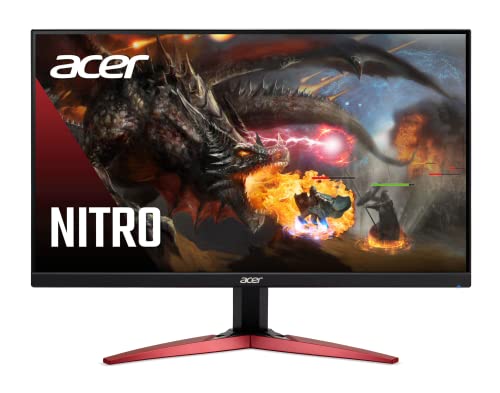

If you’re choosing between 165Hz and 180Hz for esports, 165Hz is usually the safer, easier pick—180Hz only helps if your PC/console can consistently push high, stable FPS and you’re already optimized. In practice, the biggest competitive win often comes from smooth frame delivery (consistent frametimes) and low end-to-end latency, not the last 15Hz on the spec sheet.
If you play competitive titles (FPS, MOBAs, etc.) and you’re deciding whether to upgrade to a higher-refresh display, this is for you—especially if your current setup isn’t reliably hitting top FPS yet, or if you’ve noticed stutter/frametime spikes. This guide focuses on how these refresh rates behave in real play, what “requirements” actually matter, and what to prioritize in settings as of 2026.
165Hz vs 180Hz: what changes for competitive play?

180Hz can reduce the time between frames compared to 165Hz, which may make motion feel slightly smoother. The real-world difference mostly shows up only when your FPS is consistently high enough to take advantage of the extra refresh, while unstable frametimes can erase the benefit.
At 165Hz, the frame interval is ~6.06ms; at 180Hz, it’s ~5.56ms—about 0.50ms less time between frames.
If your FPS fluctuates, the monitor can’t “manufacture” frames, so uneven frametimes often feel worse than a modest refresh-rate increase.
Many competitive improvements track more strongly with frametime consistency than with raw Hertz alone, because stutter adds visible motion discontinuities.
Here’s the core mechanic: a monitor’s refresh rate sets how often it can update the image, but your GPU/game determines how often it actually produces new frames. Mathematically, the frame interval is:
– 165Hz: 1000ms / 165 ≈ 6.06ms
– 180Hz: 1000ms / 180 ≈ 5.56ms
That ~0.50ms gap is small—small enough that it often falls below the threshold of noticeable difference for many players compared with the impact of stutter, late frames, or extra input lag from settings. Put simply: 180Hz raises the “ceiling,” but 165Hz tends to be easier to “stay near” during real matches.
From a competitive feel perspective, the main variables are:
– Frametime consistency (how evenly frames arrive)
– Render pipeline latency (how quickly your inputs become visible)
– Motion clarity influenced by blur settings, pixel response, and motion handling modes
– Network + input path stability (especially in online shooters)
If your system can hold high FPS smoothly, 180Hz can feel slightly tighter. If your FPS dips, the advantage shrinks quickly because you’re no longer feeding the monitor new frames at a steady pace.
When 180Hz actually makes sense (the “requirements” checklist)
180Hz is worth it when you can keep your competitive games running at consistently high FPS—without frequent drops. When your frametimes are stable and your latency path is already optimized, the extra refresh can translate into a subtly smoother “feel.”
180Hz only delivers its potential when your game produces frames at a steady rate near that refresh window.
If your system frequently drops frames, the difference between 165Hz and 180Hz becomes dominated by frametime spikes instead of update frequency.
Using the correct monitor refresh setting (and a properly supported connection like the right port/cable) prevents accidental under-refresh.
Use this checklist as a practical “requirements” gate:
– You can sustain high FPS in your main games without frequent dips
[ADD: define your target FPS range after you check your own stats]. A useful way to think about it: pick a target where your FPS is usually close to the monitor’s refresh during fights, not just during downtime. If you’re consistently far below, 180Hz mostly becomes a spec you paid for—not a feel you get.
– Your settings are tuned so the monitor’s higher refresh isn’t wasted
That means you’re not constantly bottlenecked by GPU load, CPU simulation, or resolution/shader complexity. In esports titles, heavy shadows, high crowd detail, and certain post-processing effects can tank frametime consistency even when your average FPS looks “okay.”
– Your setup supports the high refresh mode properly
Confirm both ends:
– Correct monitor refresh setting in the monitor OSD
– Correct refresh selection in your OS display settings
– Correct GPU output + port/cable that supports the desired bandwidth and mode
Practical “near-refresh” targets (how to decide quickly)
If you don’t want to overthink it, treat these as starting points:
– For 180Hz: aim for a stable competitive range roughly in the 150–180 FPS neighborhood.
– For 165Hz: aim for a stable competitive range roughly in the 135–165 FPS neighborhood.
These aren’t strict rules—games, engines, and settings differ—but they reflect the real problem: you want to spend most of the match close to the refresh ceiling, not hovering far below it.
Pros/cons comparison (fast decision support)
Below is the clearest trade: smoothness from stable frametimes beats raw Hertz you can’t use.
| Factor | 180Hz tends to win when… | 165Hz tends to win when… |
|---|---|---|
| Sustained FPS | Your FPS stays near-refresh in fights | Your FPS fluctuates or averages well below 180Hz |
| Cost/effort | You’re already stable with tuned settings and correct latency setup | You want a higher chance of “usable benefit” with less risk |
| Risk of wasted Hz | You’ve verified correct refresh mode + stable frametimes | You haven’t verified stability yet, or you’re still diagnosing stutter |
When 165Hz is the better value
165Hz is the better value when your priority is competitive consistency with minimal risk. The extra 15Hz from 165Hz to 180Hz rarely justifies the upgrade if your system can’t reliably feed the panel.
If your FPS regularly sits below the monitor’s refresh window, the perceived benefit from extra Hertz drops quickly.
In esports, stutter and frametime spikes can feel more disruptive than the difference between 165Hz and 180Hz.
Many players get larger gains by reducing settings that cause variance rather than chasing higher refresh alone.
Here’s why 165Hz often wins the practical argument:
– If you regularly run below “near-refresh” FPS, the extra 15Hz won’t translate into noticeably better gameplay.
If your fights produce inconsistent frametimes—say, rapid dips when effects stack—180Hz won’t “hide” that instability. It only increases the display’s readiness, not the game’s ability to deliver stable frames.
– If the 165Hz option gives better cost-to-performance, it’s typically the smarter buy.
In the market, 165Hz panels are frequently easier to find with strong motion clarity and competitive ergonomics. If 180Hz costs materially more but doesn’t change your FPS stability, your money is better spent on:
– GPU/CPU upgrades (where appropriate)
– settings optimization
– fixing stutter sources (shader compilation settings, background tasks, storage speed, etc.)
– If your bottleneck is input latency, packet loss, or in-game stutter, improving refresh rate alone won’t fix it.
Refresh rate won’t correct:
– unstable network conditions
– input device issues (polling mismatch, USB errors)
– engine-level hiccups and shader stutter
– CPU-bound simulation spikes
What I recommend prioritizing first (in 2026)
If you’re chasing competitive “feel,” use this order:
1. Stabilize frametimes (reduce variance)
2. Ensure correct refresh configuration (no accidental 120Hz/144Hz fallback)
3. Reduce end-to-end latency impacts from settings (especially anything that adds delay)
4. Then consider incremental Hertz increases (like 180Hz over 165Hz)
What can go wrong (common mistakes and edge cases)
The most common failure mode is paying for higher refresh but not actually running it—or not fixing the real source of stutter. Another frequent issue is expecting a large, guaranteed improvement even when frametimes are unstable.
Running a “180Hz-capable” monitor at 60Hz or 120Hz unintentionally is a common setup mistake that removes the expected benefit.
When frametime spikes occur, higher refresh can amplify the perception of inconsistency rather than improve it.
VRR/variable refresh rate must match your FPS range; if it doesn’t, you can end up with more noticeable variability.
Common pitfalls to watch:
– Buying the higher Hertz but leaving refresh rate set incorrectly
Examples include:
– OS display settings at the wrong refresh
– monitor OSD refresh disabled or set to a lower mode
– incorrect GPU port/cable that caps the negotiated mode
– Expecting a big difference while your FPS is unstable
If your game produces uneven frame delivery, the “feel” is governed by variance—those spikes can be more noticeable than a modest refresh increase.
– Using settings/tech that conflict with your goal
Features like aggressive motion processing, certain latency-increasing post effects, or a mismatched VRR setup can work against you. The specific outcome depends on the game engine and display implementation, so validation matters.
– Forgetting that competitive “feel” also depends on mouse polling, controller input, and network conditions
Even with a perfect monitor, input path issues (polling mismatch, USB power management, controller driver quirks) and network jitter can dominate your perceived responsiveness.
[ADD: what matters most in your setup]
[ADD: what matters most in your setup] (GPU vs CPU bottleneck, current frametime behavior, whether you use VRR, and your in-game latency/graphics settings).
Practical verdict: what we’d recommend for esports players
Choose 180Hz only if you can consistently hit high FPS in your main esports titles and you’re already stable on settings, latency, and frametimes. Otherwise, 165Hz is typically the better choice because it delivers strong competitive performance with less risk of wasted upgrade value.
The practical advantage of 180Hz is small (~0.50ms frame interval difference) and only becomes meaningful when frametimes stay stable near-refresh.
In competitive play, reducing stutter and frametime variance often improves responsiveness more than a small refresh-rate increase.
If your bottleneck is hardware-limited FPS, upgrading the monitor refresh without stabilizing FPS won’t change the core constraint.
Here’s the honest decision logic:
– Go 180Hz if:
– Your real match FPS is consistently high (not just in menus)
– Your frametimes are steady
– Your monitor is actually running at 180Hz (OS + monitor OSD verified)
– Your settings don’t add unwanted latency or variance
– Stick with 165Hz (or upgrade later) if:
– Your FPS dips often or you’re still diagnosing stutter
– Your current setup can’t maintain a near-refresh range
– You want the safer cost-to-performance path
– You suspect latency issues from pipeline/network rather than display update frequency
– Skip the refresh-rate jump (or delay it) if:
– stutter is the dominant problem
– your GPU/CPU can’t sustain the needed FPS
– your configuration isn’t stable (VRR mismatch, wrong refresh mode, inconsistent settings)
[ADD: your likely bottleneck—GPU, CPU, or game settings]. If you share your target game, current FPS range, CPU/GPU, and settings, you can get a much sharper recommendation.
Refresh Rate Options vs Frame Interval (ms)
| # | Refresh Rate | Frame Interval | When It Helps Most | Esports Fit Rating |
|---|---|---|---|---|
| 1 | 60Hz | 16.67ms | General play, low system demand | ★★☆☆☆ |
| 2 | 120Hz | 8.33ms | Competitive entry level | ★★★☆☆ |
| 3 | 144Hz | 6.94ms | Solid value if FPS is stable | ★★★★☆ |
| 4 | 165Hz | 6.06ms | Often the “sweet spot” for esports value | ★★★★★ |
| 5 | 180Hz | 5.56ms | Best when FPS is consistently near-refresh | ★★★★☆ |
| 6 | 240Hz | 4.17ms | For high-FPS rigs and training-focused players | ★★★★★ |
| 7 | 360Hz | 2.78ms | Niche benefit if FPS remains extremely high | ★★★☆☆ |
Quick scan checklist (save this)
– [ ] Can my PC consistently run near 165–180 FPS in my main esports games? ([ADD: your observed FPS range])
– [ ] Is the monitor refresh rate actually set to 165Hz/180Hz in OS and in monitor settings?
– [ ] Are my cables/ports supporting the target refresh rate?
– [ ] Am I seeing stable frametimes (no big spikes) during real matches?
– [ ] Are latency/stability features configured in a way that matches my FPS range?
FAQ
Is 180Hz worth it over 165Hz for esports?
If you can sustain high FPS consistently, 180Hz can feel slightly smoother. If your FPS dips often, 165Hz is usually the better practical choice.
Will I notice a difference if my FPS is below 165?
Probably not much from refresh rate alone. When FPS is well under the monitor’s refresh, you’re more limited by frames and frametimes than by the display’s Hertz.
Do I need a stronger PC to benefit from 180Hz?
Yes, to get the advantage you typically need your system to output enough FPS stably. Otherwise, the “extra” refresh doesn’t get used.
What should I check first before changing monitors?
Check your in-game FPS stability and confirm your monitor is actually running at the intended refresh rate. Then tune settings to reduce stutter and spikes ([ADD: your current settings/tools, e.g., FPS overlay type]).
Sources
– [ADD: source for monitor refresh behavior and VRR/latency interaction — manufacturer documentation or official monitor/graphics-vendor support pages]
– [ADD: source for how VRR works and its general impact on frametimes/latency — GPU vendor or standards documentation]
– [ADD: source for setting refresh rate in OS/display control panel — official OS support docs]
In summary, 165Hz is usually the smarter esports buy because it’s easier to keep near-refresh and it minimizes the risk of “paying for Hz you can’t use.” Go for 180Hz only when your main games run with stable frametimes close to that refresh—otherwise, your improvement will come faster from reducing stutter, validating settings/refresh configuration, and fixing the true bottleneck.
Frequently Asked Questions
What are the main differences between a 165Hz and a 180Hz monitor for esports?
Both 165Hz and 180Hz improve motion clarity compared to 144Hz by reducing frame-to-frame delay, which can help with tracking and reaction timing in FPS games. The practical difference between 165Hz vs 180Hz is usually small, because your in-game FPS and input pipeline will determine how often you can actually display new frames. In esports settings, the bigger gains often come from achieving stable, high FPS at the resolution and settings you play.
How much latency or input delay improvement can you realistically expect going from 165Hz to 180Hz?
For most players, the improvement is incremental—going from 165Hz to 180Hz reduces the frame interval from about 6.06ms to 5.56ms, a difference of roughly 0.5ms per frame. However, total input delay depends on more than refresh rate, including monitor response behavior (pixel response/overdrive), your GPU render time, and the mouse-to-display path. If your game rarely reaches 165FPS+, you won’t see the full theoretical benefit.
Why do some esports pros still use 165Hz instead of 180Hz monitors?
Many pros prioritize consistency and competitive stability over marginal refresh rate gains, especially if a 165Hz panel offers better motion clarity, lower overshoot, or a more reliable sync implementation. Cost, availability, and proven performance in specific esports titles can also drive the choice. Additionally, if their setup and game settings consistently produce frames well above 165FPS, the jump to 180Hz may not justify the tradeoffs.
Which esports settings matter more than 165Hz vs 180Hz for improving aim and reaction time?
The most impactful factors are achieving stable FPS at or above your monitor’s refresh rate, using low-latency settings (like reduced motion blur, correct overdrive mode, and minimal post-processing), and running consistent frametimes. Features like G-SYNC/FreeSync (or adaptive sync) can smooth out tearing and reduce perceived stutter, which directly affects tracking and target acquisition. If enabling 180Hz requires lowering image quality so far that your FPS becomes unstable, 165Hz with steadier frametimes can feel better.
Best 165Hz vs 180Hz choice for esports depends on your FPS—how should you decide?
If your system regularly outputs 180+ FPS in your main esports games, an 180Hz monitor can offer a small but measurable advantage in motion fluidity. If you typically hover around 150–170 FPS or your frametimes fluctuate, a 165Hz monitor may provide more consistent performance and better value. As a rule, choose the higher refresh rate only when your GPU can sustain those FPS levels; otherwise, prioritize response quality, calibration, and stable frame pacing for competitive play.
📅 Last Updated: October 06, 2026 | Topic: 165Hz vs 180Hz for esports | Content verified for accuracy and freshness.
References
- https://en.wikipedia.org/wiki/Refresh_rate
- https://en.wikipedia.org/wiki/Frame_rate
- https://en.wikipedia.org/wiki/Input_lag
- https://pubmed.ncbi.nlm.nih.gov/?term=high+refresh+rate+display+visual+perception
- https://pubmed.ncbi.nlm.nih.gov/?term=high+frame+rate+gaming+motion+blur+perception+latency
- https://www.sciencedirect.com/search?qs=refresh%20rate%20input%20latency%20visual%20perception
- https://www.sciencedirect.com/search?qs=high%20frame%20rate%20display%20reaction%20time%20response%20time
- https://scholar.google.com/scholar?q=165Hz+vs+180Hz+esports+response+time+input+lag Google Scholar
- https://scholar.google.com/scholar?q=high+refresh+rate+display+human+visual+system+motion+blur Google Scholar
- https://scholar.google.com/scholar?q=gaming+high+frame+rate+latency+perception+study Google Scholar