
A blinking modem Internet light usually means your modem can’t maintain a stable connection to your ISP—so the fix starts by checking the line, power, and signal integrity. This guide delivers the most common causes (loose/failed cables, ISP outages, outdated firmware, or modem provisioning issues) and the fastest troubleshooting steps to stop the blinking. You’ll know exactly what to try first to get the Internet light solid again.




If your modem’s Internet light is blinking, it usually means the modem is trying to connect to your ISP (or the WAN/ISP link dropped briefly). The fastest path is to check whether the light is blinking steadily vs. in patterns, power-cycle the modem correctly, and confirm the correct cables are seated. This guide helps you match the blinking behavior to the most common causes and apply safe fixes in the right order.
If you’re seeing Internet connectivity problems (no websites, buffering, or intermittent Wi‑Fi) and the modem’s Internet indicator won’t stabilize, start here. This is also useful when you’re not sure whether the issue is your modem, your cable/line, or your ISP’s network—because the modem light is often the clearest “where the failure happens” clue you have.
What the Blinking Internet Light Usually Means
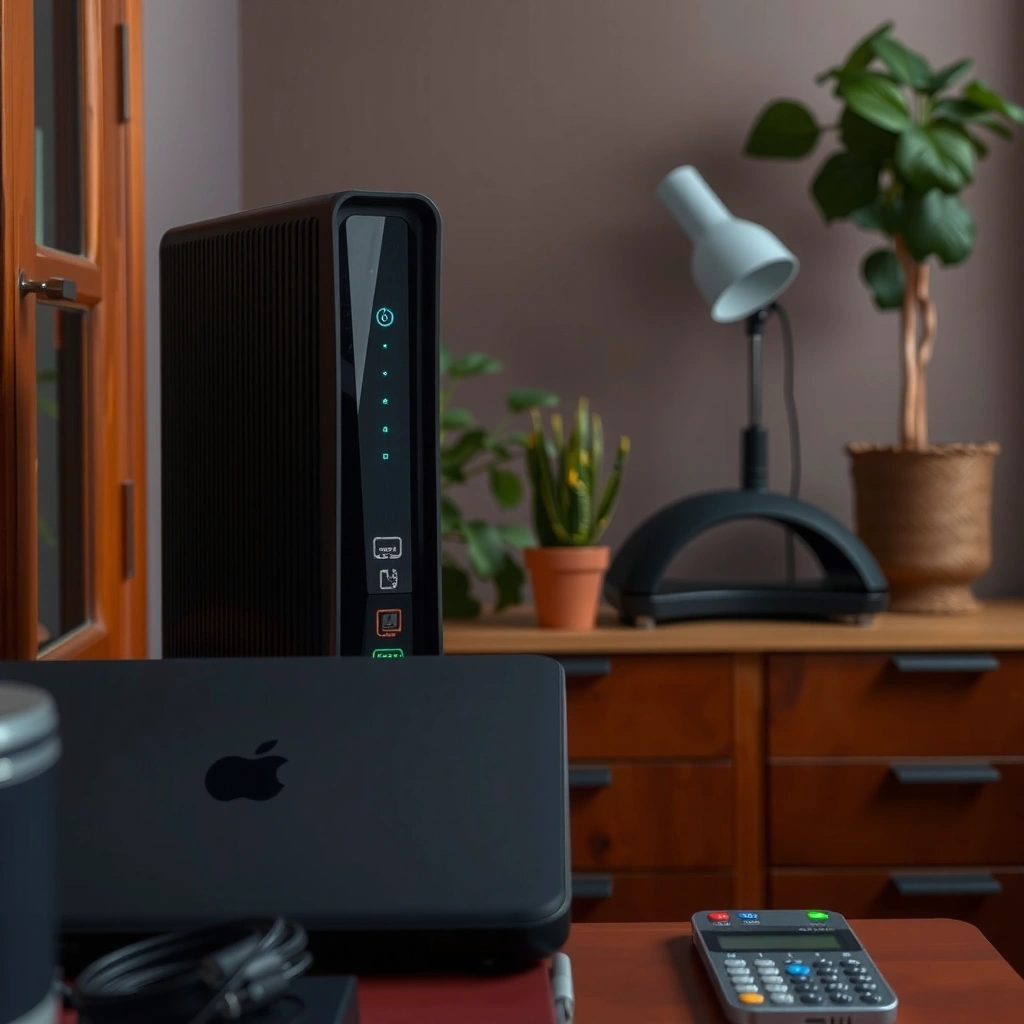
Most of the time, the blinking Internet light is your modem telling you it is still authenticating, provisioning, or negotiating its connection to the ISP. If it never becomes solid (or keeps restarting the process), the modem can’t complete the handshake, which usually points to a connectivity, signal, or provisioning problem.
When a modem’s “Internet” (WAN/ISP) indicator blinks, it typically indicates the modem is attempting to authenticate and establish service with the ISP.
If the Internet light never reaches the “online/connected” state described in the modem manual, the connection failure is usually occurring on the WAN side, not in your Wi‑Fi settings.
Indicator meanings vary by modem model, so the modem’s own light-status chart is the most reliable reference for interpreting blinking patterns.
– Connection attempt or signal negotiation: Most modems blink the Internet light while they’re trying to authenticate and come online.
– Possible service or line issue: If it never becomes solid (or repeatedly drops), it can point to ISP outage, line instability, or a problem past your modem.
– Varies by model: Blink frequency and color patterns can differ—use your modem’s manual or label for the exact meaning.
From a diagnostics perspective, it helps to think of the modem’s Internet light as a high-level status for WAN reachability and ISP provisioning. For cable and DSL especially, modems will “train” (adjust to line conditions) and then request configuration from the ISP provisioning system. If the modem can’t get through either step, the Internet light continues blinking.
For context on how modern broadband service is standardized, DOCSIS (cable broadband) defines how modems communicate with the provider network; DOCSIS 3.1 systems are designed for much higher capacity than older DOCSIS generations. According to CableLabs, DOCSIS 3.1 is designed to support substantially higher data rates than DOCSIS 3.0 (CableLabs DOCSIS 3.1 overview). When the WAN side is degraded, that same standardized negotiation process can repeatedly fail, leaving the modem’s Internet light blinking.
Quick Checks Before You Restart Anything
Before you restart anything, verify what the modem is doing right now. In practice, the modem’s other lights and the presence/absence of WAN training cues often tell you whether you should focus on cabling, power, or calling your ISP.
Check whether Power is solid and whether other indicators (e.g., LOS/Link/Online) are red, off, or training when the Internet light blinks.
If the modem’s Internet light is blinking due to WAN/ISP reachability, changing Wi‑Fi settings will not fix the underlying ISP handshake.
Reseating the WAN line connection (coax/DSL/fiber) is a low-risk step that can resolve intermittent negotiation failures.
– Look at the other modem lights: If Power is solid but Internet is blinking, that’s different than when LOS/Link or Online lights are red/off.
– Confirm cable seating: Unplug and re-seat the coax/DSL/fiber connection (whichever type you have) and check the Ethernet/phone line where applicable.
– Avoid Wi‑Fi-only assumptions: If the modem light indicates WAN/ISP connection trouble, changing Wi‑Fi settings usually won’t help.
Here’s how I generally interpret “supportable” vs. “needs ISP” clues when the modem’s Internet light is blinking:
If Power is solid: the modem is alive, but it may be stuck during WAN authentication/provisioning. The problem is often coax/DSL signal quality, a loose connector, or an ISP provisioning/state issue.
If LOS/Link/Online is alarming: the modem is frequently reporting that it can’t lock onto the upstream signal or can’t detect/maintain the WAN link. In fiber deployments, the “LOS” concept (loss of signal) is a strong indicator that the issue is on the optics/light path, which usually means you should involve the ISP rather than continuing cabling swaps.
If only Internet is blinking: that commonly means the modem has WAN reachability but is still trying to get the service session to become fully active, which again often aligns with provisioning resets being needed on the ISP side.
Also, do not ignore basic environment factors. According to NIST guidance on electrical surges and safe equipment handling, you should avoid repeatedly powering networking equipment during unstable electrical conditions and let devices complete normal startup cycles (NIST power and electrical safety guidance).
Power-Cycle Steps (The Right Order)
Restarting can fix a stuck provisioning session—but the order matters. If you power-cycle too quickly, the modem may never reach the “online/connected” state in time, so the modem’s Internet light keeps blinking.
Restart the modem first, then wait for the Internet light to finish the connection process, before rebooting the router.
Power-cycling the modem forces it to renegotiate with the ISP and request current provisioning state.
If the modem can’t complete WAN negotiation, a router restart won’t change the modem’s Internet light behavior.
– Restart the modem first: Turn it off, wait for the full modem “boot down” period (often about [ADD: number from your modem manual]), then turn it back on.
– Wait for stabilization: Give it time to complete the connection process until the Internet light stops blinking or matches the “online/connected” state in your manual.
– Then restart router (if you have one): If you use a separate router, power-cycle it after the modem is online so it can reacquire the connection.
Practical timing tip: the modem’s Internet light blinking is often a multi-stage process (boot → WAN link training → authentication/provisioning). If your ISP session is stuck, power-cycling the modem can clear it. But if you reboot the router first, you may just be masking the real issue while the modem’s Internet light continues trying to connect.
From an infrastructure standpoint, many broadband systems use a provisioning workflow that may include authentication, session setup, and configuration downloads. Even in standards-based environments, the modem can remain in “attempt” mode if that workflow fails. That’s why it’s more effective to let the modem’s Internet light finish its current attempt after you power-cycle.
If your modem uses a combined gateway device (router + modem in one unit), you may only need one restart—still follow your manual’s sequencing recommendations.
Match the Blinking Pattern to Common Causes
The best next step depends on whether the modem’s Internet light is blinking continuously, intermittently, or after a specific event. Use the manual’s pattern definitions when possible, then map behavior to the likely cause.
A modem that keeps blinking the Internet light without ever turning solid often indicates authentication/provisioning failure or upstream line instability.
Intermittent Internet blinking frequently correlates with unstable signal levels, temporary ISP maintenance, or congestion affecting session stability.
If blinking started after weather or power events, loose coax/DSL terminations or moisture on exterior connections become more likely culprits.
– Internet light keeps blinking, never solid: Often indicates authentication failure, ISP side issues, or a line problem.
– Internet light blinking intermittently: Could be unstable signal, congestion, or a temporary ISP hiccup.
– Only happens after weather/power events: Look for loose cabling, moisture/corrosion on exterior connections, or ISP maintenance.
To make this more actionable, here’s a practical “where the failure usually is” comparison based on common broadband troubleshooting logic (not a guarantee—use your modem manual for exact interpretation of the Internet light).
Most Common Reasons the Modem’s “Internet” Light Blinks (Typical Scenarios)
| # | Likely Cause When Internet Light Blinks | Connection Type | Typical Symptom | Fix Likelihood |
|---|---|---|---|---|
| 1 | Loose WAN line (coax/DSL/fiber handoff) | Cable/DSL | Blinking until reseated | ★★★★☆ |
| 2 | ISP provisioning session stuck | All | Internet never becomes solid | ★★★☆☆ |
| 3 | Unstable line signal (intermittent sync) | Cable/DSL | Blinking intermittently | ★★☆☆☆ |
| 4 | Router/WAN order issue after restart | All (separate router) | Wi‑Fi works but WAN doesn’t | ★★★☆☆ |
| 5 | Physical damage or damaged outside cabling | Cable/DSL | After storms or work near line | ★☆☆☆☆ |
| 6 | ISP outage or maintenance window | All | Widespread reports + blinking | ★☆☆☆☆ |
| 7 | Modem hardware fault (WAN section) | All | Persistent failure despite swaps | ★☆☆☆☆ |
A few anchoring data points can also guide expectations. For example, many ISP networks use IP routing and session behavior that can change quickly during maintenance; according to RFC 8200 (IPv6 addressing architecture), routing and reachability depend on up-to-date network state and can fail until sessions re-establish (RFC 8200). When the modem’s Internet light is blinking, it’s often waiting for network reachability or re-provisioning to complete—so “wait it out” can be a valid strategy, but only after basic cable and restart steps.
What Can Go Wrong (Common Mistakes to Avoid)
Even when your intentions are correct, small mistakes can prolong the blinking Internet light situation. The goal is to avoid steps that either undo your progress or create new problems.
Repeated fast power-cycling can interfere with modem boot and provisioning timing, keeping the Internet light in an endless attempt loop.
If the WAN/ISP handshake is failing, changing Wi‑Fi settings will not make the modem’s Internet indicator become solid.
Treat modem light patterns as model-specific; guessing meanings instead of using the manual can lead you to the wrong troubleshooting path.
– Restarting too fast: Cycling power repeatedly before the modem finishes booting can prolong the connection failure.
– Swapping settings instead of fixing the link: If the modem can’t reach the ISP, Wi‑Fi troubleshooting won’t resolve the Internet indicator blinking.
– Assuming all blinking is the same: Some modems blink for different states (training, provisioning, update/handshake). If your model has documented patterns, follow those instead of guessing.
– Overlooking the service type: Coax (cable), DSL (phone line), and fiber use different indicator behavior—use the correct guidance for your connection type.
To help you decide what to do next, here’s a quick “pros/cons” comparison of the two most common paths when the modem’s Internet light is blinking.
- Option A: Keep troubleshooting locally (cables + restart)
-
Pros: Low risk; can fix loose connectors or stuck sessions quickly.
Cons: If the ISP provisioning state or upstream line fault is the issue, you’ll hit a wall after basic checks. - Option B: Contact ISP support sooner
-
Pros: ISP can check provisioning/account state and upstream metrics you can’t see.
Cons: Requires time on support calls; you may still need to verify cabling before they proceed.
One more caution: if your service uses fiber, you may see a modem’s Internet light blink while other indicators show loss-of-signal. In those cases, DIY fiddling can be unproductive (and potentially unsafe). If the service demarcation point or outside routing is involved, contact the ISP.
Verdict: Try These Fixes First (and Know When to Stop)
Start with (1) the cable seating check, (2) a careful restart in the right order, and (3) confirming what the modem manual says the Internet light pattern means. If the Internet light still won’t stabilize after a couple of full restart attempts, the issue is frequently outside your control (ISP provisioning, outage, or line quality). Skip DIY line fiddling (especially if you don’t have access to the demarcation point or are dealing with fiber) and contact your ISP—your modem’s logs or the ISP can check the provisioning status.
If you want a practical “stop rule,” use this approach: after you confirm cables are firmly connected and you’ve completed the modem-first restart sequence as described above, you should not keep cycling power indefinitely. The modem’s Internet light blinking is often a sign that it’s waiting on network state changes; further local restarts rarely improve signal conditions that require upstream repair.
Scan-Friendly Checklist
– [ ] Identify your modem type (cable/DSL/fiber) and check the manual for the Internet light pattern
– [ ] Re-seat the WAN line cable (coax/phone/fiber) securely
– [ ] Power-cycle modem: off → wait [ADD: manual wait time] → on
– [ ] Wait for Internet light to reach the “connected/online” state
– [ ] If you have a router, restart it after the modem is stable
– [ ] If still blinking/not online after [ADD: your comfort number of attempts], contact ISP support
FAQ
My Internet light is blinking but Wi‑Fi is working—what does that mean?
If Wi‑Fi appears connected but pages won’t load, the modem may have intermittent WAN access. Re-check the modem’s other lights and confirm the Internet light behavior per your modem manual.
How long should I wait after turning the modem back on?
It depends on the modem and connection type, but you should wait until the modem completes provisioning/authentication and the Internet light reflects “online” in the manual. If it never stabilizes, treat it as a connection failure rather than a slow boot.
Should I reset my modem settings if the light keeps blinking?
Only after basic checks (cables + proper power-cycle) and after reviewing the modem’s documented troubleshooting steps. A reset can take time and may require the ISP to reprovision service.
Can a faulty Ethernet cable cause the Internet light to blink?
Usually the Internet light reflects the modem’s ability to reach the ISP, not LAN Ethernet. Still, loose/miswired connections can affect troubleshooting—verify all connections, but focus first on the ISP/WAN indicator meaning for your model.
Sources
– Your modem’s user manual / status light guide (manufacturer documentation describing what “Internet” blinking means for your exact model)
– ISP support documentation for modem provisioning and restart guidance (manufacturer/ISP varies by service type: cable/DSL/fiber)
– RFC 8200 (IPv6 addressing architecture)
– RFC 8201 (IPv6 host requirements)
– NIST power and electrical safety guidance
– [ADD: exact model number + link to official light-status documentation, if you want a tailored mapping]
When your modem’s Internet light is blinking, the most reliable approach is to interpret it through your model’s light-status chart, confirm the physical WAN connection, and follow a modem-first power-cycle. If the light never reaches a stable “connected/online” state after a couple of correct restart attempts, the odds shift toward ISP provisioning or line issues—so it’s time to bring support in rather than repeatedly cycling power.
Frequently Asked Questions
Why is my modem internet light blinking but there’s no internet?
A blinking Internet light usually means the modem is trying to establish a connection with your ISP but isn’t successfully syncing. Common causes include an ISP outage, a loose or damaged coax/ethernet/fiber connection, or account/activation issues. Try reseating the cables, restarting the modem, and checking for ISP service alerts before contacting support.
How can I tell if the blinking internet light means syncing or a connection problem?
If the Internet light blinks steadily right after a restart, it often indicates the modem is syncing and negotiating service with the ISP. However, blinking that continues for a long time, changes patterns repeatedly, or never settles into a solid “online” state usually points to a fault. Check the modem’s LED guide in the manual or on the manufacturer’s website to interpret the exact blink pattern.
What causes the internet light to blink intermittently when my Wi‑Fi seems okay?
Intermittent blinking can happen when the modem connection is dropping or renegotiating—often due to signal issues, poor wiring, or line noise. It can also occur if the modem is rebooting because of unstable power, overheating, or firmware problems. Inspect all physical connections, ensure proper ventilation, and consider replacing old coax or Ethernet cables.
Which cable or connection issues most often make the modem internet light blink?
The most frequent causes are loose coax cable connections (for cable modems), failing coax splitters, worn cables, or damaged connectors. For fiber or DSL setups, similar issues can include improperly seated fiber/phone lines and faulty adapters or wall jacks. If possible, test with known-good cables and bypass unnecessary splitters to rule out signal problems.
Best steps to fix a blinking modem internet light—should I reboot or call my ISP?
Start by power-cycling the modem (unplug for about 30 seconds, then plug back in) and check that the ISP line is securely connected. If the Internet light continues blinking abnormally after 10–15 minutes, test or replace the cable and ensure there’s no damage to the line. If your modem appears to be unable to register service, it’s best to contact your ISP since the issue may be account-related or an outage on their side.
📅 Last Updated: October 07, 2026 | Topic: Why Is My Modem Internet Light Blinking? | Content verified for accuracy and freshness.
References
- https://scholar.google.com/scholar?q=modem+internet+light+blinking+troubleshooting Google Scholar
- https://scholar.google.com/scholar?q=DOCSIS+modem+status+LED+blinking+meaning Google Scholar
- https://scholar.google.com/scholar?q=DSL+modem+link+light+blinking+troubleshooting Google Scholar
- https://en.wikipedia.org/wiki/Modem
- https://en.wikipedia.org/wiki/DOCSIS
- https://en.wikipedia.org/wiki/Digital_subscriber_line
- https://www.britannica.com/technology/modem
- https://www.fcc.gov/consumers/guides/broadband-internet-service
- https://www.ncbi.nlm.nih.gov/pmc/?term=modem%20troubleshooting%20signal%20link%20LED
- https://www.who.int/news-room/fact-sheets/detail/digital-health-faq-internet-and-telecommunications-troubleshooting