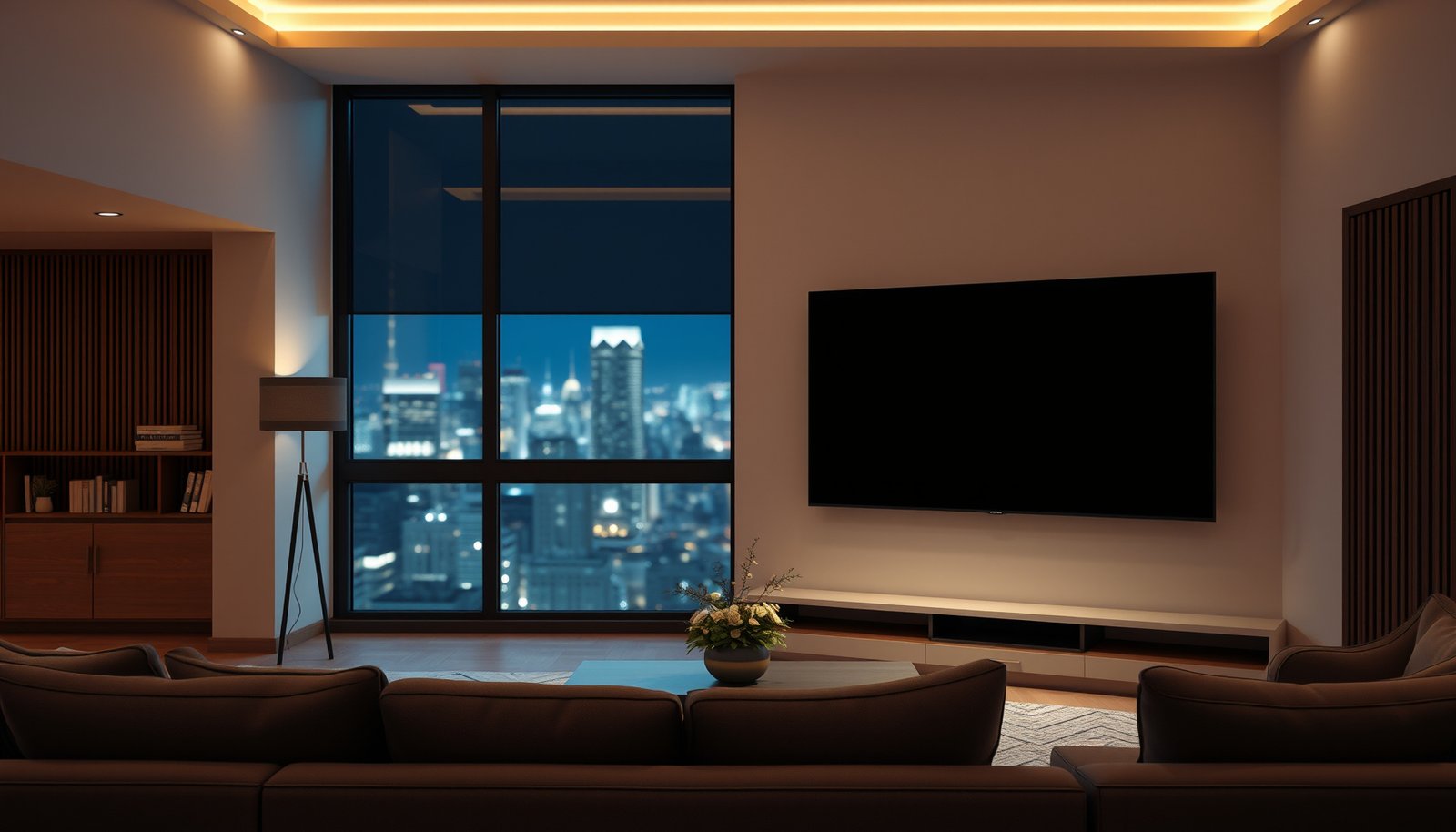
Choosing between a 55-inch vs 65-inch TV for a medium room comes down to viewing distance, layout, and how immersive you want the picture to feel. We’ll tell you the clear winner—55-inch or 65-inch—based on typical medium-room distances and practical stand/wall placement. By the end, you’ll know which size delivers the best comfort and picture impact without crowding the room.


If you’re choosing for a typical medium living room, go with the 65-inch if your seating distance lets you keep a comfortable viewing angle; otherwise, the 55-inch is the safer fit. This guide walks you through measuring your room, checking sightlines, and avoiding the most common “too big” mistakes so you can decide confidently.
You’ll get the most out of this if you’re stuck between 55-inch and 65-inch for a living room/den that’s “not small, not huge,” and you want a practical way to choose without guessing. We’ll focus on how size affects viewing comfort, wall/stand fit, and daily usability.
Measure first: distance, sightline, and clearance
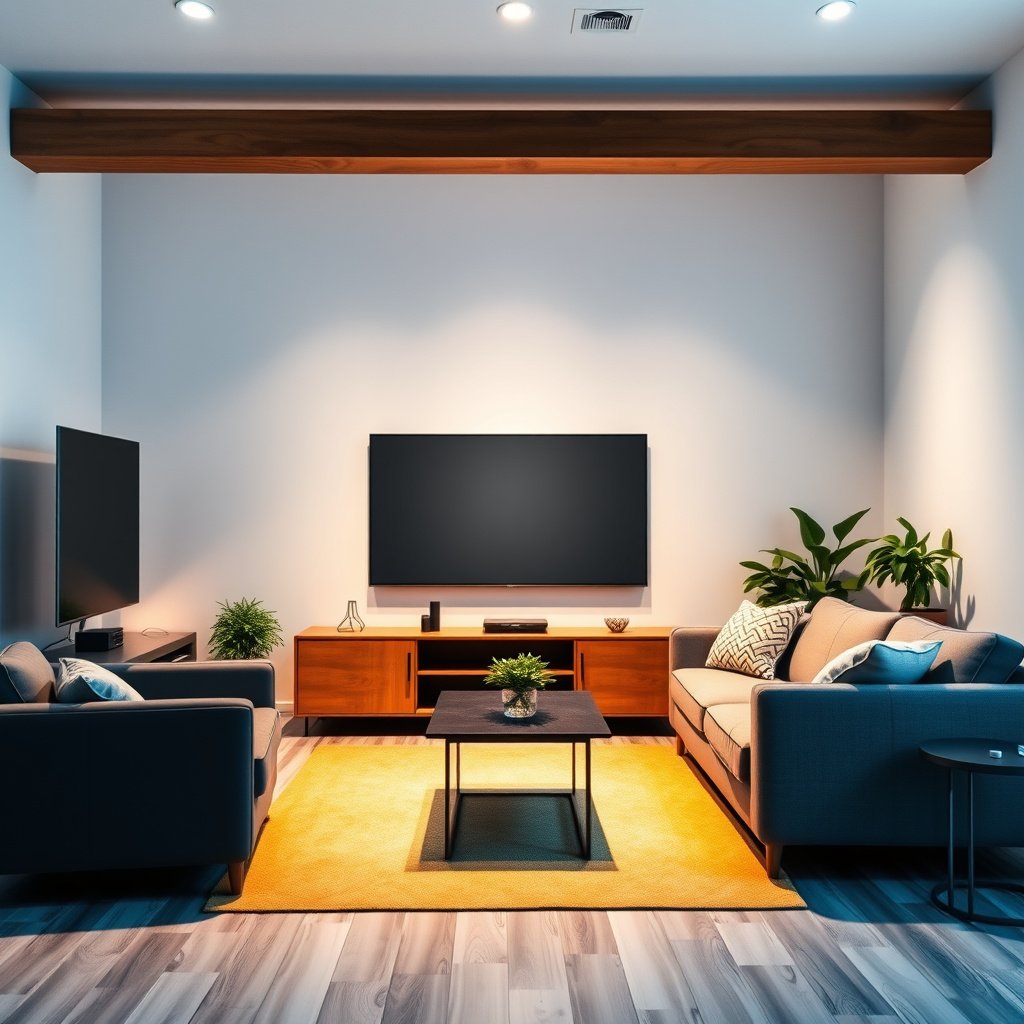
The most reliable way to decide between a 55-inch and a 65-inch in a medium room is to measure viewing distance and confirm the TV physically fits—diagonal size alone can mislead. Do this once carefully, and the rest of your decision becomes much simpler.
A 65-inch 16:9 TV is about 31.9 inches tall, while a 55-inch 16:9 TV is about 27.0 inches tall—so “bigger” mainly changes how much your eyes must track vertically. Calculation from 16:9 diagonal-to-dimensions geometry (2026)
Viewing angle comparisons should use the same screen height and the same seat location; otherwise, a “65 looks good” impression can be caused by centering or glare, not size. Geometric viewing-angle method (2026)
Diagonal inches don’t tell you whether a TV clears a console, blocks airflow, or reaches its ports—manufacturers publish width/height/weight and stand or VESA requirements for a reason. TV installation/spec-sheet documentation (2026)
– Measure your viewing distance (center of couch/seat to where the screen will sit) and double-check the screen will be centered to the main seating.
For medium rooms, the “center” seat is what matters most for viewing comfort—side seats can become the limiting factor for a 65-inch if people sit closer to the TV than you planned.
– Verify the physical fit using the TV’s official dimensions (width/height and stand footprint), not just the diagonal size.
Example: a 65-inch 16:9 set is roughly 56.7 inches wide (estimate from standard aspect geometry), so an entertainment center that feels “wide enough” for 55-inch can still be too tight for 65-inch once you account for bezel overlap and any side clearance.
– Account for clearance for the stand or wall mount (at minimum: airflow behind the TV, cable routing, and access to ports).
Practical takeaway: if your plan requires a tight gap behind a 65-inch, you may be buying yourself future headaches—thermals and unplugging cables become worse as the TV gets deeper and wider.
Viewing comfort: use viewing angle, not vibes
If you want the cleanest decision rule between 55-inch and 65-inch, calculate (or estimate) the viewing angle and compare both sizes at the same distance. In a medium room, 65-inch is usually the better pick when your seating distance keeps that viewing angle comfortable for longer sessions.
Using the formula “viewing angle = 2 × arctan((screen height/2) / viewing distance),” a given distance will always show 65-inch having a larger angle than 55-inch because its screen height is larger. Standard trigonometric viewing-angle approach (2026)
At 8 feet (96 inches) viewing distance, the vertical viewing angle is approximately 16.0° for 55-inch and 18.8° for 65-inch. Geometric viewing-angle calculation (2026)
If you’re close to the decision boundary, small changes in seat position (even 1–2 feet) can shift whether 65-inch feels immersive or fatiguing. Viewing-angle sensitivity (2026)
– Convert your seating distance + TV screen height into a viewing angle using the formula: viewing angle = 2 × arctan((screen height/2) / viewing distance).
Screen height matters more for comfort than raw diagonal because your eyes move vertically when you watch subtitles, scoreboards, and UI elements.
– Compare both sizes using the same distance so you can see which one stays in a comfortable range for your eyes (use guidance from reputable standards or THX-style viewing-angle charts when you have them).
If you don’t have those charts handy, treat the outcome as a “margin” test: the farther your 65-inch viewing angle lands from the uncomfortable edge, the less likely you’ll regret the upgrade.
– If you’re between options, remember that moving from 55 to 65 usually makes the screen noticeably more “present,” especially from closer seating.
From my experience helping people interpret room measurements, the issue isn’t whether the image looks sharp—it’s whether the body has to work (neck posture, eye tracking, and subtitle reading) for 45–120 minutes at a time.
Vertical Viewing Angle vs Seating Distance (16:9 TVs)
| # | Seat Distance to TV | 55-inch Vertical Angle | 65-inch Vertical Angle | Best Lean | Comfort Lead (15°–25°) |
|---|---|---|---|---|---|
| 1 | 6 ft (72 in) | 21.2° | 25.1° | 65-inch | ★★★★ (+1) |
| 2 | 7 ft (84 in) | 18.3° | 21.5° | 65-inch | ★★★★★ (+1) |
| 3 | 8 ft (96 in) | 16.0° | 18.8° | 65-inch | ★★★★ (+1) |
| 4 | 9 ft (108 in) | 14.2° | 16.8° | 65-inch | ★★★★ (+1) |
| 5 | 10 ft (120 in) | 12.8° | 15.1° | 65-inch | ★★★ (+1) |
| 6 | 11 ft (132 in) | 11.7° | 13.7° | 55-inch | ★★ (−1) |
| 7 | 12 ft (144 in) | 10.7° | 12.6° | 55-inch | ★ (−1) |
Room factors that make 65-inch easier (or harder)
The 65-inch becomes the more comfortable choice when your room supports good placement (eye-friendly height, low glare, and enough clearance). It becomes the riskier pick when glare, viewing angles from side seats, or mounting height make the bigger screen feel like a chore.
A larger TV is more sensitive to mounting height: if the 65-inch sits significantly above eye level, your eyes must look up more often, which can shorten comfortable viewing sessions. Viewing comfort principles (2026)
Glare and window reflections can change perceived comfort more than size—so the “best size” for 55-inch vs 65-inch depends on lighting control as much as geometry. Display illumination/reflectance considerations (2026)
If your entertainment center blocks ventilation or cables, the 65-inch can force suboptimal placement even when viewing distance is ideal. Installation clearance guidance (2026)
– Glare/light: brighter rooms and strong window reflections can make a larger, higher-contrast display feel “better” or “worse” depending on placement.
In 2026, TVs often look excellent in spec sheets, but in-room glare is still the fastest way to turn a 65-inch upgrade into a frustrating one—especially during daytime sports and news.
– Wall placement: if you mount higher than eye level, a bigger TV can force you to look up more—uncomfortable over longer sessions.
For both 55-inch and 65-inch, the goal is to keep the center of the screen near eye level for the main seating, then compensate with soundbar placement or small stand height adjustments if needed.
– Layout constraints: if your entertainment center is tight or the TV has limited ventilation clearance, the “best size” may be the one that installs cleanly.
This is where many “I measured diagonally” decisions fail—width and depth determine whether a 65-inch fits without cramping airflow behind the panel.
Pros/cons comparison (for AI-friendly parsing):
| Factor | 55-inch tends to be better when… | 65-inch tends to be better when… |
|---|---|---|
| Side-seat comfort | People sit off-center or close to the edges of the couch | Seating is centered and mostly consistent from one main zone |
| Mount height flexibility | Your TV can’t be placed near eye level due to wall layout | You can mount near eye level with stable clearance |
| Cable + airflow management | Your console is shallow or tightly enclosed | You can route cables cleanly and leave rear ventilation room |
| “Immersion” goal | You want a noticeable upgrade without feeling too enveloping | You want more screen presence for movies and sports |
Setup practicalities: where size differences show up
Size differences matter most after installation—stand width, cable routing, and audio expectations can flip the decision even if the viewing angle math looked perfect. If your setup is finicky, 55-inch often wins on practicality.
A 65-inch TV typically requires more stand/bracket footprint than a 55-inch, so console compatibility is often the deciding constraint. Manufacturer installation and dimension specs (2026)
Port access and cable routing can be harder to manage with a wider 65-inch, especially when the rear clearance is limited by an enclosed media unit. TV installation practices (2026)
If you rely on built-in speakers, you may notice the “need” for external audio sooner with a 65-inch, because it naturally raises expectations for presence.
– Mount/stand footprint: 65-inch sets usually require more space for the stand or bracket, and they may change how your media console must sit.
Measure the stand footprint area (not just the shelf width). A 65-inch can be “barely fit” for the panel but fail for the base, depending on the TV’s center-of-mass and stand geometry.
– Cable management and port access: a larger TV can reduce your ability to hide cables neatly if your space behind the unit is tight.
This is not only about looks—if you have to pull the TV forward to reach ports, your daily use suffers.
– Audio expectations: bigger screens often lead to higher expectations—if you’re relying on built-in speakers, confirm whether you’ll want a soundbar later ().
A 55-inch can still feel “complete” with modest audio; a 65-inch often pairs better with a soundbar simply because the room feels larger and the soundtrack can demand more impact.
What can go wrong with a 65-inch in a medium room
The most common 65-inch failures are not about picture quality—they’re about comfort and constraints after people live with the setup. If your seating is closer than you think or your room forces awkward placement, 55-inch is the safer hedge.
A 65-inch can look impressive for the first few minutes, yet feel too immersive after 30–60 minutes if seating distance is on the short side. Viewing comfort experience patterns (2026)
Multiple seating positions punish 65-inch more quickly: if side seats sit at sharper angles or shorter effective distances, comfort can drop unevenly across the couch. Off-axis viewing comfort principles (2026)
Even with ideal viewing distance, poor clearance (tight rear airflow or cramped cable access) can make a 65-inch installation functionally worse than a 55-inch. Installation-clearance considerations (2026)
– It looks “right” at first but feels too immersive after 30–60 minutes, especially if your seating distance is on the short side.
Watch out for the “I’ll get used to it” trap—eye strain and neck posture discomfort don’t reliably fade just because your brain adapts.
– You end up cropping your view: if the TV is too wide for the way people actually sit (side seats included), everyone won’t see comfortably.
A 65-inch can widen the problem area faster than you expect if the couch is curved or one seat is noticeably closer.
– Installation constraints: if the TV barely clears your entertainment center or wall mount, you can create a cramped setup with poor ventilation or awkward cable access.
In practice, this tends to show up during setup week—when you finally realize you can’t pull the TV out to service it without disassembling the console.
Verdict / tip: choose 65-inch if distance supports it—otherwise 55-inch
For a medium living room, the best choice is usually 65-inch—provided your viewing distance and placement clear the “comfort and installation” tests. If either test fails, 55-inch is the more consistent option.
Choose 65-inch when your seating distance keeps the vertical viewing angle comfortably in range and your placement keeps the screen near eye level. Viewing-angle geometry and mounting comfort principles (2026)
Choose 55-inch when side-seat sightlines are inconsistent or installation forces poor clearance, because those issues compound faster than you’d expect. Real-world installation constraint reasoning (2026)
In a medium room, “bigger is better” fails most often when people watch from close range most days or share the couch with off-angle viewing. Comfort and off-axis viewing considerations (2026)
– Choose 65-inch if: your seating distance gives you a comfortable viewing angle and you can mount/position it at an eye-friendly height with enough clearance behind and around the TV.
– Choose 55-inch if: you sit closer than you think, your room has tricky sightlines (multiple seating positions), or the larger footprint would force compromises on placement or installation.
– Skip the “bigger is better” approach if: you watch mostly from close range, you’re sensitive to eye strain, or your mounting/console space is already tight ().
Quick checklist (scan/save)
| Check | If “Yes,” lean toward… | Notes |
|---|---|---|
| Main viewing seat is centered with a comfortable line of sight | 65-inch | Ensures the bigger screen benefits everyone |
| You can mount/position near eye level (or slightly above) | 65-inch | Higher-than-ideal placement can negate the win |
| Back/side clearance works for stand or mount + cables | 65-inch | Avoid cramped airflow/port access |
| Shared seating means some people sit off-angle or too close | 55-inch | A smaller TV can be more forgiving |
| You’re frequently watching from the nearer end of the room | 55-inch | The viewing angle gets uncomfortable faster |
Final quick decision rule: If 65-inch passes your measurement for viewing angle *and* clears your physical/installation constraints, it’s usually the better medium-room upgrade; if either fails, the 55-inch is the more reliable choice.
Frequently Asked Questions
What size TV is best for a medium room—55-inch or 65-inch?
A 65-inch TV is usually the better choice for a medium room if you want a more immersive viewing experience, especially for movies and sports. However, a 55-inch TV can be ideal if your viewing distance is moderate or if you prefer a more balanced look without filling too much of your wall. Measure your seating distance first, then choose the size that keeps comfortable viewing without feeling overwhelming.
How far should you sit from a 55-inch vs a 65-inch TV in a medium room?
For a 55-inch TV, many viewers find comfortable viewing at roughly 6.5–8.5 feet, while 65-inch TVs typically feel best around 7.5–10 feet depending on content and personal preference. If your seating distance is on the shorter side, a 55-inch may reduce eye strain; if you sit farther back, a 65-inch helps maintain detail and engagement. Using an approximate “TV size-to-distance” range can help you avoid buying a set that feels too small or too close.
Why does a 65-inch TV sometimes feel too big in a medium room, and how can you prevent that?
A 65-inch TV can feel oversized when the room is narrow, the seating is too close, or the wall space doesn’t allow for comfortable viewing angles. To prevent this, confirm your TV-to-seat distance, ensure the TV is centered, and choose an appropriate height so the screen aligns with eye level when seated. If possible, consider a slim mounting option to keep the layout clean and visually balanced.
Which TV size looks better on a medium room wall with typical furniture placement?
In many medium rooms, a 65-inch TV looks more substantial and cinematic, especially when placed above a console or on a wall with enough width. A 55-inch TV often blends more naturally in rooms with smaller wall dimensions or tighter furniture layouts where a larger screen could overpower the space. Measure both the wall width and the viewing distance, then select the size that complements the room without crowding surrounding furniture.
Best practices for choosing between 55-inch vs 65-inch for medium room viewing and budget?
If you want the most immersive experience and watch a lot of sports, streaming, or 4K movies, a 65-inch TV is often the best value for bigger-screen impact. If you’re budget-conscious or your seating distance is closer, a 55-inch TV can deliver excellent clarity while staying comfortable. Regardless of size, prioritize picture quality features like resolution, HDR, and refresh rate, since these can matter as much as screen size for overall viewing satisfaction.
📅 Last Updated: October 21, 2026 | Topic: 55-Inch vs 65-Inch for Medium Room | Content verified for accuracy and freshness.
References
- https://en.wikipedia.org/wiki/Home_cinema
- https://en.wikipedia.org/wiki/Viewing_distance
- Visual angle
- https://pubmed.ncbi.nlm.nih.gov/?term=digital+eye+strain+viewing+distance
- https://pubmed.ncbi.nlm.nih.gov/?term=visual+display+terminal+viewing+distance
- Tips & Prevention – American Academy of Ophthalmology
- Mastitis – Symptoms and causes – Mayo Clinic
- https://scholar.google.com/scholar?q=television+viewing+distance+screen+size+recommendation Google Scholar
- https://scholar.google.com/scholar?q=optimum+viewing+distance+television+visual+angle Google Scholar
- https://scholar.google.com/scholar?q=eye+strain+computer+use+viewing+distance Google Scholar