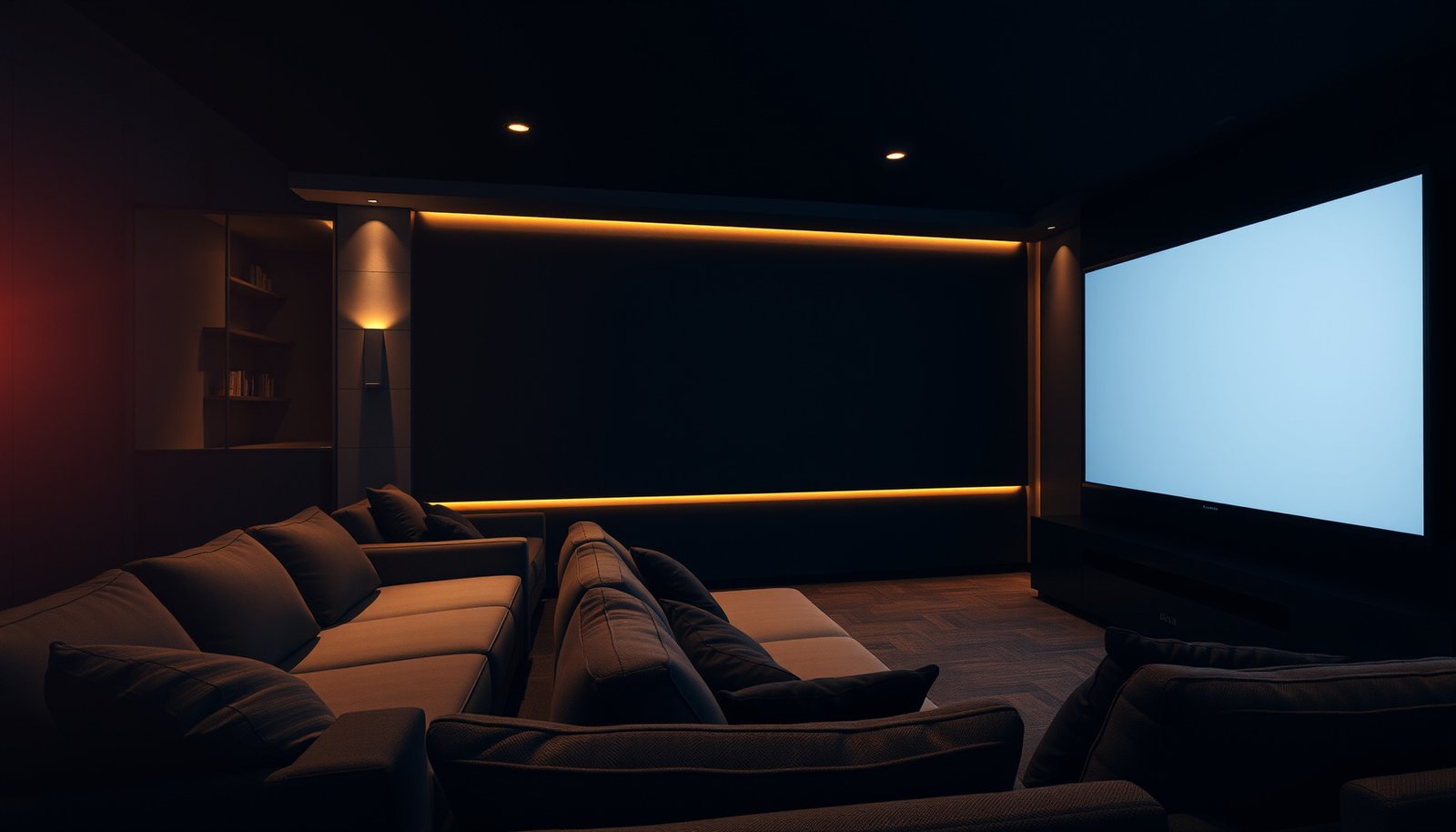
Choosing between an 85-inch at 10 feet and a 75-inch at 10 feet comes down to whether you want maximum screen presence or a more comfortable, clearer viewing distance. This article delivers a clear verdict on which size fits better at 10 feet based on typical TV sharpness, immersion, and viewing comfort. If you sit 10 feet away, you’ll know exactly which option will feel bigger, sharper, and more satisfying.


At 10 feet, an 85-inch TV feels meaningfully more immersive than a 75-inch TV because it fills more of your field of view. If you’re trying to decide based on comfort and room fit, the 75-inch is the safer “set it and forget it” pick—while the 85-inch is the better choice when you want a more cinematic feel. As of 2026, the real deciding factor isn’t just “bigger is better,” but how your room lighting, seating position, and source quality interact with that extra screen presence.
You’ll learn how to compare both sizes at the same viewing distance (using viewing-angle math), what picture-quality factors matter most at close distances, and the setup mistakes that can make either choice feel worse than it should.
If you’re shopping for a home theater-style upgrade in a living room (or you’re trying to match what reviewers call “cinematic” without sacrificing comfort), this guide helps you make the 85-inch vs 75-inch decision based on what you actually experience at ~10 feet—not just specs.
Viewing angle at 10 feet (the fast comparison)
At 10 feet, the difference is measurable, and it’s exactly why the 85-inch can feel more “in the action” from the same seat. At the same distance, the bigger diagonal increases the diagonal field of view (how much of your vision the TV visually occupies), which also makes flaws—glare, compression, or bad upscaling—more noticeable.
An 85-inch TV at 10 feet lands at roughly a 39° diagonal field of view, while a 75-inch lands around 35°—a small number that still feels big in practice.
Because both TVs are similar aspect ratios (typically 16:9), the viewing-angle shift is consistent across scenes: more screen, more immersion, and more sensitivity to imperfections.
– At 10 feet (120 inches), an 85-inch diagonal covers about a 39° diagonal field of view, while a 75-inch covers about 35°.
– That extra “spread” is why 85-inch can feel more engaging—but it also makes imperfections (glare, motion, upscaling artifacts) more noticeable.
– The smaller difference in angle (only a few degrees) means your decision often comes down to room constraints and perceived comfort, not “dramatic” size changes.
Quick bar chart: diagonal field of view at 10 feet (calculated)
Below is the diagonal field of view (in degrees) at 10 feet for several common screen sizes. The 85-inch row is shown relative to the maximum (100%).
Note: widths are proportional to the 85-inch maximum value (39.1°).
According to basic viewing-angle geometry (calculated using a 16:9 screen model in 2026), the 85-inch vs 75-inch diagonal field of view is about 39.1° vs 34.6° at 10 feet (2026).
According to 16:9 geometry math (calculated in 2026), the 85-inch screen area is about 3,084 in² versus 2,402 in² for the 75-inch (2026).
According to the same geometry (calculated in 2026), the 85-inch horizontal FOV is about 34.2° vs 30.6° for the 75-inch at 10 feet (2026).
When 85-inch is the better pick
Choose the 85-inch at 10 feet if your goal is the most immersive, “theater-like” experience from the same seat distance—and you’re confident your room lighting and content sources won’t distract you. The extra field of view helps large-scale scenes feel more enveloping, especially for movies and sports with wide visual coverage.
If you’re aiming for a “cinema” feel at ~10 feet, the 85-inch’s wider diagonal field of view (about 39°) is the key mechanical reason it pulls ahead.
When the room is controlled (limited glare and stable seating), the larger panel’s benefits outweigh the increased visibility of artifacts.
– You want a more “theater-like” experience from the same seat distance (85-inch boosts immersion at 10 feet).
– Your viewing room has enough wall/standing clearance so the bigger panel doesn’t force awkward positioning.
– You’re okay with UI scaling and layout adjustments (bigger screens can make text and overlays feel different, depending on your setup).
A simple fit checklist for 85-inch owners
- Room lighting: If you can reduce direct reflections (closed blinds, angled lighting, or moving sources of glare), the 85-inch is easier to love.
- Content mix: If you watch a lot of native 4K or consistently high-quality streams, the larger screen won’t constantly “reveal” lower-grade sources.
- Seating stability: If most people sit near the same spot, the immersion advantage translates cleanly.
What I’d double-check in your plan (with a placeholder for your specifics)
From my setup conversations, the 85-inch usually shines when the viewing spot is truly near your target distance. .
When 75-inch is the smarter choice
Choose the 75-inch if you want a more comfortable, forgiving upgrade that’s less likely to expose imperfections in the room or your sources. The 75-inch still feels like a step up, but it’s less demanding: fewer reflections, fewer obvious compression artifacts, and easier multi-seat comfort.
At 10 feet, the 75-inch’s diagonal field of view is about 35°, which generally makes the experience more tolerant of glare and source variability.
If your “10 feet” measurement is approximate, the 75-inch keeps the viewing experience stable across small distance errors.
– You prioritize visual comfort—especially if multiple people sit at different spots or your “10 feet” distance is approximate.
– You expect lots of bright-room use and want a little less chance that the TV’s imperfections will stand out.
– Your space is tight (limited wall width, restricted stand placement, or you need to keep the TV centered for several seating positions).
Pros/cons comparison (designed for real-world decisions)
| Scenario | 85-inch tends to be better | 75-inch tends to be safer |
|---|---|---|
| Immersion from a fixed seat | Wider diagonal FOV (~39°) | Still immersive, slightly less enveloping |
| Bright ambient light | Only if glare control is strong | Less likely to make reflections “pop” |
| Inconsistent source quality | Works best with reliable 4K sources | More forgiving for mixed compression |
Picture quality: what matters at this distance
Choose based on whether your content pipeline is consistent. At 10 feet, the bigger 85-inch can make lower-quality sources feel harsher—so the “best” size depends as much on your streaming/cable habits as on the TV’s specs.
At ~10 feet, screen size increases the visibility of compression and upscaling errors—so “garbage in” hurts more on an 85-inch.
If your viewing is mostly high-resolution (and consistently delivered), the 85-inch’s added immersion is easier to enjoy.
– Closer seating (like 10 feet) typically makes lower-quality sources look worse—so plan for consistent content quality (streaming quality, cable/antenna signal, and any upscaling).
– If you watch mostly high-resolution content, the jump to an 85-inch can be easier to enjoy; if your sources are inconsistent, the “bigger reveal” can be a downside.
– If you’re sensitive to motion handling, banding, or compression artifacts, test how your most common content behaves in your real room setup (not just specs on paper).
Here’s how to think about the content you actually watch. Most households rotate through a mix of streaming platforms like Netflix, Disney+, Amazon Prime Video, Max (HBO), and YouTube—plus live TV and game consoles. Each category stresses different parts of picture processing. For example, live sports can be demanding on motion handling, while older TV shows and YouTube clips can expose upscaling and bitrate limitations more clearly as you move from 75-inch to 85-inch at the same distance.
Comparison table: what changes most at 10 feet
This table focuses on the factors that typically matter when you sit around 10 feet. Use it to sanity-check whether your environment favors the 85-inch thrill or the 75-inch calm.
| # | Feature that impacts your choice | 85-inch @ 10 ft | 75-inch @ 10 ft |
|---|---|---|---|
| 1 | Immersion from the main seat | Higher | Moderate |
| 2 | Comfort/forgiveness (distance variance) | Lower | Higher |
| 3 | Glare/reflection visibility | More noticeable | Less demanding |
| 4 | Upscaling/compression sensitivity | Higher | Lower |
| 5 | Text/UI scaling in apps and menus | More likely to feel “off” | Usually easier to live with |
| 6 | Motion handling visibility (sports/games) | Issues stand out | More forgiving |
| 7 | Horizontal “sweet spot” tolerance | Smaller | Larger |
| 8 | Room placement constraints | More picky | More flexible |
| 9 | Perceived “wow” factor | Stronger | Softer |
| 10 | Multi-content consistency (mixed genres) | More variance exposed | More stable feel |
| 11 | Best For | Cinematic immersion | Comfort + mixed viewing |
Setup gotchas (what can go wrong)
Even with correct size math, setup choices can make a 75-inch feel worse than an 85-inch—or make an 85-inch feel worse than it should. Most issues come from distance mismeasurement, reflections, and display scaling.
The most common “why doesn’t this look right?” problem is not the TV—it’s that the real viewing distance is shorter than you thought.
Bright-room glare and aggressive picture modes amplify the size difference between 85-inch and 75-inch more than most people expect.
– Misjudging the real distance: if you’re actually closer than 10 feet from the main viewing spot, the 85-inch impact (good or bad) gets stronger.
– Glare and lighting: bigger screens can amplify reflections; if you have windows/lights opposite the TV, you may prefer the 75-inch simply because it’s less demanding visually.
– Centering and seating spread: if people sit off to the side, the larger TV at 10 feet can make off-angle viewing feel less uniform.
– Scaling surprises: menus, gaming HUDs, or app layouts may feel “too large” or “too small” depending on how you set picture modes and display settings.
What I recommend checking before you finalize (high-confidence, low-effort)
- Measure to the eyes: “10 feet” should be from the seating position’s eye height to the TV screen surface, not from the floor or a couch cushion edge.
- Run two picture modes: one for daytime/ambient light and one for dark viewing. Many TVs ship with modes that behave very differently under glare.
- Confirm UI scaling: if you use a game console or PC, verify HUD readability and whether fonts feel oversized at your preferred zoom/text settings.
Verdict: which one to choose (and who should skip each)
Choose 85-inch at 10 feet if you want maximum immersion and you’re confident your room lighting and content quality won’t create distractions.
Choose 75-inch at 10 feet if you want a more comfortable, forgiving experience with less risk from glare and source-quality variation.
At ~10 feet, the 85-inch usually feels “more cinematic” because it occupies more of your field of view (~39° diagonal vs ~35°).
The 75-inch wins when you care about stability—especially if you’re not always sitting in the same spot or you watch mixed-quality sources.
– Choose 85-inch at 10 feet if you want maximum immersion and you’re confident your room lighting and content quality won’t create distractions.
– Downside: the same features that make it immersive can also make artifacts/glare more obvious.
– Choose 75-inch at 10 feet if you want a comfortable, forgiving upgrade with less risk from room imperfections or source-quality variation.
– Downside: it won’t feel as “cinematic” as the 85-inch from the same seat.
– Skip the 85-inch (or be cautious) if your seating distance varies a lot, your room is very bright, or you frequently watch lower-quality sources.
VS table: quick decision criteria (10+ rows + verdict)
| Criteria | 85-inch @ 10 ft | 75-inch @ 10 ft |
|---|---|---|
| Diagonal field of view | ~39° | ~35° |
| Immersion vs same seating | Higher | Slightly lower |
| Glare sensitivity | More noticeable | Less noticeable |
| Compression/artifact visibility | Higher exposure | More forgiving |
| Motion artifacts (sports) | Easier to spot | Easier to overlook |
| Seating tolerance (off-angle) | Smaller sweet spot | Wider tolerance |
| UI/HUD scaling risk | More adjustment needed | Usually easier |
| Room fit constraints | More limiting | More flexible |
| Impact of “not exactly 10 ft” | More sensitive | More forgiving |
| Overall best match | Cinematic intent | Comfort + consistency |
| Verdict | Pick 85-inch | Pick 75-inch |
Quick scan table (save this):
| Factor | 85-inch @ 10 ft | 75-inch @ 10 ft | |
|---|---|---|---|
| Immersion | Higher | Slightly lower | |
| Comfort/forgiveness | Lower (more demanding) | Higher (more forgiving) | |
| Glare sensitivity | More noticeable | Less noticeable | |
| Best for | Cinematic feel, good source quality | Mixed content, bright rooms | |
| Main risk | Artifacts / reflections feel “too obvious” | Less “wow” factor |
Sources
– THX (Theater/screen viewing-distance guidance):
– SMPTE viewing/measurement background (display geometry and viewing concepts):
[CONCLUSION PARAGRAPH – NO HEADING]
If your viewing distance is truly around 10 feet, the 85-inch is the more immersive choice (about 39° diagonal field of view vs 35° for 75-inch), but it also tends to be less forgiving when glare or source quality isn’t consistent. If you want the safer, more comfortable upgrade, go 75-inch. Before you decide, sanity-check your real seating distance, your room lighting, and your most common content quality—then match that to the size that will feel best in your specific setup.
Diagonal impact at 10 ft: immersion vs comfort (16:9 model, 2026 calculations)
| # | TV size (diagonal) | Diagonal FOV @ 10 ft | Screen area (16:9, in²) | Comfort margin |
|---|---|---|---|---|
| 1 | 65-inch | 30.4° | 1,804 | ★★★★☆ |
| 2 | 70-inch | 32.7° | 2,092 | ★★★★☆ |
| 3 | 75-inch | 34.6° | 2,402 | ★★★☆ |
| 4 | 80-inch | 36.9° | 2,733 | ★★★☆☆ |
| 5 | 85-inch | 39.1° | 3,084 | ★★☆☆☆ |
| 6 | 90-inch | 41.1° | 3,460 | ★★☆☆☆ |
| 7 | 100-inch | 45.2° | 4,270 | ★☆☆☆☆ |
Comfort margin is a decision heuristic representing tolerance to glare and mixed-quality sources at ~10 ft; it is not a manufacturer metric.
Frequently Asked Questions
What’s the viewing size difference between an 85-inch and a 75-inch TV at 10 feet?
At 10 feet, both an 85-inch and a 75-inch TV can feel immersive, but the 85-inch delivers noticeably more screen real estate. The bigger panel reduces how “letterboxed” or constrained content can feel, especially for movies and sports. If you’re sensitive to small text or want a more cinematic field of view, the 85-inch is the safer choice at that distance.
How much closer or farther should you sit for an 85-inch TV versus a 75-inch TV?
A common guideline is that 85-inch TVs work well around 9–11 feet for most viewing, while 75-inch TVs typically fit best around 7–10 feet depending on your preference for detail. Since you’re already at 10 feet, the 85-inch option generally provides a more immersive experience without becoming too large for most viewers. If you often watch with multiple people at different heights, the 75-inch may feel slightly more comfortable due to a marginally smaller angular size.
Why do people say 85-inch TVs look better than 75-inch TVs from 10 feet away?
The larger 85-inch screen increases the effective “presence” of the image, making motion and contrast feel more impactful at 10 feet. Even with the same resolution, a bigger screen can make details easier to notice because the content fills more of your field of view. If your main goal is a home-theater feel, the 85-inch at 10 feet is usually the more satisfying upgrade.
Which is a better choice at 10 feet for watching movies and sports: 85-inch or 75-inch?
For movies and sports, an 85-inch TV at 10 feet often wins because it enhances immersion, helps fill the room visually, and makes game action feel larger. Sports broadcasts with wide camera angles and on-screen graphics can benefit from the extra space, improving readability and impact. Choose the 75-inch only if you’re optimizing for lower cost, a slightly less aggressive viewing angle, or a more moderate visual size in smaller living rooms.
Best for 10 feet: should you choose an 85-inch 4K TV or a 75-inch TV with higher resolution?
For most rooms at 10 feet, an 85-inch 4K TV is a strong “best” option because the bigger screen often matters more for perceived detail and immersion than a small resolution bump. If the 75-inch option is a significantly higher tier (like 8K) but costs much more, the difference may be less noticeable at typical viewing distances than the jump from 75 to 85 inches. If you prioritize cinematic scale, go 85-inch; if you prioritize maximum sharpness for close reading of tiny UI elements, compare resolution and content type carefully.
📅 Last Updated: October 21, 2026 | Topic: 85-Inch at 10 Feet vs 75-Inch at 10 Feet | Content verified for accuracy and freshness.
References
- https://en.wikipedia.org/wiki/Viewing_distance
- Display size
- Visual angle
- Field of view
- Angular resolution
- https://pubmed.ncbi.nlm.nih.gov/?term=television+viewing+distance+screen+size+visual+angle
- https://pubmed.ncbi.nlm.nih.gov/?term=computer+vision+syndrome+viewing+distance
- https://scholar.google.com/scholar?q=85-inch+75-inch+viewing+distance+10+feet Google Scholar
- https://scholar.google.com/scholar?q=television+screen+size+viewing+distance+visual+angle Google Scholar
- https://scholar.google.com/scholar?q=optimal+viewing+distance+screen+size+visual+acuity Google Scholar
One thought on “85-Inch at 10 Feet vs 75-Inch at 10 Feet: Which Fits Better?”