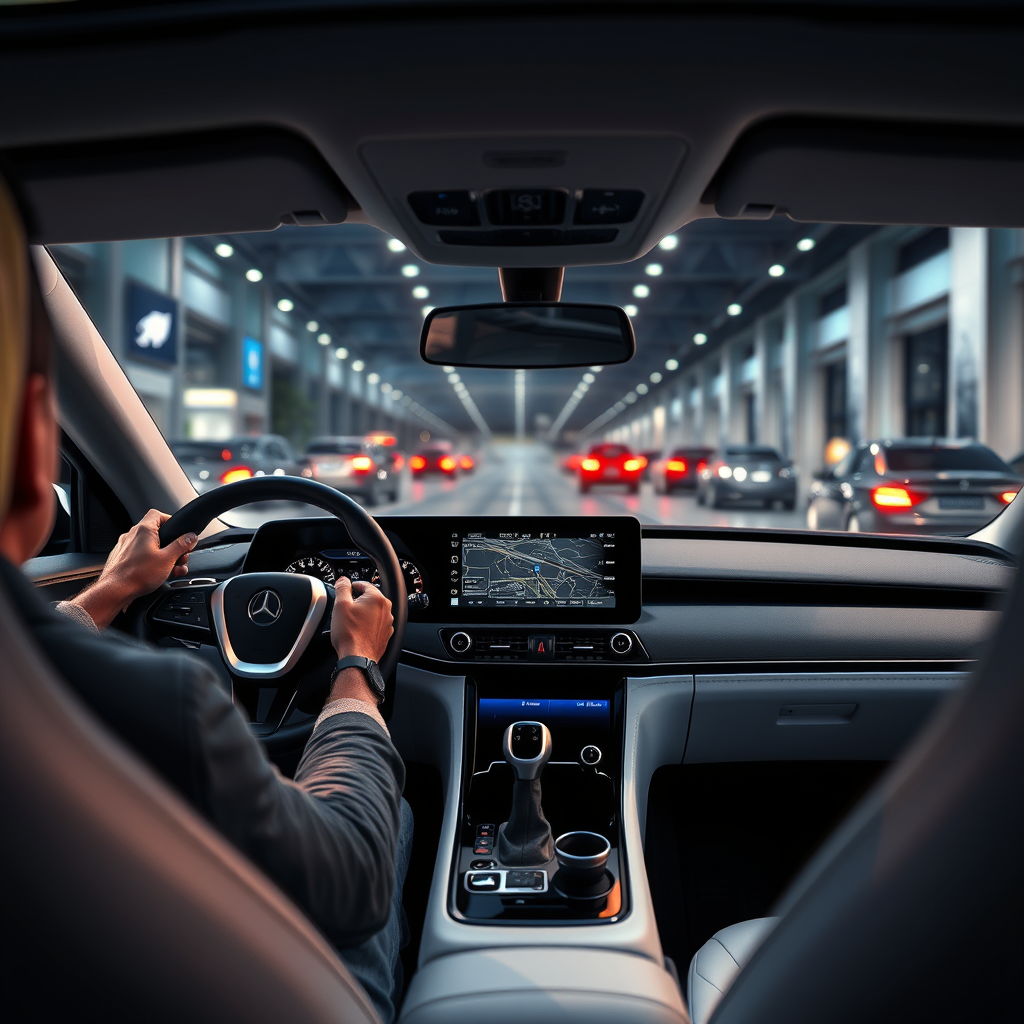

Autonomous vehicles leverage advanced display technologies to enhance navigation by providing real-time information and intuitive interfaces for both passengers and operators. These displays play a crucial role in making self-driving cars not just a technological marvel but also a user-friendly experience. Through a combination of real-time data visualization, user interactivity, and innovative feedback systems, these displays ensure that everyone on board can navigate confidently and safely. In this article, we’ll explore how these displays function, their importance in autonomous driving, and the various types of technologies involved.
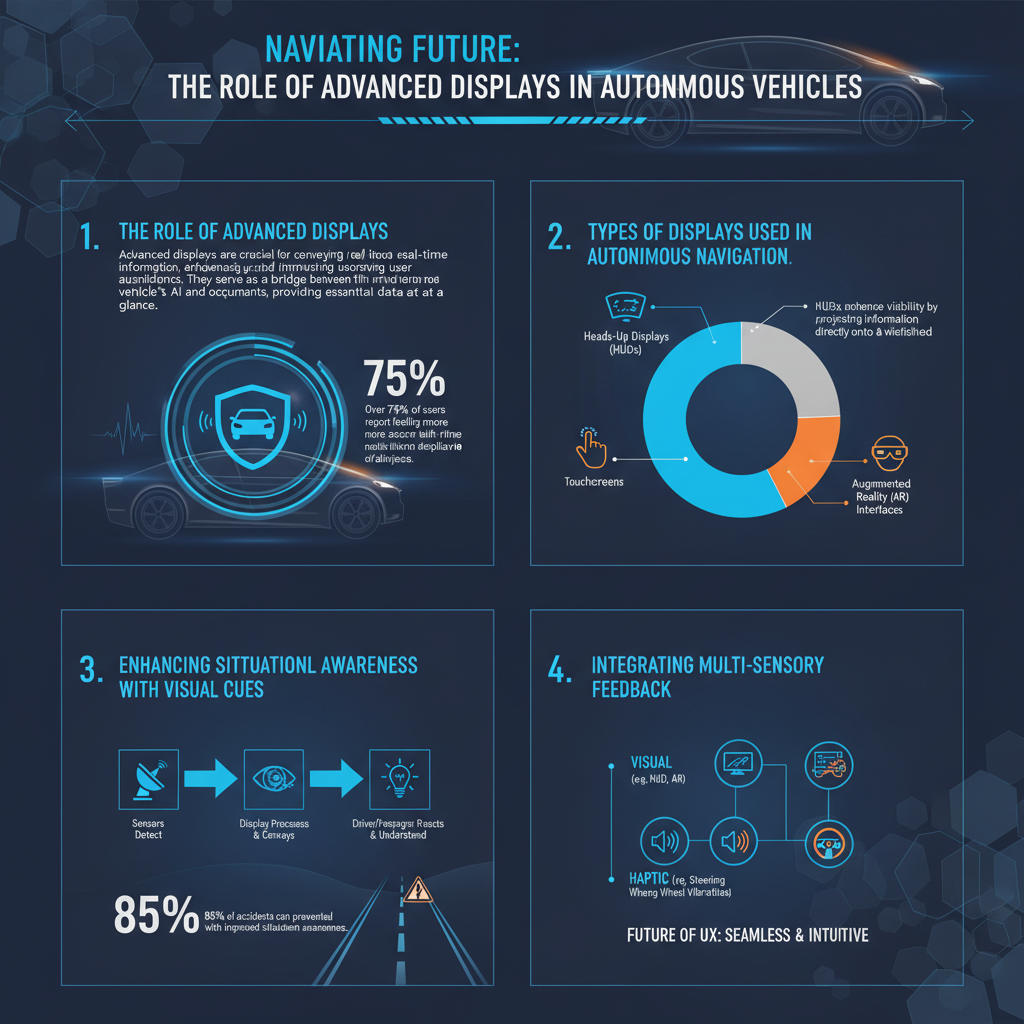
The Role of Advanced Displays in Autonomous Vehicles
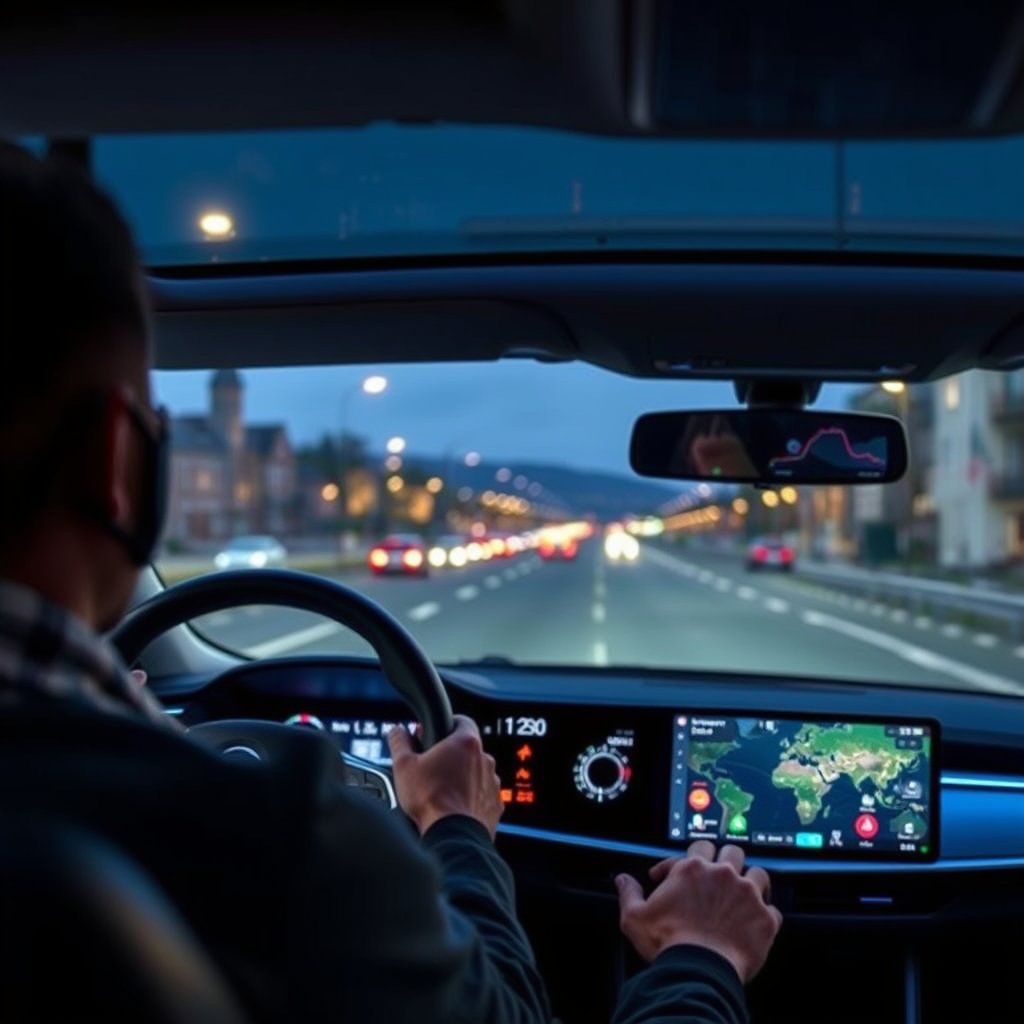
Advanced displays are the backbone of navigation in autonomous vehicles. They offer real-time data visualization that helps both passengers and operators understand the vehicle’s surroundings, making navigation more intuitive. For example, a display can show the vehicle’s current speed, upcoming turns, and even traffic updates, ensuring that users are always in the loop about their journey.
Moreover, these displays serve as vital communication tools. They not only relay information from the vehicle’s sensors and systems but also provide feedback to passengers, helping them understand where the vehicle is headed and what decisions it’s making. This transparency builds trust in the self-driving technology, as users can see why the vehicle is taking certain routes or actions.
Imagine sitting in a self-driving car as it navigates through a busy city. The display dynamically updates with real-time traffic information and alerts about road conditions. This level of communication transforms what could be a passive experience into an engaging one.
Types of Displays Used in Autonomous Navigation
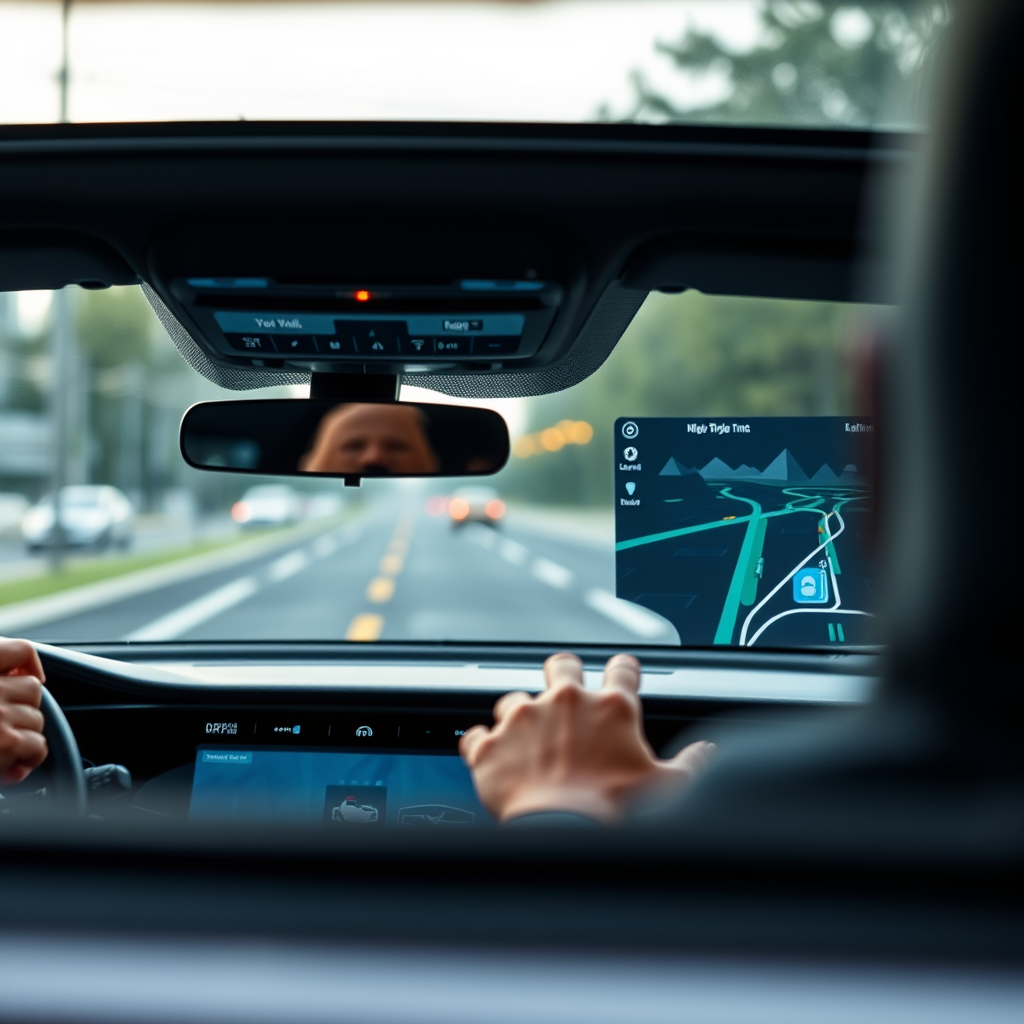
The types of displays used in autonomous vehicles are varied and designed to meet specific user needs. One of the most common interfaces is the touchscreen. Touchscreen displays allow for interactive user experiences, enabling passengers to input destinations, adjust preferences, or even engage with entertainment options during their journey. These interfaces are designed to be user-friendly, often featuring large icons and intuitive layouts to ensure accessibility for people of all ages.
Another innovative display technology is the Heads-Up Display (HUD). HUDs project vital information directly onto the windshield, allowing users to keep their attention on the road while still receiving essential navigation cues. This technology can display speed limits, navigation arrows, and even alerts about nearby hazards without requiring passengers to look away from their immediate surroundings.
Both touchscreen interfaces and HUDs exemplify how advanced display technologies are tailored to enhance the overall experience of autonomous driving, making it safer and more enjoyable.
Enhancing Situational Awareness with Visual Cues
Situational awareness is paramount in autonomous driving, and advanced displays significantly enhance it through visual cues. Displays provide critical alerts about road conditions, such as wet pavement or construction zones, thereby allowing passengers to prepare for any changes in their journey. These alerts can be visually highlighted on the display, making them easily noticeable even amidst other information.
Furthermore, advanced displays can visually highlight points of interest and navigation routes. For example, if the vehicle is approaching a popular restaurant or tourist attraction, the display might showcase this on the screen, complete with ratings and reviews. This not only helps passengers make informed choices about stops along their route but also enriches the travel experience by turning a simple ride into an opportunity for exploration.
By providing these visual cues, autonomous vehicles ensure that passengers feel more engaged and informed, ultimately leading to a more enjoyable journey.
Integrating Multi-Sensory Feedback
To enhance the user experience further, advanced displays in autonomous vehicles often integrate multi-sensory feedback. This means that in addition to visual information, displays may incorporate audio cues and haptic feedback to ensure that users receive clear navigation prompts and alerts.
For instance, a gentle vibration in the seat may accompany a visual alert on the display when the vehicle is about to make a turn, effectively confirming the direction without requiring passengers to focus solely on the screen. Audio feedback, such as a friendly voice announcing upcoming turns or changes, can also make navigation more engaging and less stressful.
This multi-sensory approach is particularly beneficial for enhancing user interaction and ensuring that important information is communicated effectively. By leveraging different senses, autonomous vehicles can create a seamless experience that keeps passengers informed and comfortable throughout their journey.
The Future of Display Technology in Autonomous Driving
The future of display technology in autonomous vehicles is poised for exciting advancements. Emerging technologies like augmented reality (AR) are set to revolutionize navigation displays. Imagine a scenario where navigation arrows are projected onto the road itself, guiding passengers through complex intersections seamlessly. This level of integration between digital and physical worlds could dramatically improve situational awareness and navigation efficiency.
Additionally, continuous advancements in display resolution and responsiveness are expected to enhance user interaction even further. Higher resolution displays will allow for clearer, more detailed visualizations, making it easier for passengers to interpret data quickly. Furthermore, improvements in touch sensitivity and response times will create a more fluid and enjoyable interaction with the vehicle’s system.
These advancements not only promise to make navigation safer and more intuitive but also aim to enrich the overall experience of traveling in an autonomous vehicle.
Safety and Usability Considerations
While advanced displays offer incredible benefits, safety and usability considerations remain paramount. The design of displays is crucial for minimizing driver distraction while maximizing information accessibility. For example, displays should be strategically placed within the vehicle’s interior to ensure that they can be viewed easily without diverting attention from the road ahead.
Usability testing plays a pivotal role in ensuring that display interfaces meet the needs of diverse users. Designers must consider varying levels of tech-savviness, physical abilities, and personal preferences. This means conducting extensive user testing to refine layouts, adjust contrast, and ensure that information is conveyed clearly and effectively.
By focusing on these safety and usability considerations, manufacturers can create displays that enhance the autonomous driving experience while keeping passengers safe and informed.
Real-World Applications and Case Studies
Many leading autonomous vehicle manufacturers are currently implementing advanced displays to improve navigation and user experience. Companies like Waymo and Tesla have been at the forefront of integrating innovative display technologies in their vehicles. For instance, Waymo’s vehicles utilize a sophisticated combination of touchscreen interfaces and HUDs to provide passengers with a comprehensive view of their journey, including traffic conditions and navigation prompts.
A notable case study involves Tesla’s Autopilot feature, which uses advanced displays to show real-time data about the vehicle’s surroundings. The interface provides feedback on nearby vehicles, pedestrians, and lane markings, allowing users to see how the vehicle is interpreting its environment. This transparency not only enhances trust in the technology but also significantly improves the user experience.
These real-world applications highlight the critical impact of effective display technology on user experience, making autonomous vehicles more accessible and enjoyable for everyone.
Summarizing the critical role of advanced displays in autonomous vehicles, we see how they not only facilitate navigation but also enhance overall safety and interaction for users. These displays serve as communication hubs, offering real-time information and engaging interfaces that build trust in the autonomous driving experience. As technology continues to evolve, staying informed about advancements in display systems will be essential for understanding the future of autonomous driving. Explore further to discover more about the innovative technologies shaping this field!
Frequently Asked Questions
How do advanced displays in autonomous vehicles enhance navigation?
Advanced displays in autonomous vehicles utilize high-resolution screens, augmented reality (AR), and user-friendly interfaces to provide real-time navigation assistance. These displays can show detailed maps, traffic conditions, and potential hazards, allowing passengers to visualize their route clearly. By integrating data from sensors and cameras, these displays help improve decision-making for both the vehicle’s AI and the passengers, ensuring a safer and more efficient journey.
What types of displays are commonly used in autonomous vehicles?
Autonomous vehicles typically use a combination of digital dashboards, heads-up displays (HUDs), and large infotainment screens. Digital dashboards provide essential driving data, while HUDs project critical information onto the windshield, allowing drivers to keep their eyes on the road. Infotainment screens often serve as the main interface for navigation, entertainment, and vehicle control, enhancing the overall user experience and interaction with the vehicle.
Why are augmented reality displays important for autonomous vehicle navigation?
Augmented reality displays are crucial for autonomous vehicle navigation as they overlay digital information onto the physical world, helping drivers and passengers understand their surroundings better. These displays can highlight routes, point out landmarks, and indicate nearby obstacles, enhancing situational awareness. By providing contextual information in real-time, AR displays contribute to safer navigation by making it easier to interpret complex driving environments.
Which features should I look for in the display of an autonomous vehicle for optimal navigation?
When evaluating an autonomous vehicle’s display for optimal navigation, look for features such as clarity, responsiveness, and user customization options. High-resolution screens that offer vibrant colors and contrast are essential for visibility in various lighting conditions. Additionally, interactive navigation systems that allow for voice commands and touch gestures can significantly enhance user experience, making it easier to adjust routes or access information on-the-go.
How do autonomous vehicles use display technology to communicate with passengers?
Autonomous vehicles employ display technology to communicate with passengers through visual cues and notifications. For instance, the display can indicate when it’s safe to exit the vehicle, show upcoming stops, or inform passengers about route changes. By keeping passengers informed with real-time updates and alerts, these displays foster a sense of trust and engagement, making the autonomous travel experience more comfortable and reassuring.
References
- https://en.wikipedia.org/wiki/Autonomous_car
- Automated Vehicle Safety | NHTSA
- https://www.sciencedirect.com/science/article/pii/S2352146518301090
- https://www.reuters.com/technology/autonomous-vehicles-why-displays-matter-2021-07-01/
- https://www.techrepublic.com/article/how-advanced-displays-are-evolving-for-autonomous-vehicles/
- https://www.aaai.org/ojs/index.php/aimagazine/article/view/4798
- https://www.itu.int/en/ITU-T/focusgroups/ai4good/Pages/default.aspx