
Exploring the Moon for mining purposes is becoming a reality, with various space agencies and private companies stepping up their game. These lunar mining missions promise to unlock a treasure trove of resources that could change everything from energy production to space exploration. In this article, we’ll dive deep into the details, timelines, and implications of these missions, helping you understand why they are significant for the future of both our planet and the cosmos.




Overview of Moon Mining Missions
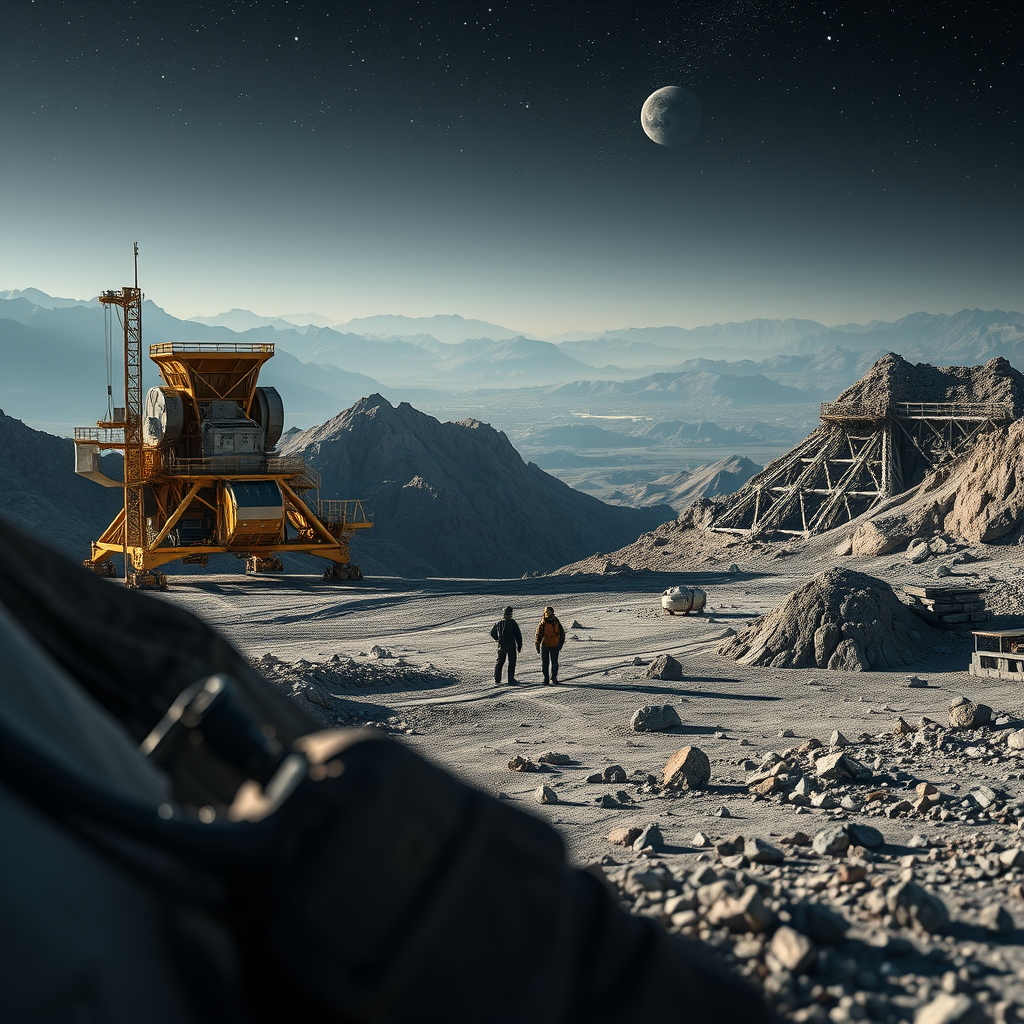
The landscape of lunar mining is rapidly evolving, with key players like NASA, the European Space Agency (ESA), and private companies such as SpaceX and Blue Origin leading the charge. NASA’s Artemis program aims to return humans to the Moon by 2024, with an eye on sustainable lunar exploration and resource utilization. Following closely, companies like Planetary Resources and Astrobotic are also gearing up for their own lunar missions, targeting not only scientific research but also the commercial viability of lunar resources.
The timelines for these missions are ambitious. NASA plans to establish a sustainable lunar presence by the end of the decade, with a focus on mining water ice in permanently shadowed craters, which could support both human life and fuel production. Meanwhile, private ventures are looking to send robotic missions as early as 2025, with objectives that include testing mining technologies and extracting materials like Helium-3.
Resources to be Mined

The Moon is not just a barren rock; it houses a wealth of valuable resources that could significantly benefit Earth. One of the most talked-about materials is Helium-3, a rare isotope that has the potential to be a clean and efficient fuel for nuclear fusion. Harnessing Helium-3 could provide a nearly limitless energy source, reducing our reliance on fossil fuels and addressing climate change challenges.
Additionally, the Moon is rich in rare Earth elements, which are crucial for many modern technologies, including smartphones, electric vehicles, and renewable energy systems. The extraction of these elements could alleviate supply chain issues on Earth and foster technological advancements. In essence, lunar mining could bridge the gap between our current resource limitations and the demands of the future.
Technological Innovations Required
Successfully extracting and processing lunar resources will require significant technological innovations. Robotics and automation are at the forefront of this evolution. Companies like NASA and private startups are developing autonomous mining robots capable of navigating the Moon’s rugged terrain, identifying valuable materials, and carrying out extraction processes without human intervention.
Additionally, advancements in 3D printing technology could allow for on-site manufacturing of tools and components, reducing the need to transport heavy equipment from Earth. Innovative drilling techniques and processing methods will also be essential to efficiently extract resources while minimizing environmental impact.
Challenges and Risks
Despite the thrilling prospects, lunar mining missions face considerable challenges. Logistically, transporting equipment and maintaining a human presence on the Moon will require a robust supply chain and infrastructure that currently does not exist. Technical challenges include developing reliable systems that can withstand the Moon’s extreme temperatures and radiation levels.
Financially, the investments required for these missions are immense. With many unknowns, private companies may hesitate to fully commit without government support or clear regulatory frameworks. Environmental concerns also loom large, as the Moon’s pristine environment must be protected from potential exploitation and degradation. Ethical questions surrounding ownership and the rights to extraterrestrial resources add further complexity to the discussion.
Economic Impact and Opportunities
The potential economic impact of lunar mining could be monumental. If successful, these missions could generate a new sector within the economy that focuses on space resources, creating thousands of jobs in engineering, robotics, and logistics. Moreover, the availability of rare Earth elements and Helium-3 could drive down costs for various technologies, from renewable energy systems to consumer electronics.
As countries and companies race to establish a foothold on the Moon, the competition could also spur innovation and collaboration. This new frontier might lead to the creation of a space economy that benefits not just those with the technological prowess to mine the Moon but also industries back on Earth that rely on these materials.
International Collaboration and Competition
Lunar mining isn’t just a race; it’s a complex web of international collaboration and competition. Countries like China and Russia are also developing their lunar missions, which raises questions about how these nations will coordinate their efforts. The Outer Space Treaty of 1967, which states that celestial bodies cannot be claimed by any one nation, will be crucial in guiding these interactions.
Collaboration may emerge from necessity, as shared knowledge and resources could lead to more successful missions. International treaties may also need to evolve to ensure equitable resource sharing and environmental protection, fostering global cooperation in this new era of space exploration.
Future of Lunar Exploration
Looking ahead, the long-term goals of lunar mining missions extend far beyond the Moon itself. Successful extraction of resources could serve as a stepping stone for future missions to Mars and beyond. The technologies developed for lunar mining could be adapted for use on other celestial bodies, potentially making human settlement on Mars feasible.
Moreover, as we explore further into the solar system, the data and experience gained from lunar missions will be invaluable. The Moon could become a hub for launching deep space missions, enhancing our ability to explore and understand the universe.
The potential and challenges of moon mining missions present us with an exciting opportunity for advancement in space exploration. As we stand on the brink of this new frontier, it is essential to stay informed and engaged with the developments in lunar mining. Keep an eye out for updates as these missions unfold, and consider how they might impact our world and beyond.
Frequently Asked Questions
What are the main objectives of the recently announced moon mining missions?
The primary objectives of the newly announced moon mining missions include extracting valuable resources such as Helium-3, rare earth metals, and water ice. These resources are crucial for supporting future lunar bases, enabling sustainable human presence on the Moon, and potentially supplying materials for energy production back on Earth. The missions aim to lay the groundwork for long-term lunar exploration and the development of a lunar economy.
How will moon mining impact future space exploration and colonization efforts?
Moon mining is expected to significantly enhance future space exploration and colonization by providing essential resources that can be utilized for life support, fuel production, and construction materials. The extraction of water ice, for example, can be converted into hydrogen and oxygen, supporting both human habitats and spacecraft. Additionally, establishing a lunar resource supply chain could reduce the cost and logistical challenges of transporting materials from Earth, thereby facilitating deeper space missions to Mars and beyond.
Why is Helium-3 considered a valuable resource for moon mining missions?
Helium-3 is considered a highly valuable resource for moon mining missions due to its potential use in nuclear fusion as a clean energy source. Unlike traditional nuclear fission, fusion using Helium-3 produces minimal radioactive waste and has the potential to provide vast amounts of energy. As Earth seeks sustainable energy solutions, the prospect of harvesting Helium-3 from the Moon presents a promising avenue for future power generation.
Which countries or organizations are leading the charge in moon mining missions?
Currently, several countries and private organizations are leading the charge in moon mining missions, including the United States (NASA), China (CNSA), and private companies like SpaceX and Blue Origin. NASA’s Artemis program aims to establish a sustainable human presence on the Moon, while China has announced ambitious plans for lunar exploration and resource extraction. These efforts reflect a growing global interest in lunar resource utilization and collaboration in space exploration.
What are the potential challenges and risks associated with moon mining missions?
The potential challenges and risks associated with moon mining missions include technological hurdles, high costs of lunar operations, and legal or regulatory issues regarding space resources. Extracting resources from the Moon requires advanced robotics and mining technologies, which are still in development. Additionally, the legal framework governing the use of extraterrestrial resources is complex and evolving, leading to concerns about ownership and environmental impacts. Addressing these challenges is crucial for the success of future moon mining endeavors.
References
- https://www.nasa.gov/press-release/nasa-announces-new-moon-missions-to-support-artemis-program
- https://www.bbc.com/news/science-environment-57932938
- https://www.reuters.com/science/moon-mining-missions-are-just-around-corner-nasa-says-2021-06-07/
- https://www.sciencedirect.com/science/article/pii/S0012825221005688
- https://www.forbes.com/sites/startswithabang/2021/06/12/the-future-of-moon-mining-and-what-it-means-for-the-human-race/
- https://www.theguardian.com/science/2021/jul/15/nasa-moon-mining-plan-global-race
- https://www.wired.com/story/nasa-moon-mining-missions/
- https://www.nationalgeographic.com/science/article/nasa-moon-mining-missions-what-are-they-and-why-do-they-matter
- https://www.space.com/nasa-artemis-moon-mining-missions-2021
- Lunar resources