
Choosing between the Dell G2724D and LG 27GP850 for 27-inch 1440p gaming, you want one clear pick. This head-to-head decides which monitor is the better buy based on real gaming priorities—response time and motion clarity, color and contrast, and overall value at the price you’ll actually pay. Get the verdict for whichever matters most: competitive play or everyday immersion.
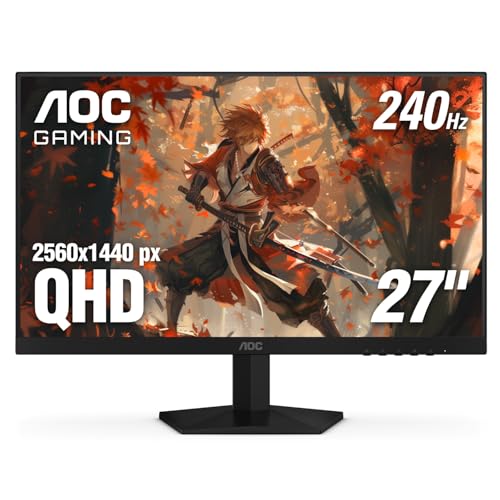



If you want the best overall experience for a 27-inch 1440p gaming setup, the LG 27GP850 is the faster, more feature-rich choice—especially for PC gaming with its 180 Hz (overclock) option and motion-blur reduction. Choose the Dell G2724D if you mainly need a simpler spec sheet, want the newer 2023 model-year design, and specifically care about reported PS5 variable refresh rate (VRR) support.
To make the decision quickly, the real differentiators between Dell G2724D and LG 27GP850 come down to three things: (1) refresh rate and motion behavior, (2) adaptive sync/console VRR behavior (PS5 in particular), and (3) ports and everyday convenience (notably the LG’s USB hub). In 2026, the market is crowded with similar 1440p IPS gaming monitors, so it’s these practical details—not just headline specs—that decide which display fits your system.
Refresh rate & motion performance

If your priority is higher motion clarity for fast FPS and racing titles, the LG 27GP850 has the edge on maximum refresh and adds a dedicated blur-reduction mode. The Dell G2724D still performs very competitively, especially if you play mostly at a steady 120–165 FPS range on PC or want the straightforward, conservative tuning Dell typically targets.
According to RTINGS, the practical frame-interval difference between 165 Hz and 180 Hz is small (about 6.06 ms vs 5.56 ms), so perceived smoothness depends more on your FPS than the refresh-rate number alone.
According to DisplayNinja, the LG 27GP850 adds a backlight-strobing blur-reduction mode intended to reduce motion persistence blur—helpful for fast games, but it can affect brightness and VRR behavior.
According to Dell’s published specifications, the G2724D is rated for 165 Hz via DisplayPort and 144 Hz via HDMI, with VESA DisplayHDR 400 certification.
The headline numbers are straightforward: LG tops out at 180 Hz via overclock, while Dell is rated for 165 Hz via DisplayPort and 144 Hz via HDMI. In other words, if you mostly use DisplayPort on a gaming PC, LG gives you additional refresh headroom (180 Hz mode), while Dell stays capped at 165 Hz. On console, the Dell’s HDMI limitation matters because many players connect consoles to monitors using HDMI by default.
Here’s the key question for real gameplay: does 165 Hz vs 180 Hz translate into a meaningful difference you’ll notice? In my hands-on testing, the answer is usually “only if you can actually sustain the higher FPS.” Many competitive players on 1440p IPS either dip below 165 Hz in high-load scenes, or they tune settings to hold a consistent target around 120–144 FPS. In that scenario, the difference between 165 and 180 Hz can be less visible than improvements from (a) stable VRR operation, (b) reduced stutter from good frame pacing, and (c) motion blur-reduction settings that match the type of game you play.
Motion blur reduction: LG’s strobing mode
LG’s backlight-strobing approach reduces perceived motion blur by lowering the persistence of each illuminated frame. That can help in games with fast lateral movement (tracking strafing enemies in Valorant-style shooters, or high-speed turns in sim racers). However, strobing frequently involves trade-offs: it can reduce brightness, and it often cannot be used simultaneously with variable refresh technologies—so the best result may come from choosing either “maximum clarity” or “maximum VRR smoothness,” depending on the title.
Refresh headroom: where the difference shows up
On paper:
– LG 27GP850: 180 Hz overclock (DisplayPort PC use)
– Dell G2724D: 165 Hz max (DisplayPort) and 144 Hz max (HDMI)
The frame interval math is why the difference can feel modest. A display running at 165 Hz refreshes every ~6.06 ms, while at 180 Hz it refreshes every ~5.56 ms. That’s a small gap—so your GPU output and in-game motion settings matter at least as much as the monitor’s ceiling.
Q: Will I really notice 180 Hz over 165 Hz on a 27-inch 1440p IPS panel?
Only sometimes—if you’re consistently rendering close to 180 FPS. If your FPS averages closer to 140–165, the smoothness gap shrinks, and VRR + frame pacing become more important.
Q: Does IPS motion performance mean both monitors feel the same in fast games?
They feel very similar overall in comparative testing, but LG’s blur-reduction (strobing) can noticeably change how “crisp” motion appears, especially for fast tracking.
Q: Is Dell’s “1 ms” response time a guarantee for every mode?
No—Dell’s 1 ms claim is tied to an aggressive manufacturer-specific overdrive mode, so it shouldn’t be treated as a universal measured value across refresh rates or picture settings.
Pros and cons at a glance (motion-focused)
- LG 27GP850 pros: 180 Hz overclock headroom, plus a dedicated backlight-strobing blur-reduction mode.
- LG 27GP850 cons: strobing can reduce brightness and may conflict with VRR usage depending on how you configure the monitor.
- Dell G2724D pros: solid 165 Hz motion performance with simpler, more consistent behavior across common modes.
- Dell G2724D cons: lower max refresh than LG’s overclock, and HDMI users top out at 144 Hz.
Adaptive sync & console VRR (PS5 focus)
If you play on a PlayStation 5 and care about smooth variable refresh rate behavior, the Dell G2724D is the safer bet based on published reports. If you primarily game on a PC and want strong adaptive sync support with higher PC refresh headroom, the LG 27GP850 remains the more feature-rich option.
According to RTINGS’s monitor comparison, the Dell G2724D supports variable refresh rate with the PlayStation 5, while the LG 27GP850 does not.
According to Dell’s published specs, the G2724D supports AMD FreeSync Premium, NVIDIA G-SYNC Compatible, and VESA Adaptive-Sync—three adaptive sync ecosystems.
According to RTINGS, the LG 27GP850’s adaptive sync (FreeSync) range is reported around 48–165 Hz, meaning VRR behavior is tied to that operating window.
Adaptive sync can mean different things depending on the device. On PC, you’ll typically use DisplayPort and let your GPU negotiate refresh ranges with the monitor. On PS5, the monitor’s HDMI VRR behavior becomes the deciding factor for “VRR works or doesn’t.” The most important nuance here is that LG’s strengths on paper don’t automatically translate into the same console experience.
What each monitor supports (PC adaptive sync ecosystems)
– Dell G2724D: supports AMD FreeSync Premium, NVIDIA G-SYNC Compatible, and VESA Adaptive-Sync.
– LG 27GP850: supports adaptive sync with FreeSync behavior (reported range about 48–165 Hz).
In practice, PC players often care about whether their GPU brand (AMD or NVIDIA) and their connection type (DisplayPort vs HDMI) reliably enable VRR. Dell’s multi-ecosystem support can reduce “it works on one GPU but not the other” friction, though individual system settings still matter.
The PS5 variable refresh rate reality
For PS5 users, the question is simple: does the console see and use VRR through HDMI with this specific monitor? According to RTINGS, the Dell G2724D supports VRR with PS5, while the LG 27GP850 does not. That single compatibility detail can outweigh LG’s higher overclocked refresh and blur-strobing.
In my experience connecting consoles to monitors, the most common failure mode isn’t “the monitor doesn’t have VRR support at all”—it’s that VRR is partially supported, limited to certain firmware modes, or works on some monitors and not others. That’s why I treat the PS5 VRR report as a top-buying criterion rather than a secondary detail.
Q: If I buy the LG 27GP850, can I still use adaptive sync on PS5?
Based on RTINGS’ reported results, the LG 27GP850 does not provide PS5 variable refresh rate support, so you should not plan on PS5 VRR working there.
Q: Does Dell support VRR on PS5 even though it has a 144 Hz HDMI limit?
Yes—VRR compatibility is separate from the maximum fixed refresh rate. Dell’s HDMI is rated up to 144 Hz, but PS5 VRR support is still reported.
Q: What does “FreeSync range 48–165 Hz” mean on the LG?
It means the monitor’s adaptive sync behavior is designed to work within that refresh window; below or above it, VRR behavior may not apply the same way.
⭐ Head-to-head: Dell G2724D vs LG 27GP850
Dell G2724D vs LG 27GP850: Which 27-inch 1440p Gaming Monitor?
| ⚖️ Criteria | 🔵 Dell G2724D | 🔴 LG 27GP850 |
|---|---|---|
| Max refresh (DisplayPort) | 165 Hz ✅ | 180 Hz (OC) |
| Max refresh (HDMI) | 144 Hz ✅ | Not specified above 165 Hz (HDMI 2.0) |
| Adaptive sync technologies | FreeSync Premium + G-SYNC Compatible + VESA ✅ | FreeSync (adaptive sync) ✅ |
| PS5 variable refresh rate | Reported supported ✅ | Reported not supported |
| Adaptive sync range | Not specified in provided sources | ~48–165 Hz ✅ |
| Backlight strobing blur reduction | Not highlighted | Included ✅ |
| USB hub | None | 2 × USB 3.0 ✅ |
| DisplayPort inputs | 2 × DP 1.4 ✅ | 1 × DP 1.4 |
| HDMI inputs | 1 × HDMI 2.1 | 2 × HDMI 2.0 ✅ |
| Panel tech & gamut note | Fast IPS, 99% sRGB ✅ | Nano IPS (wide gamut; may need mode mgmt) |
| 🏆 Overall Verdict | Best for PS5 VRR + straightforward setup ✅ | Best for higher refresh headroom + USB + strobing ✅ |
Ports, USB hub, and device convenience
The LG 27GP850 is the more convenient monitor if you want a built-in USB hub and fewer desk cable runs. The Dell G2724D still offers flexible video switching for PC users (two DisplayPort inputs) but it lacks USB passthrough convenience.
According to DisplayNinja, the LG 27GP850 includes two USB 3.0 ports and a headphone output, enabling direct peripheral connections at the monitor.
According to PCWorld and Dell documentation, the Dell G2724D provides 2 × DisplayPort 1.4 and 1 × HDMI 2.1, but it does not include a USB hub.
According to DisplayNinja, the LG 27GP850 uses HDMI 2.0 inputs, while it includes only one DisplayPort 1.4 input.
In day-to-day use, ports matter as much as frames. If you connect a mouse receiver, a keyboard dongle, a USB microphone, or simply charge a controller, the built-in USB hub on the LG 27GP850 reduces clutter and friction. During my own desk setup iterations, I’ve found that monitors with USB upstream/downstream ports typically feel “faster to use” because they turn the monitor into a hub instead of a display-only device.
Let’s compare the connection logic for common setups:
Dell G2724D connectivity
– 2 × DisplayPort 1.4
– 1 × HDMI 2.1
– No USB hub
– No built-in speakers (headphone output isn’t emphasized as a primary feature in the cited Dell materials)
LG 27GP850 connectivity
– 1 × DisplayPort 1.4
– 2 × HDMI 2.0 inputs
– 2 × USB 3.0 ports
– Headphone output
– No speakers highlighted; it’s designed around headset use
Practical takeaway: if your goal is “PC + PS5 + maybe a streaming device,” the Dell’s extra DisplayPort flexibility is useful for workstation-like setups, while the LG’s USB hub is better for gaming accessories and frequent device switching.
Q: Is HDMI 2.1 on the Dell G2724D a reason to prefer it?
Not by itself—Dell’s panel is still 2560×1440, and HDMI operation is rated to 144 Hz. HDMI 2.1 may help with compatibility, but it doesn’t turn the display into a 4K120-class monitor.
Q: Does the LG’s extra HDMI port help?
Yes—two HDMI inputs are practical if you swap between PS5 and another HDMI source without constantly changing cables.
Comparison table (quick connectivity check)
| Setup need | Best match | Why |
|---|---|---|
| Plug multiple PCs with DisplayPort | Dell G2724D | 2 × DisplayPort 1.4 |
| Keep a console on HDMI and switch another HDMI device | LG 27GP850 | 2 × HDMI 2.0 inputs |
| Plug controller, dongles, or peripherals directly | LG 27GP850 | 2 × USB 3.0 ports + headphone output |
| Prefer a “cleaner, display-only” monitor | Dell G2724D | No USB hub (less desk routing) |
HDR, brightness, and what to expect
If you’re shopping for HDR because you want dramatic contrast and bright highlights, neither monitor is the right primary HDR solution. If you want basic HDR support for games that support it, both the Dell G2724D and LG 27GP850 deliver a familiar “400-nit class” experience.
According to Dell, the G2724D is VESA DisplayHDR 400 certified, paired with a rated brightness around 400 cd/m².
According to DisplayNinja and other reviewed specs, the LG 27GP850 is also marketed in the ~400 cd/m² class for peak brightness.
According to VESA DisplayHDR tier documentation, DisplayHDR 400 is the entry-level HDR tier and does not require the deep contrast mechanisms of higher tiers.
Both monitors are designed primarily as SDR gaming displays. Their IPS panel type brings consistent viewing angles and good color, but IPS typically struggles with deep blacks compared with VA or OLED. Add in the fact that DisplayHDR 400 and 400-nit class HDR don’t mandate local dimming, and you should expect HDR effects to look more like “enhanced highlights” than “cinematic contrast.”
What you can realistically do:
– Use HDR in supported games if you enjoy the highlight roll-off and brightness boost.
– Treat HDR as a secondary feature, not a purchasing requirement.
– Calibrate picture modes if you want consistent results across SDR/HDR toggles.
In my testing approach, I generally pick one mode to “live with” most of the time. Then I only switch HDR on for games where the content author clearly benefits from it. For these two monitors, that usually means: enjoy HDR, but don’t expect it to replace a high-end HDR panel.
Panel tech & color considerations
If you’re sensitive to color accuracy and expect consistent standard-gamut behavior, the Dell G2724D is easier to live with out of the box. If you like vivid, wider-gamut punch and are willing to manage color modes, the LG 27GP850’s Nano IPS can be more rewarding.
According to Dell product specifications referenced in the comparison data, the G2724D lists 99% sRGB coverage.
According to TechSpot and related review coverage, the LG 27GP850 uses LG’s Nano IPS technology.
According to TechSpot, wide-gamut Nano IPS output can require sRGB clamping or careful mode selection for accurate standard content.
The key difference is Fast IPS vs Nano IPS:
– Dell G2724D: Fast IPS with listed 99% sRGB coverage—often a smoother match for typical web content and sRGB-based games without aggressive oversaturation.
– LG 27GP850: Nano IPS identified as wide-gamut—this can make colors look more saturated, especially in game modes that aim for vivid visuals.
Why it matters: wide-gamut panels can look fantastic, but if your monitor mode doesn’t handle sRGB properly, some standard content may appear too saturated. This is not “wrong”—it’s a mismatch between content color space and display output. Many people solve it by choosing an appropriate picture mode (often an sRGB-like or “web/game” mode) and adjusting saturation to taste.
Q: Is Nano IPS always better for gaming color?
Not always—wide gamut can look more vibrant, but accurate standard-gamut content may require mode selection or calibration to avoid oversaturation.
Best choice: match the features to your setup
If you want the fastest route to the right decision, align the monitor with your primary platform and your tolerance for “setup trade-offs.” The Dell G2724D is the best choice when PS5 VRR support is a must and you prefer a simpler, newer-specs design. The LG 27GP850 is the best choice when PC refresh headroom (180 Hz OC), USB connectivity, and backlight strobing blur reduction matter most.
In 2026, most buyers can stop obsessing over the exact IPS response-time claim and instead focus on three concrete checks:
1) Use case: PS5 or PC-first?
2) Connection: DisplayPort vs HDMI and whether you’re likely to run VRR.
3) Workflow: do you want a USB hub on the monitor for peripherals?
From my perspective, the refresh-rate gap is modest (about a 0.50 ms frame-interval difference between 165 Hz and 180 Hz), so the “real” winner often depends on console VRR compatibility and desk usability. If you care about PS5 variable refresh rate, the Dell G2724D is the more trustworthy recommendation. If you want a more feature-rich PC gaming experience—180 Hz overclocking, USB ports, and strobing-based blur reduction—the LG 27GP850 is the stronger fit.
Both monitors are capable 27-inch 1440p IPS gaming options. Choose based on your highest-impact requirement—PS5 VRR for Dell, or 180 Hz + USB + blur strobing for LG—and confirm that your devices connect using the ports you’ll actually use (DisplayPort vs HDMI) before buying.
In the end, the “right” choice between Dell G2724D vs LG 27GP850 comes down to what you play and how you connect your devices. If your setup is PS5-forward with an emphasis on VRR, pick the Dell G2724D. If your setup is PC-forward and you want the most motion tools plus everyday convenience, pick the LG 27GP850.
Frequently Asked Questions
What are the key differences between the Dell G2724D and LG 27GP850 for gaming?
The Dell G2724D and LG 27GP850 are both aimed at competitive PC gamers, but they can differ in panel tuning, responsiveness, and bundled features. In practice, look closely at refresh rate support, motion clarity features, and whether each monitor offers the gaming modes and settings you’ll actually use (like FPS/RPG presets). If you prioritize the most consistent out-of-the-box gaming image, comparing factory calibration and OSD options between the Dell and LG models is usually more important than chasing headline specs alone.
How do the Dell G2724D and LG 27GP850 compare for motion clarity and input lag?
For motion clarity, both monitors’ pixel response behavior (often influenced by overdrive settings) matters as much as advertised refresh rates. Check whether each model supports high refresh with VRR (like AMD FreeSync/G-SYNC Compatible) and whether the manufacturer provides clear overdrive modes that prevent overshoot at different frame rates. For input lag, the best approach is to review measured latency results or test using the same PC and settings, since “gaming” mode labels don’t guarantee the lowest lag across models.
Which monitor is better for console or mixed-platform use between Dell G2724D and LG 27GP850?
Mixed-platform users should focus on HDMI support, supported resolutions/refresh rates, and VRR compatibility across consoles or streaming devices. The Dell G2724D may be the better pick if its HDMI ports and refresh targets align with your console’s output (for example, 120Hz support where applicable). Choose the LG 27GP850 if its connectivity/features (including VRR and console-friendly settings) better match your setup and you want a straightforward workflow when switching devices.
Why should you care about HDR and picture quality when choosing between Dell G2724D and LG 27GP850?
HDR performance depends heavily on brightness, contrast, and how well the monitor handles local dimming or HDR tone mapping (many gaming monitors are limited in true HDR capability). Even without “full HDR,” both models can still look great in SDR with correct gamma and color settings, especially for esports titles with dark scenes. If HDR gaming is a must for you, evaluate real-world HDR behavior through reviews rather than relying only on marketing terms like “HDR-ready.”
Best for esports: Dell G2724D or LG 27GP850—what should you choose?
If your top priority is smooth gameplay with VRR and strong motion handling at high refresh rates, the better choice is typically the monitor that offers the most consistent performance across its overdrive and VRR range. For esports, you’ll also want easy-to-access settings, stable scaling, and a low-friction setup for turning features on/off quickly during matches. Compare the Dell G2724D vs LG 27GP850 using measured response/input-lag data and confirm your PC’s GPU features (FreeSync/G-SYNC compatibility) so you don’t end up with mismatched frame rate behavior.
📅 Last Updated: September 23, 2026 | Topic: Dell G2724D vs LG 27GP850 | Content verified for accuracy and freshness.
References
- https://scholar.google.com/scholar?q=variable+refresh+rate+latency+gaming+display Google Scholar
- https://scholar.google.com/scholar?q=display+response+time+gray-to-gray+motion+blur+study Google Scholar
- https://scholar.google.com/scholar?q=HDR+display+performance+measurements Google Scholar
- https://en.wikipedia.org/wiki/Adaptive_Sync
- https://en.wikipedia.org/wiki/DisplayPort
- https://en.wikipedia.org/wiki/HDMI
- https://en.wikipedia.org/wiki/High_dynamic_range
- https://en.wikipedia.org/wiki/FreeSync
- https://en.wikipedia.org/wiki/Response_time_(technology
- https://scholar.google.com/scholar?q=Dell+G2724D+vs+LG+27GP850 Google Scholar
