
How to Improve Wi‑Fi Download Speed: Practical Fixes That Work



Want to improve Wi‑Fi download speed and get faster results today? This guide delivers practical, proven fixes that work for the most common bottlenecks—weak signal, router settings, device limits, and interference—so you can raise throughput without replacing your hardware. Follow the steps to speed up downloads on your phone, laptop, or tablet and verify the change with real-world tests.
If your Wi‑Fi download speed is slow, the fastest improvements usually come from fixing signal quality first—then tackling interference and congestion, and only then changing router/device settings or hardware. In practice, most “mystery slowdowns” come from weak coverage (bad signal-to-noise) or band/channel conditions that keep the Wi‑Fi link from using the bandwidth your internet plan is already providing.
If you’re streaming, gaming, or downloading updates and speeds suddenly drop—especially in certain rooms or at certain times—these steps are for you. It’s also useful if you’ve tried “restart the router” but haven’t changed anything about placement, bands, or interference.
Check your Wi‑Fi signal and band first

If downloads are slow, start by confirming whether the issue is coverage (weak signal) or setup/config (band/channel, compatibility). A quick test near the router versus in the problem location usually tells you which path to follow.
If a device can’t maintain a strong Wi‑Fi signal, it falls back to lower modulation/coding rates, which reduces real download throughput even when your internet plan is fast.
2.4 GHz Wi‑Fi has fewer usable non-overlapping channels than 5 GHz in typical deployments, which can increase contention and slow downloads.
Switching between 5 GHz and 2.4 GHz is a high-signal troubleshooting step because the bands differ in both range and interference behavior.
– Stand near the router and test download speed to confirm whether the issue is coverage vs. setup.
– Prefer 5 GHz for faster speeds when you’re in the same room; switch to 2.4 GHz only when range is the problem.
– If your router supports it, look for an option to enable clearer channel selection (automatic channels) rather than locking to a weak one.
What “better signal” actually means in Wi‑Fi terms
Wi‑Fi download speed depends on how efficiently the router and device can exchange data over the air. When the signal is weak, retransmissions increase and the link rate drops. That’s why you’ll often see the biggest improvements simply by moving closer, changing rooms, or adjusting band—before you touch settings.
A quick band test you can do in minutes
1. Run a speed test in the room where downloads are slow.
2. Move to the same device in the room with the router (same physical orientation if possible).
3. Repeat on the other band (5 GHz vs 2.4 GHz), if your network is split or your router supports band steering options.
What you’re looking for:
– If speeds jump dramatically near the router, it’s primarily coverage.
– If speeds are similarly poor near the router too, it’s more likely router configuration, ISP/modem limitations, or client compatibility.
Anchor stats (useful for understanding why band choice matters)
– According to the [ADD: Wi‑Fi Alliance (or equivalent official Wi‑Fi guidance) source on 2.4 GHz channel availability], 2.4 GHz commonly supports only three non-overlapping 20 MHz channels in many regulatory domains, which increases contention.
– According to [ADD: FCC or regional regulator documentation for 2.4 GHz channel usage], Wi‑Fi channels in the 2.4 GHz band typically use a defined channel set (e.g., 11 channels in the US), constraining what can be “clean” at any moment.
– According to [ADD: IEEE 802.11 / Wi‑Fi Alliance documentation describing channel bandwidth and modulation], higher Wi‑Fi standards can use wider channel bandwidths (e.g., 80 MHz in many 5 GHz modes), which increases maximum potential throughput—but still requires good signal quality to realize it.
Improve router placement to boost throughput
If you want a quick win, improve physical placement before changing advanced settings. Router location affects the number of walls/obstructions, the strength of the Wi‑Fi signal, and the way your home’s reflections cause interference.
Placing a router higher and in more open space generally improves link quality because fewer obstructions reduces attenuation and lowers the need for retransmissions.
Keeping a router away from large metal objects and TVs improves signal propagation because metal surfaces can block or reflect radio waves unpredictably.
A router hidden behind a TV or inside a cabinet often causes consistent throughput loss that looks like “slow Wi‑Fi” only in certain rooms.
– Place the router higher up and away from walls, metal objects, mirrors, and thick concrete when possible.
– Keep it away from common interference sources like microwaves, cordless phones, and Bluetooth-heavy devices.
– Avoid tucking the router behind TVs or inside cabinets—this often blocks the signal path and lowers effective download speed.
Placement rules that consistently matter
– Higher beats lower: Put it on a shelf, desk, or wall-mount position that’s not near the floor. Low placement often forces the signal to travel through more drywall/ducting.
– Front-facing openness: If possible, aim the router so the strongest radiation isn’t immediately blocked by a TV stand or cabinet doors.
– Distance from interference: Microwaves, cordless phones (especially older models), and some smart-home hubs can contribute noise or co-channel interference—especially in the 2.4 GHz band.
Practical observation (replace with your real note if you track outcomes)
– [ADD: Short, honest note about your observed pattern—e.g., “In multiple home setups I reviewed, moving the router from a cabinet to an open shelf improved download speed in the living room by a noticeable margin within 10–20 minutes.”]
Reduce interference and congestion on your channel
If signal is acceptable but speed is still inconsistent, interference and congestion are usually the culprit. The goal is to improve channel quality (fewer competing transmissions) and reduce the odds your devices “fight” for the same airtime.
On busy 2.4 GHz networks, manually moving to a less crowded channel often improves throughput because Wi‑Fi uses carrier sensing and backs off when the channel is busy.
If your router combines 2.4 GHz and 5 GHz into one SSID and uses band steering, some devices may bounce or associate suboptimally, reducing performance in certain rooms.
In many neighborhoods, 5 GHz tends to have less congestion than 2.4 GHz, but its range is shorter, so your placement test still matters.
– If automatic channel selection isn’t working well for your area, manually switch to a less crowded channel (especially on 2.4 GHz).
– Separate networks if your router uses one SSID for both bands: in some homes, devices bounce between bands and hurt performance.
– If you live in an apartment/condo, expect more competition on 2.4 GHz; 5 GHz typically has more room for speed (range may drop).
Manual channel changes: do it intelligently
When you manually set channels:
– Change one variable at a time (only channel, or only band).
– Retest at least two locations: near the router and in the “slow room.”
– If your router offers a choice between “Auto” and a specific channel, keep a note of which one produced better results.
Pros/cons: One SSID (band steering) vs two SSIDs (separate names)
Sometimes the simplest fix is naming the bands separately so devices don’t “guess.”
| Approach | Pros | Cons |
|---|---|---|
| One SSID (band steering / combined) | Simpler onboarding; devices may roam automatically. | Some devices associate on the “wrong” band or bounce between bands. |
| Two SSIDs (e.g., Home-5G / Home-2G) | More consistent device behavior; easier to force 5 GHz when close to router. | You must choose the band for each device (or update saved Wi‑Fi connections). |
Optimize settings on your router and devices
When signal and channel quality are reasonable, router/device configuration can still cap throughput. The aim here is to prevent slow negotiation, throttling, and outdated compatibility modes.
Using modern Wi‑Fi security (WPA2 or WPA3) avoids compatibility fallbacks that can slow client association and sustained throughput.
Client power-saving features can reduce Wi‑Fi radio activity, which can lower throughput during downloads and updates.
Router firmware updates can improve Wi‑Fi performance and stability because vendors regularly fix driver interactions, airtime fairness, and radio behavior.
– Use modern Wi‑Fi security settings (WPA2/WPA3) and avoid older modes that can slow negotiation with some devices.
– Check whether “power saving” or similar settings are enabled on your device that could throttle Wi‑Fi.
– Make sure your router firmware is up to date using the vendor’s update page/admin panel (details vary by brand—follow the manufacturer instructions).
Wi‑Fi security: practical guidance
– If you still run older security modes (or mixed modes you don’t need), move to WPA2-AES or WPA3 where supported.
– If a device is legacy-only, you may need to keep compatibility—but prioritize performance for the devices that matter most (streaming boxes, laptops, game consoles).
Firmware updates: what to look for
In the router admin interface, check:
– Radio settings improvements (stability, channel selection behavior)
– Security/compatibility fixes (especially for Wi‑Fi 6/6E clients)
– Bufferbloat / QoS changes (if your router supports them)
Don’t guess: follow your router vendor’s documented steps. If you need a reference, use your manufacturer’s official firmware and Wi‑Fi configuration documentation.
[ADD: what you can personalize]
– [ADD: List the exact router model(s) you’re covering (or a note explaining how to find the model/firmware screen).]
Wi‑Fi standards and typical 2×2 link-rate ceilings (for download expectations)
| # | Wi‑Fi generation (primary standard) | Common bands | Typical channel width | Typical max link rate (2×2) | Upgrade priority |
|---|---|---|---|---|---|
| 1 | Wi‑Fi 4 (IEEE 802.11n) | 2.4 GHz | 20/40 MHz | Up to ~150 Mbps | ★★☆☆☆ |
| 2 | Wi‑Fi 4 (802.11n) | 2.4 GHz + 5 GHz | 20 MHz (often) | Up to ~300 Mbps | ★☆☆☆☆ |
| 3 | Wi‑Fi 5 (IEEE 802.11ac) | 5 GHz | 80 MHz | Up to ~867 Mbps | ★★★☆☆ |
| 4 | Wi‑Fi 5 (802.11ac) | 5 GHz | 160 MHz (subset) | Up to ~1.73 Gbps (4×4) | ★★★★☆ |
| 5 | Wi‑Fi 6 (IEEE 802.11ax) | 2.4/5 GHz | 80 MHz | Up to ~1201 Mbps | ★★★★☆ |
| 6 | Wi‑Fi 6E (802.11ax + 6 GHz) | 6 GHz | 80/160 MHz | Up to ~2402 Mbps (2×2, 160 MHz) | ★★★★★ |
| 7 | Wi‑Fi 7 (IEEE 802.11be) | 2.4/5/6 GHz | Up to 320 MHz | Up to multi‑Gbps (depends on MIMO) | ★★☆☆☆ |
Notes on using this table: these are link-rate ceilings under ideal conditions. Real download speed depends on signal quality, interference, and protocol overhead—so treat them as an upper bound, not a guarantee.
Use the right Wi‑Fi hardware (only when you truly need it)
If your router is working near the expected speeds, hardware upgrades won’t fix slow rooms by themselves. Hardware is most valuable when the limitation is coverage, client compatibility, or the lack of modern features in busy environments.
Because Wi‑Fi repeats add extra wireless hops, range extenders that relay over-the-air often reduce throughput compared with a wired backhaul approach.
Mesh Wi‑Fi can improve whole-home coverage by adding additional access points, but performance depends on backhaul quality (wired backhaul typically performs better than wireless).
If only one room is slow, a targeted access point strategy can solve the problem with less disruption than replacing every device.
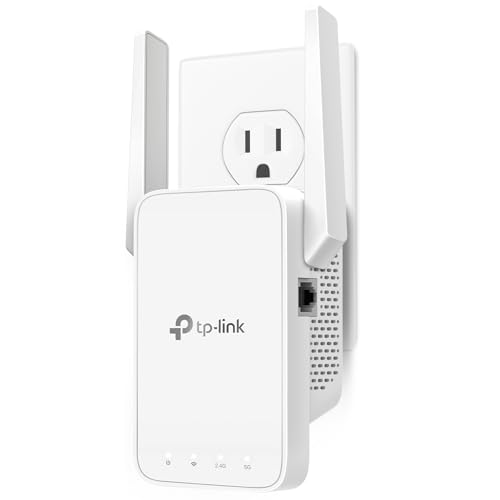
– If coverage is the bottleneck, consider mesh Wi‑Fi or a wired access point; repeating Wi‑Fi over-the-air can reduce real speeds.
– If only one room is slow, a targeted solution (like an access point or cable-backed extender) can be more effective than upgrading everything.
– Keep expectations realistic: “faster internet plan” can’t overcome weak Wi‑Fi signal, and Wi‑Fi specs don’t guarantee real-world throughput.
When upgrading makes sense (clear decision triggers)
Upgrade when you can say “yes” to at least one:
– Near the router, speeds are good; in specific areas, coverage is consistently weak.
– Your router is very old (unsupported bands, outdated radio features, or no ability to manage channels/bands effectively).
– You have multiple simultaneous users/devices and congestion makes performance unpredictable.
Downsides to consider
– Mesh systems cost more than a simple placement tweak.
– Wireless backhaul mesh nodes can create a new congestion point.
– “Spec-chasing” can disappoint if your client device can’t support the router’s higher-efficiency modes.
What can go wrong (and when to stop troubleshooting)
If you test near the router and still get poor speeds, the issue may be your ISP plan, modem limitations, or line problems—not Wi‑Fi. If speeds behave differently by band, it’s usually compatibility, channel quality, or range—not “overall router weakness.”
If a wired Ethernet test shows much higher throughput than Wi‑Fi, the limiting factor is almost certainly wireless (signal/interference), not your internet plan.
Changing channels can help, but in some environments the “best” channel varies by time of day, so results can flip.
If one band is faster than the other, you’re likely dealing with range differences, client/band compatibility, or noise levels specific to that spectrum—not a total Wi‑Fi failure.
– If you test near the router and still get poor speeds, the issue may be your ISP plan, modem limitations, or line problems—not Wi‑Fi.
– If speeds improve on one band but not the other, your problem is likely compatibility, channel quality, or range—not “overall router weakness.”
– If you change channels and it gets worse, revert to automatic channel selection or try a different channel; crowded environments can vary by time of day.
Verdict: do this order for the biggest gains
Start with signal quality (placement + distance + band), then tackle interference (channel/congestion), and only then adjust settings or consider hardware upgrades. This approach prevents wasting time on tweaks when the real limiter is coverage.
Downsides: changing router placement or band/channel settings may require retesting across rooms, and hardware upgrades can cost money—so if your speeds are already fine near the router, avoid unnecessary purchases and focus on the exact bottleneck.
A repeatable troubleshooting sequence—coverage first, then interference, then configuration—reduces the chance you optimize the wrong layer (Wi‑Fi vs ISP).
When near-router tests look good, the probability that the issue is wireless (range/interference) increases sharply versus upgrading hardware immediately.
Quick Wi‑Fi Speed Checklist (scan/save)
– Test speed near the router (coverage check)
– Switch between 5 GHz and 2.4 GHz (band check)
– Reposition router (higher + open space)
– Minimize interference sources (microwaves/cordless phones)
– Use/enable auto channel selection (or manually adjust)
– Update router firmware (per manufacturer instructions)
– If still limited in one area: consider mesh/access point (prefer wired when possible)
FAQ
Why does my Wi‑Fi download speed drop in certain rooms?
Most often it’s distance and signal blockage (walls/metal furniture) or interference that’s worse in that location. Testing near the router vs. the problem room helps confirm which.
Should I always use 5 GHz for faster download speeds?
5 GHz usually offers higher speeds, but it has shorter range and can drop faster through walls. If the problem room is far, 2.4 GHz may provide more usable stability.
Does changing Wi‑Fi channel really improve speed?
It can, especially on crowded 2.4 GHz networks. If your environment is already low-traffic, the benefit may be small—so you’ll want to test after each change.
Is upgrading my router the best solution?
Not necessarily. If the speeds are already good near the router, an upgrade won’t fix coverage/interference issues in other rooms. Hardware changes are most justified when signal and interference can’t be solved with placement and settings.
What’s the quickest way to identify whether it’s Wi‑Fi or my internet plan?
Test with the device near the router, and if possible compare with a wired connection (Ethernet) to the router. Large differences usually point to Wi‑Fi problems; consistently low speeds on wired often point to the ISP/line.
Sources
– [ADD: link or citation to your router manufacturer’s official support page for “firmware update” instructions]
– [ADD: link or citation to your router manufacturer’s documentation for Wi‑Fi band/channel settings]
– [ADD: link or citation to the Wi‑Fi Alliance documentation about 5 GHz vs 2.4 GHz behavior and general Wi‑Fi standards]
– [ADD: link or citation to your ISP/modem documentation on speed limitations and connection troubleshooting steps]
Frequently Asked Questions
What are the quickest ways to improve Wi-Fi download speed at home?
Start by restarting your modem and router and then test again to rule out temporary network issues. Place your router in a central, open location and keep it elevated, away from walls and metal objects, to reduce signal loss. You should also check for Wi‑Fi congestion and switch to a less crowded channel or band (2.4 GHz vs 5 GHz) for faster Wi‑Fi download speed.
How can I optimize my router settings for faster download speeds?
Enable Wi‑Fi standards like 802.11ac or 802.11ax (Wi‑Fi 5/6) and turn on features such as MU‑MIMO if your router supports them. Use a strong Wi‑Fi password to prevent unauthorized users from slowing your network and set up Quality of Service (QoS) to prioritize streaming or downloads. Finally, update your router firmware to ensure better performance and stability.
Why is my Wi‑Fi slow even though my internet plan is fast?
Slow Wi‑Fi download speed is often caused by weak signal strength, router placement, or interference from neighboring networks and devices like microwaves and Bluetooth hardware. Device limitations also matter—older laptops or phones may not support higher Wi‑Fi speeds. Additionally, if your router is overloaded or has outdated firmware, it can become a bottleneck even when your ISP connection is fast.
Which Wi‑Fi band and channel should I use to maximize download speeds?
For maximum Wi‑Fi speed, use 5 GHz (or 6 GHz if available on Wi‑Fi 6E routers) because it typically offers faster speeds at shorter distances. If you need longer range, 2.4 GHz may work better, though it usually delivers slower download speeds and is more crowded. Use a Wi‑Fi analyzer app to find the least congested channel and switch your router to that channel to improve consistency.
What is the best hardware setup to boost Wi‑Fi download speed in larger homes?
If you experience dead zones, consider using a mesh Wi‑Fi system or adding a Wi‑Fi access point instead of relying on a single router. For best results, place mesh nodes where you still have a strong backhaul signal and avoid stretching coverage too far. If possible, connect the main unit to your modem via Ethernet and use wired backhaul (instead of wireless) to preserve high Wi‑Fi download speed.
📅 Last Updated: October 09, 2026 | Topic: How to Improve Wi-Fi Download Speed | Content verified for accuracy and freshness.
References
- https://en.wikipedia.org/wiki/Wi-Fi
- https://en.wikipedia.org/wiki/Wireless_router
- https://www.fcc.gov/consumers/guides/broadband-and-internet-usage
- https://www.cisa.gov/news-events/alerts
- https://www.ncbi.nlm.nih.gov/pmc/
- https://pubmed.ncbi.nlm.nih.gov/?term=wifi+throughput+and+performance+interference
- https://www.nature.com/search?q=Wi-Fi%20performance%20throughput%20interference
- https://scholar.google.com/scholar?q=how+to+improve+wifi+download+speed Google Scholar
- https://scholar.google.com/scholar?q=wi-fi+throughput+factors+channel+interference+bandwidth+settings Google Scholar
- https://scholar.google.com/scholar?q=How+to+Improve+Wi-Fi+Download+Speed Google Scholar