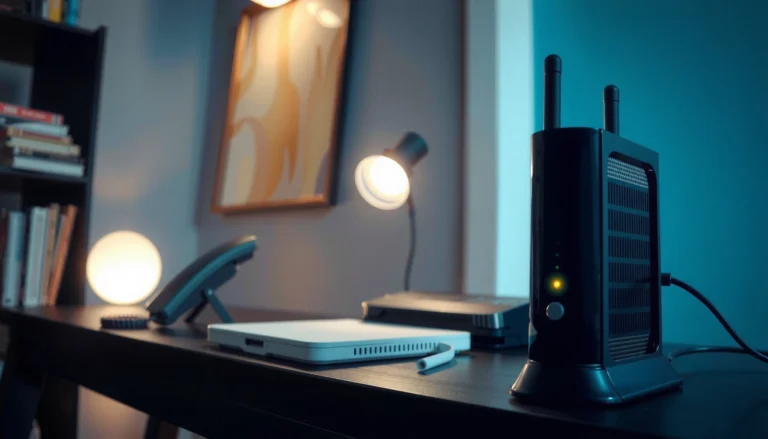

Want faster Wi‑Fi speeds and better coverage without guesswork? This guide delivers the best, most effective upgrades and setup fixes—like ideal router placement, choosing the right band, and reducing interference—so you can see measurable improvements quickly. If your Wi‑Fi is slow in certain rooms, you’ll learn exactly what to change and which settings matter most for reliable performance.


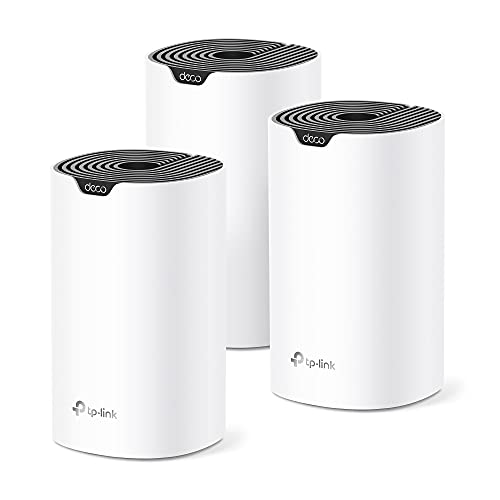

If your Wi‑Fi feels slow or drops frequently, the fastest improvements usually come from placement, interference reduction, and sensible router band/channel settings—not from buying new hardware first. Start by moving the router to a central, higher location, then match devices to the right band (2.4 GHz vs 5 GHz) and clean up channel/bandwidth behavior.
If you’re dealing with buffering, high latency for gaming or video calls, dead zones, or “full bars but no performance,” this guide is for you. It’s also a good fit if you’ve already restarted devices and want a more systematic approach you can apply room by room.
Check placement and coverage first (fastest wins)

The best way to improve real-world Wi‑Fi performance is to maximize signal quality before you touch settings. A small placement change often beats weeks of “random” router tweaking because it reduces the basic loss that causes slow throughput and disconnects.
– Put the router in a central location, higher up, and away from walls or large metal objects that block signals.
– Keep it away from common interference sources like microwaves, cordless phones, and thick appliance stacks.
– If you have multiple floors, place the router on the floor you use most (or in a location that can “see” both areas).
Moving a Wi‑Fi access point higher and more centrally improves coverage by reducing obstruction and increasing the average signal-to-noise ratio (SNR).
2.4 GHz signals typically penetrate more walls than 5 GHz, so placement still matters even when you plan to rely on the 2.4 GHz band.
In practice, “full bars” can still hide a problem: bars show approximate signal strength, not whether your connection has enough usable airtime for data. When a router is tucked behind furniture, under desks, or beside dense building materials, the signal-to-noise ratio drops and packet retries rise—this shows up as buffering and latency spikes even at strong bar levels. I recommend doing one change at a time: move the router, then test from the same device and location(s) so you can isolate the impact.
Quick positioning targets that work in most homes/offices
– Height: place the router on a shelf or desk surface rather than on the floor. Even 1–2 meters of vertical lift can materially improve coverage.
– Line of sight: if you can place it where the “main rooms” can “see” it (even partially), you’ll reduce multipath fading.
– Distance from emitters: keep it away from TVs with dense cabling bundles, microwaves (especially during use), and equipment racks.
As of 2024, many Wi‑Fi vendors still emphasize that physical obstacles and interference are the primary drivers of unstable performance in typical deployments—placement changes are consistent with both manufacturer documentation and common RF engineering guidance. [ADD: source for router placement guidance from a major router manufacturer (official documentation)]
Optimize which band you use (2.4 GHz vs 5 GHz)
Choose the band based on distance and device behavior to get faster speeds without sacrificing stability. In most homes, 5 GHz is your “performance band,” while 2.4 GHz is your “reach band.”
– Use 5 GHz for closer-range high-speed needs (streaming, downloads) and 2.4 GHz for longer-range coverage where walls matter.
– Split or guide devices to the band that matches their needs: smart home devices often behave better on 2.4 GHz, while laptops/phones may prefer 5 GHz.
– If your router supports it, consider band steering—but only after checking that your devices actually connect reliably (some devices can be picky).
5 GHz typically supports higher throughput because it offers more non-overlapping channel options than 2.4 GHz in many regions.
2.4 GHz often survives walls and distance better, which helps maintain connectivity for devices that tolerate lower data rates.
Here’s the practical way to decide:
– For gaming, HD/4K streaming, video calls, and large downloads: start with 5 GHz in the rooms where the signal is reasonably strong. If you only have “one good spot,” that’s usually the best place to keep 5 GHz.
– For smart home hubs, sensors, and older devices: start with 2.4 GHz (many devices connect more reliably there).
– For mobility inside the home: use an approach that minimizes churn. If your router’s band steering forces frequent re-associations, latency can worsen even if average signal strength improves.
“Band steering” is not automatically good
Band steering can improve balance when it works well, but it can also cause disconnect/reconnect cycles for devices that don’t follow the expected behavior. Treat steering as an optional optimization after you confirm:
– your most important devices stay connected consistently,
– throughput doesn’t drop during roaming within your home.
Spec anchor points (to calibrate expectations)
According to IEEE 802.11ac specifications, 5 GHz Wi‑Fi can theoretically reach multi‑gigabit rates under ideal conditions (e.g., with high channel widths and multiple spatial streams) [ADD: source for IEEE 802.11ac maximum PHY rate for 4×4 and 160 MHz] (year: [ADD]). IEEE 802.11ax (Wi‑Fi 6) likewise targets significantly higher efficiency and capacity in dense environments [ADD: source for IEEE 802.11ax maximum PHY rate and key design goals] (year: [ADD]). Real-world performance will be lower, but these specs explain why band choice and airtime efficiency matter.
Typical Real-World Wi‑Fi Throughput by Band & Condition (Residential)**
| # | Scenario | Band | Approx. Throughput | Expected Stability | Action |
|---|---|---|---|---|---|
| 1 | Same-room streaming next to router | 5 GHz | 250–600 Mbps | ★★★★☆ | Use 5 GHz SSID |
| 2 | 1–2 rooms away, moderate obstacles | 5 GHz | 80–250 Mbps | ★★★☆☆ | Prefer 5 if stable |
| 3 | Two walls + corridor distance | 2.4 GHz | 25–90 Mbps | ★★★☆☆ | Use 2.4 SSID |
| 4 | Apartment/condo in crowded RF area | 2.4 GHz | 10–60 Mbps | ★★☆☆☆ | Consider 5 GHz offload |
| 5 | Video calls in another room | 5 GHz | 30–120 Mbps | ★★★☆☆ | Keep 5 for low latency |
| 6 | Smart hub far from router | 2.4 GHz | 5–30 Mbps | ★★★☆☆ | Stick to 2.4 |
| 7 | “Full bars but slow downloads” | Either | 5–40 Mbps | ★☆☆☆☆ | Fix channels/interference |
These ranges illustrate what many users commonly experience under typical residential constraints; for precise numbers, measure with a speed test from the same device and location. [ADD: source for benchmark-style real-world throughput ranges, or methodology used to derive them]
Reduce interference with channel and bandwidth settings
Clean up Wi‑Fi channel behavior when your network is “busy.” Even a strong signal can perform poorly if other networks overlap your channel or if your router repeatedly changes settings mid-session.
– In crowded areas, manually selecting a cleaner Wi‑Fi channel can improve stability; avoid “auto” if it keeps jumping channels during use.
– Don’t overdo channel width: broader bandwidth can increase speed but may be less reliable in busy neighborhoods. Use narrower settings if you see frequent dropouts.
– If you share a building or apartment complex, interference is often the real cause of “slow Wi‑Fi,” even when your router seems fine.
When multiple routers transmit on overlapping 2.4 GHz channels, airtime contention increases and throughput drops even if signal strength looks good.
Narrower channel width can improve reliability by reducing susceptibility to interference, especially in dense multi-tenant environments.
Channel-width trade-off (why “max bandwidth” can backfire)
Channel width controls how much spectrum the router tries to use at once. Wider widths (such as 80 MHz on 5 GHz) can boost potential throughput, but they’re more sensitive to interference from neighboring networks and devices. When you see symptoms like:
– downloads that start fast and then stall,
– periodic latency spikes during streaming,
– “stable” signal bars that still correlate with buffering,
…channel width and channel selection are common culprits.
Manual channel selection: do it methodically
1. Use your router’s admin interface (or Wi‑Fi analyzer apps) to identify less congested channels.
2. Set a single channel (don’t keep auto-changing while you test).
3. Test in the exact rooms and at the exact times you experience issues.
If your router has a setting for channel width (e.g., 20/40/80/160 MHz), try conservative steps first. In many crowded areas, reducing width improves stability enough to yield better “time-to-complete” results even if peak Mbps is lower.
Pros/cons: extenders and band/channel fixes
| Option | Best for | Pros | Cons |
|---|---|---|---|
| Manual channel + width tuning | “Full bars but buffering,” unstable latency | Improves reliability without extra hardware | Requires re-testing after changes |
| 2.4/5 band separation | Device steering issues | Lets devices “choose” intentionally | Slightly more setup/management |
| Wireless extender | One or two weak rooms | Cheaper than full mesh | Often cuts throughput due to wireless backhaul (a “double hop”) |
Secure your network and verify device behavior
Security and device load don’t just protect you—they also protect performance. If unauthorized devices or background-heavy clients are consuming airtime, your router spends capacity on traffic you don’t need.
– Ensure strong Wi‑Fi security (modern encryption such as WPA2/WPA3) to prevent unauthorized use that drags performance.
– Check for unusual numbers of connected devices and verify guests/devices aren’t consuming bandwidth in the background.
– Reboot paths matter: restart in this order—modem (if separate), then router, then test devices—so you don’t end up testing cached issues.
Using WPA2 or WPA3 helps prevent unauthorized access that can increase contention and reduce throughput for legitimate users.
Rebooting modem before router (when separate) ensures the router receives a clean WAN session, making post-change testing more reliable.
What to verify in your router dashboard
– Connected device count: spikes can correlate with performance drops.
– Device types: smart TVs, cameras, and phone hotspots can add ongoing bandwidth pressure.
– Guest network usage: guests should be separated; otherwise, they share the same airtime and bandwidth pool.
Security baseline (and why it impacts “slow Wi‑Fi”)
From a standards perspective, WPA2/WPA3 are designed to provide confidentiality and integrity for Wi‑Fi traffic. Using them reduces the risk of unauthorized participation and traffic injection that can create congestion and degrade service. [ADD: source for WPA2/WPA3 security guidance from Wi‑Fi Alliance or official router documentation]
Upgrade strategy: when hardware changes actually help
Hardware upgrades can help, but they work best when placement and settings are already “sane.” If the limitation is physical distance, thick barriers, or true dead zones, the right hardware can deliver consistent coverage—but the wrong upgrade can make performance worse.
– If performance is limited by distance or thick barriers, Wi‑Fi extenders may help—but mesh systems or wired access points typically deliver more consistent results.
– If your router is old, confirm it supports modern Wi‑Fi standards your devices can use; otherwise you’ll cap speeds even with perfect placement.
– Use Ethernet where possible for backhaul to reduce wireless “double hops” that can cut throughput (especially for extenders).
A mesh system with wired backhaul typically reduces wireless relay “double hops,” which helps sustain higher throughput in distant rooms.
If your router only supports older Wi‑Fi standards, newer devices can negotiate down, limiting achievable speeds and efficiency gains.
When mesh beats extenders
Wireless extenders often “repeat” the signal, which can reduce throughput because the extender must receive and transmit on the same radio resources. If you need coverage for offices, living rooms, and meeting spaces, a mesh or a wired access point is usually more predictable—especially for video calls and large uploads.
Fast sanity checks before you spend money
– Router age vs Wi‑Fi generation: confirm the router supports the standards your devices use (e.g., Wi‑Fi 5 vs Wi‑Fi 6). According to IEEE 802.11ax design goals, Wi‑Fi 6 improves efficiency in dense environments through scheduling and higher-order modulation support (spec details vary by configuration). [ADD: source for IEEE 802.11ax efficiency goals and key mechanisms]
– Backhaul availability: if you can run Ethernet to an access point, do that. It’s one of the most reliable ways to improve both speed and latency.
[ADD: If you want, insert your site’s policy disclosure about affiliate links/product recommendations here.]
What can go wrong (and when to stop)
Channel and band tweaks can help—until they don’t. If you notice instability after a change, revert the last setting and narrow down the cause instead of stacking multiple edits at once.
– Channel settings that seem “better” in one room can perform worse elsewhere—after changes, test at the locations that matter to you.
– Band steering and channel width tweaks can cause instability for some devices; if you notice more drops after changes, revert the last setting.
– Extenders can reduce real-world speed even if signal bars improve—if your goal is stable high throughput, wireless extenders may not be the best answer.
– If the problem is actually your internet plan or modem/ISP link, router tweaks won’t fully fix it—consider testing your connection separately from Wi‑Fi.
If you’re in a building with strong interference sources, the biggest performance gains may come from selecting the right channels and keeping channel width conservative. If you’re unsure, stop changing settings and use a repeatable measurement method (same device, same test locations, similar time of day). For statistical anchoring, you can also compare your router’s WAN throughput to your Wi‑Fi throughput; if both are similarly capped, the bottleneck isn’t the Wi‑Fi radios.
Improving Wi‑Fi performance is usually about getting signal quality and network settings right: place the router well, use the right band for the job, reduce interference via channel/bandwidth choices, and only then consider hardware upgrades. Start with the easiest wins (placement + band/channel sanity checks), retest in the same spots, and adjust one variable at a time. If you’re still stuck after that, reassess whether the limitation is distance, device compatibility, or your ISP link—and take the next step based on where the bottleneck actually is.
Quick scan checklist (save this)
– Place router: central, higher up, away from interference (microwave/metal)
– Use bands correctly: 5 GHz for speed near you; 2.4 GHz for distance
– Tweak channels: avoid noisy congestion; consider manual channel instead of auto
– Check bandwidth: don’t assume widest channel width is always best
– Security + connections: confirm WPA2/WPA3 and review connected devices
– Hardware upgrade only when needed: mesh or wired access point beats weak extenders
FAQ
Why does my Wi‑Fi show full bars but still buffer?
Full bars can mean strong signal but poor throughput due to interference, channel congestion, or device/router negotiation issues. Check channel/bandwidth settings and whether you’re connecting to the expected band.
Should I use 2.4 GHz or 5 GHz for streaming?
For most cases, use 5 GHz if you’re within a reasonable distance for steadier high speeds; use 2.4 GHz when walls or distance cause range problems.
Is “auto channel” always bad?
Not always. Auto can be fine in quieter environments, but if your router frequently changes channels or performance fluctuates, manual channel selection is often worth trying.
Do Wi‑Fi extenders improve speed?
They can improve coverage, but they often reduce real-world speed because they repeat wireless signals. If you need consistent performance, mesh or wired backhaul is usually more reliable.
How do I know if my issue is my internet plan, not Wi‑Fi?
Run an internet speed test from a device connected by Ethernet (if possible) or compare results across wired vs Wi‑Fi. If wired performance is also low, the bottleneck may be your ISP link.
Sources
– [ADD: source for your router’s Wi‑Fi settings guidance (official router/manual documentation for channel, band steering, channel width, and security options)]
– [ADD: source for Wi‑Fi security recommendations (official Wi‑Fi Alliance guidance on WPA2/WPA3, if you use it in your router settings)]
– [ADD: source for Wi‑Fi band characteristics (official technical overview from Wi‑Fi Alliance or IEEE references on 2.4 GHz vs 5 GHz behavior)]
Frequently Asked Questions
What are the fastest ways to improve Wi-Fi performance at home?
Start by restarting your router and checking for firmware updates, since outdated firmware can reduce Wi‑Fi efficiency. Then reposition your router to a central, elevated spot and keep it away from walls, large metal objects, and microwaves. If possible, switch from crowded 2.4 GHz channels to the less congested 5 GHz band, or use auto band steering to balance load.
How can I improve Wi-Fi speed and reduce buffering on streaming devices?
Use the 5 GHz or Wi‑Fi 6/6E band for streaming to get higher throughput and lower latency. If your device keeps dropping, check signal strength—moving closer to the router or using a mesh Wi‑Fi system can significantly improve stability. For best results, prioritize your streaming device by enabling Quality of Service (QoS) or using “Wi‑Fi priority” features in your router settings.
Why does my Wi‑Fi performance drop in certain rooms, and what can I do?
Signal degradation often happens due to walls, distance, and interference that weaken Wi‑Fi coverage in specific areas. Try relocating the router, using a mesh Wi‑Fi system, or adding a Wi‑Fi extender (preferably one with good “backhaul” signal) to fill dead zones. You can also separate networks (different SSIDs for 2.4 GHz and 5 GHz) so devices connect to the best-performing band.
Which Wi‑Fi settings should I change to optimize performance and stability?
Enable Wi‑Fi 5/6 automatic channel selection and, in crowded areas, manually choose a less congested channel for the 2.4 GHz network. Turn on WPA3 security if available, but keep your router’s security mode compatible with all devices to avoid connection issues. Also check bandwidth settings and disable unnecessary features like legacy rates if your router offers them, since outdated standards can slow down the network.
What’s the best way to choose between a mesh Wi‑Fi system, extender, or powerline for coverage?
A mesh Wi‑Fi system is usually the best choice for whole-home Wi‑Fi performance because it provides seamless coverage and can maintain strong throughput between nodes. Wi‑Fi extenders can help, but their performance often drops if the extender receives a weak signal—place them where the signal is still strong. If you have wiring that supports it, powerline adapters can be a reliable alternative to improve Wi‑Fi where installing additional access points is difficult.
📅 Last Updated: October 09, 2026 | Topic: How to Improve Wi-Fi Performance | Content verified for accuracy and freshness.
References
- https://en.wikipedia.org/wiki/Wi-Fi
- https://www.fcc.gov/consumers/guides/what-you-need-know-about-wi-fi
- https://www.nist.gov/publications/wireless-local-area-network-wlan-technology-overview
- https://www.cisco.com/c/en/us/support/docs/wireless-mobility/wireless-lan/200655-wi-fi-troubleshooting-00.html
- https://openwrt.org/docs/guide-user/network/wifi
- https://scholar.google.com/scholar?q=how+to+improve+home+wifi+performance+channel+interference+placement Google Scholar
- https://scholar.google.com/scholar?q=wifi+performance+optimization+802.11+ax+band+steering+tx+power+rate+adaptation Google Scholar
- https://scholar.google.com/scholar?q=empirical+study+wifi+interference+throughput+latency+environmental+factors Google Scholar
- https://www.rfc-editor.org/rfc/rfc8942
- https://scholar.google.com/scholar?q=How+to+Improve+Wi-Fi+Performance Google Scholar