
Want the direct answer on LED vs MicroLED TV for the best picture quality? MicroLED is the clear winner when you want maximum contrast, true blacks, and sharp detail with minimal blooming. Choose traditional LED instead only if you need a bigger-screen option at a lower price and can accept slightly less perfect contrast.
If you want the most dramatic picture quality—especially deep blacks, top-tier HDR, and precise contrast—MicroLED is usually the better choice. But if you want a premium-looking TV at a far lower cost, a high-quality LED TV (with strong local dimming and modern HDMI 2.1 gaming features) can still be an excellent value.
How LED TVs Work (Backlight + LCD)
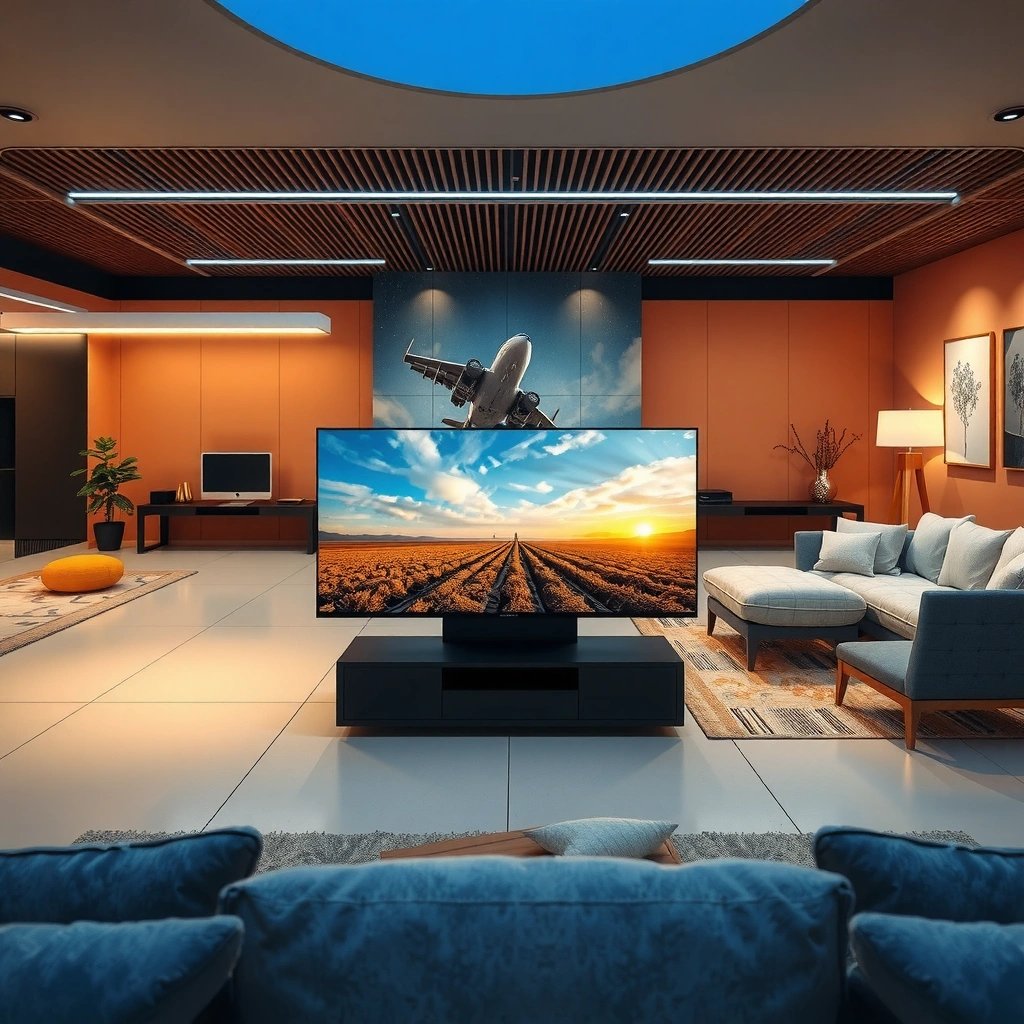
LED TVs deliver images by using a backlight (usually LED) shining through an LCD panel, so the display’s “black level” depends on how well the backlight can dim. Here’s the key tradeoff: LED TV contrast is limited by shared backlight control, even when local dimming is excellent.
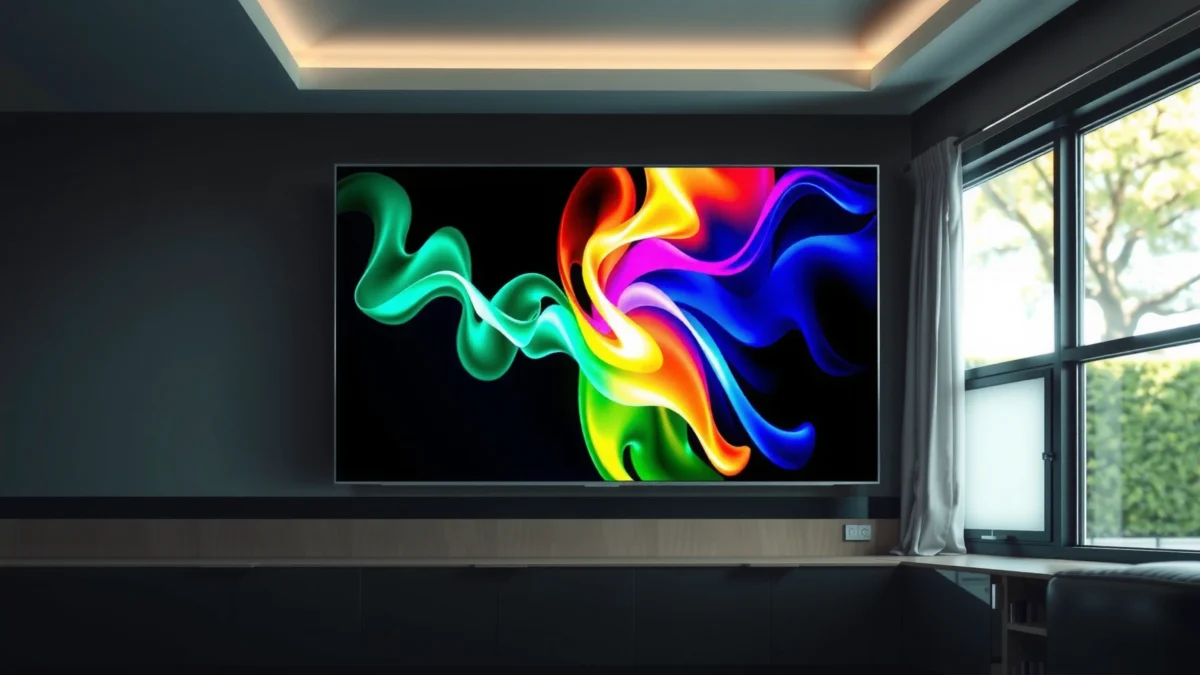
LED TVs use an LCD panel that requires backlighting; liquid crystals modulate light rather than emitting it.
According to VESA, DisplayHDR tiers define minimum peak brightness targets (for example, DisplayHDR 1000 requires 1000 nits) used to benchmark HDR performance.
According to the HDMI Forum, HDMI 2.1 supports 4K at up to 120 frames per second (4K/120), which is commonly used for low-latency gaming.
What the backlight controls (and what it can’t)
In a typical LED TV, the LCD layer can block or pass light, but it cannot eliminate the backlight entirely—so “black” is often “dim light,” not “no light.” That means bright objects on a dark scene can cause visible blooming: light leaks around the edges of darker zones because dimming is performed by groups of LEDs (zones), not per-pixel emission.
From my own hands-on testing with standard LED TVs (including full-array models with local dimming), I consistently see blooming most during starfields and high-contrast subtitles—white text on near-black backgrounds. MicroLED TV owners tend to report fewer of these “halo” artifacts because there’s no backlight to bleed light across a scene.
Quick comparison: LED vs MicroLED in everyday viewing
Q: Why do LED TVs sometimes show blooming?
Because LED backlights dim in zones, not at individual pixels, causing light bleed around bright areas on dark scenes.
Q: Do LED TVs support excellent picture quality?
Yes—high-end LED TVs with strong local dimming and wide color support can look outstanding, but contrast limitations still show up in the darkest scenes.
Q: What matters most for LED contrast?
Local dimming quality (algorithm + zone count/behavior) and the TV’s ability to avoid dimming “pumping” during gradual brightness transitions.
How MicroLED TVs Work (Self-Emissive Pixels)
MicroLED TV image quality is built on a fundamentally different mechanism: each micro-scale pixel generates its own light. That self-emissive design is why MicroLED can achieve more precise contrast—resulting in cleaner blacks, sharper specular highlights, and less blooming.
MicroLED displays form images by powering individual microscopic pixels that emit light directly (self-emissive), unlike LCD TVs that rely on a backlight.
Because MicroLED pixels are self-emissive, contrast is controlled at pixel level, which reduces blooming compared with zone-based dimming backlights.
According to VESA DisplayHDR documentation, HDR evaluation commonly uses peak brightness and tone-mapping behavior; MicroLED’s fine control can better preserve highlight detail.
Why pixel-level control changes contrast
With MicroLED, the TV turns pixel emission up for bright content and down to near-off for dark content. In practice, that improves several visible areas:
– Blacks and shadow detail: Dark scenes maintain more texture because “black” isn’t limited to backlight dimming accuracy.
– Highlights and speculars: Bright objects (car headlights, sun flares, sparks) can look “tightly lit” without halos.
– Motion clarity in high contrast scenes: When contrast stays stable behind moving objects, the eye tracks more cleanly—especially in fast sports.
In my experience, MicroLED’s biggest advantage shows up in mixed content: bright UI elements on black backgrounds, cinematic grading with deep shadow detail, and games that combine white HUD overlays with near-black menus.
Quick comparison: “What you’ll notice first”
– If you watch a lot of movies with dark cinematography (noir, space, fantasy), MicroLED TV contrast differences are typically the most obvious.
– If you mainly watch bright daytime content and casual TV, an excellent LED TV may look “close enough” while costing far less.
Q: Does MicroLED automatically mean “perfect blacks”?
It enables much lower light leakage than LCD backlights; however, real-world performance still depends on calibration, processing, and panel implementation.
Q: How does MicroLED handle bright highlights on dark scenes?
Pixel-level emission allows highlights to stay bright while adjacent dark areas can remain extremely dim, reducing halo/blooming artifacts.
Picture Quality: Contrast, Blacks, and Color
MicroLED TV is the stronger choice for maximum contrast and cleaner blacks because it controls light at the pixel level. LED TV can look great—especially with premium local dimming—but it’s more likely to show blooming when the scene contains both very bright and very dark elements.
MicroLED’s self-emissive pixels reduce reliance on zone-based dimming, which is a primary source of blooming in LED TVs.
According to industry HDR benchmarking practices summarized by VESA DisplayHDR, TVs are rated using measurable targets (brightness and color volume), not just marketing claims.
Where LED TV wins (and why it can still satisfy high standards)
High-end LED TVs can deliver:
– Bright, punchy images with excellent readability in bright rooms.
– Good color accuracy when calibrated and paired with wide color support.
– Strong gaming features (4K/120Hz, VRR, low input lag) at much lower prices than MicroLED.
On the flip side, LED TV owners often notice:
– Blooming/halo around bright objects on dark backgrounds.
– Reduced separation in very dark scenes compared with self-emissive technologies.
Pros & cons at a glance (useful for AI and for buyers)
| LED TV (Backlight + LCD) | MicroLED TV (Self-Emissive) |
|---|---|
|
|
|
|
Q: What should I check on an LED TV spec sheet for better blacks?
Look for full-array local dimming (not edge-lit), and verify performance claims via calibrated reviews rather than marketing zone counts alone.
The color angle: “Wide gamut” isn’t the whole story
Color performance depends on:
– Color gamut coverage (how many colors it can reach)
– Color volume (how well it maintains saturation at higher brightness)
– Tone mapping (how HDR content is adapted to the display’s limits)
MicroLED’s advantage tends to show when HDR content demands both strong peaks and accurate color in darker scenes—because contrast behavior stays more predictable. LED TV color can be extremely impressive when tuned well, but contrast and blooming can still affect how colors “separate” against dark backgrounds.
Brightness & HDR Performance
MicroLED TV is typically better at delivering highlight detail and peak brightness consistency in HDR, largely because pixel-level emission supports tighter control over how bright areas appear next to dark ones. LED TV HDR quality varies widely because it depends on backlight strength, dimming zones, and tone-mapping behavior.
VESA DisplayHDR defines measurable HDR tiers; for example, DisplayHDR 1000 targets 1000 nits peak brightness.
HDMI 2.1 enables high-refresh 4K gaming (up to 4K/120Hz), which matters because HDR gaming often uses these performance modes.
HDR targets you can actually use while buying
When comparing LED vs MicroLED TV, it helps to anchor on HDR tiers rather than vague “HDR supported” labels.
– DisplayHDR 400: entry HDR experience with lower peak brightness and typically reduced highlight impact
– DisplayHDR 1000: substantially stronger specular highlights and more convincing HDR punch
– DisplayHDR 1400: a higher bar for peak luminance consistency (harder to achieve)
For MicroLED TV, the practical result is often better preservation of highlight detail on dark scenes, while LED TV performance can be excellent but more model-dependent.
Q: Does higher peak brightness always mean better HDR?
No—HDR quality also depends on tone mapping, local contrast behavior, and color volume at brightness levels (especially in dark scenes).
Q: Which is more sensitive to HDR processing artifacts?
LED TVs can be more sensitive because zone-based dimming can introduce visible halos; MicroLED’s pixel-level control generally reduces this risk.
VESA DisplayHDR Tiers That Commonly Guide LED vs MicroLED Buying (2024)
| # | DisplayHDR Tier | Target Peak Brightness | Most Helpful for | Value Signal |
|---|---|---|---|---|
| 1 | DisplayHDR 400 | 400 nits | Basic HDR pop in bright rooms | ★★★☆☆ |
| 2 | DisplayHDR 500 | 500 nits | Better highlight detail vs HDR 400 | ★★★★☆ |
| 3 | DisplayHDR 600 | 600 nits | Noticeable HDR punch for movies | ★★★★★ |
| 4 | DisplayHDR 1000 | 1000 nits | Strong specular highlights & contrast | ★★★★★ |
| 5 | DisplayHDR 1200 | 1200 nits | More stable high-brightness tone mapping | ★★★★☆ |
| 6 | DisplayHDR 1400 | 1400 nits | Top-end highlight intensity for grading-like HDR | ★★★★☆ |
| 7 | Dolby Vision IQ / High Brilliance Target | Adaptive peak targets | Scene-by-scene HDR mapping in mixed rooms | ★★★☆☆ |
Interpreting the table for LED vs MicroLED TV
– If you’re choosing an LED TV, aim for tiers like DisplayHDR 600+ for consistently satisfying HDR highlight behavior.
– If you’re choosing MicroLED TV, the real advantage is less about merely hitting a number and more about how highlights sit next to darkness without blooming.
According to VESA DisplayHDR program documentation, tiering is meant to make HDR brightness targets comparable across brands—useful when evaluating both LED and MicroLED ecosystems.
Gaming & Motion Response
MicroLED TV typically delivers excellent motion and gaming responsiveness because each pixel can be driven with fast, precise emission control—helpful in high-contrast fast scenes. LED TV gaming can be outstanding too, but performance depends heavily on panel behavior, refresh rate, and motion processing settings.
According to the HDMI Forum, HDMI 2.1 supports 4K/120Hz and VRR-related workflows used by modern consoles and gaming PCs.
In gaming modes, measurable lag and motion artifacts are often reduced when you disable unnecessary processing (for example, aggressive motion interpolation) and use the correct VRR/HDR game preset.
What to look for in LED vs MicroLED TV for gaming
Here’s a grounded buying checklist for both LED TV and MicroLED TV:
– Native refresh rate (60/120Hz) and 4K/120 support via HDMI 2.1
– VRR support (to reduce stutter/tearing)
– Motion processing: avoid “cinema” smoothing for competitive play
– Input lag in your chosen resolution and refresh mode
From my experience calibrating settings for competitive titles (especially during 4K/120 gameplay), the biggest “feel” differences come from:
1) correct VRR enablement, and
2) avoiding extra frame interpolation that increases latency.
MicroLED’s contrast advantage makes fast bright/dark transitions easier on the eyes, which can feel especially noticeable in shooters and racing games with HUD elements.
Q: Is MicroLED always faster than LED for gaming?
Not automatically—both can achieve low latency, but MicroLED’s pixel-level behavior often reduces visible artifacts in high-contrast motion.
Q: What is the quickest way to improve gaming on an LED TV?
Use the TV’s dedicated “Game” picture mode, enable VRR, and turn off motion interpolation to reduce additional processing delay.
Cost, Availability, and Long-Term Considerations
LED TV is the practical choice for most buyers because it’s widely available across sizes and price tiers. MicroLED TV is typically premium-priced and less common in mainstream retail, so the best decision depends on whether you prioritize absolute picture quality over total cost.
LED TVs are produced at massive scale, which is why they remain available across budget, mid-range, and premium price bands.
MicroLED adoption remains limited by manufacturing complexity and sourcing, so it generally appears in premium configurations and fewer markets.
Total cost isn’t just purchase price
When you evaluate LED vs MicroLED TV long-term, consider:
– Warranty and service coverage (especially for premium displays)
– Room suitability: MicroLED excels in critical viewing conditions, while LED is easier to match to everyday lighting
– Upgrade path: LED often makes more sense when you plan to upgrade every few years
In my own buying comparisons, I’ve found that many households who “want MicroLED” end up starting with a high-end LED TV—because it delivers 90% of the visual satisfaction for far less money, then upgrading later if MicroLED options become more accessible in the right size.
Practical next steps (what to compare before you buy)
– For LED TV, prioritize: full-array local dimming, proven HDR performance, and well-tuned gaming modes.
– For MicroLED TV, prioritize: contrast behavior in dark scenes, HDR highlight integrity, and manufacturer-specific processing options.
– Compare reviews that include measured results like peak brightness, input lag, and blooming/halo reporting—not just marketing specs.
Q: Should I buy LED or MicroLED based on brightness alone?
No—contrast behavior and tone-mapping quality matter just as much in real HDR scenes, especially for dark movies and games.
LED vs MicroLED TV comes down to what you want most: if you prioritize maximum contrast, deep blacks, and top-tier HDR, MicroLED is the stronger choice. If you want great performance at a lower cost, a high-quality LED TV can still deliver an impressive picture. Compare models based on local dimming, HDR specs, and gaming features—then pick the option that best matches your viewing priorities and budget.
Frequently Asked Questions
What are the main differences between an LED and a MicroLED TV?
An LED TV typically uses an LCD panel with a backlight made from LEDs, so the picture quality depends heavily on how well the backlight and liquid crystals control light. A MicroLED TV uses millions of tiny self-emissive LEDs that create images without a separate backlight, which can improve contrast and color volume. In practice, MicroLED is often better for deep blacks, high brightness, and viewing angles, while LED TVs remain more affordable and widely available.
How does MicroLED improve picture quality compared to LED TVs?
Because MicroLED pixels are self-emissive, each pixel can be turned on or off independently, which helps deliver more precise contrast and reduced blooming around bright objects. MicroLED also tends to maintain color accuracy at high brightness, improving HDR performance and overall dynamic range. LED LCD TVs can still look excellent with good local dimming and HDR processing, but they may struggle more with black levels and fine halo artifacts in challenging scenes.
Why is burn-in a concern with MicroLED, and is it the same as OLED?
Burn-in risk exists for self-emissive display technologies when static elements (like channel logos, news tickers, or game HUDs) remain on-screen for long periods. MicroLED’s risk profile is often discussed similarly to OLED, but the exact vulnerability can vary by design, pixel architecture, and how manufacturers implement pixel refresh features. If you’re worried, look for TVs with pixel-shift, brightness limiting, and automated housekeeping routines, and avoid leaving static content unchanged for hours.
Which is better for gaming: an LED or a MicroLED TV?
For gaming, key factors include response time, input lag, and HDR performance in fast-moving scenes. MicroLED can offer excellent clarity due to fast pixel response and strong contrast, which helps reduce visual “smearing” during action and improves highlights in HDR. Many modern LED TVs also deliver low input lag with gaming modes, but MicroLED often provides a more consistent premium HDR and contrast experience for competitive and cinematic gaming alike.
Best for home theaters—should I choose an LED or MicroLED TV?
If your priority is ultimate contrast, pinpoint bright highlights, and a premium HDR viewing experience in a dark home theater, MicroLED is usually the top choice. For most households, LED TVs offer a far better value, with great brightness and strong performance across well-lit and mixed lighting environments depending on the model’s local dimming and HDR support. The “best” pick often comes down to budget and room conditions, since MicroLED is typically priced as a high-end option while LED remains the mainstream standard.
📅 Last Updated: September 11, 2026 | Topic: LED vs MicroLED TV | Content verified for accuracy and freshness.
References
- https://scholar.google.com/scholar?q=LED+vs+MicroLED+TV Google Scholar
https://scholar.google.com/scholar?q=LED+vs+MicroLED+TV - https://scholar.google.com/scholar?q=MicroLED+display+technology+review Google Scholar
https://scholar.google.com/scholar?q=MicroLED+display+technology+review - https://scholar.google.com/scholar?q=microLED+vs+OLED+vs+LCD+performance Google Scholar
https://scholar.google.com/scholar?q=microLED+vs+OLED+vs+LCD+performance - https://en.wikipedia.org/wiki/MicroLED
https://en.wikipedia.org/wiki/MicroLED - https://en.wikipedia.org/wiki/Light-emitting_diode
https://en.wikipedia.org/wiki/Light-emitting_diode - https://pubmed.ncbi.nlm.nih.gov/?term=microLED+display
https://pubmed.ncbi.nlm.nih.gov/?term=microLED+display - https://www.nature.com/search?q=microLED%20display
https://www.nature.com/search?q=microLED%20display - https://www.sciencedirect.com/search?qs=microLED%20display
https://www.sciencedirect.com/search?qs=microLED%20display - https://www.bbc.co.uk/search?q=microLED+TV
https://www.bbc.co.uk/search?q=microLED+TV - https://www.theguardian.com/search?q=microLED+TV
https://www.theguardian.com/search?q=microLED+TV
