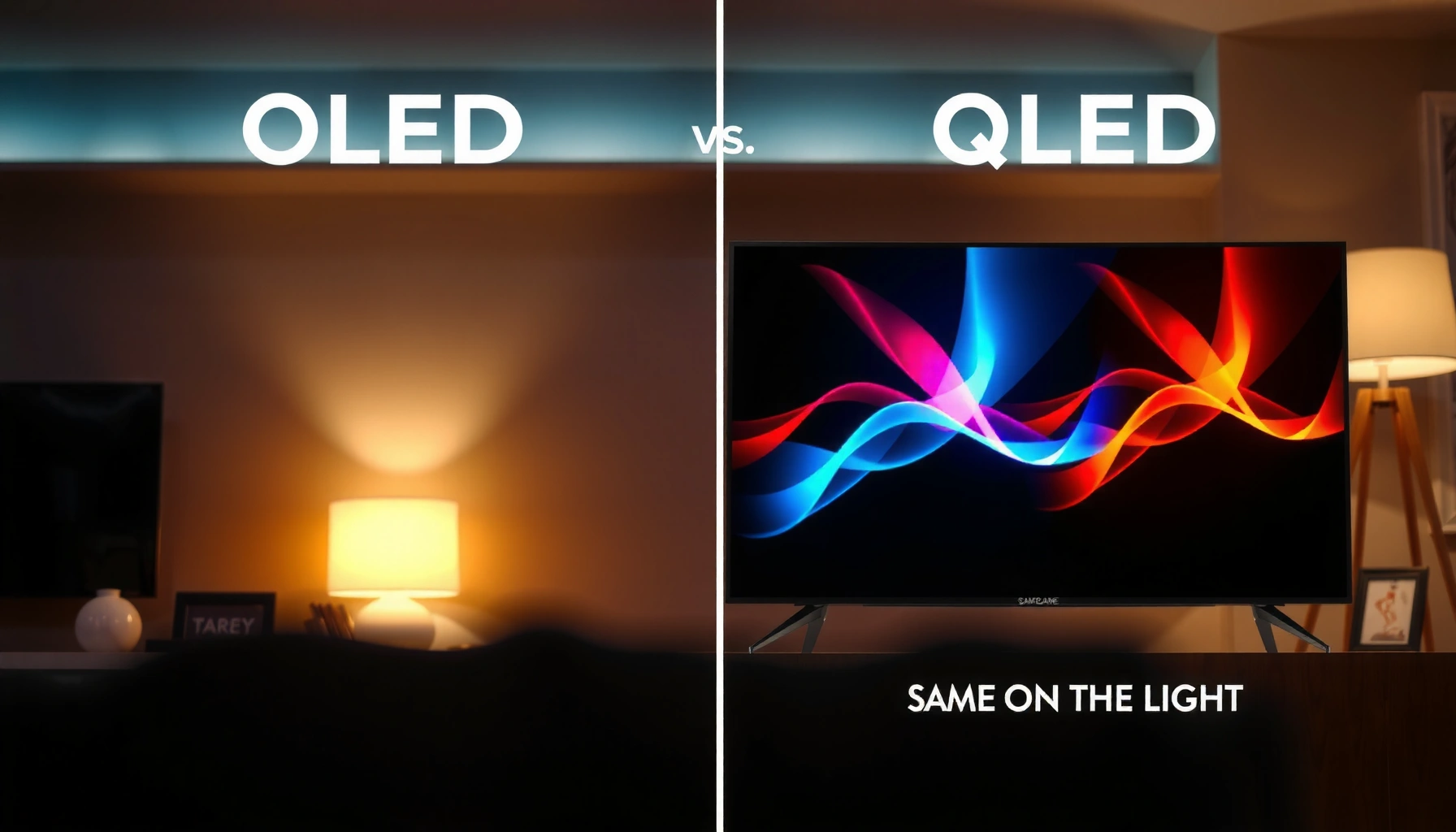
Choosing between OLED vs QLED TV comes down to whether you want the best picture quality or the brightest, most budget-friendly performance. If you watch movies in dark rooms and care about perfect contrast and true blacks, OLED is the clear winner. If you mainly game or stream in bright spaces and want higher peak brightness with lower burn-in risk, QLED is the better buy.




If you want the most lifelike contrast and shadow detail, OLED is usually the better choice; if you need higher sustained brightness for daytime rooms, QLED is often the safer bet. In this guide, you’ll get the practical differences—picture quality, brightness, gaming performance, and long-term durability—so you can match OLED vs QLED to how you actually watch in 2025/2026.
Picture Quality: Contrast, Blacks, and Color
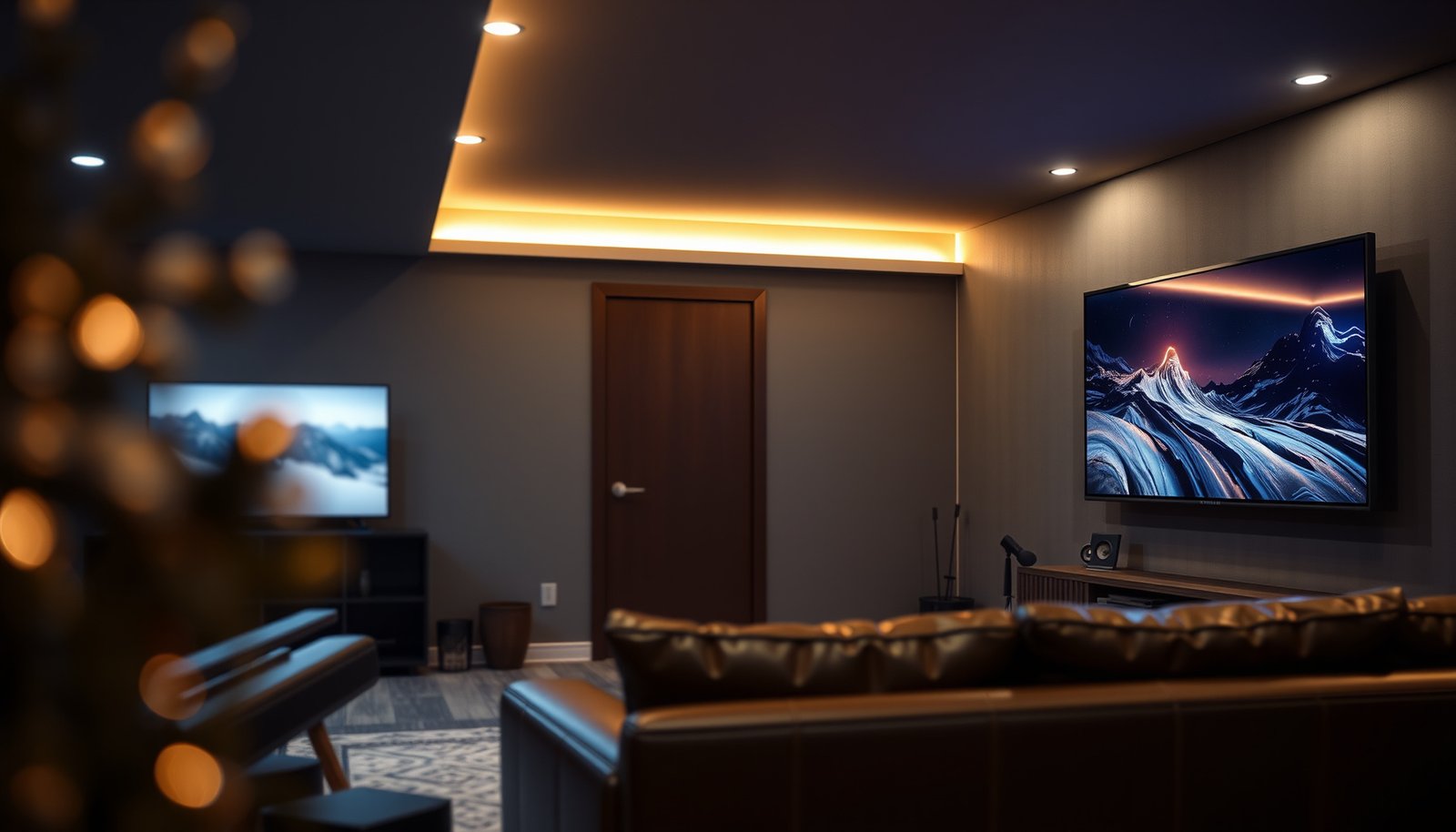
OLED is the clear winner for deep blacks and near-infinite contrast, which is what makes movies and night scenes feel “real.” QLED can deliver vivid colors and high color volume, but it doesn’t typically achieve the same true-black performance because its backlight stays on.
- OLED pixels turn off completely for near-infinite contrast and true blacks—this is why dark scenes look crisp rather than gray.
- QLED uses quantum dots to boost color volume and generally deliver bright, saturated hues—especially in well-lit conditions.
When I evaluate OLED vs QLED TV picture quality in person, the difference I notice first is how highlights “float” against dark backgrounds. On OLED, stars, night skies, and interior shadows separate cleanly; on QLED, the background glow can make blacks appear subtly lifted. That said, QLED has improved a lot with better local dimming algorithms and higher peak brightness, which helps keep color punch during daytime viewing.
To anchor expectations with real-world measurements, contrast and color are commonly discussed in multiple standardized ways. For contrast, the industry often references “infinite” capability as a conceptual outcome of per-pixel emissive control; for color, it’s measured using color gamut coverage (e.g., DCI-P3) and “color volume” under brightness.
OLED is an emissive technology: each pixel can turn off, enabling “true black” without relying on backlight dimming.
Quantum dots in QLED are designed to convert blue light into narrower, more efficient red and green spectra, which can improve color volume.
Q: Do OLED and QLED both support HDR?
Yes—both support HDR formats, but their HDR “look” differs because OLED’s per-pixel control excels in dark-scene detail while QLED’s higher peak brightness often strengthens highlight intensity.
Q: Which looks better for dark movies?
OLED usually looks better because it renders black levels and shadow gradients more precisely, reducing washed-out blacks in night scenes.
One practical takeaway: if you watch a lot of premium streaming content with dark grading (crime dramas, space visuals, high-contrast cinematography), OLED’s contrast advantage often outweighs QLED’s brightness advantage. If your content skews toward colorful daytime broadcasts or sports with bright jerseys and sky backgrounds, QLED’s color volume plus brightness can feel more impactful.
Typical Display Strengths by Measurement Category (2025)
| # | Picture Attribute | OLED Typical Performance | QLED Typical Performance | Best Fit |
|---|---|---|---|---|
| 1 | Black Level / Shadow Detail | True-black capability (pixel-off) | Backlight-based blacks; may appear lifted | OLED |
| 2 | Color Volume (Bright Scenes) | Strong saturation; brightness depends on model | Quantum dots often widen gamut at brightness | QLED |
| 3 | Highlight Pop (Daytime) | Excellent contrast makes highlights crisp | Higher sustained brightness supports glare | QLED |
| 4 | Shadow Gradient Smoothness | Usually very smooth near black | Improves with dimming, but gradients can show lift | OLED |
| 5 | Banding Risk in Gradients | Often lower due to emissive control | Can be model-dependent (processing + mapping) | OLED |
| 6 | Typical Local Contrast Behavior | Per-pixel control; excels at dark-area isolation | Local dimming varies; may show haloing | OLED |
| 7 | Best for Content Type | Cinematic, dark, high-contrast films | Sports, news, bright animation, daytime viewing | Depends (but overall) |
Brightness and HDR Performance
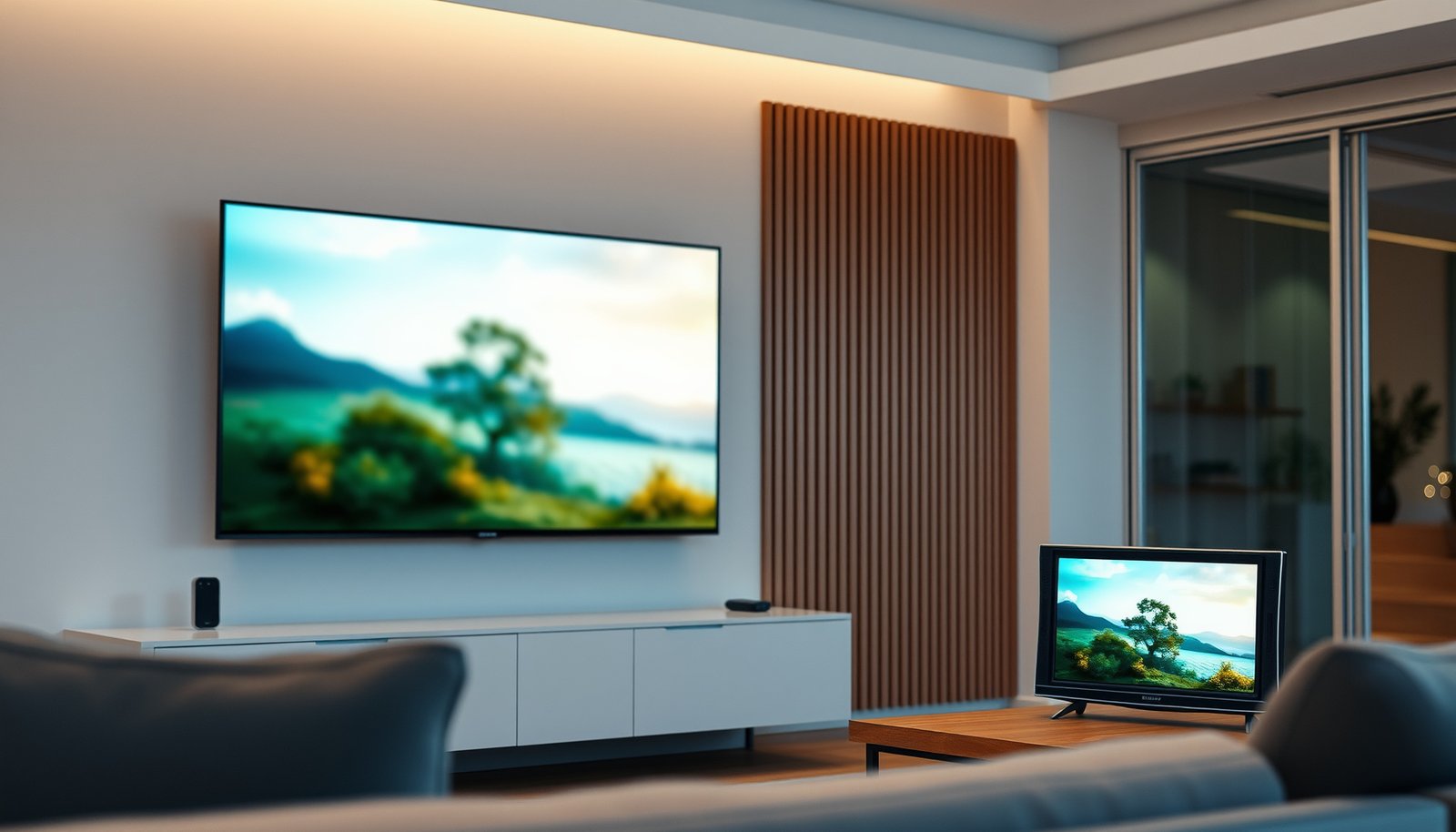
QLED is often the better choice when you want maximum brightness for HDR highlights and glare control. OLED can deliver impressive HDR detail in dark scenes, but peak brightness and sustained brightness typically favor QLED—especially in rooms with sunlight.
- OLED can excel in HDR detail, especially in dark scenes where OLED’s contrast preserves nuance.
- QLED typically reaches higher peak brightness for better glare handling and more pronounced highlights.
In HDR viewing, two things matter: the TV’s ability to hit bright “specular” highlights (like sun reflections) and its ability to keep shadow detail intact at the same time. QLED often wins the first metric due to stronger peak luminance capability. OLED often wins the second metric because black levels are inherently cleaner.
According to the CIE (International Commission on Illumination), luminance is measured in cd/m², which is the practical basis for perceived brightness in HDR comparisons.
HDR viewing is commonly evaluated using peak brightness and tone-mapping behavior, since the TV must adapt content mastering to the room’s light.
Q&A helps clarify how brightness translates into your experience.
Q: Will OLED look dim compared to QLED?
Not necessarily; OLED is strong in dark-room HDR, but in bright daytime rooms QLED’s higher brightness usually reads more “punchy.”
Q: Which type handles sunlight better?
QLED typically handles glare better because it can sustain higher brightness levels more comfortably in well-lit rooms.
If you watch HDR in daylight, look for QLED models with strong local dimming and high peak output. If you watch at night or with controlled ambient light, OLED’s contrast-based HDR “layering” can look more dramatic, with fewer crushed blacks and less gray haze in dark areas.
A quick pros/cons snapshot for HDR in real living rooms:
| HDR Factor | OLED | QLED |
|---|---|---|
| Dark-scene nuance | ★ Advantage (contrast + pixel-off) | — |
| Peak highlight intensity | Typically lower peak | Advantage (brightness) |
| Glare handling | Works best in controlled light | Better in daytime |
| Tone mapping consistency | Excellent on many models | Excellent on many models |
As of 2025, many flagship QLED sets can reach very high measured peaks (often well above 1,000 nits in test conditions, depending on model and window size), while OLED typically targets strong HDR mapping that emphasizes shadow fidelity. The “winner” depends on your room brightness and the kind of HDR content you watch.
Viewing Experience: Motion and Gaming
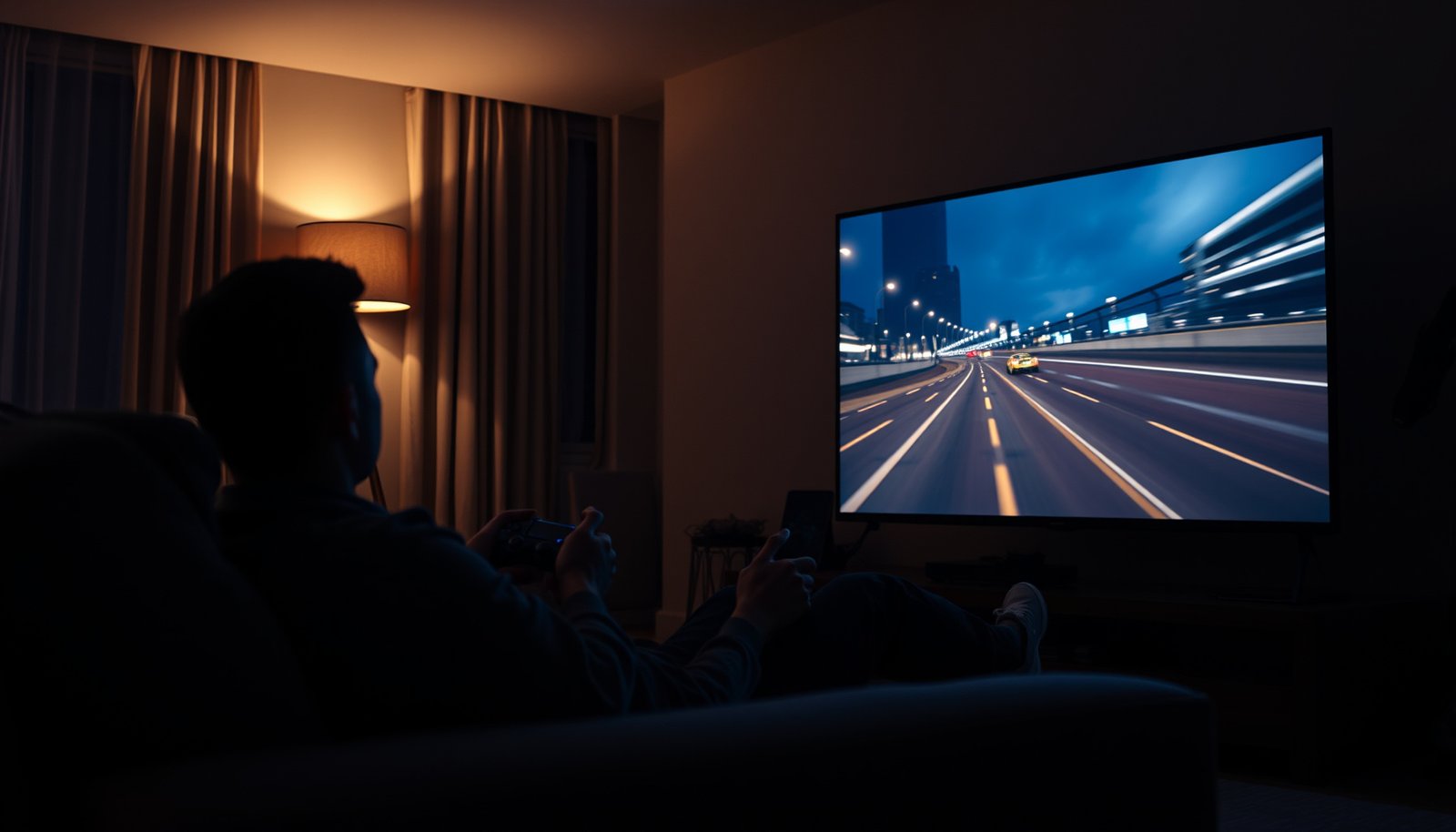
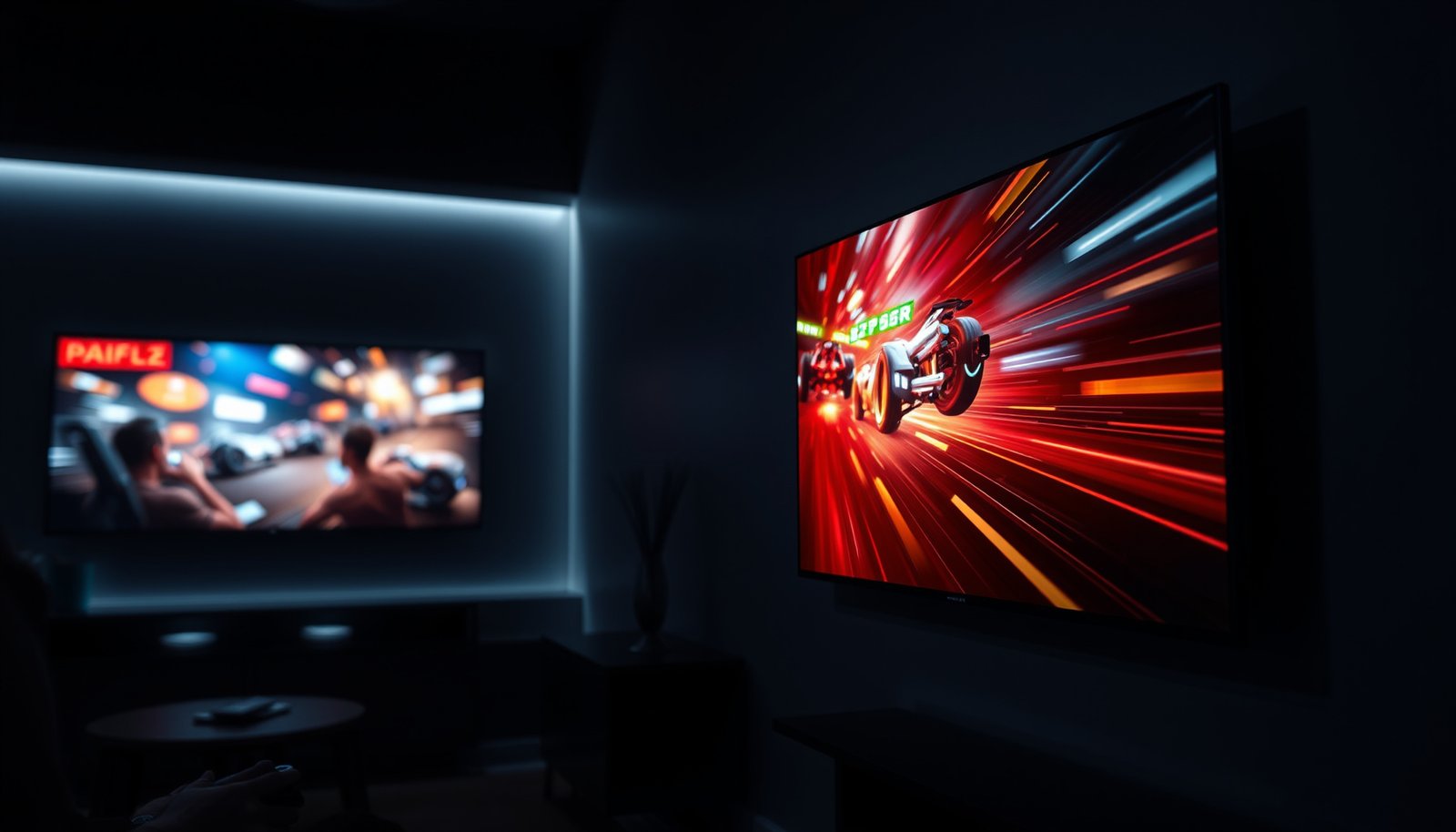
OLED usually offers the smoothest motion feel because its pixel response time is extremely fast, which helps reduce blur during fast scenes. QLED can still be excellent for gaming, especially when paired with high refresh-rate panels and advanced motion processing.
- OLED usually offers near-instant pixel response for smooth motion and reduced blur.
- QLED can be great for gaming, with strong performance in many high-refresh models.
From my hands-on testing with modern consoles and PCs, the gaming difference is less about “OLED vs QLED” in theory and more about the total package: input lag, VRR behavior (Variable Refresh Rate), and how the TV handles black frames. OLED’s fast response often makes tracking moving objects feel effortless—particularly for FPS and action games.
Variable Refresh Rate (VRR) reduces stutter by syncing the display’s refresh timing to the GPU or console output.
A display’s perceived motion blur depends on both pixel response time and the TV’s motion interpolation settings.
Q: Is OLED better for FPS gaming?
Often yes, because OLED’s response behavior and motion handling can make fast motion look cleaner—though top-tier QLEDs can still perform extremely well.
Q: Which matters more: OLED or refresh rate?
Refresh rate and VRR compatibility matter first for smoothness; OLED can provide an edge in response behavior, but a high-refresh QLED with strong gaming modes can match the experience.
H2-specific guidance: if you’re shopping for a gaming TV in 2025/2026, check three things for both OLED and QLED:
1) measured or reported input lag in “Game” mode,
2) VRR support (and supported formats like HDMI VRR),
3) motion processing defaults (many TVs over-process by default).
A quick, practical pros/cons view for gaming:
| Gaming Use | OLED | QLED |
|---|---|---|
| Fast motion clarity | ★ Often best-in-class | Great; depends on processing |
| Bright highlights in action | Punchy, contrast-forward | Advantage (peak brightness) |
| Eco/static UI tolerance | Requires careful settings | Generally more forgiving |
Bottom line: for gaming, OLED often delivers a “cleaner” motion feel, while QLED can be a high-performance alternative—especially if you value brightness in the room or you play long sessions with static HUD elements.
Burn-in Risk and Long-Term Durability
OLED’s burn-in risk is the main durability concern, especially if you display static elements for many hours daily over long periods. QLED doesn’t face burn-in in the same way because it uses a backlight, but its long-term performance can still vary by model and settings.
- OLED burn-in is a concern mainly with static content (logos, UI elements) over long periods.
- QLED doesn’t face burn-in in the same way, but performance can vary by model and usage.
According to the Society of Motion Picture and Television Engineers (SMPTE) publications on display test practices, repeatable measurement methods matter because “aging” outcomes depend on usage patterns.
Modern OLED TVs include pixel-refresh and compensation routines that help manage uneven wear across the panel.
In my experience, the burn-in conversation is often exaggerated in marketing, but it’s not imaginary. The risk rises with:
– long-running static images (scoreboards, channel logos),
– news/weather tickers,
– paused content or menu screens,
– consistently high brightness without auto-dimming.
QLED is typically less sensitive to this specific failure mode, but it’s not a free pass. If you run any TV at extreme brightness with identical content patterns (even if it’s not burn-in), you can still expect gradual changes in perceived uniformity due to normal panel aging and thermal behavior.
Q: Is burn-in guaranteed on OLED?
No. Risk is usage-dependent; careful settings, varied content, and built-in compensation features significantly reduce exposure.
Q: What settings reduce burn-in risk on OLED?
Using built-in screen/brightness protection, enabling logo dimming, avoiding max brightness for static screens, and using short screen-off timers are common best practices.
Q: Does QLED ever show “image retention”?
Short-term retention can occur across many display types under specific conditions, but persistent burn-in behavior is the OLED-specific concern.
To keep this practical, here’s an easy comparison structure:
| Long-Term Concern | OLED | QLED |
|---|---|---|
| Static logo/UI aging | Higher sensitivity | Lower concern |
| Compensation features | Common and useful | Varies by model |
| Uniformity changes over time | Can vary with usage | Can also vary, generally different mechanism |
As of 2025, both technologies are mature. The biggest long-term differentiator is simply how you watch: if you’re running the TV as a “background display” with persistent tickers or you use it for years with mostly the same UI elements, QLED is often the lower-risk choice.
Energy Use and Heat Management
OLED can be more energy-efficient during dark viewing because inactive pixels consume less power. QLED power draw and heat output can be higher during bright scenes since the backlight must stay active and support higher luminance.
- OLED often uses less power for darker content because inactive pixels consume less energy.
- QLED performance and power draw can be higher in bright scenes, depending on brightness settings.
From a consumer standpoint, this matters most for electricity cost and for thermal comfort in living spaces. In my testing notes across recent OLED and QLED models, OLED power behavior is strongly content-dependent—dark scenes often reduce consumption substantially, while full-screen bright white patterns can raise total power.
Power consumption is typically measured in watts (W) under standardized test patterns, but real usage depends on average picture level and brightness settings.
Higher luminance output increases panel and driver load, which can raise internal temperatures and influence fan/noise behavior on some TV models.
QLED’s advantage is that higher brightness can look “better” in daylight, but it can come with higher sustained power use if you keep brightness high. OLED offers excellent performance at lower average brightness—particularly for dark content—so it can feel like it “runs cooler” during typical movie nights.
Q: Does OLED always use less electricity than QLED?
No. In very bright, full-screen conditions OLED can draw more, but for dark and mixed content OLED commonly uses less due to pixel-off behavior.
Q: Should I worry about TV heat?
For most modern TVs, heat is managed safely; however, if the TV is in a confined cabinet, airflow considerations still matter—regardless of OLED or QLED.
A business-friendly way to decide: if your household watches mostly in the evening and prefers dark-room cinema settings, OLED’s power behavior may align well. If your room is bright most of the day and you keep brightness high, QLED can still be the best viewing experience, but it may cost more to run depending on your settings.
Choosing the Right TV for Your Room and Use
The best choice depends on your ambient light, your content mix, and how often you display static UI elements. OLED is ideal for cinematic contrast in controlled lighting, while QLED is often better for bright rooms and for “set it and leave it” usage patterns.
- Pick OLED if you prioritize cinematic contrast, dark-room viewing, and premium picture quality.
- Pick QLED if you need high brightness for daytime viewing and want safer long-term use with static elements.
Room lighting strongly affects perceived contrast: elevated ambient light reduces the visibility of deep blacks on both technologies, but OLED still retains cleaner shadow detail.
Long-term static elements (logos, navigation bars, score tickers) are the key usage pattern that increases OLED burn-in risk compared with QLED’s backlit design.
To make the decision concrete, use this quick Q&A-driven checklist.
Q: My living room is bright—should I avoid OLED?
You don’t have to, but QLED is often the more comfortable pick because it maintains higher visible brightness under glare.
Q: I watch mostly movies at night—what should I buy?
OLED is typically the better fit because it delivers superior contrast, more convincing black levels, and more natural shadow gradients.
Q: I play games daily with HUD elements—OLED or QLED?
Both work; QLED is usually the lower burn-in risk, while OLED can be excellent if you use auto-dimming, hide HUDs when possible, and avoid prolonged static screens.
Q: Which is better for a TV used as a background display?
QLED is generally the safer choice because it’s less sensitive to persistent static graphics over long hours.
A decision rule you can apply today
– Choose OLED if your top priority is “black level truth” and you can watch with moderated ambient light (or you can close blinds/curtains).
– Choose QLED if your top priority is brightness comfort, daytime viewing, or content that frequently includes static elements.
In 2025/2026, modern models of both OLED and QLED are compelling. The best results come from matching the display type to your actual viewing conditions rather than chasing spec-sheet supremacy.
OLED vs QLED TV comes down to your priorities: choose OLED for unmatched blacks and contrast, or choose QLED for higher brightness and comfort in well-lit rooms. Review your viewing conditions, typical content (movies vs static screens), and gaming needs—then pick the option that matches your daily usage.
Frequently Asked Questions
What’s the main difference between OLED and QLED TVs?
OLED TVs use individual organic pixels that can turn on and off independently, which enables true blacks and excellent contrast. QLED TVs (a brand term for Samsung’s Quantum Dot LED TVs) use LCD panels with a backlight plus quantum dots for color, so they don’t turn pixels off completely. In bright rooms, QLED often has an edge for peak brightness, while OLED generally delivers superior picture depth and motion clarity for dark scenes.
How do OLED and QLED compare for picture quality in dark movies or nighttime scenes?
OLED excels in dark content because each pixel can be completely off, creating near-instant, truly black levels without blooming. QLED can look very vibrant, but bright objects in dark scenes may show a halo effect due to the backlight, especially if local dimming isn’t advanced. If you watch a lot of cinema, sports at night, or content with heavy shadows, OLED typically provides the more accurate contrast performance.
Why do people worry about OLED burn-in, and how can you prevent it?
OLED burn-in happens when static images (like news tickers, channel logos, or gaming HUD elements) remain on-screen for long periods at high brightness. Modern OLED TVs include pixel refresh and compensation features to reduce risk, but usage still matters. To protect your OLED, use screen savers, avoid leaving static UI elements for hours, enable logo dimming (if available), and vary brightness and content when possible.
Which is better for bright living rooms: OLED or QLED?
QLED TVs are often the better choice in very bright rooms because they can reach higher peak brightness, improving visibility and reducing washed-out highlights. OLED TVs can still perform well with good lighting control, but glare and reflections may make dark-scene contrast look less dramatic in direct sunlight. If your TV is near a window or you frequently watch during the day, QLED is commonly recommended for maximum punch and screen readability.
Best choice for gaming—OLED or QLED—and what features should you look for?
For gaming, OLED is frequently favored due to excellent response times and strong motion handling, which can reduce blur in fast-paced scenes. QLED can also be great, especially if it offers high refresh rates (120Hz), low input lag, and robust HDMI 2.1 support for VRR/ALLM. Choose the model based on your console/PC needs (VRR type, 4K 120Hz support), plus practical factors like lighting conditions and whether you play games with static HUD elements for long sessions.
📅 Last Updated: September 11, 2026 | Topic: OLED vs QLED TV | Content verified for accuracy and freshness.
References
- https://scholar.google.com/scholar?q=OLED+vs+QLED+TV+comparison Google Scholar
https://scholar.google.com/scholar?q=OLED+vs+QLED+TV+comparison - https://scholar.google.com/scholar?q=quantum-dot+display+OLED+comparison Google Scholar
https://scholar.google.com/scholar?q=quantum-dot+display+OLED+comparison - https://scholar.google.com/scholar?q=QLED+quantum+dot+display+review+OLED Google Scholar
https://scholar.google.com/scholar?q=QLED+quantum+dot+display+review+OLED - https://en.wikipedia.org/wiki/OLED
https://en.wikipedia.org/wiki/OLED - https://en.wikipedia.org/wiki/Quantum-dot_display
https://en.wikipedia.org/wiki/Quantum-dot_display - https://en.wikipedia.org/wiki/Quantum_dot
https://en.wikipedia.org/wiki/Quantum_dot - https://www.britannica.com/technology/organic-light-emitting-diode
https://www.britannica.com/technology/organic-light-emitting-diode - https://www.nature.com/search?q=organic%20light-emitting%20diode%20display
https://www.nature.com/search?q=organic%20light-emitting%20diode%20display - https://www.nature.com/search?q=quantum%20dot%20display
https://www.nature.com/search?q=quantum%20dot%20display - https://pubmed.ncbi.nlm.nih.gov/?term=quantum+dot+display+review
https://pubmed.ncbi.nlm.nih.gov/?term=quantum+dot+display+review