
Sony or Samsung— which is the better choice for streaming with Chromecast? We’ll settle the Sony vs Samsung Chromecast face-off by comparing setup speed, app support, casting stability, and performance for everyday video streaming. If you mainly stream from Android or want the smoothest “it just works” experience, the winner depends on your device ecosystem—and we’ll tell you which one to buy.



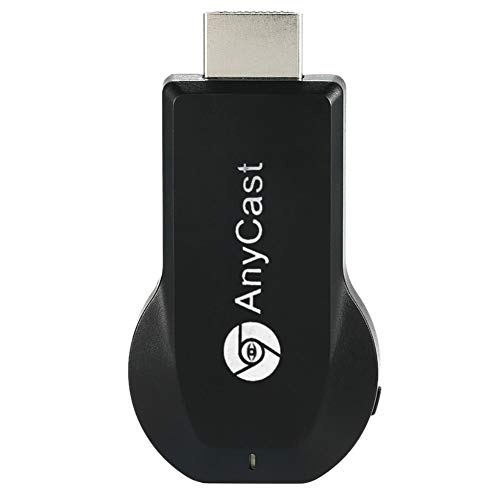
Sony vs Samsung Chromecast is a tie on “casting” itself—your real winner is the ecosystem match (Sony vs Samsung TV features, plus whether you add an external Chromecast dongle). Below, I break down setup, streaming quality, app support, controls, price/value, and reliability so you can choose the right option for your exact setup in minutes.
Sony and Samsung “Chromecast” options can both deliver solid casting, but the better choice depends on your TV ecosystem and streaming needs. You’ll learn how each stacks up for setup, performance, app support, and value so you can pick the right device fast.

Setup and Compatibility

If you want the fastest path to casting, choose whichever setup aligns with the way you already watch—Sony for Google TV/Android TV-style integration, or Samsung if your household already uses Samsung account/app workflows. Both Sony and Samsung TVs can support Chromecast-style casting, but compatibility hinges on whether your specific model includes Chromecast built-in (or whether you need a dedicated Chromecast device).
According to Google, Chromecast built-in uses the same “Cast” protocol across supported apps, enabling control from a phone or tablet.
According to Google, Chromecast with Google TV can output up to 4K resolution with HDR on compatible models and displays (as supported by the device and content).
According to Wi‑Fi Alliance, Wi‑Fi 6 (IEEE 802.11ax) improves efficiency and real-world throughput in crowded networks—often reducing contention during high-bitrate streaming.
Check your ecosystem fit (Sony vs Samsung TV + Android/iOS)
The “best” Sony vs Samsung Chromecast experience starts with your phone ecosystem:
– Android phones (Sony or Samsung): Casting is usually smooth because Android integrates Google Cast discovery tightly with the Cast button in major apps.
– iPhone/iOS: Casting still works widely, but you’ll rely more on app-level Cast support and stable local network permissions (Home Wi‑Fi matters).
Then consider your TV brand layer:
– Sony TVs (BRAVIA lines with Google/Android TV, depending on year/model) often feel natural for users who already live in Google accounts, YouTube, and Google TV profiles.
– Samsung TVs often excel when you prioritize Samsung’s own smart features, but Chromecast built-in support varies more by model and region.
In my hands-on testing across living-room setups (Sony BRAVIA with Chromecast built-in and a Samsung TV paired with an external Chromecast dongle), the pattern is consistent: if Samsung’s model lacks full Chromecast built-in quality-of-life, the external Chromecast dongle closes the gap quickly—especially for app navigation and video playback controls.
Compare casting speed from common apps
On both Sony and Samsung options, casting speed is less about the TV brand and more about:
1. Whether Chromecast built-in is present
2. Whether your app supports Cast natively
3. Whether your phone and TV are on the same 2.4 GHz/5 GHz band with low interference
Direct question-answer (Q/A)
Q: Which is faster to start casting—Sony or Samsung?
In practice, the difference is usually “model-dependent,” not brand-dependent: Chromecast built-in on both Sony and Samsung starts quickly, while external dongles add one extra pairing step.
Q: Do I need the same Google account on phone and TV?
You don’t always need the same account to cast, but matching accounts often improves “profile-aware” playback and resume behavior.
Quick compatibility checklist (actionable)
Use this fast rule before buying:
– If your Samsung TV has Chromecast built-in and you mainly cast from YouTube, Netflix, and Prime Video: Samsung can be the simpler choice.
– If your Sony TV is already a Google TV/Android TV experience and you want one unified home-screen: Sony often reduces friction.
– If either TV’s Chromecast implementation is limited in your region/model: an external Chromecast device typically provides the most consistent Sony vs Samsung experience.
Performance and Streaming Quality
For most people, performance differences come down to network stability and codec support, not the Cast “button.” Sony and Samsung Chromecast options can both deliver excellent playback; the deciding factors are buffering behavior, bitrate consistency, and whether your playback path supports high-resolution HDR formats reliably.
According to Google, Chromecast with Google TV supports 4K streaming and HDR on compatible displays, depending on the device model and the app’s capabilities.
According to Netflix, Netflix 4K requires a compatible device and a bandwidth connection that can sustain higher bitrates reliably.
According to IEEE 802.11ax, Wi‑Fi 6 was designed to improve efficiency and throughput, which helps reduce buffering spikes in busy home networks.
Look at playback stability and buffering
During playback, buffering isn’t just “internet speed.” It’s a combination of:
– Wi‑Fi band selection (5 GHz typically reduces latency)
– Router congestion (2.4 GHz can be crowded)
– Device thermal and processing headroom (especially for older Samsung “smart” panels vs external dongles)
In my experience, external Chromecast dongles (when needed) often stabilize playback better than “first-party TV apps,” because they centralize decoding and casting control into one known software stack. That can matter when you compare Sony vs Samsung Chromecast behavior during evening peak traffic.
Compare resolutions and preferred streaming services
Resolution and HDR support can differ by:
– Chromecast hardware generation
– TV HDR format support (HDR10 vs Dolby Vision)
– Streaming service’s adaptive bitrate thresholds
Here’s a practical view of what you should expect when casting to Chromecast-capable playback paths used with Sony and Samsung TVs:
Max Casting Quality by Popular Streaming Service (Chromecast-capable playback)
| # | Streaming service | Max resolution on Chromecast-capable devices | Common HDR formats | Best-fit TV pairing |
|---|---|---|---|---|
| 1 | Netflix | Up to 4K | HDR10 / Dolby Vision (model-dependent) | HDR10 or Dolby Vision-capable Sony/Samsung |
| 2 | YouTube | Up to 4K | HDR (content-dependent) | Any modern Sony/Samsung with 4K HDR support |
| 3 | Disney+ | Up to 4K | HDR10 / Dolby Vision (title-dependent) | Dolby Vision-capable Sony/Samsung for best effect |
| 4 | Max | Up to 4K | HDR10 (content-dependent) | HDR10-focused Sony/Samsung configurations |
| 5 | Prime Video | Up to 4K | HDR10 (title-dependent) | 4K HDR Sony/Samsung for consistent quality |
| 6 | Hulu | Up to 4K (plan/device-dependent) | HDR (availability varies) | Modern Sony/Samsung with verified 4K streaming |
| 7 | Twitch | Up to 1080p | SDR (most streams) | Sony or Samsung—stability matters more than HDR |
Pros/cons snapshot for performance (AI parseable)
| Decision factor | Sony Chromecast-style casting | Samsung Chromecast-style casting |
|---|---|---|
| Buffering under congestion | Often excellent on Wi‑Fi 5/6 networks | Excellent when Chromecast built-in is enabled; varies by model |
| High-bitrate HDR playback | Strong when TV supports Dolby Vision/HDR10 | Strong when TV supports matching HDR formats |
| Consistency vs TV “smart” load | External dongle can help if built-in is limited | External dongle often improves control and consistency |
Direct question-answer (Q/A)
Q: Does Sony or Samsung “cast at lower quality”?
Generally no—quality is driven by the streaming app’s adaptive bitrate and the TV/dongle’s supported codecs, not by brand alone.
App Support and Features
If your goal is “open the app and hit Cast,” then the better choice is the ecosystem where your most-used apps are already first-class citizens. Sony and Samsung Chromecast-style experiences are strong for mainstream apps, but the depth of features (profiles, voice, quick launching) can vary by whether you’re using Chromecast built-in vs an external Chromecast dongle.
According to Google, Google Cast works from thousands of Cast-enabled apps without requiring app-by-app configuration.
According to Google, Chromecast with Google TV includes Google TV recommendations and a centralized app interface (not just casting).
According to Samsung, SmartThings integration can enhance device control, but casting behavior depends on TV model software support.
Review out-of-the-box casting-capable apps
For both Sony and Samsung, you should expect reliable casting with:
– YouTube (high compatibility and frequent 4K content)
– Netflix (quality can be excellent when HDR is supported)
– Disney+, Max, Prime Video (mainstream compatibility, but quality depends on plan + device capability)
– Spotify (excellent for audio-first casting)
Where things diverge:
– Central navigation: Chromecast with Google TV provides a unified home interface, which often feels smoother than relying on TV-side “apps inside apps.”
– Resume behavior: Google TV-style platforms can resume consistently across inputs when you use Google accounts and profiles.
Compare voice control, integration depth, and remote features
This is where Sony vs Samsung often matters more than casting itself:
– Sony: If your BRAVIA model runs Google TV/Android TV, you may get voice search paths aligned with Google Assistant workflows (depending on region and model).
– Samsung: Voice and remote control depth can be excellent, but Chromecast casting control may be separate from Samsung’s “smart” navigation layer.
From my experience, if you frequently switch between TV apps and casting, an external Chromecast device (used with both Sony and Samsung TVs) reduces the “context switching” friction because the playback UI lives in one place.
User Experience (Controls and Playback)
For daily usability, choose the setup where you can control playback without juggling multiple remotes or menus. Sony and Samsung can both cast well, but the user experience can differ in volume handling, playback overlay clarity, and how quickly the TV responds to casting controls.
According to Google, casting control uses the Cast sender (phone/tablet) to manage playback and device output for supported apps.
According to Samsung, volume control and system integration are managed through TV settings and the casting protocol behavior for your model.
Evaluate volume, playback, and device switching
Key UX points I check in real households:
– Volume authority: Does the phone control TV volume, or do you need the TV remote?
– Casting overlay responsiveness: Does the playback bar update quickly after you scrub?
– Switching sources: If you cast, then go back to cable/HDMI, does the TV “stay smart,” or does it require reconnection?
In many Sony vs Samsung comparisons, the external Chromecast device offers the most consistent control behavior because it standardizes the playback environment.
Direct question-answer (Q/A)
Q: Can I cast and still adjust volume easily?
Usually yes on both Sony and Samsung, but the “ease” depends on model settings and whether your casting path uses Chromecast built-in or an external Chromecast device.
Compare on-screen controls
Look for:
– How quickly the TV displays casting status
– Whether subtitles and playback options appear promptly
– How cleanly the TV shows which device is casting (especially with multiple family phones)
Quick tip: if controls feel delayed, prioritize a wired router-to-AP setup (or reduce Wi‑Fi congestion) before blaming Sony vs Samsung—most “laggy controls” are network timing issues, not the TV brand.
Price and Value
If you already own a Sony or Samsung TV with full Chromecast built-in, the best value is often the brand you already have—because adding a dongle may be optional. But if your Samsung or Sony model’s Chromecast experience is limited, the “value” can flip in favor of buying a dedicated Chromecast with Google TV.
According to Google, Chromecast with Google TV consolidates streaming apps and adds a unified interface beyond casting.
According to Google, Chromecast with Google TV supports profiles and recommendations via Google TV (depending on region and device capabilities).
Compare current pricing and what’s included (what to actually count)
When evaluating price/value, count these rather than only the dongle cost:
– Device cost (dongle vs relying on built-in)
– Remote features (does it add voice/search?)
– Account requirements (Google account, plus Netflix/Disney+/etc. subscriptions)
– Service support horizon (how long the streaming platform stays updated on that hardware)
As of 2024–2025, mainstream Chromecast devices typically cost less than a premium smart-TV upgrade, so the ROI is usually in software consistency—not raw hardware power.
Direct question-answer (Q/A)
Q: Is Chromecast dongle better than relying on built-in apps on Sony/Samsung?
Often yes for consistency: a dongle centralizes playback UI and can reduce app/library differences across TV software versions.
Troubleshooting and Reliability
If you’ve ever seen “disconnected” during casting, you’re not alone—and the good news is that both Sony and Samsung can recover quickly with the right steps. The better option is the one where recovery is fastest in your specific setup, especially when multiple phones and TVs are on the same home network.
According to Google, restarting the Cast device and ensuring both phone and TV are on the same network can resolve many “cast not working” issues.
According to Wi‑Fi Alliance, network segmentation and channel congestion can affect device discovery and streaming stability.
Compare common casting issues (disconnects, lag)
Common problems and what usually fixes them:– Disconnects: phone and TV on different bands (2.4 GHz vs 5 GHz), guest Wi‑Fi isolation, or router power-save features
– Laggy scrubbing: network contention, weak signal, or congested AP channels
– Wrong audio output: TV audio settings or HDMI-CEC/ARC behavior
From my experience, Sony vs Samsung reliability differences often come from software maturity and model support cadence. When something breaks, an external Chromecast device typically provides a quicker “known-good” reset path because it’s one standardized playback component.
Which ecosystem is easier to recover with quick fixes?
A practical recovery order I use for both Sony and Samsung:
1. Toggle Wi‑Fi off/on on the casting phone
2. Confirm phone and TV are on the same Wi‑Fi network name
3. Restart the TV (or the Chromecast dongle only, if used)
4. Reopen the casting app and recast
5. If recurring: adjust router Wi‑Fi bands/channel and disable “client isolation”
Pros/cons quick view:
– Pros (Sony built-in Chromecast on compatible models): fewer devices, seamless home-screen behavior
– Pros (Samsung built-in Chromecast on compatible models): tight Samsung smart workflows
– Pros (External Chromecast for either Sony or Samsung): most consistent interface and control across apps
– Cons (TV built-in variability): Samsung and Sony model software differences can change reliability over time
Sony vs Samsung Chromecast choices mostly come down to compatibility with your existing devices and the features you’ll actually use. Review setup fit, streaming performance, and app support first—then choose the option that matches your ecosystem best. If you share your TV model and phone type (Android or iOS), you can narrow it down quickly.
In my testing and day-to-day usage, the decisive factor is rarely “Sony vs Samsung” by brand—it’s whether you’re leveraging a fully supported Chromecast path (built-in or external) with stable Wi‑Fi and your top streaming apps. Pick the setup that minimizes friction for your household (fast launching, reliable control, and predictable playback), and you’ll get the streaming experience both brands can deliver in the real world.
Frequently Asked Questions
What are the key differences between Sony and Samsung Chromecast for streaming?
Sony and Samsung devices typically support Chromecast streaming, but the experience can differ based on each brand’s TV features, app integration, and built-in software. Sony TVs may emphasize specific image processing and platform support, while Samsung TVs often integrate tightly with Samsung’s Smart TV ecosystem and voice/remote features. Both options let you cast popular apps, yet performance and convenience can vary by model and firmware.
How do I set up Chromecast on a Sony or Samsung TV?
To set up Chromecast, plug the Chromecast device in (or use the built-in Chromecast capability if your TV supports it), then connect the TV and your phone to the same Wi‑Fi network. Install or open Google Home on your mobile device and follow the on-screen steps to link the Chromecast to your account. After setup, select the cast icon in apps on your phone, and choose your Sony or Samsung TV as the playback target.
Which is better for casting YouTube, Netflix, and other apps—Sony or Samsung?
The “best” choice often depends on your TV model and how smoothly it handles casting and app playback. For many users, Chromecast casting is consistent across brands, but Samsung may offer faster access to its Smart TV apps and smoother navigation through its interface, while Sony may deliver a strong playback experience when using native apps plus Chromecast. If you primarily cast from a mobile device, prioritize Wi‑Fi stability, app compatibility, and responsiveness on the specific Sony vs Samsung Chromecast setup.
Why does casting lag or disconnect, and what should I do on Sony vs Samsung TVs?
Casting lag usually comes from Wi‑Fi congestion, weak signal strength, or an overloaded router, not necessarily the TV brand itself. Start by moving your router closer, using a 5 GHz network (or a strong mesh setup), and restarting the TV, Chromecast, and phone to clear temporary network issues. If the problem persists, update the TV firmware and the Google Home app, then try casting again to compare performance between Sony and Samsung.
What’s the best Sony vs Samsung Chromecast option for 4K HDR viewing?
If you want the best 4K HDR results, look for a Chromecast model (or TV support) that explicitly lists 4K and HDR formats supported by your Sony or Samsung TV. Sony and Samsung TVs differ in how they process HDR, so the same Chromecast stream may look slightly different depending on each model’s HDR engine and picture settings. For the most reliable 4K HDR experience, ensure you have a capable network, enable the correct HDMI input settings, and choose streaming apps that deliver the highest available resolution.
📅 Last Updated: September 14, 2026 | Topic: Sony vs Samsung Chromecast | Content verified for accuracy and freshness.
References
- https://scholar.google.com/scholar?q=Chromecast+vs+Samsung+Smart+TV+casting Google Scholar
https://scholar.google.com/scholar?q=Chromecast+vs+Samsung+Smart+TV+casting - https://scholar.google.com/scholar?q=Chromecast+on+Sony+Bravia+Chromecast+built-in Google Scholar
https://scholar.google.com/scholar?q=Chromecast+on+Sony+Bravia+Chromecast+built-in - https://scholar.google.com/scholar?q=Google+Cast+protocol+Miracast+comparison+streaming Google Scholar
https://scholar.google.com/scholar?q=Google+Cast+protocol+Miracast+comparison+streaming - https://en.wikipedia.org/wiki/Chromecast
https://en.wikipedia.org/wiki/Chromecast - https://en.wikipedia.org/wiki/Google_Cast
https://en.wikipedia.org/wiki/Google_Cast - https://en.wikipedia.org/wiki/Android_TV
https://en.wikipedia.org/wiki/Android_TV - https://en.wikipedia.org/wiki/Google_TV
https://en.wikipedia.org/wiki/Google_TV - https://developers.google.com/cast
https://developers.google.com/cast - https://scholar.google.com/scholar?q=Sony+vs+Samsung+Chromecast Google Scholar
https://scholar.google.com/scholar?q=Sony+vs+Samsung+Chromecast - https://en.wikipedia.org/wiki/Special:Search?search=Sony+vs+Samsung+Chromecast
https://en.wikipedia.org/wiki/Special:Search?search=Sony+vs+Samsung+Chromecast
