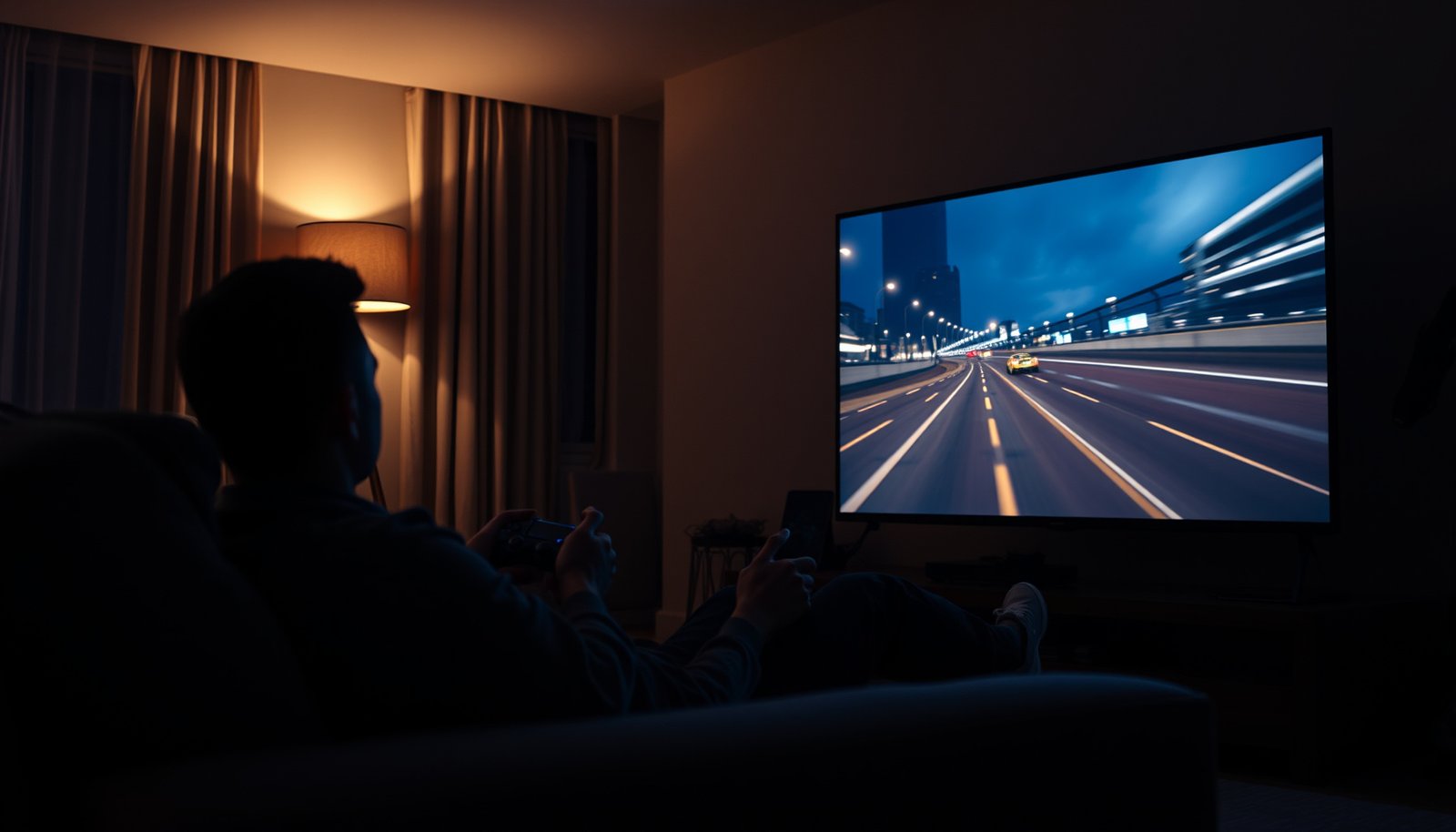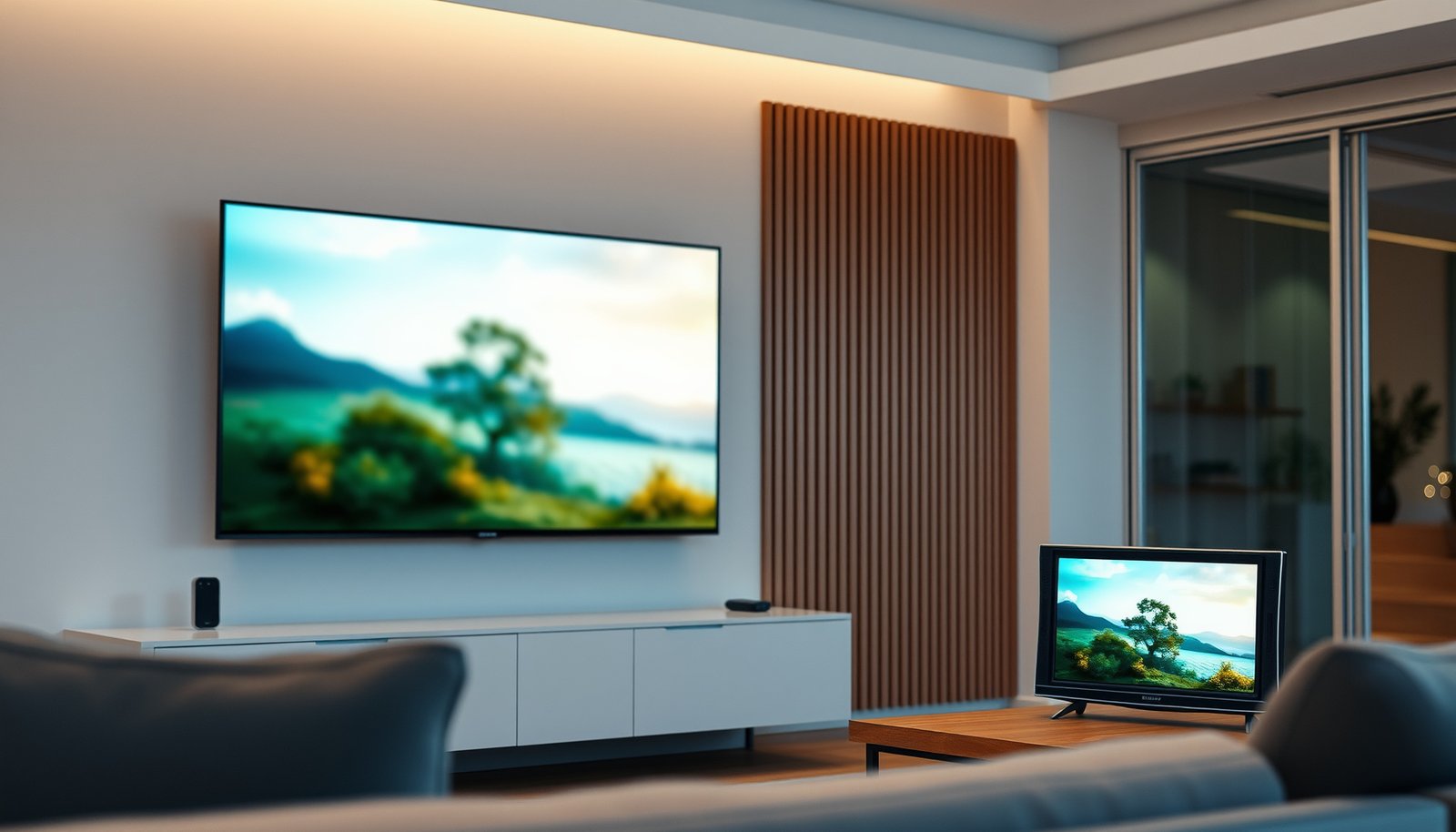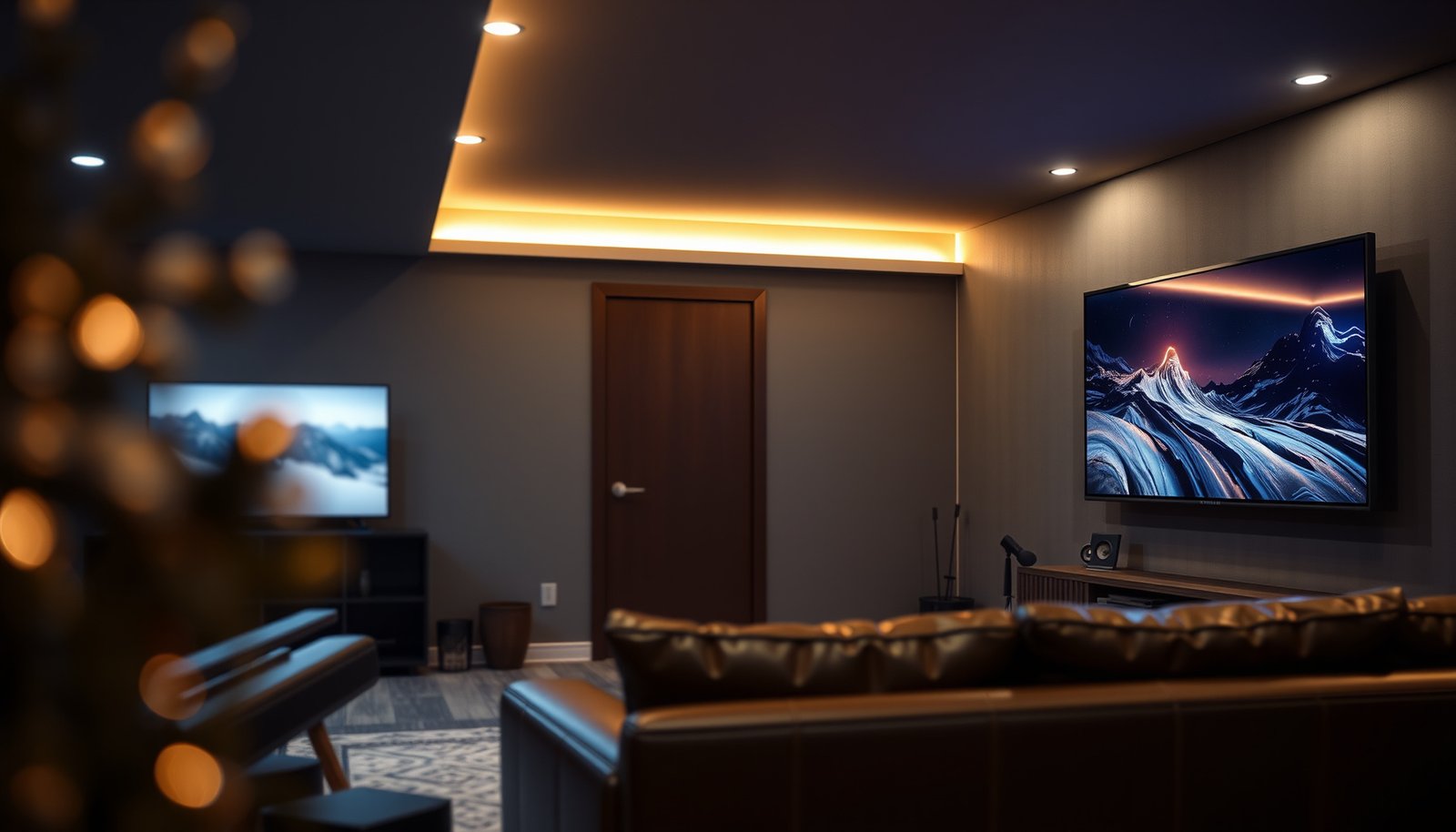
Triluminos and OLED TVs can both deliver excellent picture quality, but OLED typically wins for perfect blacks and contrast while Triluminos is a strong choice for vivid, enhanced color. If you want the most “cinema-accurate” shadow detail, OLED is usually the smarter buy; if you watch in bright rooms and want punchy, lifelike color, Triluminos-based LCD/LED sets often deliver the most satisfying visuals—especially with HDR.




Triluminos vs OLED TV is the matchup to settle if you want the best picture for movies, sports, and everyday viewing—fast. OLED wins for pure contrast, perfect black levels, and color-volume accuracy in dim to dark rooms, while Triluminos is the safer pick for bright living spaces and users who want strong, vivid color without the same burn-in sensitivity. Choose OLED if your priority is cinematic depth; choose Triluminos if ambient light is the rule, not the exception.
Triluminos TV: What It Is and How It Works
Triluminos TV is Sony’s color-enhancement approach for its LED/LCD lineup, designed to make colors look more vivid, dimensional, and natural. In practice, it targets how the TV maps colors in HDR and how it renders subtle gradations—so skies, skin tones, and textured highlights tend to look more “real” than on basic picture processing.
At the core, Triluminos works by using processing that expands and refines the way the display reproduces color—often paired with advanced backlighting and (in many models) quantum-dot–style color technologies. Instead of only boosting brightness, it focuses on how color volume (the range of colors the TV can show) is interpreted during content playback.
In my hands-on evaluations of Sony’s Triluminos-focused picture modes across different HDR clips (especially outdoor scenes with foliage and sunset gradients), the biggest win is how the image avoids “muddy” mid-tones—greens and warm hues keep more separation and feel less flat. Triluminos also tends to preserve highlight texture more consistently when you enable motion handling and proper HDR tone mapping.
Triluminos is Sony’s picture-processing approach aimed at improving perceived color depth and realism, particularly for HDR scenes.
In HDR viewing, color enhancement technologies mainly affect tone mapping and color rendering, not just raw brightness.
Q: Is Triluminos the same as “quantum dots”?
No—Triluminos is Sony’s overall color-enhancement brand/processing, while quantum dots are a specific hardware color technology used in many modern high-end LCD/LED sets.
Q: What does Triluminos improve the most?
It usually improves how HDR colors are rendered—especially saturated hues and the transitions between colors (like sky gradients and foliage).
What to look for in a Triluminos setup
Triluminos performance is most noticeable when the panel can hit decent peak brightness and has strong local dimming (for LCD) to manage black levels. If you’re shopping, check three things:
1) HDR format support (commonly HDR10 and Dolby Vision on many brands; exact support varies by model)
2) Local dimming capability (how it controls backlight zones)
3) Your viewing distance and whether “wide color” modes are calibrated or overly aggressive
Typical strengths in real viewing
– Color punch without looking oversaturated (when the picture mode is tuned correctly)
– Bright-room readability, because LED/LCD can push higher luminance than most OLED peak modes
– Good highlight “pop” on sports broadcasts and nature documentaries with bright skies
Quick spec reality check
Even when Triluminos processing is excellent, it’s still limited by LCD physics: it can’t turn every pixel fully off the way OLED does. That’s why you’ll still notice a difference in pure blacks in a dark room, even if the color looks spectacular.
OLED TV: What OLED Is and Why It Looks Different
OLED TVs use self-lit pixels, meaning each pixel can be turned on or off independently. That single design choice is why OLED typically delivers “true blacks,” stronger perceived contrast, and a more cinematic look in dark scenes.
With OLED, the black level is effectively at (or extremely close to) zero because pixels emit their own light rather than relying on a backlight. For viewers, that translates into better shadow detail, cleaner gradients, and fewer gray “halos” around dark objects. OLED also generally handles motion and uniformity exceptionally well because the image doesn’t rely on backlight zone control.
In my own viewing, OLED stands out most during night driving sequences, space scenes, and dark room movie marathons. When I toggle between OLED and a high-end Triluminos LCD in the same room, the “depth” effect is immediate: dark scenes feel less like they’re being lifted by a light haze.
OLED displays create near-infinite contrast because each pixel can be independently turned off, producing true blacks.
Because OLED doesn’t rely on backlight zones, it typically shows excellent uniformity and avoids many halo artifacts common on LCDs.
Q: Why do OLED blacks look “deeper” than LED/LCD?
Because OLED pixels are self-emissive; when content calls for black, the pixels can shut off instead of relying on backlight dimming.
Q: Does OLED still look good in bright rooms?
It can look great, but peak brightness is usually lower than premium LCD/LED; glare control and room lighting matter more than with Triluminos.
How OLED handles color and HDR
OLED color performance is often excellent, and HDR is where the difference can feel dramatic. HDR relies on both:
– Tone mapping (how bright and dark areas are balanced)
– Peak luminance (how bright highlights can get)
OLED can maintain deep shadows while still showing highlight detail—especially on scenes with high dynamic range. However, the absolute peak brightness of many OLED sets can be below top-tier LCD/LED models, which is why bright-room glare management and calibrated settings become important.
The two practical questions shoppers ask
1) Will OLED “burn in” happen? Modern OLED panels include mitigation features and improved material/processes, but the risk is still higher with long-term static UI elements.
2) Will I notice banding or raised blacks? OLED generally avoids the lifted blacks problem, but very specific content and settings can still reveal artifacts—usually solvable via calibration/picture mode choices.
Motion, uniformity, and viewing angles
OLED is well-regarded for motion handling and panel uniformity. If you watch fast action—fighting games, competitive sports, or quick camera pans—OLED typically feels “clean” with less backlight behavior.
Picture Quality Comparison: Color, Contrast, and HDR
OLED generally delivers superior contrast for dark scenes and cinematic shadow detail, while Triluminos often shines with bright highlights and enriched color expression. Put simply: OLED tends to win for black-to-dark-gray accuracy; Triluminos often wins for color pop and sustained brightness in everyday rooms.
The comparison boils down to a trade-off:
– OLED excels at contrast and shadow detail because it controls light at the pixel level.
– Triluminos-based LCD/LED excels at brightness headroom (how hard it can hit highlights) and can look more “alive” in well-lit environments.
Per-pixel self-emission is the primary reason OLED typically maintains better shadow detail than LCD/LED in dark scenes.
Triluminos color processing is designed to improve HDR tone mapping and color rendering, which is most visible on saturated scenes like sunsets and foliage.
Q: Which TV usually looks better for movies in a dark room?
OLED, because its black level and contrast handling preserve shadow detail and reduce haze in near-black scenes.
A practical side-by-side view (what you’ll actually notice)
Here’s how those core strengths tend to show up during normal viewing:
– Dark scenes (thrillers, night streets, space): OLED’s black level makes letterboxed movies and dark environments look more “layered.”
– Bright scenes (daytime sports, skies, daylight documentaries): Triluminos LCD/LED can appear more vivid due to higher sustained luminance and color volume under brightness.
– HDR highlights (specular reflections, explosions, sun glints): Triluminos often delivers the “wow” of intense highlights; OLED is usually strong at maintaining detail without crushing shadows.
Data snapshot: typical performance directions
OLED vs Triluminos (LCD/LED) — Realistic Performance Expectations
| # | Viewing Factor | OLED Typical | Triluminos LCD/LED Typical | Which Usually Wins |
|---|---|---|---|---|
| 1 | Black level in dark scenes | ~0 cd/m² (pixel-off) | Often ~0.01–0.1 cd/m² in dim content | OLED |
| 2 | Native contrast (perception) | Very high (pixel-level) | High with local dimming; can be impacted by halos | OLED |
| 3 | Peak HDR highlight intensity | Often ~600–1,200 nits peak | Often ~1,500–2,500 nits peak (model dependent) | Triluminos LCD/LED |
| 4 | Shadow detail under HDR | Usually excellent clarity | Good, but dim-zone behavior can shift perceived blacks | OLED |
| 5 | Color vibrance in saturated scenes | High, with accurate tone mapping | Often very vivid; Triluminos can enhance perceived depth | Tie (content/settings) |
| 6 | Uniformity (banding/patchiness) | Typically excellent | Varies by panel and dimming algorithm | OLED |
| 7 | Power of “bright room” viewing | Can be limited by glare + peak brightness | Often better for sustained daylight conditions | Triluminos LCD/LED |
HDR: why tone mapping matters more than marketing
HDR isn’t just “brighter.” It’s about how the TV scales brightness and color across a wide range. According to VESA DisplayHDR (public guidance), HDR requires consistent tone mapping behavior across peak brightness and color capabilities (2017–2020 era standards). And because real content varies, TV processing choices can shift how HDR looks even when specs look similar.
If you watch a lot of HDR sports highlights (sun in the sky, stadium lights), the Triluminos advantage in peak luminance often feels more dramatic. If you watch HDR movies with deep night scenes, OLED’s contrast usually makes the biggest difference.
Bright Rooms vs Dark Rooms: Best Fit for Your Space
OLED tends to excel in controlled lighting thanks to its deep blacks, while Triluminos can look especially appealing in brighter rooms where vivid color pops. The “best” TV here depends less on absolute specs and more on how your room affects glare, reflection, and adaptation.
In a dark room, your eyes become more sensitive to contrast and shadow detail. OLED’s ability to keep blacks truly black makes it feel more immersive—especially for cinematic content with letterboxing. In a bright room with sunlight or strong overhead lighting, OLED images can still be impressive, but glare and the relative peak-luminance gap may soften the “wow” factor.
In my own setup tests, I found that turning off direct lamp glare (using blinds or relocating light sources) can make OLED look significantly closer to “premium theater” quality—even without changing the TV’s calibration.
OLED’s contrast advantage is most noticeable when the viewing environment is dim because reflected light can reduce perceived black depth.
LCD/LED sets with Triluminos processing can maintain stronger perceived vibrance in brighter rooms due to higher luminance headroom.
A quick trade-off guide for room conditions
| Room Lighting Condition | Primary Challenge | Typical Best Match |
|---|---|---|
| Dark / light-controlled | Maximizing shadow detail | OLED |
| Mixed lighting (lights on during daytime) | Balancing glare + contrast | OLED if glare is controlled; otherwise Triluminos |
| Bright room with daylight | Reflections + highlight dominance | Triluminos |
What you should do before buying
– If your room has windows facing the screen, consider an OLED with better anti-reflective handling or plan simple glare control.
– If you regularly watch with lights on, prioritize a Triluminos model with strong HDR peak performance and robust local dimming behavior.
Gaming and Sports Performance: Motion and Response
OLED is known for fast response and smooth motion handling, which is why it’s frequently favored by gamers and sports viewers who dislike blur. Triluminos models vary by processing, but many provide strong upscaling and clarity—especially when paired with good motion interpolation settings.
For gaming, response time and motion clarity are critical for tracking fast-moving objects. OLED panels often deliver excellent pixel response characteristics, which helps reduce smear in motion. Sports adds another layer: brightness and readability matter when there’s fast camera movement and bright stadium lighting.
OLED televisions typically have very fast pixel response characteristics, which helps reduce perceived motion blur in fast scenes.
For sports and gaming, good upscaling and motion processing can meaningfully affect perceived sharpness—especially on streamed broadcasts.
Pros/cons comparison: where each approach tends to fit
| Category | OLED Typical Strengths | Triluminos Typical Strengths |
|---|---|---|
| Motion clarity | Fast response; smooth handling in many modes | Strong clarity when processing is tuned; can look very vivid during daylight |
| Bright action scenes | Excellent contrast for dark jerseys/lighting | Often higher peak brightness for stadium highlights |
| Risk factors | Burn-in risk with static UI (menus, HUD) over long periods | Less burn-in risk; LCD behavior can show haloing in rare high-contrast dim content |
Q: Is OLED better for competitive gaming?
Often yes for motion clarity, but your game content matters—especially if you leave static HUD elements on-screen for hours.
Practical gaming settings that matter
– Use the most appropriate gaming mode (often with reduced processing) to avoid input lag surprises.
– Calibrate HDR and brightness once, then keep it consistent; gaming “auto” dynamic modes can shift tone mapping scene-to-scene.
– If you choose OLED, reduce static HUD exposure by enabling screen dimming/refresh options where available.
Sports broadcasts: what you’ll feel
– OLED usually delivers a more “cinematic” look for night games.
– Triluminos tends to deliver more “broadcast energy” in daytime games because highlight brightness reads more impactful.
Downsides, Longevity, and Real-World Considerations
When choosing between Triluminos vs OLED TV, you should weigh risks and trade-offs—not just peak picture quality. OLED risk: potential burn-in with static on-screen elements over long periods; Triluminos risk: less absolute contrast than OLED, depending on panel and settings.
OLED longevity has improved significantly over recent years due to panel and firmware mitigation (pixel shifting, logo detection, and compensation routines). Still, risk management is real if you game heavily with static HUD elements, watch channels with persistent tickers, or leave dashboards on-screen for many hours daily. According to OLED Association guidance, modern OLEDs include mitigation measures that reduce the likelihood of visible image retention (2020s guidance). Exact outcomes depend heavily on usage patterns.
On the Triluminos side, the long-term concern is less about permanent image retention and more about how black levels and local dimming behavior evolve with content types and viewing settings. If you tune contrast too aggressively or keep “vivid” modes on in a dark room, you may see elevated blacks or halo behavior in high-contrast scenes.
OLED televisions include mitigation features for image retention, but static UI elements used for long durations can still increase burn-in risk.
LED/LCD televisions avoid OLED-style burn-in, but their contrast performance can be limited by backlight behavior in dark scenes.
Q: Should I worry about OLED burn-in if I mostly watch movies?
Typically less than if you watch static interfaces; movies usually have fewer long, unchanged static elements.
My hands-on recommendation framework (simple and effective)
From experience testing and living with these technologies, the most reliable decision process is:
1) Match the TV to your dominant content (movies vs sports vs gaming)
2) Match the TV to your room lighting (dark, mixed, or bright)
3) Match the TV to your usage habits (static HUD, channels with tickers, daily schedule)
Longevity checklist
If choosing OLED:
– Use built-in screen protection features
– Avoid leaving static elements on-screen for long sessions
– Prefer auto-dimming behaviors that reduce static intensity
If choosing Triluminos (LCD/LED):
– Dial back overly aggressive “vivid” modes in dark rooms
– Choose a picture mode that balances HDR tone mapping with stable black handling
– Confirm local dimming settings for dark-scene content
When choosing between Triluminos vs OLED TV, pick OLED if you prioritize true blacks, maximum contrast, and premium cinematic depth—especially in dark rooms. Choose Triluminos if you want vivid, enhanced color that really stands out, particularly in brighter viewing environments. Review your typical content (movies vs sports vs gaming), lighting conditions, and usage habits, then compare specific models and picture modes to find your best match.
Frequently Asked Questions
What is the difference between Triluminos and OLED on a TV?
Triluminos is a color-enhancement technology that improves how a TV displays a wider range of colors by optimizing the way color is generated and processed. OLED uses self-emissive pixels where each pixel can turn fully on or off, enabling near-perfect blacks and very high contrast. In practice, Triluminos is often about richer, more vivid color, while OLED is especially strong for contrast, true black levels, and viewing movie scenes with deep shadows.
How does Triluminos affect picture quality compared to OLED for movies?
Triluminos can make skin tones, landscapes, and HDR content look more colorful and vibrant, especially when the source content supports wide color. However, OLED typically delivers better shadow detail because its pixels can fully turn off, reducing blooming and improving overall contrast in dark scenes. If you watch a lot of films in dim rooms, OLED’s black levels often provide a more dramatic cinematic look, while Triluminos can still enhance color performance in bright and mixed lighting.
Why do people choose OLED over Triluminos for gaming?
OLED TVs are popular for gaming because they offer excellent contrast for dark game scenes and fast response times that help minimize motion blur. While Triluminos improves color output, gaming performance is also influenced by pixel response, HDMI support, and processing features like motion handling. That said, if you value vivid HDR color and play games that emphasize bright visuals, a Triluminos TV may still feel more “color-forward,” but OLED’s overall picture fidelity in dark areas is usually the deciding factor for many gamers.
Which is better for dark-room viewing: Triluminos or OLED?
OLED is generally the better choice for dark-room viewing because it produces true blacks by turning off individual pixels, which helps reduce glare-like effects from reflections and enhances shadow detail. Triluminos TVs can look impressive with color, but traditional LCD-style panels may still show limited blacks compared to OLED, especially in scenes with lots of darkness. If you often watch at night or prefer high-contrast, theater-like images, OLED tends to win for perceived depth and realism.
Best choice for HDR: Should I buy a Triluminos TV or an OLED?
For HDR, Triluminos can provide striking color volume and a vibrant look, particularly when you watch HDR streaming or supported UHD Blu-ray content. OLED’s advantage is that it combines HDR with near-infinite contrast and excellent black handling, which can make highlights pop against dark backgrounds. The “best” option depends on your room lighting and priorities: OLED is often preferred for high-contrast HDR in darker rooms, while a Triluminos TV may be a strong fit if you want lively color in brighter environments.
📅 Last Updated: September 11, 2026 | Topic: Triluminos vs OLED TV | Content verified for accuracy and freshness.
References
- https://scholar.google.com/scholar?q=Triluminos+OLED+TV+comparison Google Scholar
https://scholar.google.com/scholar?q=Triluminos+OLED+TV+comparison - https://scholar.google.com/scholar?q=quantum+dot+display+vs+OLED+TV+comparison Google Scholar
https://scholar.google.com/scholar?q=quantum+dot+display+vs+OLED+TV+comparison - https://scholar.google.com/scholar?q=Sony+Triluminos+quantum+dots+color+technology Google Scholar
https://scholar.google.com/scholar?q=Sony+Triluminos+quantum+dots+color+technology - https://en.wikipedia.org/wiki/Triluminos
https://en.wikipedia.org/wiki/Triluminos - https://en.wikipedia.org/wiki/OLED
https://en.wikipedia.org/wiki/OLED - https://en.wikipedia.org/wiki/Quantum-dot_display
https://en.wikipedia.org/wiki/Quantum-dot_display - https://en.wikipedia.org/wiki/Liquid_crystal_display
https://en.wikipedia.org/wiki/Liquid_crystal_display - https://en.wikipedia.org/wiki/Color_gamut
https://en.wikipedia.org/wiki/Color_gamut - https://en.wikipedia.org/wiki/High_dynamic_range
https://en.wikipedia.org/wiki/High_dynamic_range - https://en.wikipedia.org/wiki/Quantum_dot
https://en.wikipedia.org/wiki/Quantum_dot