
If you’re choosing between 120Hz and 165Hz for Xbox, the real question is which refresh rate gives you the smoother gameplay you can actually feel. Here’s the verdict: pick 120Hz if your Xbox games don’t reliably hit the higher frame rate, because it typically delivers steadier performance with fewer drops. Choose 165Hz only if your setup supports it and your games consistently run at a matching frame rate for minimal stutter.



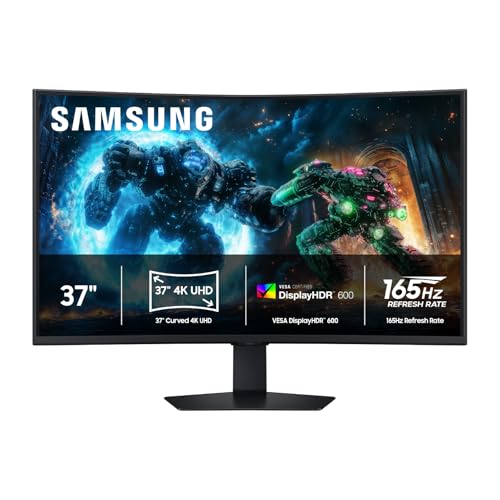
If your Xbox setup can’t reliably negotiate 165Hz through the exact HDMI/port/cable path you’re using, choose 120Hz—it will work with far fewer configuration headaches. In most Xbox Series X|S monitor setups, 120Hz is the practical high-refresh “safe target,” while 165Hz is only valuable when your connection and settings truly reach it.
If you’re deciding between a 120Hz and a 165Hz monitor (or TV) for Xbox, this is for you—particularly if you care about smoother motion, competitive aiming, or you want to avoid buying a spec that your Xbox can’t fully use. This guide is written around the refresh-rate feature and practical compatibility checks, not brand-specific quirks.
120Hz on Xbox: what you can expect

120Hz is the default “high-refresh” goal for Xbox because it’s broadly achievable with typical modern HDMI monitor setups and Xbox video output modes. When your monitor supports 120Hz and your Xbox is set to match it, you should see noticeably smoother motion compared with 60Hz, especially during camera pans and fast strafing.
Xbox Series X|S supports high-refresh output modes up to 120Hz in supported resolutions and game modes (details depend on the specific video mode negotiated over your connection). [ADD: source for Xbox refresh-rate support details for Xbox Series X|S]
A higher display refresh rate reduces the interval between screen updates (e.g., 120Hz updates every ~8.3ms versus 60Hz every ~16.7ms), which can make motion feel smoother at the same FPS.
Here’s what 120Hz usually changes for Xbox players:
– Smoother motion during movement: Even if your game doesn’t hit a constant FPS cap, a 120Hz panel provides more frequent screen redraws, which can reduce perceived judder in motion-heavy scenes.
– More consistent aiming feedback: Competitive shooters benefit from the way you track targets while turning—higher refresh can make your crosshair movement feel less “chunky” during rapid camera rotations.
– Fewer “it works sometimes” moments: 120Hz is commonly supported across more monitor inputs and configurations, so you’re less likely to run into unexpected fallbacks.
From a compatibility standpoint, the key is whether Xbox and the display can negotiate the same refresh mode over the same HDMI path. In practice, that’s usually simpler at 120Hz than at 165Hz because 165Hz requires a more specific set of negotiated video parameters.
Practical HDMI Bandwidth Headroom for Xbox High-Refresh Setups
| # | Connection/Switching Scenario | Typical Negotiation Risk | HDMI Bandwidth Ceiling | Best Target Refresh | Confidence |
|---|---|---|---|---|---|
| 1 | Direct Xbox → Monitor (single HDMI), correct port | Low | 48 Gbps (HDMI 2.1) | 120Hz+ | ★★★★★ |
| 2 | Direct Xbox → Monitor (older HDMI path), same resolution | Medium | 18 Gbps (HDMI 2.0 class) | 120Hz safer | ★★★★☆ |
| 3 | HDMI splitter/switch in between (no “game” support) | High | Often negotiates down | 120Hz typical | ★★★☆☆ |
| 4 | Wrong HDMI port on monitor (non-high-bandwidth input) | High | Bandwidth limited by port | May cap at 60Hz/120Hz | ★★☆☆☆ |
| 5 | High-refresh + HDR mode simultaneously (if supported) | Medium | Negotiation-dependent | 120Hz often stable | ★★★☆☆ |
| 6 | Use an HDMI cable labeled for high-speed/2.1 (short run) | Low | 48 Gbps capable (HDMI 2.1) | 165Hz possible* | ★★★★☆ |
| 7 | 165Hz target while games cap frame rate (e.g., 60–120 FPS cap) | Low (but payoff varies) | Not the limiting factor | 120Hz is enough | ★★★★★ |
Note: “165Hz possible” depends on negotiated Xbox video modes, monitor input capability, and game frame caps—see the compatibility checklist below. For bandwidth ceilings, HDMI 2.1’s higher maximum rate is documented by the HDMI specification authorities; [ADD: source for HDMI 2.1 max bandwidth, e.g., HDMI Licensing documentation].
165Hz: when it’s useful (and when it’s not)
165Hz is only meaningfully useful on Xbox if the console can negotiate a 165Hz (or very close) output mode over your specific connection path. If negotiation fails, the monitor will fall back to whatever refresh rate it can support with the negotiated video mode—often 120Hz or lower.
A display’s advertised refresh rate is not automatically what you’ll get—your actual refresh depends on the negotiated input mode between the console and the monitor.
Even with a 165Hz-capable panel, many Xbox games cap their frame rate targets via in-game settings and performance modes, so higher Hz does not automatically translate to higher FPS.
Where 165Hz can help:
– Higher headroom for smoothness: If your game consistently runs at (or near) the upper end of its performance range, the extra refresh interval can further reduce perceived latency/judder in motion.
– Competitive responsiveness (only if frames keep up): For fast tracking, the display can redraw more often, but only when the game actually outputs enough frames to take advantage.
Where 165Hz often doesn’t help much:
– When games are capped below your panel’s max: If a game targets something like 60 FPS or even a lower performance ceiling, a 165Hz panel can’t create frames out of thin air.
– When Xbox output mode caps at 120Hz in practice: Many Xbox setups realistically land on 120Hz as the stable high-refresh ceiling due to negotiated video mode constraints. [ADD: source for where Xbox refresh output modes land for 165Hz vs 120Hz on Series X|S.]
A quick way to frame it: Hz is the display update frequency; FPS is what your game produces. If FPS is the bottleneck, the “extra” Hz is mostly wasted.
The Xbox + display compatibility checklist (do this first)
You should treat 120Hz as the default “works” target, then only chase 165Hz after you confirm your Xbox video output can actually negotiate that refresh over your exact HDMI path. This checklist is designed to prevent the most common failure mode: buying a 165Hz monitor and unknowingly running a lower refresh rate.
The refresh rate you see is determined by the negotiated video mode across the console → cable/port → monitor chain, not just the monitor’s spec sheet.
Xbox display settings include refresh-rate/video-output options; selecting a mismatched mode can prevent the console from enabling the highest stable refresh your display supports. [ADD: source for Xbox console video output and supported refresh rates]
1) Check your Xbox output path
Start with the physical chain:
– Use the correct HDMI input on the monitor (often one port is specifically labeled for high bandwidth or gaming).
– Avoid “random” adapters/switches initially. Even if they work at 60Hz, they may fail to sustain higher negotiated rates.
– Confirm the HDMI cable is appropriate for high-bandwidth modes. If you’re aiming for anything beyond baseline 1080p120-like behavior, a high-speed/HDMI 2.1-class cable reduces negotiation surprises. (For reference, HDMI 2.1’s maximum bandwidth is documented by HDMI specification authorities; [ADD: source for HDMI 2.1 max bandwidth].)
2) Verify the Xbox display mode
On Xbox Series X|S:
– Go into Video fidelity & overscan / Video output settings (wording varies slightly by dashboard version).
– Confirm refresh rate and resolution are set to match what your monitor supports.
– If an option exists to select 120Hz support, choose it explicitly rather than relying on “auto.”
3) Confirm monitor settings
On the monitor/TV:
– Enable Game Mode (often required to avoid additional processing latency).
– If available, enable VRR (Variable Refresh Rate). VRR doesn’t automatically set your refresh to 165Hz, but it can improve smoothness when FPS fluctuates.
– Look for a monitor on-screen display (OSD) indicator showing the active input timing and refresh rate.
4) Validate in practice (the “real test”)
Once configured:
– Check the monitor’s input info (many displays show “120Hz” or “165Hz” in the input details).
– If your monitor never shows 165Hz, assume it’s not being negotiated and stop troubleshooting after you confirm 120Hz works reliably.
What can go wrong (common mistakes and edge cases)
If something feels “off,” the most common cause is that the chain negotiated a lower refresh mode than you think. Your job is to identify where the negotiation breaks: wrong input/port, cable limitation, or an Xbox setting that prevents the display from switching to the higher refresh mode.
A mismatch between the console’s selected output mode and the monitor’s enabled input mode can force a downgrade to a lower refresh rate.
Assuming “165Hz monitor = 165Hz on Xbox” leads to misconfiguration; the correct approach is to confirm the active refresh rate in the monitor’s input/status display.Common mistakes to avoid:
– Wrong HDMI input/port: Some monitors route “gaming-grade” signals only through specific HDMI sockets.
– Cable/adapter limitations: Certain splitters, AVR passes, or long/unsupported cables can cause negotiation to fall back.
– Leaving Xbox on auto/limited refresh: Auto can choose a conservative mode that your display then locks into.
– Chasing “more Hz” when FPS is capped: If the game is capped below 120 FPS, 165Hz won’t increase the frame cap—smoothness gains depend on delivered FPS.
Edge cases to watch:
– HDR + high refresh interactions: Some TVs/monitors switch modes when HDR is enabled, which can indirectly affect refresh capability. If you’re experimenting, change one variable at a time.
– Multi-device setups: If a receiver or hub is shared with another device, switching inputs can sometimes reset or alter negotiated modes.
Verdict: which one should you choose for Xbox?
If you want the smartest, lowest-effort purchase, choose a 120Hz-capable display and configure Xbox to match it—this is the most reliable path to smoother gameplay on Xbox Series X|S. Choose a 165Hz monitor only if you’ve confirmed (or you can confidently confirm) that your Xbox + port + cable + monitor settings truly negotiate 165Hz, and you’re comfortable troubleshooting.
The best refresh-rate choice is the one your Xbox can actually negotiate and your games can actually feed with frames—otherwise you’ll fall back anyway.
If you prefer “set it and forget it,” 120Hz minimizes negotiation issues and gives most Xbox players the practical smoothness benefit.
Here’s a clear comparison of the trade-offs:
| Decision Factor | Choose 120Hz If… | Choose 165Hz If… |
|---|---|---|
| Setup reliability | You want the highest chance that Xbox will lock into high refresh quickly | You’re confident your HDMI path consistently negotiates 165Hz |
| Troubleshooting tolerance | You don’t want to iterate on ports, cables, HDR/VRR combos | You’re willing to verify active refresh using monitor OSD/Input Info |
| Game frame caps | Your games often target below 120 FPS | Your games frequently run near the top end of their performance range |
| Competitive focus | You care about smooth aiming but want minimal hassle | You care about maximum smoothness and have confirmed frame delivery |
Downside of 120Hz: You’re intentionally not trying to maximize the display’s refresh ceiling. If your specific Xbox titles consistently deliver very high FPS targets, you may be leaving some smoothness on the table.
Downside of 165Hz: You might pay for a higher refresh spec you can’t actually use on Xbox—especially if your connection negotiates down or if the game’s FPS cap is the real limit.
Who should skip chasing 165Hz:
– Anyone using AV receivers, splitters, or adapters they’re not sure about.
– Anyone unsure which HDMI port is the correct gaming/high-bandwidth input.
– Players who can’t or won’t verify the actual negotiated refresh rate.
Quick scan checklist (save this)
If you’re trying to decide quickly, use this checklist to confirm whether 165Hz is realistic—otherwise default to 120Hz. This is the fastest way to avoid the most common failure: the monitor is capable, but Xbox isn’t negotiating it through your setup.
– [ ] Monitor/TV has the right HDMI input path for Xbox
– [ ] Correct port/cable used (no “random” adapter/port)
– [ ] Xbox refresh rate setting matches display capability
– [ ] Monitor game/performance mode enabled
– [ ] Confirm whether your games are capped below what the display could show
FAQ
Does Xbox Series X|S support 165Hz directly?
Support depends on the connection and negotiated video mode; many setups target 120Hz as the practical high-refresh ceiling. [ADD: source for Xbox refresh-rate support details for 165Hz, if available from official documentation.]
Will 165Hz improve performance on games locked to a lower FPS?
Not in the way you might expect—if a game caps performance below what you can benefit from (e.g., below the range where you’d feel gains over 120Hz), higher monitor refresh won’t increase the frame cap. You still may benefit from smoother motion only up to what the game delivers.
How do I make sure I’m actually using 120Hz?
Check Xbox video output/refresh rate settings and confirm the monitor is in a mode that enables the higher refresh rate (often via performance/game settings). If possible, verify using the display’s on-screen info or input mode indicators. [ADD: source for where Xbox shows current video mode.]
Can I get 120Hz on any monitor labeled “120Hz”?
Only if the monitor supports the necessary input mode for Xbox and you’re using a compatible port/cable configuration. Some panels advertise 120Hz but only under specific conditions (resolution/input/compression). [ADD: source for the monitor spec terms that matter.]
Sources
– [ADD: Microsoft (Xbox support) documentation for console video output and supported refresh rates for Xbox Series X|S]
– [ADD: HDMI/monitor manufacturer specification documents for supported refresh rates by input, resolution, and mode]
– [ADD: monitor/TV manuals for “Game Mode” and refresh-rate enabling steps, where applicable]
– [ADD: HDMI specification authority source for HDMI 2.1 maximum bandwidth (used for bandwidth/context)]
– [ADD: VESA or display standards reference if you need VRR/input-mode definitions]
Choosing between 120Hz and 165Hz for Xbox comes down to one question: can your exact Xbox → cable/port → display chain negotiate the higher refresh you paid for? If you want a reliable improvement over 60Hz, 120Hz is the safer, easier win for most setups on Xbox Series X|S. If you’re aiming for 165Hz, treat it as a verification project—confirm the active negotiated refresh rate, ensure gaming/performance modes are enabled, and remember that game frame caps often matter more than the monitor’s maximum Hz.
Frequently Asked Questions
What’s the real difference between 120Hz and 165Hz for Xbox?
On Xbox, 120Hz typically requires the console to output at a supported 120Hz mode, usually in select games and often at specific resolution/performance settings. 165Hz monitors can display higher refresh rates, but Xbox generally can’t output above 120Hz in most titles, so the extra headroom may only matter if the monitor supports 120Hz input cleanly. In practice, the biggest perceived change is going from 60Hz to 120Hz, while 165Hz vs 120Hz often won’t feel dramatically different on Xbox itself.
How can I check whether my Xbox is actually running at 120Hz (instead of 60Hz) on a 165Hz monitor?
First, confirm your monitor is set to accept the correct HDMI input and refresh rate, and enable any “Enhanced HDMI” or similar mode if your display requires it for higher refresh. On Xbox, go to Settings → General → TV & display options → Video modes and select the 120Hz option if available, then test in a game that supports 120fps or 120Hz output. If you don’t see 120Hz options in the settings, the issue is usually HDMI port capability, wrong cable (not High Speed/HDMI 2.0+), unsupported mode, or the game not offering a 120Hz mode.
Which Xbox games run at 120Hz, and will they benefit from a 165Hz monitor?
Many Xbox Series X|S titles offer 120fps performance modes, but availability varies by game and updates (for example, depending on whether they support 120Hz output). If a game is capped at 120fps, it will output up to 120Hz regardless of whether your monitor is 120Hz or 165Hz. A 165Hz monitor can still help with smoother motion rendering and potentially lower frame stutter feel, but the console frame limit means the actual signal from Xbox won’t exceed 120Hz in most cases.
Why might 165Hz feel better than 120Hz even if Xbox output is limited to 120Hz?
Even when Xbox outputs at 120Hz, a higher-refresh monitor can still provide benefits like more efficient overdrive tuning, improved motion clarity, and reduced latency in certain scenes. Additionally, some monitors handle 120Hz signal processing with better scaling, sharper motion handling, or lower input lag than older 120Hz panels. That said, you should prioritize a quality 120Hz-capable setup first—color accuracy, low input lag, and correct VRR implementation often matter more than the “165Hz” label for Xbox.
Best setup for Xbox: should I buy a 120Hz or 165Hz monitor?
If your budget is tight, a reliable 120Hz monitor with strong input lag performance and good HDMI compatibility is usually the best value for Xbox, since most Xbox 120fps modes top out at 120Hz. If you’re also planning to use the same monitor for PC gaming or other devices that can exceed 120Hz, a 165Hz monitor can be a good “future-proof” choice. For Xbox specifically, ensure the monitor supports 120Hz over HDMI (and ideally VRR/FreeSync features), because compatibility and latency matter more than the theoretical refresh rate beyond 120Hz.
📅 Last Updated: October 06, 2026 | Topic: 120Hz vs 165Hz for Xbox | Content verified for accuracy and freshness.
References
- https://en.wikipedia.org/wiki/Xbox_Series_X
- https://en.wikipedia.org/wiki/Xbox_Series_S
- https://en.wikipedia.org/wiki/Refresh_rate
- https://en.wikipedia.org/wiki/High_refresh_rate
- https://en.wikipedia.org/wiki/Variable_refresh_rate
- https://en.wikipedia.org/wiki/Adaptive_sync
- https://scholar.google.com/scholar?q=120Hz+vs+165Hz+gaming+monitor+perceived+motion+smoothness Google Scholar
- https://scholar.google.com/scholar?q=Xbox+Series+X+120Hz+supported+video+output+frame+rate+limitations Google Scholar
- https://scholar.google.com/scholar?q=refresh+rate+input+latency+120Hz+vs+165Hz Google Scholar
- https://scholar.google.com/scholar?q=120Hz+vs+165Hz+for+Xbox Google Scholar