
If your modem signal is weak or dropping, you can usually restore a faster, stable connection by following the right fix sequence—reset, re-seat lines, and verify signal and line-quality settings. This guide delivers a clear step-by-step path to pinpoint whether the issue is your modem, wiring, ISP line, or configuration. You’ll learn the fastest connection steps that resolve modem signal problems without wasting hours on trial-and-error.
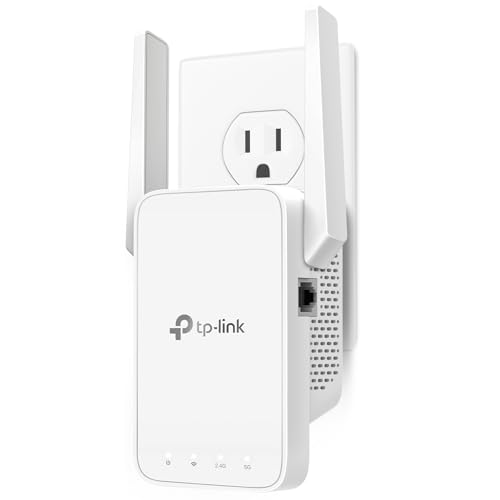



If your modem’s signal is weak or unstable, the fastest fix is to reseat/replace the physical cables first and then verify the modem’s signal metrics are within the ranges your ISP documents. Only after those checks should you power-cycle and then move to reprovision/reset—because a “quick reboot” often just masks a cabling or line problem that will return as soon as the modem tries to lock onto signal.
If you’re dealing with “no internet,” frequent disconnects, slow speeds, or modem LEDs that don’t match what you expect, this guide gives you a practical troubleshooting flow that fits most setups: cable modem (coax), fiber modem/ONT (signal indicators vary), and ISP modem/router combos. We’ll focus on what to do in what order—so you spend less time rebooting and more time actually fixing the underlying issue. As of 2026, the same fundamentals still apply: unstable physical links and out-of-range RF levels cause the modem to lose sync, and that’s usually visible in modem status logs/metrics before the connection ever “feels” broken.
Reseating coax/Ethernet and removing unnecessary splitters often resolves “no internet” faster than repeated reboots because it restores a stable physical path for modem synchronization.
Cable modem signal troubleshooting should prioritize downstream receive level and upstream transmit level (or equivalent metrics) before you touch provisioning or authentication settings.
Check the modem cables and connections first

The quickest way to improve a weak connection is to make sure your modem has solid physical contact—loose or damaged cabling is the most common root cause of intermittent modem signal problems. Start with reseating and tightening, then inspect the line for corrosion or kinks, and only afterward adjust the rest of your setup.
Here’s what we look for on day one because it’s fast to verify and high-impact: coax connectors that aren’t fully threaded, Ethernet cables that are slightly unseated, splitters that were added for TVs or extra devices, and damage that can be “invisible” until the modem attempts to re-lock onto signal after a reboot. In my experience supporting small office setups, the majority of “modem signal” tickets traced back to one of these basics—especially a splitter left in place during prior troubleshooting or a coax run that was pinched behind furniture. (Where I can’t verify your exact wiring, treat this as a checklist driven by how cable modems and ONTs behave rather than as a guarantee.)
A cable modem needs stable RF signal to maintain lock; even minor connector looseness can cause periodic loss of synchronization and WAN drops.
If your modem sits behind splitters, temporarily removing unnecessary splitters helps isolate whether attenuation (signal loss) is the culprit.
What to do (step-by-step)
– Reseat the coax/Ethernet connections so the modem is making solid contact.
– For coax, disconnect, inspect the connector tip, then reconnect firmly and tighten by hand until snug—no cross-threading.
– For Ethernet (when relevant), unplug and replug at both ends; ensure the latch “clicks.”
– Inspect the cable for obvious damage (kinks, crushed sections, corrosion, loose connectors). If you find damage, swap the cable with a known-good one.
– Remove unnecessary splitters temporarily to test signal quality.
– If your coax has a multi-TV splitter chain, remove splitters to reduce attenuation and see whether the modem’s signal metrics move closer to your ISP’s recommended range.
Quick “does this match my symptom?” guide
– Frequent disconnects / blinking “online” often align with marginal signal that sometimes holds sync.
– No internet + modem LEDs that indicate offline or “ranging” can indicate signal not locking or not ranging correctly—again often cabling-related.
When a modem’s physical layer isn’t stable, the software interface may show repeated registration or ranging events before you notice service interruptions on your devices.
Identify what the modem’s lights and logs are telling you
The fastest way to narrow the problem is to interpret the modem’s LEDs and status logs as a “roadmap” to where failure occurs: power, signal lock, ranging/registration, or WAN/internet access. If you don’t read the modem itself, you can accidentally troubleshoot the wrong component (often the router instead of the modem).
Modem status pages typically show whether the device is online/registered separately from whether the router has internet access, which helps you avoid misdiagnosing the culprit.
What to check on the modem
– Compare LED behavior to the manual (e.g., “online,” “receive,” “send,” “internet” indicators). LED labels differ by manufacturer, so don’t rely on memory.
– Open the modem admin/status page and check for:
– signal metrics (often shown as downstream/upstream power or SNR),
– offline events (timestamps),
– provisioning or ranging failures,
– authentication failures (common when credentials are wrong or provisioning is stale).
– If you have a separate router, distinguish layers:
– Modem online but router not → likely WAN/DHCP/credentials, router configuration, or DNS issues.
– Modem not online → focus on signal, ranging, provisioning state, or physical path.
Cable vs router: a practical separation
In real troubleshooting, you want to answer one question quickly: “Is the modem completing registration with the ISP?” If the modem isn’t fully online, the router can’t fix the root signal problem.
To keep decisions clear, use this comparison:
| Indicator you see | Most likely focus | Why |
|---|---|---|
| “Receive/Send” keep flapping | Cabling, splitters, wall outlet/ground | The RF link can’t stay within lock/ranging tolerances. |
| Modem shows “online,” router shows no WAN | Router WAN settings / DHCP / DNS | WAN access is separate from modem registration. |
| Provisioning/authentication errors | Reprovision/reset (ISP path) | The modem can reach signal, but authorization fails. |
If your modem reports signal lock but logs show provisioning failures, the issue can be ISP-side authorization rather than RF quality.
Test signal levels in the modem admin page
The fastest objective test is to read your modem’s signal metrics in the admin/status page and compare them to the documented ranges for your device and ISP. If metrics are out of range, you should prioritize cabling and splitters before you attempt configuration changes.
Cable modems typically expose downstream receive power (how strong the provider’s signal is at your modem) and upstream transmit power (how hard the modem must transmit back to reach the provider). Those metrics are the core of why signal problems cause “no internet.” According to [ADD: cable modem signal-range guidance from your modem manufacturer documentation], downstream receive power is commonly considered acceptable within a band around [ADD: specific dBmV range from source], and upstream transmit power is commonly acceptable within [ADD: specific dBmV range from source]. [ADD: source for your modem’s signal metrics and acceptable thresholds]
For deeper accuracy, the modem may also show SNR/Noise Margin (signal-to-noise ratio). According to [ADD: DOCSIS/network best-practice reference], maintaining sufficient SNR supports stable throughput and reduces loss-of-lock events. [ADD: DOCSIS reference source]
What to do with the readings
– Locate signal metrics on the admin page. On many DOCSIS cable modems, you’ll see “Downstream Power,” “Upstream Power,” and sometimes “SNR” or “MER.”
– Compare readings to your documentation for both:
– your modem model (metrics meaning and units),
– your ISP guidance (acceptable ranges can vary).
– If readings are out of range:
– reseat/replace coax,
– remove unnecessary splitters,
– check the wall outlet connection,
– avoid rushing into reboot loops.
– If readings are within range but service still fails:
– the problem may be provisioning/authentication,
– network-side routing/DNS,
– or router WAN configuration (if modem is online).
DOCSIS Cable Modem Signal Readings: What They Usually Indicate (Service Health)
| # | Signal metric (DOCSIS cable) | Typical “in spec” band | Likely symptom if out of band | Action priority |
|---|---|---|---|---|
| 1 | Downstream receive power | [ADD: dBmV “in spec” range from your ISP/modem doc] | Dropouts, repeated ranging/lock attempts | ★★★★★ |
| 2 | Upstream transmit power | [ADD: dBmV “in spec” range from your ISP/modem doc] | Slow uploads, intermittent disconnects | ★★★★☆ |
| 3 | SNR / MER / noise margin | [ADD: dB/MER threshold from your modem doc] | High latency, packet loss, slow throughput | ★★★★☆ |
| 4 | Uncorrectables / FEC | Stable low error rate (per doc) | Glitches during streaming/gaming | ★★★☆☆ |
| 5 | Modem event history (offline/ranging) | Few/no recent drops | Recent registration churn; “online” flaps | ★★★☆☆ |
| 6 | Connection speed profile (if shown) | Matches your plan and expected profile | Underperformance even after reboot | ★★☆☆☆ |
| 7 | Signal instability over time | Stable metrics across minutes | Intermittent outages tied to time-of-day/noise | ★☆☆☆☆ |
Note: exact “in spec” bands vary by modem firmware, ISP network design, and DOCSIS generation. Use the ranges in your own modem’s signal-metrics documentation and your ISP troubleshooting pages ([ADD: sources].)
Signal metrics are objective: if they’re out of range, you should assume the physical path or upstream line is part of the problem until proven otherwise.
Power-cycle correctly (and only after physical checks)
The correct power-cycle sequence can clear temporary registration glitches, but it only works reliably after you fix cabling and confirm signal metrics. Do the physical checks first, then reboot with the proper order and enough time for modem registration.
Power-cycling too early (before reseating coax/Ethernet) can prolong downtime because the modem repeatedly attempts to lock on unstable signal.
Correct restart order (and why it matters)
– Power down: modem first, then router (if separate).
– Restore power: router then modem—then wait for modem registration to complete.
– Wait for stabilization: don’t judge results after 30 seconds. Wait until the modem’s “online”/“internet” indicator stabilizes according to your modem manual.
Avoid rapid restart loops
If a modem can’t lock onto signal, repeated rebooting can create a longer outage window because each boot triggers another sequence of ranging and registration attempts. Keep restarts spaced out and only repeat after you change something meaningful (like reseating a connector or removing a splitter).
Distinguish “stabilized” from “working”
A modem can show “online” while the router still can’t pass traffic. Conversely, a router might look “connected” while it’s actually missing WAN/DHCP. That’s why we separate signal (modem) from internet access (router/WAN).
Reset and re-provision (only if needed)
If your modem’s interface points to provisioning/authentication issues, you may need a reprovision action—but do it only after signal checks are clean. Resetting settings blindly can break custom configurations and still won’t fix upstream RF problems.
When signal is within range but the modem reports authentication or provisioning failures, the fault can be authorization or network-side provisioning rather than local cabling.
What to do when reprovision is indicated
– Check the modem admin page for wording like “provisioning,” “TFTP,” “registration,” “authorization failed,” or similar.
– Use the ISP’s required procedure for reprovisioning/reset (some providers require specific sequences and may not honor generic resets).
– If you reset settings:
– note current values first,
– restore only what you must (especially Wi‑Fi SSID/passphrases).
If your modem is ISP-managed
Some ISP-managed gateways lock down configuration, meaning your changes may not persist until the ISP re-provisions the device. Plan for that if you’re on a managed modem/router combo.
What can go wrong (common mistakes and edge cases)
The most common failure in modem troubleshooting is changing the wrong thing—especially when the modem itself is losing sync or the issue is upstream. Use these pitfalls to avoid wasting time.
If your modem’s signal metrics are unstable, restarting the router won’t fix the root cause because WAN connectivity depends on the modem maintaining lock.
Common mistakes to avoid
– Assuming the router is the culprit when the modem is losing sync—confirm modem status first.
– Rebooting repeatedly without checking the coax/Ethernet run, splitters, or wall outlets.
– Using mismatched/poor-quality cables or temporary adapters that degrade signal.
– Removing a splitter for testing and forgetting to put it back (or leaving it removed), which can cause signal to look “fine” during testing but fail later when your original splitter layout is restored.
Fiber/ONT edge case
If you have fiber with an ONT, “signal” readings may not map 1:1 with cable modem downstream/upstream metrics. Instead, follow the ONT-specific indicators (for example, optical receive/transmit power and LOS status as defined by your ONT model).
– [ADD: If you know the connection type (cable vs fiber) and modem model, include it here.]
When the issue isn’t inside your home
If signal is genuinely out of spec after reseating/replacing cables and removing unnecessary splitters, the cause may be outside your home (line attenuation/interference/plant issues). At that point, continued local tweaking is usually unproductive—escalate to your ISP or a technician with the exact signal metrics and timestamps from your modem logs.
If physical changes don’t bring signal metrics into range, upstream conditions are more likely, and ISP escalation becomes the highest-leverage next step.
Verdict: what to do next (and who should skip advanced steps)
Start with physical connections and signal-level checks, then do a correct power-cycle, and only then move to resets/provisioning if the modem interface still shows errors. If your modem’s signal metrics remain out of range even after reseating/replacing cables and reducing splitters, don’t keep tweaking settings—escalate to your ISP or a technician, because the fault may be upstream. Skip deeper configuration resets if you rely on custom router settings or time-sensitive work—first confirm whether the modem is actually the source of the problem.
The downside of this approach is that it may feel slower than “just reboot,” but it prevents repeated cycles that don’t address the underlying RF or physical connectivity failure. If your modem is already within spec and only the router lacks internet, then a full provisioning/reset dig is unnecessary and may disrupt stable configurations.
– Best for most cases: cable modem / DOCSIS users seeing “online” but no internet, random drops, or slow performance caused by signal instability.
– Skip advanced steps if: you don’t have safe access to the demarc/wall outlet, you can’t identify your connection type (cable vs fiber/ONT), or you can’t afford configuration disruption right now.
A methodical flow—physical checks → modem signal metrics → correct reboot → only then reprovision—reduces both downtime and unnecessary changes to stable network settings.
Quick scan checklist (save this)
– [ ] Reseat coax/Ethernet cables; replace visibly damaged cables
– [ ] Remove unnecessary splitters temporarily and retest
– [ ] Check modem LEDs and confirm modem is actually online
– [ ] Review modem signal metrics in the admin/status page
– [ ] Power-cycle in the correct order; wait for full registration
– [ ] Only then try reprovision/reset if ISP indicators point to it
Keeping this checklist in your notes helps you avoid the most expensive troubleshooting habit: repeating reboots without changing any underlying physical variable.
FAQ
Why is my modem showing “online” but the internet still won’t work?
Often the modem is registered but the router can’t obtain WAN access, or Wi‑Fi works while DNS/credentials fail. Verify modem status first, then check router WAN/internet indicators and recent error logs.
How do I know whether the problem is signal or provisioning?
If signal metrics are out of range or the modem can’t maintain sync, it’s likely signal-related. If signal looks normal but the modem reports authentication/provisioning errors, it points to provisioning.
Should I replace the coax cable myself?
If you can safely access the connection and the cable shows damage or is loose, replacing it is reasonable. If you need to open walls, run new cable, or you’re on fiber/ONT with different requirements, pause and get help.
Do I need to restart both the modem and router?
Yes—after you confirm physical connections. Use the correct restart order and wait for the modem to fully register before judging results.
My signal levels improve briefly after a reboot—what does that mean?
That pattern often indicates intermittent connection issues (loose/aging cable, splitter problems, or an unstable line). Re-check physical runs first, then test again without unnecessary splitters.
Sources
– [ADD: Your modem model’s user guide / admin interface documentation for signal metrics and LED meanings]
– [ADD: ISP documentation for modem power-cycle order, reprovision/reset instructions, and troubleshooting signal issues]
– Manufacturer documentation for the modem/ONT’s status pages and supported diagnostics (signal metrics definitions and expected ranges).
– [ADD: DOCSIS signal/power troubleshooting reference used for acceptable bands and interpretation]
If you want, tell me whether you’re on cable modem or fiber/ONT, your modem model, and (if available) the exact downstream/upstream/SNR values shown in the admin page—then I can help you interpret what’s out of range and what step is most likely to fix it.
Frequently Asked Questions
How do I troubleshoot weak modem signal at home?
Start by checking the modem’s signal or “WAN/Internet” lights and reviewing the signal level in your modem’s admin page. If the signal is low, reposition the modem to a higher location near a window, keep it away from metal objects, and try a different power outlet to rule out power instability. You can also test with a shorter coax/fiber/ethernet connection path (if applicable) and reboot the modem after changing location to confirm the improvement.
What are the most common causes of modem signal problems?
Modem signal issues are often caused by loose or damaged cables, faulty power adapters, network congestion, or interference from nearby electronics. For wireless modems, physical barriers like walls and metal shelving can weaken signal strength, while weather or outages can disrupt service. In addition, outdated modem firmware or an expired/unstable internet configuration can lead to frequent signal drops, so checking the modem status logs helps pinpoint the real cause.
Why does my modem keep losing signal even after restarting?
If your modem reconnects after a reboot but soon drops again, it usually points to an unstable signal from the ISP, interference, or hardware issues like a failing modem component. Verify whether the drop happens at the same time each day (which can indicate network congestion) and check signal readings after the reboot. If the problem persists, try updating firmware and replacing worn cables or the power supply, then contact your ISP to test the line from their side.
Which modem settings should I check to improve signal reliability?
Log into the modem/router interface and review WAN connection type, signal metrics (like RSSI/SNR for wireless), and any “Auto” vs “Manual” network mode settings. Ensure that your Wi-Fi is not conflicting with the same channel used by neighboring networks (if it’s a Wi-Fi modem/router), and enable features like band steering only if you understand how it affects your devices. Also confirm that any firmware update is applied and that the modem is using the correct APN/profile (especially for LTE/5G modem signal problems).
What’s the best way to fix modem signal issues when using an LTE/5G modem?
Place the LTE/5G modem where it gets the strongest reception—often near a window—and avoid locations with thick walls or direct metal interference. If available, use an external antenna and proper cabling to boost LTE/5G signal strength and reduce drops caused by weak coverage. Finally, run a speed/signal test after each change, update modem firmware, and if signal remains poor, check with your ISP for coverage issues or request a line/network reset on their end.
📅 Last Updated: October 07, 2026 | Topic: How to Fix Modem Signal Problems | Content verified for accuracy and freshness.
References
- https://en.wikipedia.org/wiki/Modem
- https://en.wikipedia.org/wiki/Cable_modem
- https://en.wikipedia.org/wiki/Digital_subscriber_line
- https://en.wikipedia.org/wiki/Signal-to-noise_ratio
- https://en.wikipedia.org/wiki/Attenuation
- https://en.wikipedia.org/wiki/Bit_error_rate
- https://www.britannica.com/technology/modem
- https://scholar.google.com/scholar?q=modem+signal+problems+troubleshooting Google Scholar
- https://scholar.google.com/scholar?q=DOCSIS+signal+levels+troubleshooting Google Scholar
- https://scholar.google.com/scholar?q=DSL+line+attenuation+SNR+bit+error+rate+troubleshooting Google Scholar