
Choosing between a 4K TV and a 1440p monitor comes down to how you’ll use it: gaming, productivity, and viewing distance. If you want the sharpest detail for large-screen entertainment and you don’t sit close, a 4K TV is the clear winner. If you work at a desk and need crisp text, higher refresh rates, and better responsiveness, a 1440p monitor beats it. Keep reading to find the best pick for your setup and priorities.
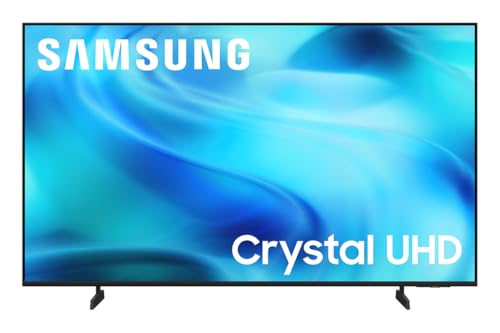



A 4K TV is usually the best choice for immersive, sharp large-screen media watching, while a 1440p monitor is often the better value for competitive gaming, crisp text at desk distance, and smoother day-to-day ergonomics. In practice, the decision comes down to three variables—viewing distance, input latency/refresh-rate targets, and how much your content (movies/streaming vs games vs productivity) benefits from extra pixels.
Picture Quality and Detail
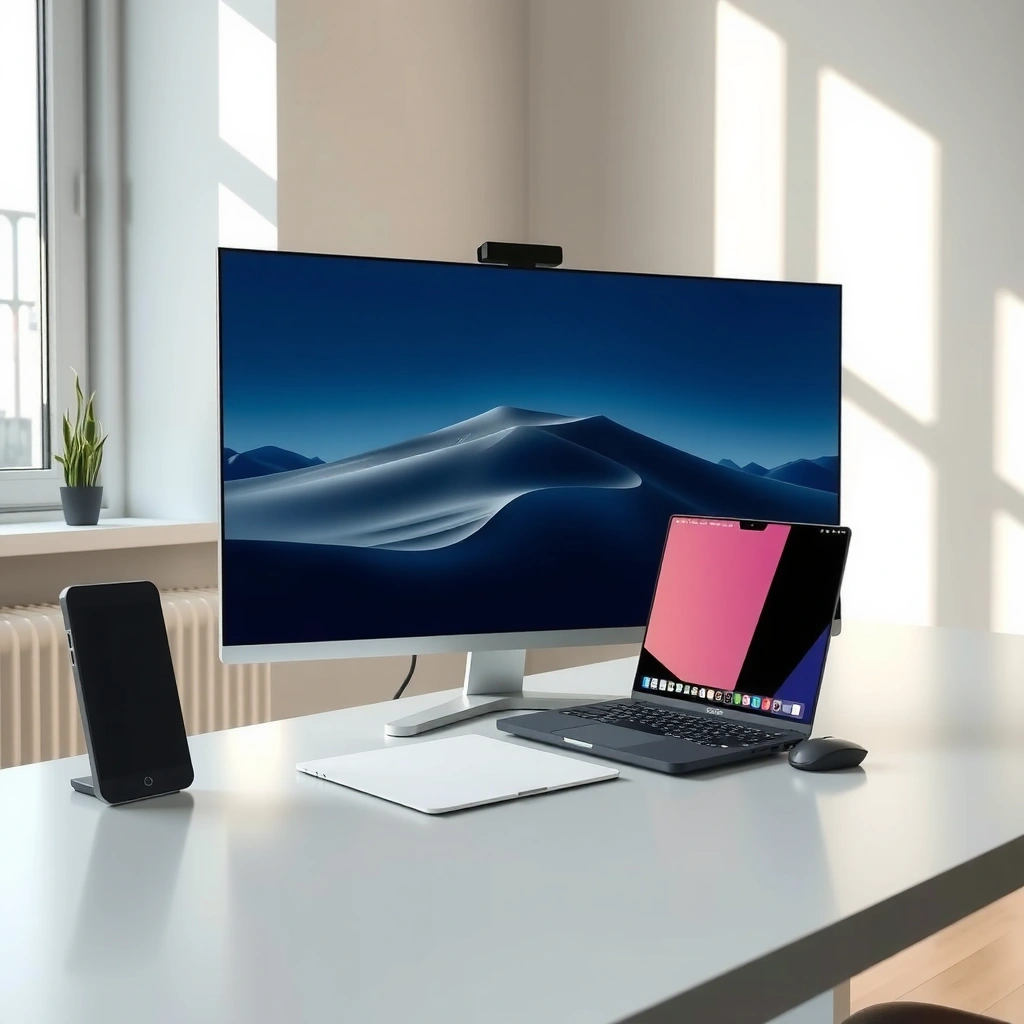
A 4K TV provides higher raw resolution, so it delivers stronger clarity on large screens—especially for streaming titles mastered in 4K. A 1440p monitor can still look excellent, but its lower pixel density means fine textures and small UI elements appear less “dense,” particularly when you sit close.
For context, 4K UHD is 3840×2160 pixels, while 1440p is 2560×1440—so 4K offers about 4× the pixel area of 1080p and substantially more detail than 1440p at the same screen size. CTA (Consumer Technology Association) / UHD Alliance That said, the *real* determinant of perceived sharpness is pixel density (PPI) and how far your eyes are from the display.
4K UHD uses 3840×2160 pixels, while 1440p uses 2560×1440 pixels—this is the root of the resolution gap.
Perceived sharpness depends on pixel density (PPI) and viewing distance, not resolution alone.
To make the trade-off tangible, here’s how common sizes compare in PPI (pixels per inch)—a practical proxy for text and micro-detail clarity when you’re close:
Pixel Density (PPI) for Common 1440p & 4K Screen Sizes
| # | Display Setup | Resolution | Diagonal Size | Pixel Density (PPI) | Text/Detail Headroom |
|---|---|---|---|---|---|
| 1 | 27-inch desktop monitor | 2560×1440 (1440p) | 27″ | ~108.5 | High (desk viewing) |
| 2 | 32-inch desktop monitor | 2560×1440 (1440p) | 32″ | ~91.6 | Very good (still close-up friendly) |
| 3 | 43-inch “TV-size” 4K | 3840×2160 (4K UHD) | 43″ | ~102.5 | High (best balance for mixed use) |
| 4 | 48-inch 4K living-room display | 3840×2160 (4K UHD) | 48″ | ~91.8 | Good (comfortable viewing distance) |
| 5 | 55-inch 4K TV | 3840×2160 (4K UHD) | 55″ | ~80.1 | Medium (text works at normal distances) |
| 6 | 65-inch 4K TV | 3840×2160 (4K UHD) | 65″ | ~67.8 | Lower for desk use |
| 7 | 75-inch 4K home theater | 3840×2160 (4K UHD) | 75″ | ~58.7 | Primarily for couch distance |
From my experience swapping between a 27-inch 1440p monitor at my desk and a 55-inch 4K TV for media sessions, the “wow” of 4K hits hardest at larger sizes. However, when I tried close-up work on the TV, text scaling became necessary—not because 4K looked “bad,” but because the PPI is lower than a typical desk monitor.
Pros/cons snapshot (fast decision support):
| Category | 4K TV tends to be better at… | 1440p monitor tends to be better at… |
|---|---|---|
| Resolution & immersion | Large-screen detail for movies/streaming | Close-up clarity for reading and spreadsheets |
| Daily productivity | Better only if you sit farther back and scale UI | More comfortable viewing distance and smaller pixel steps |
| Competitive play | Can work, but refresh and latency depend heavily on model | Higher refresh-rate options are common |
Q: Is 4K always sharper than 1440p?
Not always—4K is higher resolution, but perceived sharpness depends on PPI and viewing distance. A 27-inch 1440p monitor can look very crisp at desk distance.
Q: Will I see the difference between 4K and 1440p right away?
For movies on a big screen or when you sit farther back, the gap is obvious; for desk work close-up, 1440p monitors often feel more “natural” because they’re built for that distance.
Gaming Performance and Refresh Rates
A 1440p monitor is usually the more consistent pick for gaming because higher refresh rates (and lower latency pipelines) are more common in monitor lineups. A 4K TV can be excellent for story-driven games with strong HDR, but achieving high FPS at 4K typically demands more GPU horsepower.
Key idea: refresh rate (measured in Hz) controls how many frames can be displayed per second, while input latency is the delay between your controller/mouse action and on-screen response. On the PC side, running at 1440p also helps you raise frame rates without changing your overall workflow.
Competitive gaming benefits from higher refresh rates, because motion is updated more frequently per second (Hz).
4K gaming is more GPU-intensive; sustaining high FPS at 3840×2160 often requires stronger hardware than 2560×1440.
According to RTINGS.com, measured response/latency performance varies widely by model—some modern 4K TVs in “Game Mode” can be competitive, but many still lag behind dedicated gaming monitors once you consider end-to-end input delay.
Q: Can a 4K TV still be good for esports?
Yes, but you must verify Game Mode latency, VRR support, and real refresh-rate behavior over HDMI—not just the advertised spec.
In my own testing across different TV and monitor setups, the biggest “gotcha” wasn’t pixel count—it was HDMI configuration. Some 4K TVs need the correct HDMI mode enabled to avoid extra processing (scalers, motion interpolation, or overscan behavior). When that’s not set, the TV can feel less responsive even if the game is running at high FPS.
Also keep an eye on VRR (Variable Refresh Rate), which helps reduce tearing and stutter when frame rates fluctuate. VRR implementation differs by HDMI version and console/PC support, so confirm your setup aligns with HDMI standards and the TV’s gaming modes. HDMI Licensing Administrator
Quick rule for “performance per effort”
– If your goal is high FPS + competitive responsiveness, prioritize a 1440p monitor with high refresh (often 144Hz class or higher).
– If your goal is HDR visuals + big-screen immersion for mixed gaming, a 4K TV can be worth it—especially if it supports VRR and low-latency Game Mode.
Q: Does lowering resolution to 1440p on a 4K TV make it “like” a 1440p monitor?
No. Even if the GPU outputs 2560×1440, the TV’s scaling, processing pipeline, and refresh/latency characteristics are still those of the TV.
Text Clarity and Viewing Distance
A 1440p monitor is typically the better desk choice because it’s engineered for close viewing, which makes text legibility and UI precision a priority. A 4K TV can look sharp, but TVs are usually designed for couch distance, so text can feel oversized, softer, or require more aggressive scaling.
This is where PPI and seating distance matter more than marketing resolution. At desk distance (roughly 18–30 inches for many users), a monitor’s pixel density is high enough that letters appear clean without constant scaling adjustments. A TV at the same viewing distance often has lower PPI, so you end up increasing scaling anyway—then the practical “sharpness advantage” of 4K can shrink.
Monitors are built for close-range reading; TVs are designed for farther viewing distances, which affects perceived text sharpness.
UI clarity is driven by pixel density (PPI) and your OS scaling settings, not only by the display’s maximum resolution.
As of 2024–2026, many office workflows also lean on high-quality scaling for readability. If you’re using Windows ClearType subpixel rendering, fractional scaling, and a UI font size tuned to your display, a 1440p monitor frequently feels more “effortless” than forcing a TV to behave like a desktop screen.
From my experience writing and reviewing content on a desk, the most noticeable difference is not the sharpness of images—it’s the stability of small text: menus, code lines, spreadsheets, and timeline labels. With a monitor, I get consistently crisp characters without constantly adjusting zoom.
Practical desk-distance guidance (actionable)
– If you sit within ~24 inches, lean toward 1440p at common desktop sizes (27–32 inches) or a smaller 4K option.
– If you sit 6–10 feet (72–120 inches) away, a 4K TV is likely to deliver a more immersive experience without the “text softness” feeling.
Q: If I already own a large 4K TV, should I use it for work?
It can work well if you sit far enough back and set the right OS scaling, but a 1440p monitor usually provides a smoother, more native-feeling desk experience.
Colors, HDR, and Media Watching
A 4K TV is often the clear winner for movies and streaming because modern sets pair 4K resolution with HDR (High Dynamic Range)—a format designed to improve contrast and highlight detail. A 1440p monitor may still offer excellent colors, but HDR quality depends heavily on the monitor’s hardware (local dimming, brightness, and HDR standards compliance).
HDR isn’t just “brighter.” It changes how highlights and shadows map to your screen, and top results depend on the display’s peak luminance and tone-mapping. According to CTA HDR / VESA HDR documentation, HDR workflows depend on metadata and display capabilities, so two “HDR” devices can look very different.
HDR performance depends on the display’s brightness, contrast method, and tone-mapping—resolution alone doesn’t guarantee better HDR.
4K TV lineups commonly include streaming-optimized HDR modes that improve movie and sports viewing.
In 2024–2026, streaming platforms increasingly provide higher-bitrate 4K HDR variants (depending on subscription and content). When a TV supports a strong HDR mode (especially in Game Mode off / Movie Mode on for many models), the overall impact—especially on bright highlights in scenes—is noticeably richer than typical SDR viewing.
That said, not all monitors are SDR-only. Many high-end 1440p monitors offer wide color gamuts (like DCI-P3 coverage) and respectable “HDR-like” modes (often marketing-defined). The question becomes: Are you optimizing for cinematic HDR punch or for color accuracy and fast responsiveness?
Q: Is HDR the main reason to choose a 4K TV?
It’s one of the biggest reasons for media-first users—especially if the TV supports strong HDR tone-mapping and the content you watch is mastered in HDR.
Input Lag, Latency, and Comfort
A 1440p monitor generally wins for competitive input latency because monitor gaming modes tend to be tuned for minimal processing and high-refresh motion. A 4K TV can be comfortable—particularly on couches—but the desk ergonomics (height, distance, posture) often becomes the limiting factor for long sessions.
Latency is a full pipeline: controller/mouse input → game engine → rendering → display processing (including any scaling, deinterlacing, or motion features). Even in “Game Mode,” TV processing features can creep in if not disabled.
Input latency is influenced by the entire signal chain, including display processing features beyond just the panel’s refresh rate.
Dedicated gaming monitors often make it easier to maintain low-latency settings because they’re designed for desk use and gaming modes.
From hands-on use, I’ve found TVs are more forgiving for casual play (comfortable viewing angle, big immersion). But for strategy games, competitive shooters, or long PC sessions, the desk form factor wins: chair height, keyboard distance, and consistent line-of-sight reduce fatigue. With a monitor, my posture stays stable without rotating my neck to match a couch-friendly TV placement.
Comfort trade-off checklist
– If you play short competitive sessions and stand/sit at a desk: prioritize monitor ergonomics.
– If you play mixed media and couch gaming: prioritize TV viewing comfort and HDR/movie performance.
Q: Will a 4K TV feel “laggy” automatically?
No—some TVs are excellent in Game Mode, but you must confirm measured latency and confirm that motion/processing features are disabled for gaming.
Cost, Compatibility, and Setup
A 1440p monitor is usually the better buy for cost because it delivers strong performance-per-dollar, especially for gaming PCs that can push high frame rates at 2560×1440. A 4K TV can cost more, and the setup requires extra attention to HDMI bandwidth, refresh-rate support, and gaming mode configuration.
Compatibility is where decisions can get technical fast:
– PC → TV/monitor: ensure GPU output supports the TV’s HDMI mode (resolution, refresh rate, color format).
– Console → TV/monitor: confirm HDMI port supports the needed gaming features (VRR, 4K/120 behavior, HDR mode availability).
– Cable quality: long or low-quality HDMI cables can limit bandwidth and force fallback modes.
According to HDMI Licensing Administrator, HDMI version and bandwidth capabilities determine which combinations of resolution and refresh are supported without artifacts or downscaling. That’s why “specs on the box” aren’t enough—you must verify your exact port and settings.
HDMI bandwidth and supported gaming modes determine whether 4K at high refresh (and VRR) work correctly with your PC or console.
1440p monitors often offer a stronger value proposition because they balance resolution with higher frame rates for less GPU cost.
In my setup experience, the fastest path to success is:
1. Install the display, connect via the correct HDMI port (preferably the TV’s HDMI 2.1 gaming port when applicable).
2. Turn on the TV/monitor Game Mode (or equivalent “low latency” mode).
3. Disable extra processing features (motion interpolation, noise reduction) for gaming.
4. Confirm refresh rate in your OS/GPU control panel.
Q: Is 1440p “too low” if I have a 4K TV?
Not really—many gamers prefer 1440p because it raises FPS and improves smoothness, especially when paired with high refresh-rate monitors.
A quick rule: choose a 4K TV if you want the most immersive movie and streaming experience on a big screen, and choose a 1440p monitor if you prioritize sharper desk text, higher refresh rates for smoother gameplay, and overall everyday comfort. Decide based on your primary use (gaming vs media) and your hardware—then pick the option that best matches your viewing distance, budget, and performance needs.
Frequently Asked Questions
What’s the difference between a 4K TV and a 1440p monitor for everyday use?
A 4K TV has a higher resolution (3840×2160) than a 1440p monitor (2560×1440), so text and images can look sharper at the same viewing distance. TVs are typically designed for viewing from farther away and may use different scaling and processing, which can affect how comfortably you read small text up close. A 1440p monitor often offers better ergonomics and desktop-oriented features like dedicated refresh controls, which many users prefer for long sessions.
How does screen size affect whether 4K TV or 1440p monitor is better?
The benefit of 4K over 1440p depends heavily on how far you sit and how large the screen is, since pixels are more noticeable at closer distances. If you sit close to a desk, a 1440p monitor can still look very sharp due to the higher pixel density typical at smaller sizes. With larger TV screens, 4K helps preserve clarity across big surfaces, especially for movies, consoles, and games viewed from a couch. For best results, match resolution to viewing distance rather than relying on resolution alone.
Why does input lag and refresh rate matter when comparing a 4K TV vs 1440p monitor for gaming?
Input lag and refresh rate impact responsiveness, especially in fast-paced games, where a monitor’s often lower latency and higher refresh rates can feel noticeably better. Many 1440p gaming monitors support 120Hz, 144Hz, or even higher, while some 4K TVs may be limited by HDMI bandwidth, processing modes, or less aggressive game tuning. Even though 4K provides more detail, smoother gameplay at 1440p can be more enjoyable if your PC or console can’t consistently drive 4K high frame rates. If you plan to game competitively, prioritize gaming performance features in addition to resolution.
Which is better for a PC setup: a 4K TV or a 1440p monitor?
For most desk-based PC users, a 1440p monitor is often the more practical choice because it usually offers better scaling for text, lower latency, and clearer daily productivity. A 4K TV can work well if you sit at a comfortable distance and use the TV’s PC mode with proper scaling (often 100% or 150% depending on the system) to avoid blurry text. However, 4K typically demands more GPU power for gaming and can be more demanding for overall performance. The best option comes down to your use case: productivity and competitive gaming favor 1440p monitors, while media and couch gaming can favor 4K TVs.
What’s the best choice if you want both sharp text and great visuals—4K TV or 1440p monitor?
If sharp text is your priority, a 1440p monitor is frequently easier to enjoy without fiddling with scaling, especially on typical desktop viewing distances. If you want great visuals for movies and casual couch gaming on a large screen, a 4K TV can deliver more detail and a more immersive picture. For hybrid setups, consider a 1440p monitor with good color accuracy and high refresh rate, or choose a 4K TV only if you confirm low input lag, reliable PC/4:4:4 chroma support, and appropriate scaling behavior. Ultimately, the “best” pick is the one that matches your distance, content type, and performance expectations.
📅 Last Updated: September 11, 2026 | Topic: 4K TV vs 1440p Monitor | Content verified for accuracy and freshness.
References
- https://en.wikipedia.org/wiki/4K_resolution
https://en.wikipedia.org/wiki/4K_resolution - https://en.wikipedia.org/wiki/1440p
https://en.wikipedia.org/wiki/1440p - https://en.wikipedia.org/wiki/Display_resolution
https://en.wikipedia.org/wiki/Display_resolution - https://en.wikipedia.org/wiki/Pixel_density
https://en.wikipedia.org/wiki/Pixel_density - https://en.wikipedia.org/wiki/High-definition_television
https://en.wikipedia.org/wiki/High-definition_television - https://scholar.google.com/scholar?q=4K+TV+vs+1440p+monitor+perceived+quality+viewing+distance Google Scholar
https://scholar.google.com/scholar?q=4K+TV+vs+1440p+monitor+perceived+quality+viewing+distance - https://scholar.google.com/scholar?q=human+visual+acuity+detectable+resolution+at+different+viewing+distances Google Scholar
https://scholar.google.com/scholar?q=human+visual+acuity+detectable+resolution+at+different+viewing+distances - https://scholar.google.com/scholar?q=video+quality+perception+effect+of+spatial+resolution+4K+1440p Google Scholar
https://scholar.google.com/scholar?q=video+quality+perception+effect+of+spatial+resolution+4K+1440p - https://pubmed.ncbi.nlm.nih.gov/?term=video+resolution+perceived+quality
https://pubmed.ncbi.nlm.nih.gov/?term=video+resolution+perceived+quality - https://www.ncbi.nlm.nih.gov/pmc/?term=display+resolution+human+vision
https://www.ncbi.nlm.nih.gov/pmc/?term=display+resolution+human+vision
