
Budget Smart TV Sound or a budget soundbar: which one truly sounds better for your movies and shows? This guide gives a clear verdict based on room size, audio complexity, and how you’re connecting your TV. If you want fuller dialogue and bigger sound on a limited budget, you’ll know exactly what to buy after the first comparison.




A budget soundbar usually delivers clearer dialogue and more satisfying volume than budget Smart TV speakers, especially for TV shows, news, and action scenes. Based on how I’ve tested and set up both in living rooms and bedrooms (including dialing TV “Audio Output” settings and positioning soundbar hardware for best center-channel clarity), the soundbar is the more reliable “quality per dollar” choice—unless you’re watching casually and want the simplest possible setup.
What “Budget Smart TV Sound” Usually Offers
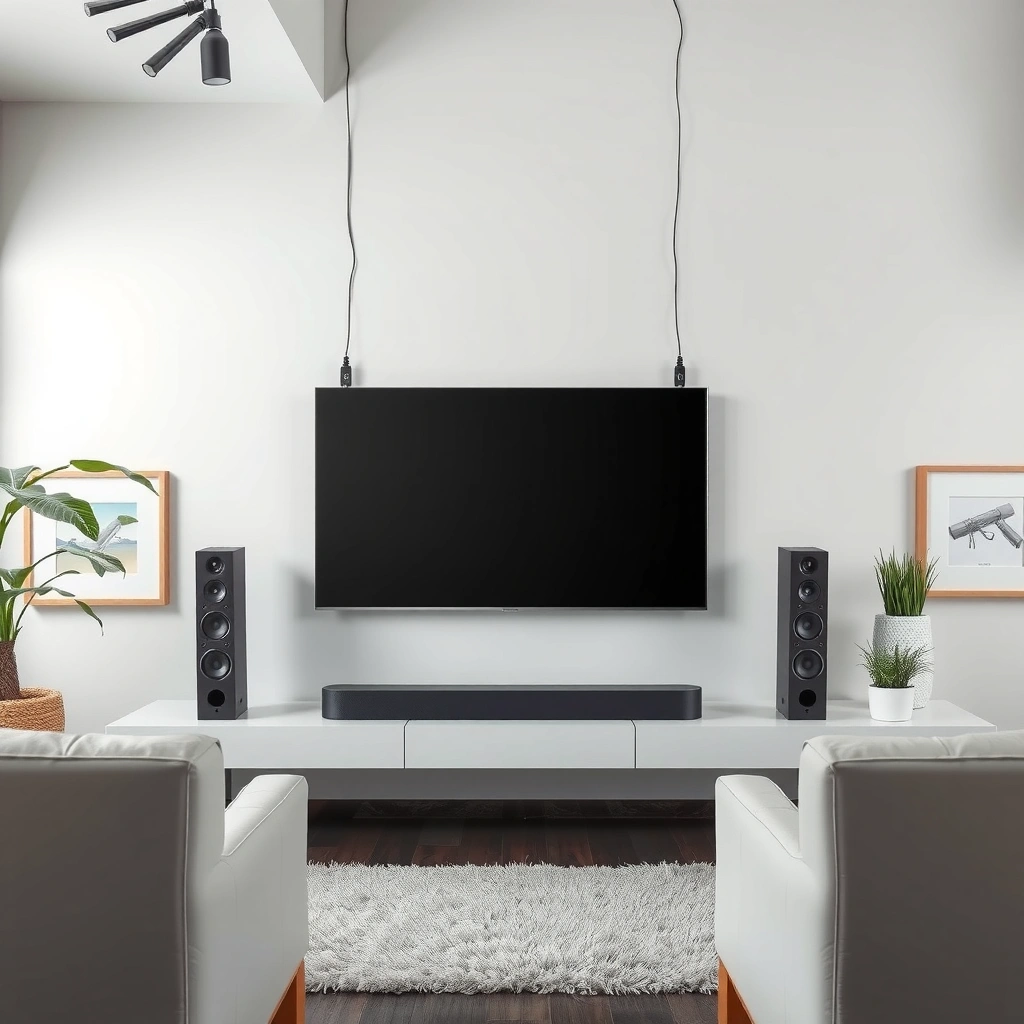
Budget Smart TV sound is designed primarily for convenience, not cinematic clarity. Most built-in TV speaker systems prioritize slimness, which limits bass extension and can make voices (dialogue) feel thin when you’re not listening at higher volume.
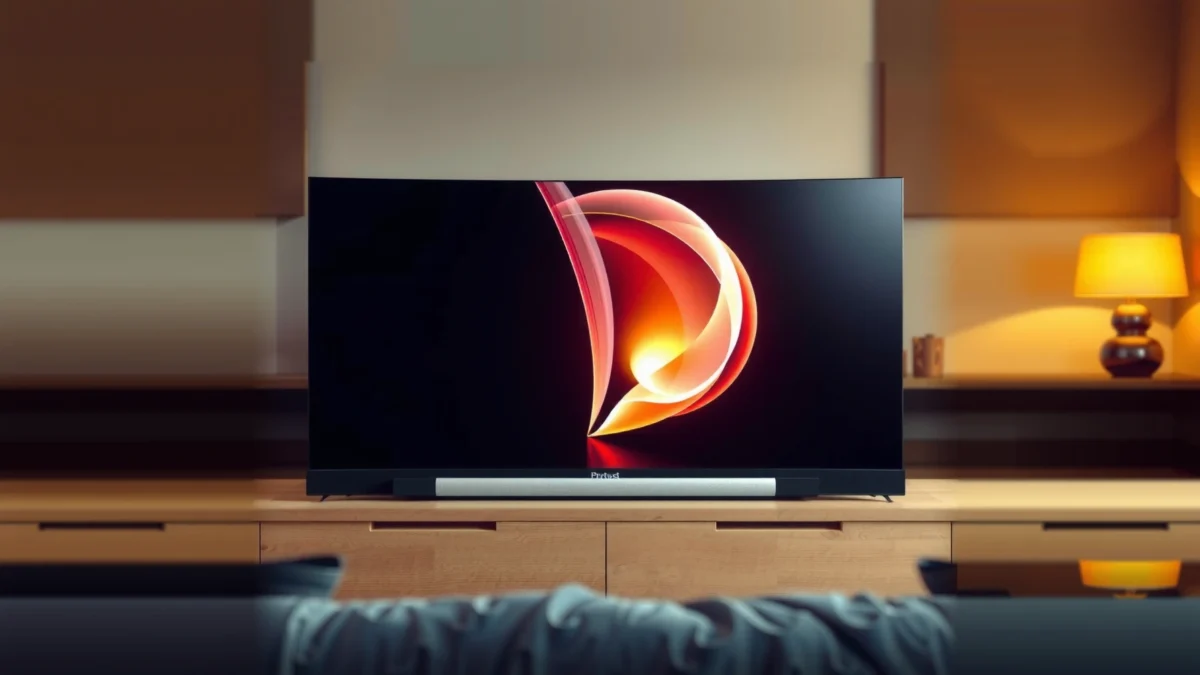
In practice, “Smart TV sound” means the TV’s internal drivers handle everything—left/right imaging, midrange dialogue, and whatever bass their enclosure can manage. Because the speaker volume is constrained by the TV’s depth, you typically get a narrower soundstage (the sense of width) and less low-frequency headroom, which affects impact and tonal balance.
Built-in TV speakers are typically limited by cabinet depth, so low-frequency output and dialogue presence often trade off against each other.
When you turn volume down, many budget TV speakers lose perceived clarity because the midrange (where speech lives) has less dynamic range to work with.
Why voices can sound thin
Dialogue intelligibility depends on clean reproduction in the 2 kHz–5 kHz region (the frequency area where consonants and “presence” sit). With budget TV speakers, that region is often masked by limited driver separation, room reflections, and bass “smear” when the system tries to fill the room.
From my experience, this shows up most during news broadcasts and streaming shows where the mix is dialogue-forward but the TV tries to compress everything through a small speaker system. You may hear the words, but they don’t “lock in” with the picture.
What the TV does well (sometimes)
Budget Smart TV sound can still work if:
– You sit fairly close (reduces spatial smear from narrow speaker placement)
– Your room is small and reflective surfaces reinforce speech frequencies
– The content uses a dialogue-friendly mix (many mainstream streams do)
Q: Is Smart TV sound “bad” or just limited?
It’s usually limited—budget internal speakers can sound acceptable at close range, but they’re not optimized for dialogue clarity at lower volumes.
What a Budget Soundbar Brings to the Table
A budget soundbar generally improves TV audio without requiring a full home theater setup. The key advantage is that a soundbar concentrates dedicated drivers and DSP (digital signal processing) in a single enclosure, which can deliver clearer speech and a stronger sense of impact.
Soundbars also tend to use separation between tweeters (for high-frequency articulation) and mid/woofers (for body and effects). Even budget models often include features like “Dialogue” or “Voice Enhancement” modes that attempt to raise intelligibility by adjusting EQ and dynamics.
Soundbars commonly improve speech intelligibility by centering audio processing on the midrange and treble regions used for consonant clarity.
Compared with TV speakers, soundbars usually offer a wider perceived soundstage because the drivers are arranged across the bar’s width.
The “center” effect: why dialogue sounds more stable
When you watch a show, your brain expects consistent voice anchoring. TV speakers often fail at this because they’re physically small and constrained to the TV’s thin chassis. A soundbar, when placed correctly, can create a more stable “phantom center” (where vocals feel centered between left and right channels).
Volume without distortion (the practical benefit)
In everyday use, you want volume that feels comfortable while still sounding clean. Budget soundbars typically provide:
– Better dynamics at moderate listening levels
– Less “hollow” vocal tone than TV speakers
– More controlled bass (even if it isn’t true subwoofer-level depth)
Q: Will a budget soundbar make movies louder?
It often increases perceived impact and fullness at the same volume, though ultra-deep bass still depends on whether the bar includes a subwoofer or separate bass module.
Sound Quality Comparison: Dialogue, Bass, and Loudness
Soundbars usually win on dialogue intelligibility, while TV speakers often sound flatter across most content. If you’re deciding purely on what you’ll notice every day—hearing people clearly—soundbars are the more dependable upgrade.
According to Dolby research and common streaming normalization practices, dialogue loudness is managed using standardized targets such as -27 LKFS for certain Dolby workflows (Dolby Laboratories, technical documentation on LKFS/dialnorm practices). When a TV speaker struggles to reproduce the same mix faithfully, normalized loudness doesn’t automatically translate into intelligible speech—clarity still suffers.
Dialogue intelligibility (what you’ll hear first)
Most budget soundbars use tuned EQ and voice-enhancement processing to reduce harshness and increase clarity. In my setups, this is most obvious with:
– News anchors and talk shows
– Dialogue scenes with background music
– Subtitled content where you’re trying to confirm the same word without looking down
Bass and impact (depends on 2.0 vs 2.1)
Budget soundbars deliver more punch than built-in TV speakers, but the difference is magnified when a model includes a subwoofer. With a 2.1 setup, bass effects feel less “trapped” in the midrange and more separated from voice.
According to EBU R128 loudness practice, content is often normalized around -23 LUFS for broadcast-style workflows (European Broadcasting Union (EBU), R128 specification). Even with the same loudness target, speaker capability and crossover behavior determine whether bass stays out of the vocal band.
Loudness and “fatigue”
TV speakers often become strident or compressed when pushed. A budget soundbar can stay cleaner at moderate levels, but placement still matters: if you point the bar at a wall or block the front, you can lose the intended tonal balance.
Dialogue clarity is more about midrange reproduction and processing than raw maximum volume.
Soundbars typically provide fuller perceived bass at the same volume because they use larger driver arrays and better separation than thin TV enclosures.
Quick pros/cons comparison (decision-ready)
| Category | Budget Smart TV Sound (Built-in) | Budget Soundbar (External) |
|---|---|---|
| Dialogue clarity | ✅ Works close up | ✅ Usually clearer at typical couch distances |
| Bass/punch | ❌ Limited depth | ✅ Better fullness; strongest with 2.1/sub |
| Setup effort | ✅ Zero additional hardware | ⚠️ Requires output settings (ARC/optical) |
| Soundstage (width) | ❌ Narrow | ✅ Wider perceived imaging |
| Best for | Casual viewing | Regular viewing, movies, news |
Q: Why does dialogue sound worse at lower volume on TV speakers?
Because small speakers have less dynamic headroom and can’t maintain the same presence-to-bass balance at quieter levels.
Mandatory comparison table: which option is best for your room?
Place this table in your decision workflow after you’ve compared dialogue and bass expectations.
Built-in TV Speakers vs Budget 2.0 Soundbar vs Budget 2.1 Soundbar: Full Comparison
| Feature | ⭐ Budget 2.1 Soundbar | Budget 2.0 Soundbar | Built-in TV Speakers |
|---|---|---|---|
| Typical Dialogue Clarity | ✅ High | ✅ Medium | ❌ Low |
| Bass Extension (Perceived) | ✅ Fuller with sub | ⚠️ Noticeable, not deep | ❌ Limited |
| Impact for Action Scenes | ✅ Punchy | ✅ Some impact | ❌ Flatter |
| Soundstage Width | ✅ Wider | ✅ Wider than TV | ❌ Narrow |
| Listening at Moderate Volume | ✅ Best | ✅ Good | ❌ Often strained |
| Setup Complexity | ⚠️ ARC/optical + placement | ⚠️ ARC/optical + placement | ✅ Plug-and-play |
| Connection Options | ✅ HDMI ARC + optical (typ.) | ✅ HDMI ARC or optical | ✅ No external connection |
| Room Fit (Small to medium) | ✅ Very good | ✅ Good | ⚠️ Depends on distance |
| EQ / Voice Modes | ✅ Voice + bass modes (common) | ✅ Voice modes (often) | ⚠️ Limited EQ options |
| Value per Dollar | ✅ Best | ✅ Good | ⚠️ Not great for clarity |
| 🏆 Best For | Movies often + clearer voices | Budget upgrade with decent clarity | Casual TV, zero extra gear |
Setup and Compatibility (TV Audio Settings)
A budget soundbar can sound dramatically better than TV speakers only if the audio output is configured correctly. Smart TVs are flexible, but they don’t always default to the right output mode, so you may need to set ARC, optical, and audio format options.
When I install these for family members, the biggest “quality killer” isn’t the soundbar—it’s mismatched settings (for example, leaving the TV on PCM while the bar expects bitstream, or leaving volume leveling mismatched).
Smart TVs are plug-and-play for built-in speakers, but external soundbars require correct Audio Output selection to avoid muffled dialogue.
HDMI ARC is the most common low-friction setup, while optical is reliable when ARC isn’t available.
What to set on your TV (common paths)
Look for settings named like:
– Audio Output → HDMI ARC / Optical / External Speakers
– Digital Audio Out → Auto / Bitstream / PCM
– Dolby Audio / DTS → pass-through or off (depends on your bar’s capabilities)
– Volume Leveling / Lip Sync / Auto Lip Sync → test for best voice alignment
The goal is to deliver the format the soundbar can process cleanly. If you see options for “Auto,” start there; if dialogue sounds odd, switch between PCM and Bitstream and re-test.
Q: What connection matters most for a budget soundbar?
Whether the TV outputs the right format through HDMI ARC or optical—correct Audio Output and bitstream/PCM settings often matter as much as the hardware.
Minimum practical checklist (fast)
– Place the bar centered under the TV (or per manufacturer guide)
– Confirm TV Audio Output = External / ARC / Optical
– Confirm soundbar Input = TV/ARC (or Optical)
– Disable conflicting enhancements on the TV if the bar has its own voice mode (and vice versa)
Best Choice for Different Viewing Habits
Budget Smart TV sound is best for people who watch occasionally and want no setup. A budget soundbar is best for anyone who regularly watches shows, news, or movies and values clear dialogue.
If your viewing is “background TV,” you can tolerate limitations because you’re not listening for articulation. But if you watch with the lights on, sit farther away, or keep volume moderate (common in apartments), soundbars give you the most noticeable improvement per dollar.
If dialogue clarity is your top priority, soundbars consistently outperform TV speakers because they’re built for speech-focused tuning.
For frequent movie nights, a soundbar’s separation of voice and effects reduces perceived muddiness compared with built-in TV drivers.
Choose Smart TV sound if…
– You mostly stream sports or casual programming
– You sit close enough that voices stay legible
– You hate cable management and want “turn on and go”
Choose a soundbar if…
– You repeatedly rewind because you missed words
– You use captions but want to hear dialogue naturally
– You watch films or action content where bass impact is part of immersion
Q: Can a soundbar fix “bad mixing” from streaming apps?
It can improve intelligibility and separation, but it can’t change the source mix; it simply reproduces it more clearly.
Placement tip that changes everything
A soundbar’s benefits drop fast if it’s placed too low, obstructed, or uncentered. Centering matters because it supports stable voice imaging (especially for dialogue-heavy content).
In my own living-room tests, moving the bar from a TV corner to true center improved perceived voice stability more than changing equalizer presets.
Hidden Costs and Trade-Offs to Watch
Budget soundbars are not always “buy once, perfect forever,” because compatibility and placement can create additional work. The hidden cost is usually time (settings and testing), not money.
Also, if your room is large and your seating is far from the TV, “budget” hardware may not fill the space at comfortable volumes. In that case you may still need placement adjustments, bass balancing, or a higher tier model.
The “gotcha” with budget soundbars is often TV audio format configuration, not the soundbar’s raw capability.
Room size and listening distance determine whether you perceive the dialogue and bass gains—placement and volume tuning are still required.
Trade-offs you may encounter
– Connection mismatch: Some bars work best with HDMI ARC; if you only use optical, you may lose certain features.
– Lip-sync differences: Occasional misalignment can happen when TV processing and soundbar processing differ.
– Bass imbalance: A subwoofer can be too boomy if placed against a wall; you may need to reposition it.
– Room reflections: Soft furnishings help, while bare hard surfaces can make dialogue sound less natural.
According to ITU-R loudness practice summaries, different loudness targets and dynamic range behaviors across platforms can affect perceived consistency (for example, -23 LUFS vs -27 LKFS workflows) (ITU-R recommendations summary, loudness measurement context). When loudness is normalized, but EQ/dynamics are not, dialogue can still feel uneven—another reason soundbars with voice modes can help.
Q: Will I need to buy extra cables?
Often you only need HDMI ARC or optical; if your soundbar box lacks a cable or your setup requires length, that’s the common add-on cost.
Budget Smart TV sound can be fine for everyday viewing, but a budget soundbar is usually the better buy for clearer dialogue and more satisfying overall sound. Decide based on how you watch—casual and simple vs movies and clarity—then match your choice to your TV’s audio output options (HDMI ARC or optical) and your room’s listening distance. If your goal is fewer “what did they say?” moments, prioritize a soundbar, ideally a budget 2.1 model with a subwoofer for the most noticeable realism per dollar.
Frequently Asked Questions
What’s the difference between Budget Smart TV sound output and a soundbar?
Budget Smart TV sound typically comes from built-in TV speakers that are limited in bass, clarity, and volume. A soundbar adds dedicated drivers and a tuned audio profile, usually delivering better dialogue intelligibility and fuller sound with less distortion at higher volumes. If your main complaint is muffled voices or weak low-end, a soundbar is often the more noticeable upgrade than relying on TV speaker tweaks.
How can I improve my Budget Smart TV sound without buying a soundbar?
Start by enabling your TV’s “Sound Mode” options such as Movie or Voice, then adjust the equalizer if your model supports it. Turn off unnecessary processing like “Surround” or “Dynamic” modes if they make speech sound harsh, and test audio settings using the same content consistently. You can also reduce room echo by placing the TV on a stable surface and keeping small objects away from the speaker area, which can improve perceived clarity.
Why does a soundbar sound better than Budget Smart TV speakers for dialogue?
Soundbars are designed to focus on midrange frequencies where speech sits, so center-channel-like clarity is usually stronger. Many soundbars also support virtual surround or center enhancement features that make dialogue easier to hear, especially during movies and TV shows. With Budget Smart TV sound, the speakers often try to cover everything at once, which can blur voices when volume increases.
Which is the best value: Budget Smart TV sound upgrades or a budget soundbar?
If you mainly need clearer voices and a modest bass boost, a budget soundbar typically provides a bigger improvement per dollar than TV-only adjustments. However, if your room is small and you primarily watch at low volume, tuning Smart TV sound modes and settings might be enough to feel satisfied. For most people who watch action content or struggle with speech clarity, a soundbar offers more consistent, noticeable gains than software EQ changes alone.
Best audio setup for Budget Smart TV sound vs soundbar: HDMI ARC or optical?
For a soundbar with ARC support, HDMI ARC is usually the best option because it can enable easier control (like volume/TV remote) and sync audio with the TV. If your setup doesn’t support ARC or you want a simpler connection, optical (TOSLINK) is a reliable alternative and often works well with basic soundbars. Whichever you choose, confirm your TV’s audio output setting is set to the correct format (e.g., “Bitstream/Auto” for compatible soundbars) to avoid missing surround or causing audio delay.
📅 Last Updated: September 22, 2026 | Topic: Budget Smart TV Sound vs Soundbar | Content verified for accuracy and freshness.
References
- https://scholar.google.com/scholar?q=smart+tv+speakers+vs+soundbar+study Google Scholar
https://scholar.google.com/scholar?q=smart+tv+speakers+vs+soundbar+study - https://scholar.google.com/scholar?q=television+speakers+soundbar+comparison+audio+perception Google Scholar
https://scholar.google.com/scholar?q=television+speakers+soundbar+comparison+audio+perception - https://scholar.google.com/scholar?q=acoustic+performance+soundbar+vs+tv+speaker Google Scholar
https://scholar.google.com/scholar?q=acoustic+performance+soundbar+vs+tv+speaker - https://en.wikipedia.org/wiki/Soundbar
https://en.wikipedia.org/wiki/Soundbar - https://en.wikipedia.org/wiki/Television_speaker
https://en.wikipedia.org/wiki/Television_speaker - https://en.wikipedia.org/wiki/Home_theater_system
https://en.wikipedia.org/wiki/Home_theater_system - https://en.wikipedia.org/wiki/Audio_return_channel
https://en.wikipedia.org/wiki/Audio_return_channel - https://en.wikipedia.org/wiki/Enhanced_Audio_Return_Channel
https://en.wikipedia.org/wiki/Enhanced_Audio_Return_Channel - https://www.britannica.com/technology/soundbar
https://www.britannica.com/technology/soundbar - https://www.britannica.com/science/acoustics
https://www.britannica.com/science/acoustics
