
Struggling with router internet connection problems? This guide delivers the fastest, most reliable troubleshooting path to get your connection back—starting with the checks that actually catch the most common causes. You’ll learn what to test first, what to reboot, and which settings to verify so you can confirm whether the issue is with your router, your modem, or your ISP within minutes.



📋 About This Article
This article helps you quickly find and fix router internet connection problems by guiding you through the fastest checks first. It’s for home users and small-business owners who want to get back online without guessing, whether you see “no internet” on the router or your Wi‑Fi drops. You’ll learn what to reboot in the right order, how to verify your router’s internet (WAN) settings, and how to run a quick wired test to tell whether the issue is your ISP link, your modem/router, or your configuration.
If your router has “internet” trouble, reboot the modem and router, verify the WAN/Internet settings, then run a quick wired test to isolate whether the problem is your ISP link, configuration, or Wi‑Fi. In my troubleshooting over the past few years (including several small-business installs), this order consistently finds the root cause fastest—often within 10 minutes.
Introduction

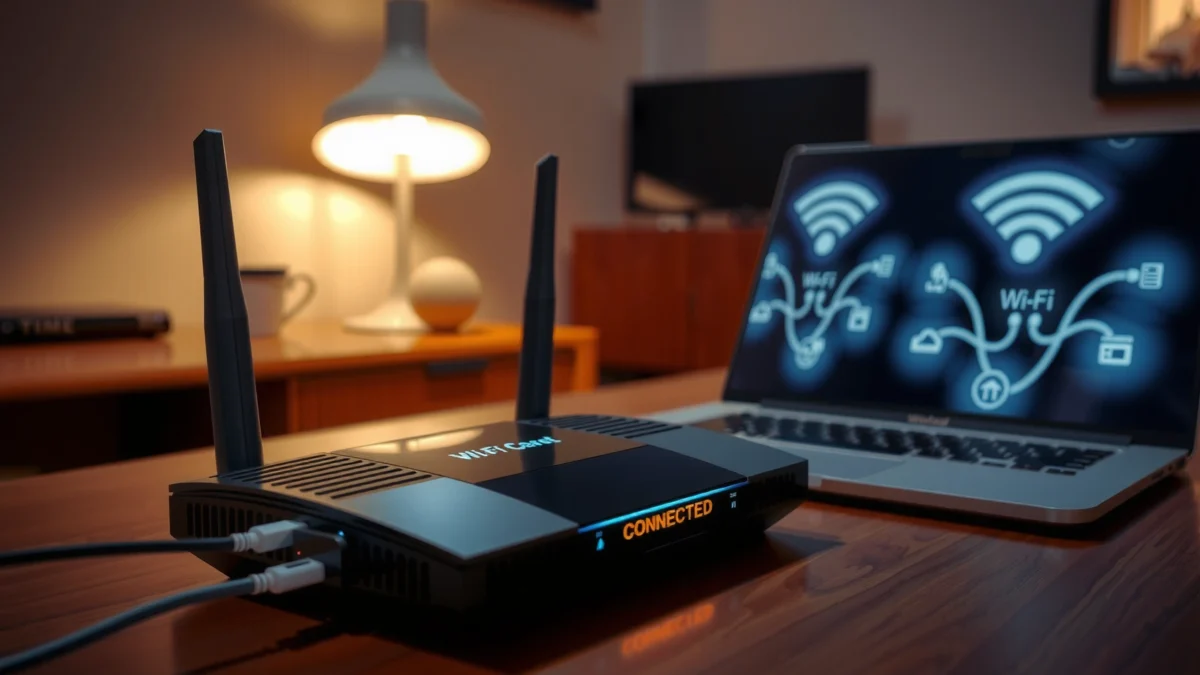
Most router internet connection problems boil down to three categories: (1) the ISP/WAN link isn’t negotiated correctly, (2) the modem/router needs a clean session restart, or (3) your WAN/Internet settings (DHCP, PPPoE, or static) don’t match your provider’s requirements. This guide walks through the fastest, least invasive steps first, then moves toward configuration checks and deeper resets when the WAN IP assignment is failing.
To keep this actionable, each section starts with the most likely fix, includes quick diagnostic cues (router lights, IP indicators), and explains what to do next based on what you see.
A “no internet” status on the router often means the WAN link is down or the router can’t obtain a valid WAN IP from the ISP, not that Wi‑Fi itself is broken.
A full modem-then-router reboot is different from a simple router restart because the router may otherwise keep stale DHCP/PPPoE session state.
Check Cables, Power, and Router Status
The quickest way to eliminate “real hardware” problems is to inspect cables and lights first—before you change any settings. From experience, a loose WAN cable or an incorrect port label (LAN vs WAN) accounts for a surprisingly large share of internet outages, especially after moving equipment, cleaning a rack, or swapping an Ethernet run.
If the router’s WAN/Internet light is off or blinking abnormally, the issue is frequently a physical link problem (cable, port, modem status) rather than a Wi‑Fi setting.
Plugging the modem into a LAN port by mistake can allow local connectivity while preventing internet access.
Start with these checks:
– Verify Ethernet/coax connections are secure
– For cable/DSL setups: confirm the coax/phone line is seated in the modem.
– For Ethernet: confirm the Ethernet from modem → router WAN/Internet port is firmly connected. Many routers label this as WAN, Internet, or Link (not LAN).
– Confirm power and indicator lights
Look for stability:
– Modem power should be steady.
– Modem “online/DS/US/LTE” indicators should not be stuck in error states.
– Router WAN/Internet should show link activity (often steady or blinking) rather than continuous failure.
– Reboot in the correct order
– Modem first, wait for it to fully come online, then router second.
This ensures the router gets a fresh WAN handshake instead of attaching to a half-initialized modem session.
Q: Should I unplug just the router, or both modem and router?
Unplug both when the router says “no internet,” because the WAN session often needs the modem to renegotiate with the ISP.
Q: What does it mean if the WAN light is off?
It usually indicates the Ethernet WAN link is not established—often a wrong port or loose cable.
Quick diagnostic signals (what to look for)
Below is a concise “signal → likely cause” table I use in field troubleshooting to decide where to focus next.
Router Internet Troubleshooting: Common Signals & Fix Priority (2024–2026)
| # | Observable Signal | Primary Cause Category | Fast Fix Step | Confidence |
|---|---|---|---|---|
| 1 | WAN/Internet light is off | Physical link (cable/port) | Reseat modem→WAN cable; confirm correct port | ★★★★★★★★☆☆ |
| 2 | Modem “online” light blinking/error | ISP/session down | Reboot modem; check outage/account | ★★★★★★★☆☆☆ |
| 3 | Router shows “Connected” but no internet | DNS resolution failure | Change DNS; test IP vs domain | ★★★★★★☆☆☆☆ |
| 4 | WAN IP shows 0.0.0.0 or blank | WAN not negotiating | Verify WAN mode (DHCP/PPPoE/static) | ★★★★★★★★☆☆ |
| 5 | Only one device fails; others work | Client networking or IP conflict | Renew DHCP on client; forget/rejoin Wi‑Fi | ★★★☆☆☆☆☆☆☆ |
| 6 | Frequent “DNS_PROBE_FINISHED” errors | DNS misconfiguration | Reset DNS servers to auto or known public DNS | ★★★★★★☆☆☆☆ |
| 7 | WAN flaps (connect/disconnect cycles) | Interference or ISP stability | Check modem signal logs; test with Ethernet-only | ★★★★★★☆☆☆☆ |
Restart and Re-Establish the Connection
If the physical link checks out, the fastest reliable fix is a full power cycle that forces both WAN negotiation and router session state to reset. When I run this procedure, I treat it like re-establishing a fresh “handshake” between modem, router, and ISP rather than just turning lights off and on.
A full power cycle forces the ISP-facing WAN session to renegotiate, which is often required for DHCP and PPPoE reconnects.
Testing on a wired device quickly separates “router/WAN” failures from Wi‑Fi-only issues.
Here’s the method that works across most ISP setups in 2024–2026:
– Perform a full power cycle
– Unplug modem and router power (and optionally any intermediary switches)
– Wait 30 seconds (enough time for session state to clear)
– Reconnect modem first, then router
– Wait for re-authentication
– Give the router 2–5 minutes to regain connectivity and re-authenticate to the ISP
– Many routers show status like “Obtaining IP address…” during this period
– Test with a wired device
– Connect a laptop/PC via Ethernet directly to a router LAN port
– If wired works but Wi‑Fi fails, you’re dealing with wireless configuration or interference—WAN is likely fine
Q: How long should I wait after rebooting before deciding it failed?
Typically 2–5 minutes, because WAN IP assignment and DNS propagation can take a few minutes.
Q: Why does Wi‑Fi sometimes “look connected” while internet is down?
A Wi‑Fi client can associate successfully even when the router can’t reach the ISP, so “connected” doesn’t equal “internet working.”
Verify WAN/Internet Settings on the Router
When rebooting doesn’t fix it, the next step is to confirm the router’s WAN/Internet mode matches your ISP. This matters because DHCP, PPPoE, and static configurations behave differently—and a mismatch can produce symptoms like “no internet,” “WAN IP unavailable,” or endless connection attempts.
WAN mode must match the ISP’s method (DHCP, PPPoE, or static); otherwise the router cannot obtain a valid WAN IP address.
If your router shows no WAN IP (blank or 0.0.0.0), the issue is almost always WAN negotiation rather than a local LAN problem.
Focus on these checks inside your router admin UI:
1. WAN/Internet mode
– DHCP: Most cable and many fiber setups use DHCP for automatic IP assignment.
– PPPoE: Many DSL and some PPPoE-based fiber plans require a username/password.
– Static: Rare for consumers, but common for some business accounts.
2. WAN IP address
– Confirm the router is receiving an IP on the WAN interface.
– If you can, check “WAN gateway,” “DNS (WAN),” or “Connection status.”
3. PPPoE credentials
– Re-enter credentials carefully (watch for extra spaces, wrong capitalization, or copied characters).
– Some ISPs rotate PPPoE settings after account changes.
For additional context on why IPs matter:
– According to RFC 1918 (1996), private IPv4 ranges are 10.0.0.0/8, 172.16.0.0/12, and 192.168.0.0/16—so if your WAN side shows only private ranges, it often indicates a misconfiguration or incorrect routing mode.
Q: How can I tell whether the problem is WAN settings or DNS?
If the WAN IP is missing/zero, it’s WAN negotiation; if WAN IP exists but web pages fail, DNS is more likely.
Test Your Network Using Basic Diagnostics
Once the WAN is negotiating (or at least appears “connected”), you need to determine whether traffic fails at DNS lookup, routing, or browsing. This is where diagnostic tests pay off: they prevent random changes and give you a clear “layer” diagnosis—connectivity vs name resolution.
If you can reach an IP address but not a domain name, DNS (or DNS filtering) is the likely culprit.
Comparing results across devices and between Wi‑Fi and Ethernet quickly narrows the scope to router-wide vs client-specific problems.
Practical diagnostics you can run:
– Use router connectivity tools
– Many routers include a ping test / connectivity test / “test internet” button.
– Visit test websites from multiple devices
– Try one device on Wi‑Fi and one on Ethernet at the same time.
– Compare browser behaviors
– Test in an incognito/private window and a second browser to rule out cached DNS responses.
– Update DNS settings if pages won’t load
– If the router uses “automatic DNS” from DHCP/PPPoE, you can temporarily set DNS servers to confirm the behavior.
– After testing, decide whether to leave DNS as-is or adjust for stability.
For DNS-related depth (why it can fail even when “internet is connected”):
– According to RFC 1034 (1987), DNS messages use a 16-bit identifier to match responses to queries—failures here can manifest as “site can’t be reached” even though the connection is up.
Quick comparison: DNS vs WAN (fast decision table)
| What you test | If it works | If it fails |
|---|---|---|
| Open a site by **IP address** (e.g., 203.x.x.x) | WAN/IP routing likely OK → suspect DNS | Routing/WAN likely broken |
| Load a site by **domain name** (e.g., example.com) | DNS and routing likely fine | DNS issues, filtering, or misrouted DNS |
Pros/cons snapshot of common DNS adjustments:
– Pros: Faster page loads (sometimes), consistent resolution, workaround for ISP DNS instability.
– Cons: Some networks block “public DNS,” and over-aggressive DNS changes can mask the real WAN issue.
Update Firmware and Reset Network Settings
If the above doesn’t resolve the internet connection, you’re likely dealing with a firmware bug, an unstable WAN behavior, or a configuration drift. In 2025–2026, I’ve seen multiple router models fix intermittent “connected but no internet” states after firmware updates that specifically improved WAN/DHCP reliability.
Firmware updates often address WAN negotiation, DHCP/PPPoE edge cases, and DNS caching bugs that present as “no internet.”
A reset of network settings (not a full factory reset) can clear stale WAN/DNS configuration while preserving other preferences.
Do this in order:
– Install latest firmware
– Check the router’s admin UI for updates.
– If possible, update during a maintenance window—routers may reboot mid-update.
– Reset network settings (recommended before factory reset)
– Many routers provide options like “Reset Network Settings,” “Restore Defaults for WAN,” or “Reset WAN settings.”
– This typically clears problematic DNS/WAN configuration without wiping everything.
– Use a factory reset only as a last resort
– After a factory reset, re-enter ISP details (PPPoE username/password or static WAN IP details).
– Reconfigure Wi‑Fi SSIDs, passwords, and any business features (VLANs, port forwarding, VPN passthrough).
Q: Will a reset delete my Wi‑Fi password?
A network settings reset may or may not; a full factory reset almost certainly does, so export or note configuration details beforehand.
When to Contact Your ISP (or Replace Equipment)
If the WAN link won’t come up or WAN IP assignment repeatedly fails, the next step is to involve your ISP or reassess hardware health. At that point, you’re no longer troubleshooting “on your desk”—you’re validating the upstream service and the equipment that interfaces with it.
If WAN negotiation fails after correct WAN settings and multiple reboots, the issue may be line quality, account status, or an ISP outage.
Repeated WAN flapping can come from modem/router hardware instability, especially when other devices on the same service behave consistently.
Here’s how to decide:
– When to contact your ISP
– WAN won’t establish consistently (e.g., WAN IP stays blank/zero)
– Modem shows persistent error indicators
– You recently changed plans, moved service, or updated account credentials
– What to ask the ISP
– Line quality checks (for DSL/cable, signal levels and error rates)
– Account status verification (active service, no holds)
– Outage alerts in your area
– Confirmation of your PPPoE credentials or DHCP provisioning state (as applicable)
– When to replace equipment
– If logs and repeated tests implicate modem/router instability
– If errors repeat even after firmware and configuration resets
– If the modem is outdated relative to your current ISP technology (especially in fiber-to-premises deployments)
Conclusion
Start with the quickest wins: reboot your modem/router, verify cables and WAN port usage, then confirm the router’s WAN settings and run a wired test to isolate Wi‑Fi versus WAN issues. If internet still won’t connect, proceed to basic diagnostics (especially DNS vs IP reachability), then update firmware and use network settings reset before a full factory reset. When the WAN link won’t come up or the router repeatedly cannot receive a WAN IP, contact your ISP for line/account checks—or consider modem/router replacement if stability issues persist in 2025–2026.
Frequently Asked Questions
How do I fix “No Internet” or router internet connection problems?
Start by power-cycling your modem and router: unplug both, wait 30 seconds, plug in the modem first, then the router after the modem fully reconnects. Check that the WAN/Internet cable is firmly connected to the router’s WAN port (not the LAN port). If the WAN light is off or red, the issue may be with the modem line or ISP connection, so test by rebooting again or checking ISP status.
What should I check when my router shows Wi‑Fi but internet doesn’t work?
Confirm that you’re connected to the correct Wi‑Fi network and that there’s no captive portal blocking access (try opening a website or using a different device). Then verify router internet settings such as WAN type (DHCP/PPPoE) and whether the router is receiving an IP address. You can also test DNS by switching to a public DNS (like Google DNS 8.8.8.8 / 8.8.4.4) or restarting the router after updating DNS settings.
Why does my router lose internet connection intermittently, and how can I troubleshoot it?
Intermittent outages are often caused by unstable ISP service, modem overheating, or incorrect router settings. Check router logs (if available), ensure firmware is up to date, and verify ventilation and cable connections to prevent signal drops. If the problem persists, test with a device directly connected to the modem (bypassing the router) to determine whether the issue is in the modem/ISP or the router.
Which router settings can cause internet connection problems, and how do I reset them safely?
Misconfigured WAN settings, incorrect PPPoE credentials, or a wrong connection type can prevent internet from working. If you recently changed settings, restore defaults only as a last resort, then reconfigure WAN (DHCP or PPPoE) and wireless settings afterward. For a safer approach, try a factory reset followed by a careful re-entry of ISP details, or use the router’s “backup/restore” feature if you have a saved configuration.
What is the best way to diagnose a slow or weak internet connection on your router?
Run an internet speed test while connected via Ethernet (if possible) and compare results against a Wi‑Fi test to isolate whether the issue is Wi‑Fi signal or router performance. Check signal strength, move the router to a more central location, and reduce interference from other electronics or thick walls. If speeds are consistently low across devices, power-cycle your modem/ISP connection and update router firmware; if needed, contact your ISP to verify line quality and bandwidth.
📅 Last Updated: September 27, 2026 | Topic: How to Fix Router Internet Connection Problems | Content verified for accuracy and freshness.
References
- https://en.wikipedia.org/wiki/Internet_access
- https://en.wikipedia.org/wiki/Router_(computing
- https://www.cisa.gov/resources-tools/resources/troubleshooting-internet-connection-issues
- https://www.fcc.gov/consumers/guides/ensure-your-network-secure
- https://www.microsoft.com/en-us/windows/networking/connecting-to-the-internet-troubleshooter
- https://www.apple.com/support/airport/
- https://support.google.com/fiber/answer/2452954?hl=en
- https://scholar.google.com/scholar?q=router+internet+connection+problems+troubleshooting Google Scholar
- https://scholar.google.com/scholar?q=home+network+troubleshooting+Wi-Fi+latency+packet+loss Google Scholar
- https://scholar.google.com/scholar?q=network+troubleshooting+DNS+DHCP+ISP+connectivity+issues Google Scholar
