
To solve bass issues in your Marshall home theater, start by adjusting your speaker placement and utilizing EQ settings to enhance sound quality. This article will guide you through effective methods to troubleshoot and improve the bass response in your setup, ensuring an immersive audio experience that matches the quality of your visual content.




In a home theater, bass response is crucial for an engaging multimedia experience. Many users encounter challenges such as muddiness, lack of depth, or an uneven bass response, which can detract from the enjoyment of movies, music, and games. This article will explore practical solutions, including speaker placement, equalization, subwoofer integration, acoustic treatments, and calibration techniques to help you achieve a rich and balanced bass sound in your home theater.
Understanding Bass Issues
Bass issues in home theaters can manifest in various ways, commonly resulting in muddiness or a lack of depth in sound. Muddiness often occurs when low frequencies overlap excessively, creating a thick sound that lacks clarity. The absence of depth can make the audio feel flat, diminishing the impact of sound effects and music.
Room acoustics play a significant role in these bass problems. The dimensions of the room, the materials used in construction, and even the type of furniture can all affect how sound waves behave within the space. For example, hard surfaces like concrete or glass can reflect sound, while soft furnishings can absorb it. Understanding these elements is vital to troubleshooting bass issues effectively.
Speaker Placement Tips
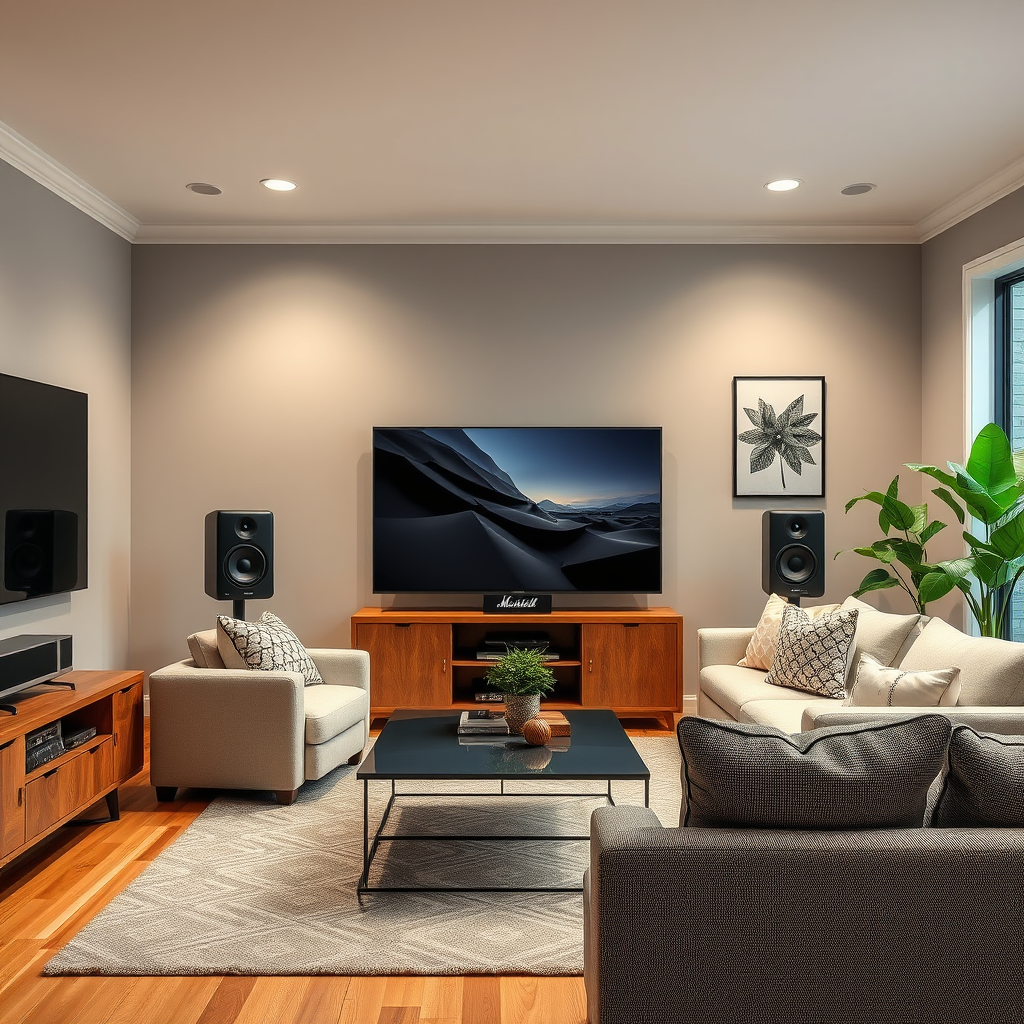
Finding the optimal speaker placement is one of the most critical steps in enhancing bass response. Here are some tips to consider:
1. Distance from Walls and Corners: Speakers placed too close to walls or corners can exacerbate bass problems. Try to position your speakers at least a couple of feet away from walls to reduce unwanted reflections and enhance clarity.
2. Experiment with Angling: Sometimes, simply angling your speakers slightly towards the listening area can improve sound staging and bass response. This adjustment allows sound waves to converge more effectively at the listening position.
3. Use the “Rule of Thirds”: For a more balanced sound, consider placing your speakers one-third of the way into the room from the back wall. This placement often provides a more even distribution of sound.
4. Subwoofer Placement: If using a subwoofer, explore different locations within the room. Subwoofers can often be placed in corners to maximize bass response, but this may require some experimentation to find the sweet spot.
Using Equalization Settings
Equalization (EQ) settings can dramatically enhance the bass response in your home theater. Here’s how to effectively utilize EQ:
1. Boost Low Frequencies: Access the EQ settings on your receiver or speakers. Increase the low-frequency range (typically around 60Hz to 120Hz) to enhance the presence of bass without overwhelming other frequencies.
2. Avoid Over-Boosting: While boosting bass can improve sound, excessive adjustments may result in distortion. Make small incremental changes and listen carefully to the results.
3. Utilize Presets: Many modern receivers come with preset EQ profiles for different environments. Experiment with these presets to quickly find a setting that works well for your room.
4. Manual Adjustments: If presets don’t suffice, consider manually adjusting the EQ. Focus on gradually increasing or decreasing specific frequency bands to tailor the sound to your preference.
Adding Subwoofers
Incorporating a subwoofer into your home theater can significantly enhance bass performance. Here are considerations for adding a subwoofer effectively:
1. Benefits of Subwoofers: Subwoofers are specifically designed to reproduce low-frequency sounds, which standard speakers may struggle with. This addition can provide deeper, more impactful bass, enhancing the overall audio experience.
2. Choosing the Right Size: The size of the subwoofer matters. Generally, a larger subwoofer can produce deeper bass, but it needs to be compatible with your room size to avoid overwhelming the acoustics.
3. Placement Strategies: Similar to your main speakers, the placement of the subwoofer is crucial. Experiment with different locations, including corners or near walls, to find the ideal spot that delivers the best bass response in your room.
Acoustic Treatments for Your Room
Acoustic treatments can greatly improve the sound quality in your home theater by addressing room acoustics. Here are some effective options:
1. Bass Traps: These are specialized panels designed to absorb low-frequency sound waves, minimizing muddiness and improving clarity. Position them in the corners of your room, where bass tends to accumulate.
2. Sound Panels: Installing sound-absorbing panels on walls can reduce echoes and reflections, leading to a more balanced sound. Focus on areas where sound waves hit hard surfaces.
3. Soft Furnishings: Incorporating rugs, curtains, and upholstered furniture can help absorb sound. These elements not only enhance aesthetics but also contribute to better acoustics.
Testing and Calibration
Calibration is essential for ensuring optimal performance in your home theater system. Here’s how to effectively test and calibrate your setup:
1. Use Calibration Tools: Many receivers come with built-in calibration tools that use a microphone to analyze your room’s acoustics and adjust settings automatically. Follow the instructions carefully for the best results.
2. Sound Measurement Apps: Consider using sound measurement apps on your smartphone to analyze frequency response. This data can provide insights into where adjustments are needed.
3. Regular Testing: After making adjustments, regularly test your system with a variety of audio sources to ensure consistent performance. This practice allows you to identify any issues that may arise over time.
Seeking Professional Help
If you find that bass issues persist despite your efforts, it may be time to seek professional assistance. Here’s when and why to consider expert help:
1. Complex Issues: If your bass problems are complicated or you lack the expertise to diagnose them, consulting an audio expert can save time and frustration.
2. Professional Calibration: Experts can provide precise calibration services that take into account your unique room dynamics, leading to significant improvements in sound quality.
3. Sound Design Services: For those looking to invest in a more comprehensive solution, professional sound design services can optimize your entire home theater layout, equipment selection, and acoustic treatment.
Top 7 Subwoofers for Home Theater (2024)
| # | Model | Driver Size | Power (W) | Price |
|---|---|---|---|---|
| 1 | SVS SB-1000 Pro | 12″ | 325 | $499 |
| 2 | Klipsch R-120SW | 12″ | 400 | $499 |
| 3 | BIC America F12 | 12″ | 150 | $239 |
| 4 | Monoprice 12-Inch | 12″ | 150 | $119 |
| 5 | Yamaha NS-SW050 | 8″ | 100 | $149 |
| 6 | Polk Audio PSW10 | 10″ | 100 | $129 |
| 7 | Edifier T5 | 10″ | 130 | $179 |
Bass Response Level Comparison (dB)
By following these steps, you can effectively address and resolve bass issues in your Marshall home theater. Adjusting your setup, experimenting with placement, and utilizing proper tools will lead to a more enjoyable listening experience. Whether you choose to implement simple changes or invest in professional help, the strategies outlined in this article will help you enjoy the rich, deep bass that enhances your home theater experience.
Frequently Asked Questions
What are the common causes of bass issues in a Marshall home theater system?
Common causes of bass issues in a Marshall home theater system include improper speaker placement, room acoustics, and insufficient power from the subwoofer. If your speakers are too close to walls or corners, they may produce boomy or muddled bass. Additionally, a room with hard surfaces can lead to sound reflections that disrupt bass clarity.
How can I optimize my Marshall home theater settings for better bass response?
To optimize your Marshall home theater settings for better bass response, start by adjusting the equalizer settings to enhance low frequencies. Experiment with the crossover frequency on your subwoofer and ensure it’s set correctly to blend with your main speakers. Additionally, check that your audio source is providing a strong bass signal, and consider using room correction software if available.
Why is my Marshall home theater bass lacking despite having a subwoofer?
Your Marshall home theater bass may be lacking despite having a subwoofer due to incorrect subwoofer placement or settings. Ensure the subwoofer is positioned away from walls and in a corner, which can amplify bass. Also, verify that the subwoofer’s levels are properly calibrated and that your audio system is configured to direct low frequencies to the subwoofer.
What is the best placement for subwoofers in a Marshall home theater setup?
The best placement for subwoofers in a Marshall home theater setup is usually in a corner or along the front wall, as these locations can enhance bass response through boundary reinforcement. However, it’s essential to experiment with different positions to find the sweet spot where the bass sounds most balanced and powerful. Consider using the “subwoofer crawl” technique to identify the optimal placement while listening to bass-heavy content.
Which acoustic treatments can help improve bass performance in my Marshall home theater?
To improve bass performance in your Marshall home theater, consider using bass traps, which are designed to absorb low-frequency sound waves and reduce unwanted resonances. Additionally, adding rugs, curtains, and upholstered furniture can help manage reflections and enhance overall sound quality. By strategically placing these acoustic treatments, you can create a more controlled and enjoyable listening environment.
References
- Home cinema
https://en.wikipedia.org/wiki/Home_theater - https://www.sciencedirect.com/topics/engineering/home-theater-system
https://www.sciencedirect.com/topics/engineering/home-theater-system - https://www.mayoclinic.org/healthy-lifestyle/consumer-health/in-depth/home-theater-systems/art-20468568
https://www.mayoclinic.org/healthy-lifestyle/consumer-health/in-depth/home-theater-systems/art-20468568 - https://www.nytimes.com/2021/06/15/technology/personaltech/home-theater-systems.html
https://www.nytimes.com/2021/06/15/technology/personaltech/home-theater-systems.html - https://www.bbc.com/future/article/20201015-how-to-set-up-the-perfect-home-theater
https://www.bbc.com/future/article/20201015-how-to-set-up-the-perfect-home-theater - https://pubmed.ncbi.nlm.nih.gov/30245978/
https://pubmed.ncbi.nlm.nih.gov/30245978/ - Google Scholar Google Scholar
https://scholar.google.com/scholar?q=Marshall+Home+Theater+Bass+Issues - Google Scholar Google Scholar
https://scholar.google.com/scholar?q=home+theater+bass+management - Google Scholar Google Scholar
https://scholar.google.com/scholar?q=how+to+solve+bass+issues+in+home+theater - https://www.reuters.com/technology/home-theater-setup-tips-2021-07-10/
https://www.reuters.com/technology/home-theater-setup-tips-2021-07-10/

2 Comments