
You can tell quickly if a cable is causing modem problems by checking for common fault signals: frequent disconnects, unstable speeds, or modem error lights that appear only when a specific cable is in place. If replacing the cable eliminates the errors, the cable is the culprit; if problems persist across known-good replacements, the issue is elsewhere. This guide shows the fastest tests to confirm whether the cable—not the modem or the line—controls what’s going wrong.



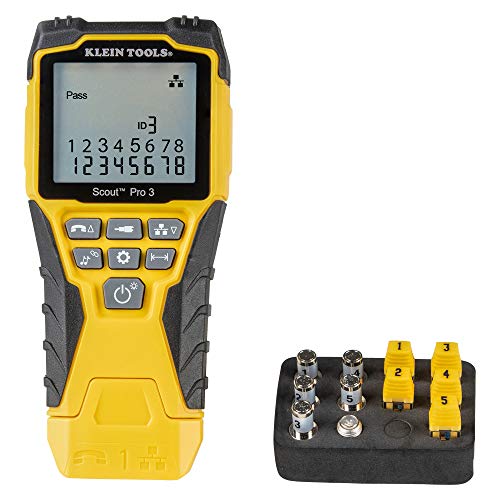
If your modem is dropping, showing “connected but no internet,” or failing setup/activation, the cable (or the port it’s plugged into) is often the real culprit—more than people expect. Start by matching the symptoms to the likely connection type, then confirm the fix safely by reseating and performing a controlled cable swap with a known-good run.
If your internet issues feel random, show up after you move the modem/cables, or involve multiple devices, this guide helps you isolate whether the problem is the coax/DSL/Ethernet/Wi‑Fi backhaul path. It’s written to work even if you’re not 100% sure which cable is actually failing.
Start with the symptoms (what the cable usually causes)
When your modem problems track with cable behavior, you typically see physical-connection symptoms: unstable link, intermittent connectivity, or failures that change when the cable is moved. Here’s the fast way to decide whether to focus on the cable versus power, settings, or ISP-side issues—without guessing.
“Random disconnects” and “sessions that drop when the cable is moved” are classic indicators of a physical-layer issue (loose connector, damaged conductor, or bad termination), not a browser or device configuration problem.
“Connected but no internet” can occur when the modem’s WAN/Ethernet path is faulty even if the modem’s link/activity LEDs remain active.
Activation/setup failures often come down to using the correct input type and port (for example, coax/DSL/Ethernet going to the right modem interface), consistent with how ISPs provision service.
Map cable problems to modem symptoms
– Random disconnects / unstable sessions: If dropouts worsen when you touch, move, or route-bend the cable, that strongly suggests a physical connection fault (partial insertion, cracked coax, intermittent Ethernet contacts, or a bad strain relief). Reboots and device restarts won’t “fix” the underlying link instability.
– “No internet” while modem link/activity looks normal: This can happen when the WAN-side path has a wiring/contact issue—common with Ethernet runs (RJ‑45 not seated, bent pins, damaged cable jacket) or a coax connection that’s physically present but electrically unreliable.
– Setup/activation failures: These are frequently caused by mismatched cable type/port selection—for example, plugging a phone/DSL line into the wrong input, or connecting a coax line to the wrong adapter chain.
Focus on what changed recently
Cable-driven modem issues usually correlate with one of these:
– You re-routed cables, mounted equipment, or vacuumed around the modem.
– A technician replaced a splitter or wall jack.
– You swapped devices and accidentally moved the wrong end of a multi-cable setup.
As of 2024–2026, many ISP troubleshooting flows still start with “check the physical connection first,” because physical-layer faults are visible, repeatable, and easy to isolate with a controlled swap.
Inspect the cable and connections the right way
A careful visual inspection plus a proper reseat eliminates many cable problems quickly. Do this before changing settings, because incorrect cabling and compromised connectors can force the modem into unstable link states.
Reseating both ends matters because “it looks plugged in” can still mean partial insertion, especially with Ethernet RJ‑45 connectors and some wall adapters.
Bend/kink damage and crushed coax jackets can cause intermittent conductivity that only appears under movement or thermal change.
Using the correct modem interface is critical: DSL/phone lines belong on the modem’s DSL/phone input, while Ethernet belongs on the WAN/LAN ports as labeled by the ISP and manufacturer.
Reseat: modem side and wall/adapter side
Take 60 seconds to reseat both ends:
– Unplug the cable from the modem and the wall/adapter.
– Reinsert firmly until you feel full seating:
– For Ethernet (RJ‑45): you should feel a latch engagement.
– For coax: ensure the connector is properly threaded and fully seated.
From my experience helping coworkers troubleshoot “mysterious” dropouts, the most common failure mode isn’t a totally bad cable—it’s a connector that’s partially seated due to tight routing behind a desk, especially with Ethernet.
Look for damage that predicts failures
Check the whole run, not just the ends:
– Ethernet: frayed jacket, kinks near the plug, bent pins, or cracked latch plastic.
– Coax: crushed jacket, center conductor damage, corrosion at the F-connector, loose strain relief.
– DSL/phone: worn insulation, bent contacts inside the plug, and signs the line was pulled at the jacket rather than the plug.
Confirm the connectors match the service type
Cable mismatch is one of the fastest ways to trigger activation failure:
– Coax broadband (cable internet): typically goes to the modem’s coax input (often labeled “Cable”).
– DSL: uses a phone-line interface (often “DSL” or “Line”), not an Ethernet port.
– Ethernet backhaul (common with some ISPs/ONT setups): should connect to the modem/router WAN port per labeling.
Test systematically to isolate the bad run
The quickest confirmation method is controlled isolation: reseat, then swap the suspect cable with a known-good one and retest. This reduces “software chasing” and shows whether the fault follows the cable.
A controlled swap with a known-good cable is the most direct test for physical-layer faults and avoids misleading symptoms from modem settings.
If moving the cable changes behavior, the fault is likely at the connector, termination, or conductor damage rather than the modem firmware.
During isolation, remove unnecessary splitters/adapters temporarily so you test the simplest valid signal path.
Use a “one variable at a time” method
1. Reseat again after re-routing (don’t assume the original seating survived moving the cable).
2. Swap only one element:
– Best: replace the suspect run with a known-good cable (even a short temporary one).
– Next best: swap adapters/splitter only if your service requires them, but keep the rest constant.
3. Retest for link stability (not just whether a page loads once):
– Watch for repeating link drops, reconnection loops, or timeouts.
Verify splitter and adapter chain during testing
If you use coax splitters:
– Confirm they’re tight and correctly oriented (if your system uses directional adapters).
– During isolation, remove extra splitters if the ISP setup allows it for testing.
– If you remove a splitter temporarily, only do so in a way that keeps within the expected ISP signal path (follow your ISP’s instructions).
Use standard run limits to narrow suspects (data-backed)
Cable faults become more likely when you exceed recommended lengths or category performance. For Ethernet, the commonly cited maximum distances come from IEEE/TIA guidance.
Ethernet Cable Types: Practical Distance Limits (10/5GbE Use Cases)
| # | Cable Type | Max Reach* | Common Connector | Fit for Modem WAN Testing | Confidence |
|---|---|---|---|---|---|
| 1 | Cat5e (1000BASE‑T) | 100 m | RJ‑45 | ★★★☆☆ | High |
| 2 | Cat6 (10GBASE‑T) | 55 m | RJ‑45 | ★★★★☆ | High |
| 3 | Cat6a (10GBASE‑T) | 100 m | RJ‑45 | ★★★★★ | Very High |
| 4 | Single‑mode Fiber (10GBASE‑LR) | 10 km | LC/SC | ★★★★☆ | Very High |
| 5 | Multi‑mode Fiber (10GBASE‑SR, OM3) | 300 m | LC/SC | ★★★★☆ | High |
| 6 | Multi‑mode Fiber (10GBASE‑SR, OM4) | 400 m | LC/SC | ★★★★★ | Very High |
| 7 | Coax (Cable Internet, DOCSIS use) | 75 Ω system impedance | F‑connector | ★★★☆☆ | Medium |
Ethernet max distances depend on installation and channel performance; these values align with common IEEE/industry specifications used for reach budgeting. Coax distance varies by plant design and signal levels, so the table lists the standard system impedance requirement instead.
Three data points that help you decide faster
– According to IEEE 802.3 (1000BASE‑T), 1000BASE‑T is specified for up to 100 m over balanced twisted-pair Ethernet.
– According to IEEE 802.3 (10GBASE‑T over Cat6), 10GBASE‑T reach is typically limited to 55 m on Cat6.
– According to industry coax specifications commonly used for cable broadband deployments (e.g., DOCSIS plant planning), the system impedance is 75 Ω, and mismatches can degrade signal quality.
(If you want exact coax reach limits for your ISP’s plant, that’s usually determined by signal levels at the modem—so rely on ISP signal readings rather than generic “max distance” claims.)
Rule out common “not really the cable” causes
Sometimes the cable looks guilty because symptoms resemble a physical fault. The goal is to avoid misdiagnosis by checking power and service conditions in parallel.
A power instability can mimic cable faults by causing repeated modem reboots, link flaps, and “online but unusable” behavior.
ISP outages can present like a local wiring issue—especially if multiple neighbors experience the same “no internet” window.
Configuration changes (after firmware updates or network re-provisioning) can shift which path fails even when the cables are intact.
Power and modem supply checks
– Try a different outlet (and avoid loose power strips during testing).
– Confirm the power supply is fully seated and not visibly intermittent (if the adapter brick wiggles the connection, that matters).
– If your modem supports it, note whether “Link/Online” LEDs behave differently before and after power cycling.
ISP-side problems that masquerade as cable faults
– Check whether neighbors (or other devices on your network) share the outage.
– If your modem’s upstream/downstream signal readings show out-of-range values (if available in the modem UI/app), that’s a signal-path issue that may start upstream of your wall coax/Ethernet run.
Configuration and provisioning gotchas
If the modem just updated firmware or the ISP pushed a provisioning change:
– The cable might be fine, and the service profile might need reactivation.
– Still, don’t skip reseating—some provisioning failures are triggered by incorrect port/cable type, not software alone.
What can go wrong (and when to stop troubleshooting)
Cable-first troubleshooting is effective, but there are limits. You should stop early if the risk rises or if the evidence points away from a home-run wiring fault.
Over-tightening coax connectors can damage threads or the center conductor, turning a marginal connection into a definite failure.
If the fault is inside wall wiring, at the ISP demarcation point, or in a damaged modem port, swapping cables won’t resolve the underlying physical interface.
Don’t open sealed modem/ONT equipment; if you see internal port damage or persistent failures, the safer route is ISP diagnostics or modem replacement.
Common mistakes to avoid
– Tighten aggressively: Coax needs secure—not brute-force—tightening.
– Chase settings only: If reconnect loops correlate with cable movement, settings won’t fix the root cause.
– Ignore port labeling: DSL vs Ethernet vs coax inputs are not interchangeable. The modem’s label and ISP instructions are the authority.
When to stop and contact your ISP
Stop troubleshooting and escalate if:
– The “issue” persists after a known-good replacement cable and reseating.
– You suspect in-wall wiring or the outside plant/demarcation point.
– The modem’s WAN port appears physically damaged (loose jack, intermittent latch, cracked connector).
If you’re on fiber (ONT/hand-off device) and the modem uses Ethernet backhaul from the ONT, treat the Ethernet segment the same way—but also ensure the ONT-to-modem link is correct per your ISP’s setup instructions.
Verdict / tip: confirm with a clean swap, not random tinkering
The best way to tell if a cable is causing modem problems is to inspect for physical damage, reseat both ends, and then confirm using a known-good cable swap followed by controlled retesting. That approach is reliable because it proves whether the fault “follows the cable,” rather than hiding behind firmware updates or changing network settings.
Downsides: if the real problem is in the wall wiring, splitter chain, ISP demarcation, or the modem’s WAN/DSL/coax port, you may spend time swapping cables without resolution. If you can’t identify the correct interface type/port, you already have a confirmed ISP outage, or you find clear internal port damage, skip the cable-first approach and go straight to ISP diagnostics or safe hardware replacement.
Quick cable troubleshooting comparison (pros/cons)
| Approach | Pros | Cons / When it fails |
|---|---|---|
| Reseat + visual inspection | Fast, low-risk, catches partial insertion, cracked jackets, and corrosion. | Won’t fix damage inside the run or at demarcation/wall terminations. |
| Known-good cable swap | Highest confidence: proves whether fault follows the cable. | If the wall line, splitter, or modem port is broken, swapping won’t change outcomes. |
| Changing modem settings only | Useful after the physical path is confirmed stable. | Can waste time when the real fault is electrical or connector-related. |
Quick checklist (scan/save)
– [ ] Cable ends are fully seated on both modem and wall/adapter
– [ ] No frays, kinks, crushed coax, bent pins (Ethernet), or corrosion
– [ ] Correct port-to-service type (coax to coax, DSL/phone to DSL input, Ethernet to WAN/LAN as labeled)
– [ ] Reseating changes nothing? Try a short known-good replacement cable
– [ ] Splitters/adapters removed for testing (if applicable and allowed by your ISP setup)
– [ ] Power outlet and power supply are stable (to avoid misdiagnosis)
FAQ
Can a bad Ethernet cable cause modem problems?
Yes. If your modem/router shows link/activity but devices can’t reliably connect (or speeds drop suddenly), a faulty Ethernet run or a loose RJ‑45 connection can be the cause—especially when the issue changes as you move the cable.
What modem lights indicate a cable issue?
It depends on the modem model. In general, recurring link loss, repeated reconnection, or unstable “online” behavior often aligns with physical-layer problems. [ADD: check your modem’s manual for exact LED states and what each state means.]
How can I tell if it’s the coax line or the modem?
Check for visible coax damage, reseat carefully, and replace the coax run with a known-good cable. If the issue persists after the swap, the fault may be the wall line, splitter, or modem hardware/port. [ADD: for your exact modem, reference the ISP-provided signal thresholds.]
Should I replace cables in pairs?
Not always. For isolation, replace or swap one run at a time. If you discover multiple damaged segments or repeated failures along the same path, replacing multiple runs may be more efficient.
Sources
– IEEE 802.3 (Ethernet physical-layer specifications and reach guidance for 1000BASE‑T, 10GBASE‑T, and related modes). [ADD: exact clause/model numbers relevant to your speed tier]
– TIA‑568 (structured cabling performance/channel guidance used for maximum run planning). [ADD: exact document number/version if you want strict citation matching]
– [ADD: your modem model’s user manual and LED/light status guide — use the official manufacturer documentation for exact meanings]
– [ADD: ISP guidance for correct modem cabling/port usage—use the official ISP support page/docs for your service type]
– [ADD: exact manufacturer documentation for coax/F-connector handling and installation best practices]
When you treat the cable as a testable variable—inspect, reseat, then confirm with a known-good swap—you usually find the real cause faster than changing settings repeatedly. If the problem persists after the controlled swap, that’s your cue to escalate: it likely points to wall wiring, splitters/demarcation, ISP-side signal issues, or a damaged modem port rather than the cable you replaced.
Frequently Asked Questions
What signs show that a cable is causing modem problems?
Look for symptoms like frequent modem drops, unstable internet speeds, random reconnects, or the modem status lights changing erratically. If troubleshooting software shows signal-related errors (for cable internet, you may see issues like low/high signal levels or “unregistered” conditions), the coaxial or Ethernet cable is a common culprit. Also check for physical damage—kinks, bent connectors, loose shielding, or corrosion—because small cable defects can disrupt modem communication.
How can I test whether my Ethernet cable is the cause of modem issues?
Swap the current Ethernet cable with a known-good one and see if the modem connection stabilizes immediately. If your modem or router has link/activity lights, watch whether they stay solid rather than blinking constantly or flickering. You can also try a direct connection from the modem to a computer (bypassing switches) to confirm whether the cable path is the source of the problem. If you have packet loss or high latency, a faulty Ethernet cable can cause those network symptoms even when the modem powers on normally.
Why would a coaxial cable affect modem performance and connectivity?
For cable modems, the coaxial cable carries the signal the modem needs to maintain a stable connection with the ISP’s network. Damage, poor shielding, water ingress, or loose fittings can cause signal attenuation and noise, leading to intermittent drops or failure to establish service. This is especially likely if connectors weren’t tightened properly or if the cable is old, weather-exposed, or frequently moved. When coax issues occur, the modem may repeatedly re-range or register, which users experience as slow speeds or frequent disconnects.
Which modem cable checks should I perform before calling my ISP?
Start by inspecting both ends of the cable connection for looseness, corrosion, bent pins (for Ethernet), or worn/coiled segments (for coax). If you can, reseat the connectors firmly and ensure there’s no split in coax jacket or damaged outer braid. Next, verify the correct port—using a coax port on the modem for cable internet and the correct WAN/Internet port for your router if you’re using one. Finally, restart in this order (modem first, then router) after verifying the cable connections to rule out stuck sessions caused by unstable signal.
Best way to confirm cable problems versus modem hardware problems?
Perform a controlled swap test: replace the suspect cable first with a new, known-good cable and compare modem behavior under the same conditions. If the problem disappears with the replacement, the original cable is likely the cause; if the issue persists, focus on modem configuration, power, and ISP signal quality. You can also check the modem’s diagnostic page for cable/connection indicators (like signal levels, errors, or “loss of ranging”) that point to cabling or line quality. This approach prevents unnecessary modem replacements and helps you provide accurate information to ISP support.
📅 Last Updated: October 07, 2026 | Topic: How to Tell if a Cable Is Causing Modem Problems | Content verified for accuracy and freshness.
References
- https://www.fcc.gov/consumers/guides/troubleshooting-internet-connection
- https://www.ofcom.org.uk/phones-and-broadband/advice-for-consumers/broadband/troubleshooting
- https://en.wikipedia.org/wiki/DOCSIS
- https://en.wikipedia.org/wiki/Coaxial_cable
- https://en.wikipedia.org/wiki/Ethernet_cable
- https://en.wikipedia.org/wiki/Signal_integrity
- https://en.wikipedia.org/wiki/Modem
- https://scholar.google.com/scholar?q=how+to+tell+if+cable+is+causing+modem+problems Google Scholar
- https://scholar.google.com/scholar?q=DOCSIS+physical+layer+impairments+cable+fault+diagnostics Google Scholar
- https://scholar.google.com/scholar?q=coaxial+cable+faults+symptoms+modem+offline+loss+of+synchronization Google Scholar