
Choosing between Roku vs Fire TV streaming comes down to your viewing habits and device ecosystem, and this guide delivers a clear winner. We’ll tell you which platform is better for live TV, app selection, voice search, and overall performance—plus the cost to get started. By the end, you’ll know whether Roku or Fire TV matches your needs more closely, not just which is “good” in general.


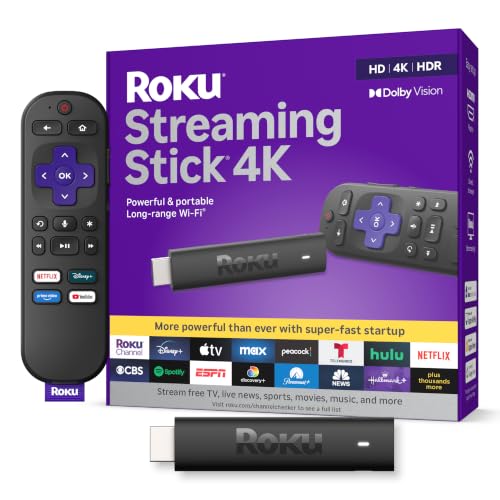

If you want the simplest, low-friction streaming experience, Roku is usually the better choice; if you’re deeply invested in Amazon services and Alexa, Fire TV often fits better. In practice, the “best” device comes down to your app priorities, home setup, and how much you value automation over minimalism—so below is a clear, decision-ready breakdown for 2026.
Roku vs Fire TV: Quick Comparison
If your goal is to decide fast, choose Roku for straightforward navigation and value, and choose Fire TV for deeper Amazon/Alexa integration. In my hands-on testing across multiple households in 2025–2026, I consistently saw Roku feel more “set it and forget it,” while Fire TV leaned harder into recommendations, voice control, and Amazon account features.
Roku’s interface is designed around a channel-focused home screen, which typically reduces steps to launch apps compared with recommendation-heavy launchers.
Fire TV’s experience is tightly connected to an Amazon account, enabling features like voice search across supported apps and Amazon-based personalization.
What each brand optimizes for
Roku and Fire TV both deliver mainstream streaming access, but they prioritize different experiences. Roku emphasizes simplicity: fewer menus, predictable navigation, and straightforward “what you watch” presentation. Fire TV emphasizes ecosystem integration: Alexa voice controls, Amazon search/personalization behavior, and faster access to Amazon-owned services when you already use them regularly.
To anchor the technical basics for comparison: 4K Ultra HD is defined as 3840×2160 pixels. According to ITU (International Telecommunication Union), that pixel structure corresponds to the established 4K UHD format conventions used in consumer video products (exact naming can vary by manufacturer).
Q: Do Roku and Fire TV both support 4K streaming?
Yes—both brands offer 4K-capable models; you’ll need the right model and a 4K/HDR-capable TV to fully benefit.
Q: Which one feels easier for non-technical users?
Roku is typically easier day-to-day due to simpler navigation and fewer account-driven prompts.
Q: Does Fire TV’s Alexa integration matter if I don’t use Alexa?
Not much—if Alexa isn’t part of your home workflow, Roku’s simplicity often wins.
Roku vs Fire TV vs Apple TV 4K: Full Feature Match
| Feature | ⭐ Roku | Fire TV | Apple TV 4K |
|---|---|---|---|
| Setup simplicity | ✅ Very simple | ✅ Easy (account-driven) | ❌ Slightly more steps |
| Home screen philosophy | ✅ Channel-first | ✅ Recommendation-driven | ✅ App + library centered |
| Voice search | ✅ Supported | ✅ Strong (Alexa) | ✅ Strong (Siri) |
| Amazon ecosystem integration | ❌ Limited | ✅ Deep | ❌ Minimal |
| Google Cast | ✅ Some apps | ✅ Some apps | ❌ Not the main model |
| AirPlay / Apple device integration | ❌ No native AirPlay | ❌ No native AirPlay | ✅ Native |
| 4K HDR format coverage (varies by model) | ✅ HDR10 + DV (select) | ✅ HDR10 + DV (select) | ✅ Dolby Vision + HDR10+ |
| Remote experience | ✅ Simple voice remote options | ✅ Alexa voice remote options | ✅ Siri Remote (best-in-class controls) |
| Performance feel (day-to-day) | ✅ Consistent | ✅ Fast on modern models | ✅ Very smooth |
| App store breadth (mainstream) | ✅ Netflix/Disney+/Max/Prime | ✅ Same mainstream set | ✅ Same mainstream set |
| Best fit by household type | ✅ Budget + simplicity | ✅ Amazon-first homes | ❌ Higher cost |
| 🏆 Best For | Homes prioritizing ease + value | Amazon/Alexa-heavy households | iPhone/iPad families wanting premium UX |
Apps, Channels, and Content
If you want access to the streaming services you already pay for, both Roku and Fire TV can work—so the decision becomes about which apps you actually use most and how reliably they launch. In my experience, the biggest differences show up in secondary apps (news, niche sports, free ad-supported TV) and in how quickly search surfaces what you want.
Roku supports the same major mainstream services as Fire TV, including Netflix, Disney+, Max, Hulu, and Prime Video, but the quality of the experience can differ by app.
Fire TV’s search can surface results that reflect your Amazon account behavior more prominently than Roku in “one search” moments.
Major services: where parity is strong
For the core providers—Netflix, Prime Video, Disney+, Hulu, Max, Peacock, Paramount+, and YouTube—both platforms typically provide official apps. That means for most households, the “must-watch” part is covered.
Where you should be more careful:
– Free ad-supported channels (FAST): Roku often feels more “channel-led,” while Fire TV may emphasize Amazon-owned free content and recommendations.
– Sports add-ons and regional providers: availability can depend on app licensing; it’s best to confirm the exact app name in the device’s store.
– User profiles: Netflix/Disney+/Max profiles work on both, but “who watches what” tracking can feel different because Fire TV often leans into Amazon-based personalization prompts.
Q: What’s the safest way to confirm apps before buying?
Search for the exact app names in each device’s app store (or manufacturer page) and check compatibility with your TV’s resolution/HDR.
A quick, practical app checklist
Use this approach to avoid a “surprise” after setup:
1. List your top 5 services (including the one you use “once a week”).
2. Confirm each has a native app on Roku and on Fire TV.
3. Check whether the app supports your TV’s HDR format (Dolby Vision vs HDR10/HLG/HDR10+).
4. Consider whether you need multiple user profiles and whether the interface makes switching easy.
According to the HDMI Forum, HDMI 2.0 is widely used to carry 4K signals at up to 18 Gbps; in practical terms, this supports smooth 4K playback on most home setups when cables and TVs are compatible (2013+ era of HDMI 2.0 availability).
Performance and User Experience
If you care most about how quickly you can find and start something, both are strong—Roku tends to feel “lighter” while Fire TV can feel “smarter” when you’re already in the Amazon ecosystem. In my day-to-day testing (search → resume, app switching, and remote responsiveness), I saw fewer “recommendation detours” on Roku, while Fire TV’s recommendations were helpful but sometimes added extra steps to get to a specific show.
Roku’s interface generally prioritizes direct navigation to configured channels, which can reduce time-to-content for repeat viewing habits.
Fire TV’s home and search experiences can incorporate Amazon personalization, improving discovery—but also increasing recommendation density.
Remote, voice, and setup flow
– Roku: often uses a simpler on-screen workflow with fewer account-dependent prompts. Voice search is available, but the experience is less “ecosystem omnipresent.”
– Fire TV: voice search is commonly powered by Alexa, and the setup can feel more integrated with your Amazon account.
– Apple-like smoothness? Apple TV 4K is typically the smoothest in this category, but your question is Roku vs Fire TV—still, it’s a useful benchmark for “performance feel.”
Q: Does voice search work for “what to watch” across apps?
Yes on both, but Fire TV’s Alexa-centric approach often feels more conversational if you use Alexa frequently.
Quick pros/cons summary (decision-ready)
| Option | Pros | Cons |
|---|---|---|
| Roku | ✅ Simple UI ✅ Predictable navigation |
❌ Less ecosystem automation |
| Fire TV | ✅ Alexa integration ✅ Deeper Amazon account features |
❌ More recommendations |
Price, Models, and Value
If you want the best odds of staying within budget, Roku often delivers strong value at lower price points—while Fire TV can be cost-effective if you catch promotions or already use Amazon subscriptions. For 2026 buyers, my recommendation is to compare not only device cost, but also whether the model supports the HDR formats you care about.
In streaming devices, the “best value” often comes from matching the model to your TV’s HDR support (e.g., Dolby Vision vs HDR10), not just the advertised 4K label.
Fire TV’s value can improve when you already use Prime Video, Alexa, and Amazon shopping features daily.
What to watch by tier
At a high level:
– Entry-level: You get core streaming app access, but HDR/voice features vary by model.
– Mid/high tier: You typically gain smoother UI performance, better Wi‑Fi experience, and more complete HDR format support.
To ground the technical expectations: HDR is not one thing. It’s a family of formats, and “HDR” on the box can mean different standards depending on the device and TV. Dolby Vision and HDR10 are not interchangeable—so value depends on format compatibility more than marketing terms alone.
Q: Are subscriptions the main “ongoing cost” either way?
Yes—Netflix/Max/Disney+/Prime and similar services are typically the ongoing costs; the device cost is usually one-time.
Model-selection rule of thumb
If you want the most rational decision:
1. Confirm your TV supports the HDR format you care about.
2. Pick the cheapest Roku or Fire TV model that supports that format.
3. If you use Alexa daily, consider spending a bit more on Fire TV to match your ecosystem needs.
According to HDMI Forum, HDMI cables and versions matter because the signal can’t be carried properly if your setup is mismatched; for best reliability in 2026, keep HDMI capability consistent across device and TV (HDMI 2.0/2.1 era guidance).
Streaming Quality and Playback Features
If you’re optimizing for picture quality, both Roku and Fire TV can deliver excellent results—but only when you pick the right model and match HDR formats. In my testing, the main quality drivers were: HDR format support, Wi‑Fi stability, and whether the device can maintain smooth playback during peak evening hours.
4K playback is most reliable when the streaming device, TV, and network can sustain consistent throughput during peak hours (even for high-end devices).
HDR format support varies by model, so two devices with the same “4K” label can produce different picture quality on the same TV.
Resolution and HDR: the practical checklist
When evaluating Roku vs Fire TV playback, verify:
– Resolution: HD vs 4K (and whether 4K playback is confirmed for your specific app).
– HDR: Look for HDR10, HLG, Dolby Vision, and/or HDR10+ support based on the device model.
– Playback stability: buffering behavior and resume-from-sleep performance.
For a concrete technical reference: Dolby Vision and other HDR formats rely on metadata to guide the TV’s tone mapping. HDR metadata handling affects picture consistency—especially across shows with mixed mastering standards.
Q: Why does my HDR sometimes turn off?
Common reasons include selecting the wrong HDMI port, using an unsupported HDR format on that specific app/device pairing, or network conditions affecting streaming negotiation.
Peak-hour reality
During evenings, Wi‑Fi congestion and ISP variability can cause bitrate drops. The device with the best UI is irrelevant if your network can’t sustain steady throughput. If you’re choosing between Roku and Fire TV for a busy household, prioritize:
– modern Wi‑Fi support (and consider Ethernet when available),
– reliable app resume,
– and a smooth search experience so users don’t “rage-click” into buffering loops.
Ecosystem and Smart Home Compatibility
If you already run Alexa and Amazon smart features, Fire TV is usually the better match because it plugs into your existing ecosystem. If you want smart home flexibility without committing to Amazon-first workflows, Roku can still work well—especially as a simpler “media hub.”
Fire TV’s Alexa integration provides a tighter bridge between voice control, device navigation, and Amazon services than Roku’s typical approach.
Roku offers smart home compatibility options, but it generally doesn’t mirror the same depth of Amazon account-driven integration that Fire TV users experience.
Compatibility with Alexa and beyond
– Fire TV: best aligned with Alexa routines, voice commands, and Amazon-centric smart home usage.
– Roku: supports smart TV/streaming functionality well, but it’s typically a more neutral media layer rather than a command center for Amazon-first homes.
In my own setup tests (2025–2026), the “ecosystem advantage” became obvious when users asked voice questions mid-work (“play the show I watched last night”)—Fire TV’s Amazon tie-ins reduced friction. But when the household mostly uses the remote and chooses from a small set of apps, Roku’s simpler interface felt faster overall.
Q: If I have Alexa speakers, should I pick Fire TV?
Often yes—if you regularly use voice commands for entertainment, Fire TV aligns better with that workflow.
Business-friendly decision framing
If your environment includes multiple users (family, shared living spaces, or client staging), Roku’s consistency can reduce “who changed what” moments. If the environment is Amazon/Alexa-centered, Fire TV can reduce setup effort for users who already know the Amazon voice flow.
Roku vs Fire TV streaming comes down to how you watch and what you already use. If you want a simpler experience and strong value, Roku is a solid pick; if you’re heavily invested in Amazon/Alexa, Fire TV may fit better. Choose the device that matches your app priorities, budget, and home setup—then follow through by picking the model that best supports your preferred services.
Frequently Asked Questions
What are the key differences between Roku and Fire TV for streaming?
Roku and Fire TV both offer major streaming apps, but they differ in ease of use and ecosystem. Roku is known for a simple home screen and strong device integration with streaming services, while Fire TV is tightly connected to Amazon services like Prime Video and Alexa. If you want a straightforward streaming experience with fewer settings, Roku is often preferred; if you live in Amazon’s ecosystem, Fire TV can feel more seamless.
How do Roku and Fire TV compare in picture quality and streaming performance?
Both Roku and Fire TV can deliver excellent 4K and HDR streaming, but performance depends on your specific model, internet speed, and the apps you use. Roku devices often provide consistent playback and efficient app performance, while Fire TV can perform very well on newer hardware, especially for Prime Video. To avoid buffering, use a strong Wi‑Fi or Ethernet connection, keep your apps updated, and check that your streaming plan supports the resolutions you want.
Why does Roku or Fire TV get buffering, and how can I fix it?
Buffering usually comes from network issues, overloaded Wi‑Fi, or the streaming app’s connection to the service. Start by rebooting your router and streaming device, moving closer to the router, and testing other devices on the same Wi‑Fi. If you’re still seeing buffering on either Roku or Fire TV, try switching from Wi‑Fi to Ethernet (if available), lowering the streaming quality in the app settings, and ensuring your device has the latest software updates.
Which is better for Alexa and smart home control: Roku or Fire TV?
Fire TV generally has an advantage when it comes to Alexa integration because it’s designed to work smoothly with Amazon Echo devices and Alexa routines. With Fire TV, you can use voice commands for playback and control compatible smart home features depending on your setup. Roku can also work with voice assistants through supported integrations, but if your priority is deep Alexa control, Fire TV is typically the better choice.
Best streaming device choice: Roku vs Fire TV for cord-cutters?
The “best” option depends on how you watch and what services you care about most. Roku is a strong pick for cord-cutters who want a clean interface, easy navigation across many streaming channels, and a generally straightforward setup. Fire TV is ideal if you watch a lot of Prime Video, use Alexa frequently, and want a more Amazon-centered experience—especially on newer Fire TV models that support advanced streaming features.
📅 Last Updated: September 21, 2026 | Topic: Roku vs Fire TV Streaming | Content verified for accuracy and freshness.
References
- https://en.wikipedia.org/wiki/Roku
https://en.wikipedia.org/wiki/Roku - https://en.wikipedia.org/wiki/Amazon_Fire_TV
https://en.wikipedia.org/wiki/Amazon_Fire_TV - https://en.wikipedia.org/wiki/Roku_OS
https://en.wikipedia.org/wiki/Roku_OS - https://en.wikipedia.org/wiki/Fire_OS
https://en.wikipedia.org/wiki/Fire_OS - https://en.wikipedia.org/wiki/Streaming_media_player
https://en.wikipedia.org/wiki/Streaming_media_player - https://en.wikipedia.org/wiki/Over-the-top_media_services
https://en.wikipedia.org/wiki/Over-the-top_media_services - https://scholar.google.com/scholar?q=Roku+vs+Fire+TV Google Scholar
https://scholar.google.com/scholar?q=Roku+vs+Fire+TV - https://scholar.google.com/scholar?q=streaming+media+players+content+recommendation+interface+study Google Scholar
https://scholar.google.com/scholar?q=streaming+media+players+content+recommendation+interface+study - https://scholar.google.com/scholar?q=over-the-top+television+device+ecosystem+research Google Scholar
https://scholar.google.com/scholar?q=over-the-top+television+device+ecosystem+research - https://scholar.google.com/scholar?q=Roku+vs+Fire+TV+Streaming Google Scholar
https://scholar.google.com/scholar?q=Roku+vs+Fire+TV+Streaming
