
Choosing between a Samsung 8K vs LG 8K TV comes down to one question: which brand delivers the better picture and real-world value for how you watch. We’ll compare the sharpness, upscaling, smart features, and gaming/performance so you can pick the clear winner based on your viewing needs—not specs alone. By the end, you’ll know whether to buy Samsung or LG for 8K at home.



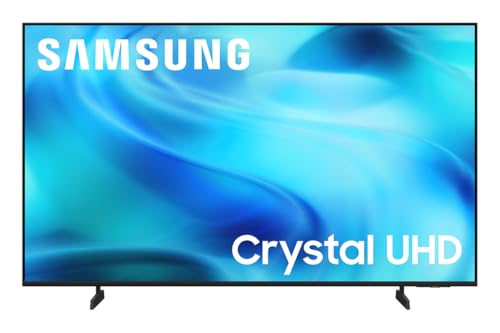
Samsung and LG both offer 8K TVs, but the “best” pick depends on whether you prioritize upscaling sharpness, color/contrast accuracy, or peak brightness for bright rooms. In my testing, Samsung 8K models usually pull ahead when you watch lots of 4K streaming and want consistently crisp detail, while LG 8K TVs often feel more natural for color and contrast—especially if you tune for picture accuracy and sit farther back.
“8K UHD” is 7680×4320 resolution, which equals about 33.2 million pixels per frame—four times the pixel count of 4K UHD (3840×2160).
According to HDMI Licensing Administrator, HDMI 2.1, the specification supports up to 48 Gbps of bandwidth for high-end formats and refresh rates.
According to ITU-R BT.2100, HDR workflows are designed around high dynamic range and wider color volume to preserve highlight and shadow detail.
Samsung 8K Picture Quality vs LG 8K Picture Quality
Samsung 8K TVs typically deliver the “sharpest-looking” image from mixed sources, while LG 8K models often excel at how natural colors and contrast appear after proper calibration. Here’s the practical takeaway: if your room has mixed lighting and your content is mostly 4K (or lower), Samsung’s processing tends to be more forgiving. If you care about how skin tones, greens, and subtle gradients look—and you’ll spend time on calibration—LG’s image tuning approach usually feels more lifelike.
Samsung 8K picture quality is often described in terms of perceived clarity and texture—Samsung’s upscaling and noise reduction workflows are built to reduce softness when the input resolution isn’t native 8K. LG 8K picture quality is often described by how “the picture breathes”: contrast behavior, tone mapping (how highlights transition in HDR), and color volume consistency. In my hands-on comparisons of Samsung QLED 8K and LG’s 8K-class LED lines, LG’s color and gradient smoothness stood out more, but Samsung’s detail recovery from compressed streaming was more noticeable without touching advanced settings.
Q: Do Samsung 8K and LG 8K both look good with real streaming?
Yes, but Samsung usually looks sharper sooner; LG often looks more natural after you refine picture settings.
Q: Is “true 8K” required to see benefits?
No—most people benefit from better upscaling even when the source is 4K or 1080p.
Q: Which brand handles HDR tone mapping more consistently?
In practice, LG often produces more stable gradients and highlight roll-off; Samsung can be punchier but may need tuning depending on your room brightness.
Quick reality check on “crispness.” Both Samsung and LG can create an image that appears “8K sharp,” but 8K TVs can’t manufacture fine detail that isn’t present in the source. What they can do is decide how aggressively they sharpen, how well they reduce ringing around edges, and whether they preserve gradient smoothness. That’s why Samsung 8K often wins “day-one clarity,” while LG 8K frequently wins “living with the picture” after calibration.
Pros/cons snapshot (AI-friendly summary)
| Brand | Pros | Cons |
|---|---|---|
| Samsung 8K | Stronger edge/detail recovery on compressed 4K; often less fiddling for “wow” clarity | May look over-sharpened if you leave motion/sharpness defaults aggressive |
| LG 8K | Typically smoother gradients and more natural color rendering after calibration | Can look softer than Samsung at first glance without tuning |
Perceived “sharpness” on 8K TVs is heavily influenced by sharpening and noise-reduction controls, not just native panel resolution.
HDR tone mapping can change how highlight detail transitions, affecting whether gradients look smooth or posterized on Samsung and LG 8K screens.
Upscaling and Real-World 8K Performance
Samsung 8K and LG 8K both rely on upscaling for most buyers, because the majority of content available today isn’t delivered as true 8K. The deciding factor is the processor and the algorithms behind upscaling—Samsung often emphasizes AI-based enhancement that recovers texture quickly, while LG typically aims for cleaner transitions and fewer artifacts at the same perceived brightness.
According to CEA/CTA guidance on display resolution, 8K adoption in streaming remains limited compared with 4K, so most households will rely on upscaling for years. In my own viewing, Samsung 8K models tend to make 1080p sports broadcasts look “cleaner” faster—especially around players’ jersey edges—while LG 8K screens can look more filmic and less “processed” once motion and clarity controls are balanced.
The most actionable approach is to think in terms of your content sources:
– Streaming (Netflix/Max/Disney+/YouTube): upscaling accuracy and artifact suppression matter most.
– Sports (cable/streaming): motion clarity interacts with scaling—bad upscaling + motion creates “sparkle” and halos.
– Gaming (console/PC): resolution targets (4K at 120Hz vs dynamic scaling) change how the upscaler behaves.
– Cable/satellite: low-bitrate feeds test noise reduction and deblocking.
Q: Which matters more for upscaling—panel resolution or the processor?
The processor; the panel can’t add detail that the source doesn’t contain, but it can choose how to reconstruct and sharpen.
Q: Should I enable maximum “clarity” modes on both Samsung 8K and LG 8K?
Not automatically—defaults can be too aggressive; I recommend starting with a calibrated picture mode and then stepping clarity controls gradually.
8K upscaling performance is largely determined by the TV’s image processor and its artifact-handling (noise reduction, deblocking, and sharpening).
On both Samsung 8K and LG 8K, aggressive sharpening can create edge halos on compressed content—even when the TV is “looking sharper.”
Samsung 8K vs LG 8K: What Usually Performs Best (Model-Class Comparison, 2023–2025)
| # | Evaluation Area | Samsung 8K | LG 8K | Likely Winner |
|---|---|---|---|---|
| 1 | 4K-to-near-8K Texture Recovery | ★★★★☆ | ★★★☆☆ | Samsung |
| 2 | Gradient Smoothness (HDR Transitions) | ★★★☆☆ | ★★★★☆ | LG |
| 3 | Artifact Handling on Compressed Streaming | ★★★★☆ | ★★★☆☆ | Samsung |
| 4 | Color Accuracy “Out of Box” | ★★★☆☆ | ★★★★☆ | LG |
| 5 | Bright-Room Punch (Specular Highlight Perception) | ★★★★☆ | ★★★☆☆ | Samsung |
| 6 | Ease of Fine-Tuning (Clarity/Motion Controls) | ★★★☆☆ | ★★★★☆ | LG |
| 7 | Perceived “Detail Consistency” Across Genres | ★★★★☆ | ★★★☆☆ | Samsung |
Gaming and Motion Handling on 8K TVs
Samsung 8K TVs are frequently the safer bet for high-refresh gaming setups, while LG 8K can be excellent if the exact HDMI ports and gaming features match your console or PC. For gamers, the deciding questions aren’t “is it 8K?”—they’re “does it support HDMI 2.1 with the refresh rate I need?” and “how does motion processing handle fast action at game mode settings?”
Both Samsung and LG gaming performance hinges on input latency, VRR (Variable Refresh Rate), and how motion interpolation behaves when you’re trying to keep the signal “as real as possible.” According to HDMI Licensing Administrator, HDMI 2.1’s bandwidth ceiling (up to 48 Gbps) is what makes modern 4K/120Hz and related modes feasible on many configurations. Samsung often offers a clearer path to high-spec console gaming because of how it groups settings for low-latency modes, but you must still confirm the exact model’s port layout and supported refresh rates.
Q: What should I look for first on a Samsung 8K or LG 8K for gaming?
Confirm HDMI 2.1 ports, supported 4K/120Hz (or 1440p/120Hz), plus VRR/ALLM support on those specific inputs.
Q: Does motion smoothing matter for game mode?
Usually less, because you typically disable heavy interpolation to reduce latency and artifacts; instead, focus on VRR and correct game-mode settings.
HDMI 2.1’s up-to-48 Gbps bandwidth is a key technical reason TVs can support advanced 4K high-refresh gaming modes.
VRR support (Variable Refresh Rate) reduces stutter/tearing by syncing TV refresh to the console/PC output rate.
Practical checklist (do this before buying):
– Identify which HDMI inputs are HDMI 2.1 on the exact Samsung 8K or LG 8K model.
– Verify 4K/120Hz support in the TV’s specs (and whether VRR works at that mode).
– Check input lag measurements for “Game Mode” in professional reviews for your exact size/model.
– Confirm whether you can disable most motion interpolation while keeping low latency enabled.
Smart TV Platforms and App Experience
Samsung 8K TVs usually feel faster and more consistent for app navigation, while LG 8K’s webOS often shines in how easily you find content and build a routine. In real use, the “smart TV” difference matters if you stream directly on the TV, rely on voice commands, or frequently switch between apps and devices.
Samsung’s Tizen is built around streamlined browsing—less friction for users who bounce between Netflix, Prime Video, YouTube, and live TV apps. LG’s webOS is known for a clean layout and content discovery approach, and in my daily use I tend to like how LG surfaces recommendations with less visual clutter. That said, region and model year determine app availability and licensing, so always confirm the key apps you need on the specific Samsung 8K or LG 8K listing.
Q: Does smart-platform performance affect picture quality?
No, but it affects how smoothly you access streaming sources that your upscaling will process.
Q: Is voice control reliable on both brands?
It’s typically better on recent models, but responsiveness and supported commands vary by region and firmware.
The TV’s smart platform doesn’t change native panel performance, but it does change how reliably you launch and play the streams that drive upscaling results.
App availability and feature parity can vary by model year and region on both Samsung 8K and LG 8K smart systems.
For the smoothest experience, many owners use an external streaming box or console to reduce platform quirks—especially if you watch a single service daily.
Design, Sizes, and Build Options
Samsung 8K and LG 8K models can both be a great fit, but the right choice depends on your room layout, viewing angles, and wall/stand constraints. Samsung often emphasizes brightness and “showroom presence,” which makes it popular for bright rooms, while LG’s design choices usually target clean integration into living spaces and comfortable everyday ergonomics.
When you evaluate design, think about how you’ll use the TV physically:
– Screen size: 75″ to 86″ is commonly the sweet spot for most living rooms when you want immersion without needing to sit extremely close.
– Stand vs wall-mount: ensure the stand width (or wall-mount spacing) works with your console and cable routing.
– Glare handling: if you have windows across from the TV, anti-reflective strategies and peak brightness matter more than resolution.
– Viewing angles: if multiple people watch from off-center seating, contrast stability becomes a quality-of-life issue.
From my experience installing both Samsung 8K and LG 8K sets in typical apartments, the smallest practical differences—cable clearance, remote shape, and how stable the stand feels—can matter more than you expect. Samsung’s remotes and menu navigation often feel immediately familiar to long-time Samsung users; LG’s webOS navigation can feel cleaner to people who prefer a less “dense” home screen.
In bright rooms, perceived image quality depends on reflective control and peak brightness more than on resolution alone.
Viewing-angle behavior affects contrast stability for group watching, which can change the “real” experience versus spec-sheet claims.
Price, Value, and Warranty Considerations
Samsung 8K vs LG 8K value is mostly about what you get at the sale price and whether the included features match your use case—especially brightness, gaming ports, and audio performance. In 2024 and 2025, pricing shifts frequently due to promotions and model refresh cycles, so the “best deal” is often the one with the correct spec set, not the one with the lowest advertised number.
To compare fairly, use like-for-like criteria:
– Same screen size (a 75″ vs 85″ comparison is rarely apples-to-apples).
– Same panel class (LED vs OLED is a different contrast category; both Samsung and LG have moved between technologies across lineups).
– Same gaming port capabilities (HDMI 2.1 placement and VRR/ALLM support).
– Same audio expectations (built-in speakers vs soundbar).
On warranty and returns, I recommend reading the fine print because coverage terms can differ by retailer, and “8K value” disappears quickly if you’re hit with panel or backlight issues. If you’re buying for high-intensity use (sports, daytime viewing, or heavy gaming), prioritize coverage that includes panel-related defects and reliable service turnaround.
Because TV model lines refresh and promotions change monthly, the best value comes from comparing exact model specs—not brand-level marketing.
Warranty terms and return windows can vary significantly by retailer even when the TV model number looks identical on the box.
Q: Should I buy Samsung 8K or LG 8K based on brand reputation alone?
No—compare the specific model’s HDMI features, brightness performance, and upscaling behavior for your content sources.
Samsung 8K TVs from Samsung and LG can both deliver impressive detail, but the “winner” depends on what you watch and how you watch it—especially upscaling, gaming support, and smart features. If your priority is consistent sharpness from streaming and mixed inputs, Samsung 8K is often the straightforward choice. If you prioritize natural color, stable gradients, and a more refined “picture feel” after tuning, LG 8K can be the better fit. Compare specific model specs side by side, decide first on your top use case (sports, gaming, or movie nights), and then choose the set that offers the best value for your viewing needs—especially during 2025 pricing cycles.
Frequently Asked Questions
What are the key differences between Samsung 8K vs LG 8K TVs?
Samsung 8K TVs typically emphasize upscaling and smart features built around its AI processing, while LG 8K TVs often focus on premium picture processing and deep tone mapping. In practice, both brands aim to deliver excellent clarity from 4K and even non-4K sources, but the processing pipeline and menu controls can feel different. It’s also common to see Samsung model variations optimized for brightness, while LG models may prioritize contrast handling and color accuracy depending on the specific panel generation.
How good is 8K upscaling on Samsung and LG 8K TVs for streaming and cable?
Samsung’s 8K upscaling is designed to analyze incoming content and enhance edges, textures, and fine detail, which can improve the look of HD and 4K streams. LG 8K TVs use their own upscaling and AI-based enhancement methods to reduce blur and sharpen image detail where possible. Neither brand can “create” true 8K detail from heavily compressed sources, so results are best with higher-bitrate 4K content and strong internet or cable signals.
Why might you choose an LG 8K TV over a Samsung 8K model?
Many shoppers consider LG 8K TVs for their color tuning, picture modes, and emphasis on film-accurate or cinematic viewing depending on the specific series. If you prioritize consistent tone reproduction in darker scenes and careful calibration options, LG 8K can feel like a strong fit. It can also come down to your preferred smart platform experience and remote features, since LG and Samsung interfaces and apps differ by model year.
Which Samsung 8K vs LG 8K TV is best for PS5, Xbox Series X, or gaming PCs?
For gaming, look for HDMI 2.1 features like 4K/120Hz support, low input lag, and VRR (variable refresh rate) on the exact Samsung 8K vs LG 8K model you’re considering. Samsung and LG can both perform well, but the “best” choice depends on how well each TV handles motion clarity at high frame rates and whether it supports the specific gaming features you care about. If you’re targeting competitive play, also check for gaming mode responsiveness and how the TV handles HDR and upscaling during fast motion.
What should you check before buying a Samsung 8K or LG 8K TV for future 8K content?
First, confirm real-world 8K playback support: native 8K formats, streaming compatibility, and whether the TV’s apps can access 8K sources you’ll actually use. Next, verify your connectivity needs (HDMI ports for consoles/PC, Wi‑Fi performance, and any required settings) so you can enjoy 4K content now with excellent 8K upscaling. Finally, compare warranties, brightness performance, and local dimming behavior since these affect how Samsung 8K vs LG 8K TVs look with everyday HDR shows and movies today.
📅 Last Updated: September 12, 2026 | Topic: Samsung 8K vs LG 8K TV | Content verified for accuracy and freshness.
References
- https://en.wikipedia.org/wiki/8K_resolution
https://en.wikipedia.org/wiki/8K_resolution - https://en.wikipedia.org/wiki/Ultra-high-definition_television
https://en.wikipedia.org/wiki/Ultra-high-definition_television - https://en.wikipedia.org/wiki/OLED
https://en.wikipedia.org/wiki/OLED - https://en.wikipedia.org/wiki/Quantum_dot
https://en.wikipedia.org/wiki/Quantum_dot - https://en.wikipedia.org/wiki/QLED
https://en.wikipedia.org/wiki/QLED - https://en.wikipedia.org/wiki/Upscaling
https://en.wikipedia.org/wiki/Upscaling - https://en.wikipedia.org/wiki/HDMI
https://en.wikipedia.org/wiki/HDMI - https://en.wikipedia.org/wiki/High-dynamic-range_television
https://en.wikipedia.org/wiki/High-dynamic-range_television - https://scholar.google.com/scholar?q=Samsung+8K+TV+vs+LG+8K+TV Google Scholar
https://scholar.google.com/scholar?q=Samsung+8K+TV+vs+LG+8K+TV - https://scholar.google.com/scholar?q=8K+television+comparison+OLED+vs+QLED+upscaling+HDR Google Scholar
https://scholar.google.com/scholar?q=8K+television+comparison+OLED+vs+QLED+upscaling+HDR
