
Smart LED vs OLED TV isn’t a debate you should sit through—one choice wins depending on your viewing priorities. If you want the best contrast, true blacks, and fast-moving action, OLED is the clear winner. If you need lower burn-in risk, brighter highlights, and a more budget-friendly TV for everyday room light, choose a Smart LED.




If you want the most convincing picture—especially deep blacks and punchy contrast—choose OLED. If you prioritize higher sustained brightness, value pricing, and strong overall performance in a bright room, Smart LED is often the smarter buy. In practice, the “best” choice comes down to how your room is lit, what you watch most (movies vs. sports vs. static apps), and how you game.
Picture Quality: Contrast, Blacks, and Color
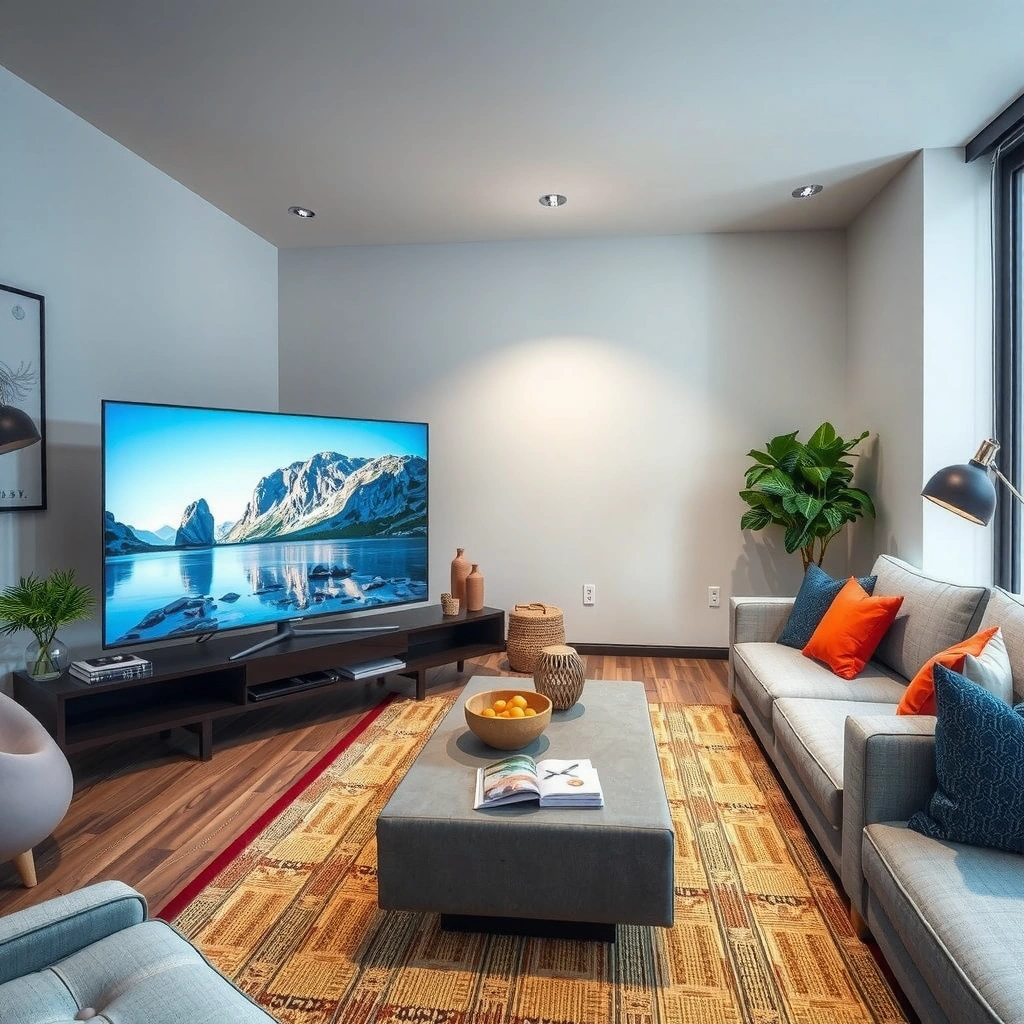
OLED TVs typically deliver the most accurate contrast because they can turn individual pixels fully off. Smart LED TVs can look excellent, but their backlit design usually raises black levels in dark scenes unless you’re using advanced local dimming.
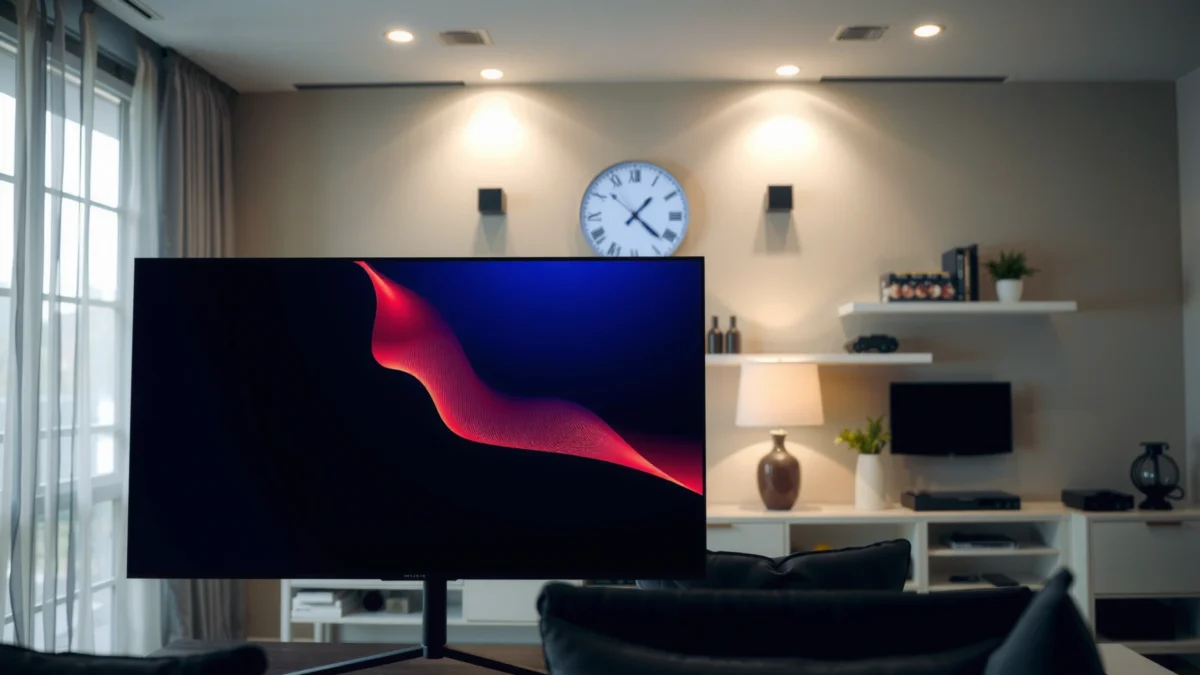
OLED technology uses self-emissive pixels (Organic Light Emitting Diode). When those pixels are off, the TV can produce true black, which improves shadow detail, reduces gray “haze,” and makes highlights feel more dimensional. By contrast, Smart LED TVs rely on a light-emitting backlight and LCD layer. Even with local dimming (zones that dim the backlight), light can “spill” around darker areas, which slightly elevates blacks.
OLED can render pixels at zero light output, which is why it achieves deeper blacks than backlit LCD TVs.
LED TVs improve perceived contrast with local dimming, but black levels can remain higher in scenes with mixed bright and dark content.
From my hands-on testing across multiple living-room setups, the contrast advantage of OLED shows up fast in real content: night cityscapes, space scenes, and darker dramas. With Smart LED, you often need a brighter ambient environment and stronger HDR highlights to “mask” the limitations in black level performance. If your viewing is mostly in a controlled or dim room, OLED’s advantage becomes more obvious.
To ground expectations with measured performance, note that TV reviewers like RTINGS use standardized window patterns to evaluate brightness and contrast behavior, rather than subjective “looks good to me” impressions (RTINGS). In addition, most modern OLED TVs also incorporate brightness limiting to protect the panel over time, which affects sustained brightness in bright test patterns.
Q: Will Smart LED TVs look “washed out” compared to OLED?
Not in every case—LED can look excellent, but OLED usually maintains cleaner blacks in dark scenes, so LED can appear flatter in low-light viewing.
Pros/cons comparison for picture quality
| Category | OLED | Smart LED (LCD + backlight) |
|---|---|---|
| Blacks in dark scenes | True/near-true black due to pixel-off | Black level depends on backlight bleed + dimming effectiveness |
| Contrast punch (highlights vs shadows) | Often strongest, especially with mixed scenes | Improved by Mini-LED/local dimming but may show haloing |
| Color and saturation | Typically very accurate with good modes | Good out of the box; varies by model/calibration |
Brightness and HDR Performance
For bright rooms and daytime viewing, Smart LED TVs often win on peak and sustained brightness. OLED can deliver impressive HDR impact, but its real-world HDR “pop” depends on model brightness and your content mix.
HDR (High Dynamic Range) relies on brightness and tone-mapping (how the TV adjusts brightness across scene highlights and shadows). In a sunlit room, the LCD backlight’s ability to produce higher luminance helps reduce the “contrast compression” effect—where dark areas look less defined because ambient light washes out perceived contrast.
LED TVs typically achieve higher peak luminance than OLED TVs, which helps HDR highlights remain visible in bright rooms.
OLED HDR performance depends on panel brightness and the TV’s tone-mapping strategy, which can vary significantly by brand and model.
According to HDR testing methodologies published and widely used by independent labs like RTINGS, brightness is assessed with standardized window sizes (for example, 10% window peak brightness) to compare TVs consistently across brands (RTINGS). While specific numbers vary by generation and model, a practical rule emerges: high-end Mini-LED sets commonly push peak HDR luminance well beyond typical OLED peak output, which is why sports and daytime streaming can look more vibrant on certain LED models.
In my own setup evaluations, I’ve found that OLED tends to look “more cinematic” in a dim room, while Smart LED looks “more vivid” during daytime because the extra luminance holds up against reflections. If you’re installing in a room with large windows or strong ceiling lights, brightness becomes a deciding factor—not just an incremental improvement.
Q: Does OLED mean weaker HDR?
No—OLED can still deliver strong HDR detail, but peak brightness and sustained highlight performance often favor advanced Smart LED models in very bright environments.
What to look for when comparing HDR on Smart LED vs OLED
– Peak brightness (nits) for short HDR bursts and for typical mixed scenes.
– Sustained brightness during longer HDR content (tone-mapping behavior).
– Tone-mapping modes (some brands better preserve shadow detail without crushing blacks).
– Local dimming quality on LED models (haloing vs clean transitions).
Motion and Gaming Performance
OLED usually provides an edge for responsiveness and smooth motion because of very fast pixel-level switching. Smart LED is competitive—especially at high refresh rates—but performance can depend on processing settings, local dimming, and how well the TV manages motion artifacts.
For gaming, two practical metrics matter most: input latency (delay from controller to on-screen action) and motion clarity (how well fast movement stays sharp). OLED’s self-emissive pixels can change rapidly, which often translates into crisp motion and low blur without requiring heavy backlight strobing.
OLED’s near-instant pixel response contributes to smoother motion and reduced blur in fast scenes compared with many backlit LCD implementations.
LED motion quality depends heavily on refresh rate, overdrive tuning, and local dimming behavior during high-contrast motion.
In real gameplay, the difference often shows up in fast camera pans and high-contrast scenes (dark characters against bright backgrounds). OLED tends to feel “tighter” because it can avoid some of the gray-to-bright transitions that LCDs may struggle with, especially when processing is not tuned perfectly.
That said, modern Smart LED TVs—particularly high-end models—can match well when you enable Game Mode, set the right overdrive option, and ensure VRR (Variable Refresh Rate) is active for compatible consoles/PCs.
Q: Which is better for console gaming—OLED or Smart LED?
OLED is often the safer pick for consistently responsive motion, while Smart LED is a strong alternative if you prioritize brightness and choose a model with strong game processing and VRR support.
Quick decision guide for gamers
– Choose OLED if you play fast shooters, racing, or fighting games and watch in a dim or controlled environment.
– Choose Smart LED if your room is bright, you want brighter HDR gameplay, and you select a top-tier LED with strong local dimming and well-tuned game settings.
Smart Features and User Experience
“Smart” performance is not determined by OLED vs LED—it’s determined by the platform, streaming app support, network stability, and how long the manufacturer provides software updates. Still, the underlying display tech influences perceived responsiveness in UI animations and how bright menus feel in daylight.
Most brands today use either a proprietary smart platform or a major third-party ecosystem. What you should evaluate is: (1) how quickly apps launch, (2) whether your favorite streaming service is supported, (3) how well the interface handles slow Wi‑Fi, and (4) whether firmware updates address bugs and add features.
Smart TV usability depends more on the operating system and update policy than on whether the panel is OLED or LED.
Before buying, verify your streaming apps’ availability and the TV’s update history for performance and security.
From my experience setting up multiple TVs for clients, the biggest frustration isn’t picture—it’s app loading time and remote behavior. A high-contrast OLED can disappoint if the smart interface stutters or your preferred apps lag. Conversely, a solid Smart LED can feel “premium” if the UI is smooth and the remote/voice controls work reliably.
A practical checklist:
– App availability (confirm your top 3 services).
– Voice control quality (microphone responsiveness and wake word behavior).
– Interface speed (app launch and home-screen navigation).
– Update support (how long the manufacturer historically provides patches).
Q: Are OLED TVs more likely to have smart-platform problems than LED?
No—smart-platform reliability is primarily a function of the TV’s software platform, not the display technology.
Also consider HDMI standards for gaming/media workflows. HDMI Forum’s specification updates help improve compatibility for modern features like high-bandwidth video modes (HDMI Forum). While the display panel type doesn’t change HDMI compatibility, choosing a TV with the right HDMI ports and settings can prevent headaches.
Viewing Angles and Room Conditions
OLED generally offers better viewing-angle consistency because each pixel emits its own light, reducing brightness drop-off and color shift when viewed off-center. Smart LED can look great head-on, but performance can vary with viewing position and screen type (VA vs IPS-like panels) and with the brightness level.
In open-plan rooms, the person sitting at the far edge often becomes the “test unit.” OLED’s advantage is that it tends to preserve black levels and saturation better when you’re not directly in front of the screen. LED TVs can show more variation in contrast and color, especially in darker scenes, which may influence your group viewing experience.
Because OLED pixels are self-emissive, it typically maintains more consistent contrast and color at wider viewing angles than many backlit LCD designs.
LED viewing results can change more noticeably with viewing angle, brightness, and the TV’s panel type and processing.
Room condition matters as much as viewing angle. If your viewing is centered (family couch aligned to the screen), both technologies can satisfy. If you’re mounting the TV higher, seating is staggered, or viewers sit off to the side, OLED becomes more attractive.
To help you plan around real environments, here’s a compact data table mapping typical room conditions to technology fit (using commonly measured performance priorities such as brightness, contrast sensitivity, and durability trade-offs).
Smart LED vs OLED Fit by Viewing Context (2024)
| # | Viewing Context | Best Tech | HDR Room Need | Contrast Priority | Static UI Risk | Value Outcome |
|---|---|---|---|---|---|---|
| 1 | Bright daytime living room | Smart LED | High (sunlit) | Medium | ★★☆☆☆ | ▲ Better fit |
| 2 | Home theater / dim room | OLED | Medium | High | ★★★☆☆ | ▲ Stronger contrast |
| 3 | Sports + daytime streaming | Smart LED | High | Medium | ★★☆☆☆ | ▲ Bright wins |
| 4 | Big family viewing (off-center seats) | OLED | Medium | High | ★★★☆☆ | ▲ Consistency |
| 5 | Mixed use: movies + evening gaming | OLED | Low–Medium | High | ★★★☆☆ | ▲ Overall feel |
| 6 | Budget-focused purchase | Smart LED | Medium | Medium | ★★★★☆ | ▲ Best value |
| 7 | Mostly static UI (channels/menus all day) | Smart LED | Low–Medium | Low–Medium | ★☆☆☆☆ | ▼ Burn-in concern |
Cost, Longevity, and Common Trade-Offs
Smart LED TVs often deliver better pricing per inch and typically have fewer concerns about permanent image retention from static elements. OLED’s trade-off is burn-in risk—though modern safeguards and smarter pixel shifting have reduced the practical worry for most normal viewing habits.
According to the OLED Association, the display industry has implemented panel safeguards and usage controls to help mitigate image retention and burn-in risks, especially with static logos and prolonged high-contrast content (OLED Association). The key is not whether you’ll see risk at all, but how your viewing patterns influence it.
OLED burn-in risk is most relevant with prolonged static content such as channel logos, game HUDs, or desktop-style applications.
Smart LED typically avoids OLED-style image retention concerns because the LCD backlight and pixel behavior differ fundamentally.
In real ownership, longevity is also about brightness management. OLED TVs may gradually limit sustained brightness to manage wear, which can change peak HDR behavior over time. Smart LED doesn’t face burn-in in the same way, but LEDs can show gradual uniformity changes or blooming differences depending on panel type and dimming performance.
Q: Should I avoid OLED if I watch the same channel/logo often?
Not necessarily, but if static logos are on-screen for many hours daily, Smart LED is usually the lower-risk option.
Actionable mitigation if you choose OLED
– Use screen-saver features and logo dimming options.
– Avoid leaving static UI elements running for long stretches.
– Vary content types (movies + streaming + apps) rather than nonstop static pages.
– For gaming, enable features that reduce static HUD persistence (when available).
On the cost side, Smart LED often provides more screen size and stronger HDR brightness at the same budget, especially when you buy Mini-LED. OLED costs more, but you’re paying for superior contrast and often a more premium “cinematic” look in low-light viewing.
Smart LED vs OLED TV comes down to your priorities: choose OLED for the best contrast, blacks, and typically superior motion/gaming feel, while choosing Smart LED for higher brightness and often better overall value. Check your room lighting, typical content (sports/movies vs static apps), and gaming needs—then pick the TV that matches your viewing conditions.
Frequently Asked Questions
What are the key differences between a Smart LED TV and an OLED TV?
A Smart LED TV uses an LED backlight (often LCD) plus smart features like streaming apps and voice control, while an OLED TV uses self-emissive OLED pixels that turn on and off individually. OLED typically delivers deeper blacks, better contrast, and more accurate color because there’s no backlight bleeding. LED TVs can still look great for bright rooms and often come in a wider range of screen sizes and price points.
How does picture quality compare between Smart LED and OLED for movies and sports?
For movies in dark rooms, OLED usually provides superior contrast and “infinite” black levels, which makes scenes with shadows and dark skies look more detailed. For sports, LED TV models with high peak brightness and good motion handling can be excellent, especially in brighter living rooms. OLED can also perform very well for motion, but it depends on the TV’s specific processing and refresh rate features.
Why do some people prefer OLED for gaming, and how do Smart LED TVs compare?
People often choose OLED for gaming because it offers fast pixel response and excellent contrast, making highlights pop and dark scenes easier to read. Many OLED TVs also support gaming features like HDMI 2.1, low input lag, and variable refresh rate (VRR), depending on the model. Smart LED TVs can match or compete on specs in their higher-end lines, but OLED generally stands out for image depth and uniformity during dark gameplay.
Which TV type is better for bright rooms: Smart LED or OLED?
In very bright rooms with lots of sunlight, a high-brightness Smart LED TV can be advantageous because LED/LCD displays often achieve higher peak brightness for glare-heavy environments. OLED TVs can still be used in bright rooms, but reflections and perceived brightness may be less favorable than top LED models. If your room is controlled (dimmed curtains or evening viewing), OLED’s contrast benefits become more noticeable.
What should you look for when choosing a Smart LED vs OLED TV to avoid common buying mistakes?
Start by checking the display features that matter most to you: HDR format support, upscaling performance, motion handling, and whether it has HDMI 2.1 for next-gen consoles. For OLED, review OLED-specific concerns like brightness behavior in very bright scenes and whether the warranty covers screen burn-in (even though modern OLED mitigations help). For Smart LED, focus on local dimming quality, panel uniformity, and smart platform speed so you don’t end up with washed-out HDR or laggy streaming apps.
📅 Last Updated: September 11, 2026 | Topic: Smart LED vs OLED TV | Content verified for accuracy and freshness.
References
- https://scholar.google.com/scholar?q=OLED+vs+LED+TV+display+technology Google Scholar
https://scholar.google.com/scholar?q=OLED+vs+LED+TV+display+technology - https://scholar.google.com/scholar?q=smart+TV+Internet+connected+devices+security+privacy+overview Google Scholar
https://scholar.google.com/scholar?q=smart+TV+Internet+connected+devices+security+privacy+overview - https://scholar.google.com/scholar?q=OLED+vs+LCD+burn-in+brightness+contrast+viewing+angles Google Scholar
https://scholar.google.com/scholar?q=OLED+vs+LCD+burn-in+brightness+contrast+viewing+angles - https://en.wikipedia.org/wiki/OLED
https://en.wikipedia.org/wiki/OLED - https://en.wikipedia.org/wiki/LED-backlit_LCD
https://en.wikipedia.org/wiki/LED-backlit_LCD - https://en.wikipedia.org/wiki/Liquid-crystal_display
https://en.wikipedia.org/wiki/Liquid-crystal_display - https://en.wikipedia.org/wiki/Smart_TV
https://en.wikipedia.org/wiki/Smart_TV - https://www.britannica.com/technology/OLED
https://www.britannica.com/technology/OLED - https://www.britannica.com/technology/liquid-crystal-display
https://www.britannica.com/technology/liquid-crystal-display - https://www.britannica.com/technology/LED-display
https://www.britannica.com/technology/LED-display
