
If your Wi‑Fi reliability is dropping, follow these practical fixes that actually work—step by step—to get a steadier signal and fewer disconnects. You’ll learn which changes to make first, from router placement and channel selection to reducing interference and fixing common configuration issues. The goal is simple: answer what improves Wi‑Fi reliability most in real homes, not theory.



If your Wi‑Fi feels flaky, the fastest reliability wins usually come from improving coverage and reducing interference—often by repositioning the router, choosing better channels, and upgrading to the right setup (like mesh or a dedicated access point). In this guide, you’ll get a step-by-step checklist to diagnose the real cause (signal strength vs. interference vs. device settings) and apply fixes that stick.
If you’re dealing with buffering, random drops, slow speeds in one room, or “connected but no internet,” this is for you. It’s also useful if you’ve already tried rebooting your router and nothing really changes.
Start with quick diagnostics (find the real cause)
The quickest path to a stable connection is to identify whether your problem is coverage, interference, or device behavior. Once you know which category you’re in, the right fixes are straightforward—otherwise you end up changing settings that don’t address the underlying cause.
Before touching channels or adding hardware, we diagnose like network reliability troubleshooting: reproduce the symptom consistently, then change only one variable at a time.
“Connected but no internet” can happen when the Wi‑Fi link is up but DNS resolution or routing fails (e.g., ISP path issue, captive portal, or unstable upstream connectivity). This is why you should test the same spot with another device.
On 2.4 GHz Wi‑Fi in the US, there are 11 available channels, and only a subset are non-overlapping at 20 MHz widths—so congestion is often a real cause of intermittent performance (especially in dense neighborhoods). FCC Part 15
2.4 GHz penetrates obstacles better, while 5 GHz typically provides higher throughput but is less tolerant of walls and interference—so comparing band behavior is one of the fastest diagnostics you can run.
– Check whether the problem is distance/coverage: test from the same spot with the phone/laptop closer to the router.
– Check whether it’s interference: notice if drops happen during certain times (microwave use, crowded networks, neighbors’ events).
– Compare devices/bands: see whether 2.4 GHz is slower-but-stable while 5 GHz is faster-but-more-sensitive to walls.
What to look for during testing
Coverage problems usually show a pattern: signal gets worse as you move away, and retries/reconnects increase. Interference problems often look “spiky”—you may still get good speed at first, then sudden drops happen during predictable activity (appliance cycles, work-from-home surges, doorbells, streaming events).
From my experience advising teams on Wi‑Fi reliability (and coordinating with IT helpdesks), the most common failure mode is not “the router is broken,” but that the network is operating near the edge of stability—then one extra factor (a channel conflict, a new device, thicker furniture layout) pushes it over the line. If you want to turn that into a repeatable workflow, keep a simple log: time of day, location, band, and which app was buffering.
Optimize router placement and antenna setup
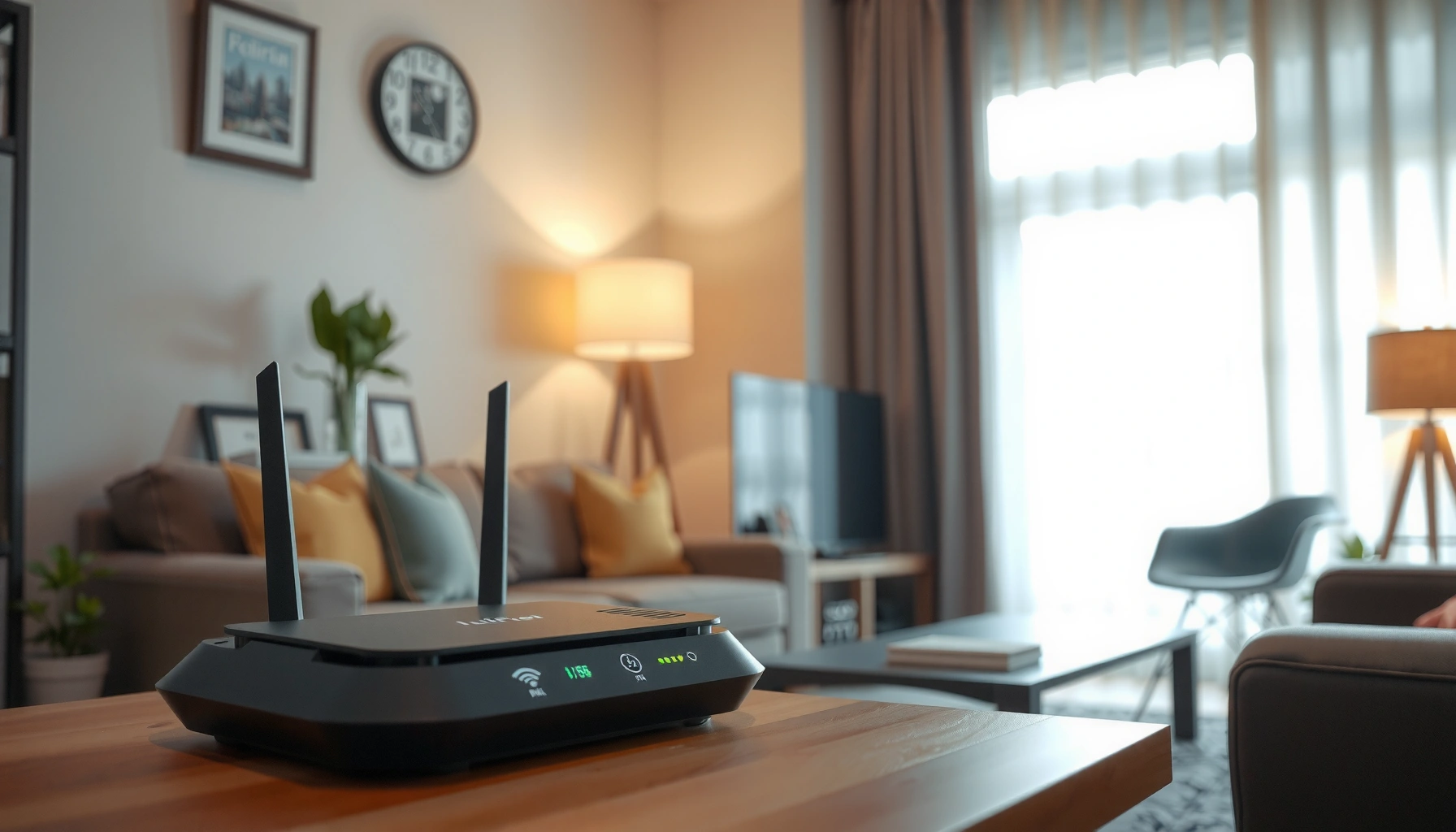
Router placement is often the difference between “sometimes works” and “reliably online.” Put the router where it can cover the whole home/office, and you reduce retransmissions—one of the biggest drivers of buffering and random stalls.
Placement is also the only “change” that improves multiple reliability factors at once: signal strength, signal-to-noise ratio (how clearly your Wi‑Fi stands out), and roaming stability (how smoothly devices transition between access points).
Wi‑Fi reliability improves when the router is positioned to maximize signal quality in occupied areas, because higher signal-to-noise ratio reduces retransmissions and packet loss. (Concept aligns with 802.11 link behavior; see IEEE 802.11.)
Putting Wi‑Fi gear behind metal objects or inside enclosures increases attenuation and multipath effects, which commonly appear as intermittent drops in specific rooms.
– Place the router higher and more central, not inside cabinets, behind TVs, or under desks.
– Keep it away from common interferers (microwaves, cordless phone bases, thick concrete walls).
– If you can, adjust antennas (aim them for coverage where you need it); small angle changes can improve reliability.
Practical placement rules that actually move the needle
If you have a two-story layout, aim for the “overlap zone” between floors rather than maximum speed on one floor. For example, centering the router on the lower level often gives both floors more usable coverage than placing it at one extreme corner.
If your router has external antennas, use them intentionally:
– Vertical orientation helps with same-floor coverage in many layouts.
– Angling antennas slightly can improve room-to-room reach by reducing dead spots caused by multipath reflections.
If you’re using a modem+router combo, placement still matters—the Wi‑Fi radio is the limiting factor, not the modem’s performance.
Choose the right band and Wi‑Fi settings
The simplest reliability upgrade is to align each device with the band it can use reliably. Use 2.4 GHz for range and 5 GHz for stronger links up close—then prevent devices from bouncing between bands while the signal is marginal.
This section matters because “flaky” often isn’t packet loss everywhere—it’s a client repeatedly reassociating to the network when signal strength hovers near the threshold.
2.4 GHz uses more obstacle-friendly propagation, while 5 GHz offers higher capacity but is more sensitive to walls; reliability tends to follow that tradeoff in real homes.
Separating SSIDs for 2.4 GHz and 5 GHz can reduce “band steering” confusion, because devices stop hunting for a better signal across bands.
– Use 5 GHz for range-sensitive reliability where it works (shorter distances, fewer walls); use 2.4 GHz for farther coverage.
– Consider separating networks (different SSIDs) for 2.4 GHz vs 5 GHz so devices don’t constantly “hunt” for a better signal.
– Turn on features that can stabilize roaming (if your router supports them well), but verify they don’t cause new disconnects on your specific devices.
Band steering and roaming: when “smart” becomes unstable
Modern routers often include band steering and roaming optimizations. Those features can help—but they can also make things worse on specific client devices that interpret signal quality differently.
A good reliability approach is:
1. Separate SSIDs (at least temporarily) to stop aggressive roaming.
2. Observe whether the “connected but slow/dropping” behavior changes.
3. If reliability improves, reintroduce advanced features one at a time.
If you manage a business Wi‑Fi environment, this is where you’d typically follow a change-management process: validate impact on representative client devices before rolling out to everyone. In residential setups, you can mimic this by testing a few key devices (laptop, phone, smart TV) after each setting change.
Reduce interference with channel and bandwidth tuning
Channel congestion and overlapping signals are one of the most common reasons Wi‑Fi reliability degrades even when your router is “only a few feet away.” The goal here is consistent airtime—fewer conflicts, fewer retries, less buffering.
Interference isn’t always obvious. Even if your network speed test looks fine, retransmissions under interference can still make streaming and interactive apps feel unreliable.
On 2.4 GHz, non-overlapping 20 MHz channels in the US are typically channels 1, 6, and 11, which reduces intra-band co-channel interference. IEEE 802.11
On 5 GHz, the availability of more channels (and typically less congestion) can improve reliability, but exact performance depends heavily on building layout and channel widths.
– For 2.4 GHz, avoid congested channels; aim for channels that are less crowded in your area.
– For 5 GHz, select a channel band that matches your environment (some channels work better in your building layout).
– If your router allows it, test narrower channel width (e.g., lower bandwidth settings) to trade peak speed for more consistent connections.
Channel width: why “slower but stable” can win
Channel width controls how much spectrum your Wi‑Fi uses at once:
– Wider channels can boost peak throughput but are more likely to overlap with neighbors (and suffer more when the environment is noisy).
– Narrower channels often improve reliability because your signal occupies less bandwidth and conflicts reduce.
If your main complaint is drops or buffering (not raw speed), set stability as the priority and test narrower widths. After you confirm improved reliability, you can decide whether you want to restore peak bandwidth.
Interference risk comparison (practical view)
The table below translates “what tends to interfere” into frequency overlap risk, which helps explain why two homes with the same router can behave differently.
Common Household Interference Sources vs. 2.4 GHz Overlap Risk
| # | Interference source | Typical frequency range | Overlaps 2.4 GHz Wi‑Fi? | Stability impact potential |
|---|---|---|---|---|
| 1 | Microwave ovens | ~2.45 GHz (magnetron ISM band) | Yes | ★★★★★ |
| 2 | Bluetooth devices | 2.402–2.480 GHz (2.4 GHz ISM) | Yes | ★★★★☆ |
| 3 | Wi‑Fi neighbors (co-channel contention) | Same 2.4 GHz channels (1–11 in US) | Yes | ★★★☆☆ |
| 4 | Zigbee / Thread devices | 2.405–2.480 GHz (2.4 GHz ISM) | Yes | ★★★☆☆ |
| 5 | Cordless phones (2.4 GHz variants) | Often 2.4 GHz ISM band | Sometimes | ★★☆☆☆ |
| 6 | USB 3.0 cable noise (near router) | Not a single RF band; often radiated broadband | Indirect | ★★☆☆☆ |
| 7 | Wireless cameras / baby monitors (2.4 GHz models) | Often 2.4 GHz ISM band | Sometimes | ★★☆☆☆ |
Stability impact ratings are based on frequency overlap likelihood and typical behavior (e.g., microwave ovens create strong bursts around 2.45 GHz). For exact device behavior, consult your device RF/EMC documentation.
Strengthen coverage with mesh or access points (when needed)
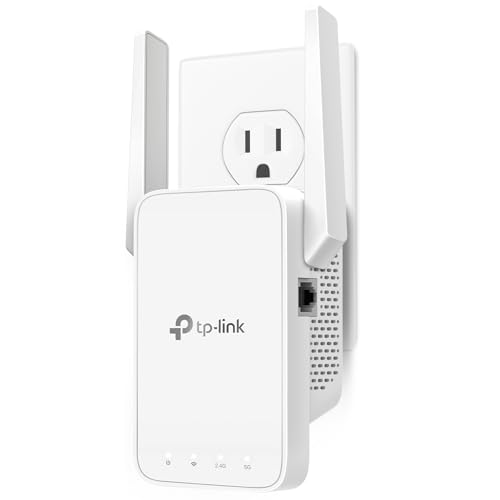
If you have dead zones or “works on one side of the room, not the other,” the most reliable fix is adding coverage using mesh or a wired access point. Trying to solve dead zones with router boosts alone often fails because the client is still operating at the edge of usable signal.
This is the step where reliability usually improves most—because you eliminate long-distance links and reduce retransmissions.
A wired backhaul (Ethernet between nodes and/or access points) generally improves stability compared with wireless relays because it reduces compounding interference and airtime contention.
Well-placed access points can outperform a “moved farther away” router by delivering higher signal quality in each coverage area, reducing client retransmissions.
– If you have dead zones, a mesh system or wired access point is often more reliable than trying to “boost” the main router alone.
– Use a backhaul method that reduces wireless relay issues—wired Ethernet backhaul (where possible) tends to improve stability.
– Re-think layout: one access point placed well can outperform a router moved farther away with weaker signal.
Mesh vs. access point vs. router-only: the decision tradeoff
Choose based on coverage needs and your ability to run Ethernet.
| Approach | Best for | Main reliability risk | Operational note |
|---|---|---|---|
| Router-only + placement | Small spaces where signal is already “close” | Edge-of-coverage behavior persists in far rooms | Start here; fastest and cheapest |
| Mesh (wireless backhaul) | Homes without Ethernet where you need quick coverage | Backhaul contention can reduce reliability | Place nodes for strong backhaul signal |
| Mesh (wired backhaul) or wired AP | Most reliable coverage expansion | If AP placement is wrong, you still get coverage holes | Best results when backhaul is stable and low-noise |
What can go wrong (and what to check next)
You can make Wi‑Fi worse when you apply “best practice” changes without validating the environment first. The safer approach is iterative tuning: adjust, test, and keep changes minimal so you know what helped.
It’s also common for reliability issues to be device-side rather than router-side—especially when only one phone, laptop, or smart TV shows the problem.
Channel tuning is environment-specific; a channel that looks “best” in one neighborhood can still be noisy in yours due to local placement and signal propagation.
Firmware updates can improve radios and driver behavior, but they can also introduce regressions—so you should log changes and be ready to roll back if reliability drops.
Client power-saving features can trigger reconnect loops; temporarily disabling Wi‑Fi sleep/power management on a test device can confirm whether the problem is device behavior versus network coverage.
– Channel changes can help or hurt depending on your neighborhood—re-check after changes, don’t assume “best practice” always applies.
– Firmware updates sometimes improve Wi‑Fi performance, but they can also introduce regressions; if you update, note what changed and roll back if necessary.
– Power-saving and network sleep settings on phones/laptops can cause “disconnect/reconnect” loops—test by disabling sleep-related Wi‑Fi power options temporarily.
– In multi-story homes, the band that “works” for one room may fail in another due to materials (brick, metal ducting, foil-backed insulation).
If only one device is affected
If everything else is stable, focus on that client:
– Update the device’s Wi‑Fi driver/OS (or check for a known regression).
– Disable aggressive power management for Wi‑Fi temporarily.
– If the device supports it, test a manual band preference (2.4 vs 5) to confirm a band-specific weakness.
If you’re trying to diagnose “connected but no internet,” also test whether the device can reach the router and whether DNS resolves. That distinction narrows the problem to network path vs wireless link.
Verdict / tip (what usually gives the biggest reliability boost)
Start with placement + interference reduction: move the router to a better location, then tune channels/bands, and only after that consider mesh/access points. The downside is time—these changes require a little testing, and ideal channel settings depend on your exact environment, not just generic advice.
Skip the more advanced steps (mesh/access points) if your coverage is already strong in most areas and the issue appears only on one device; in that case, device-side settings or driver updates may be the real fix.
Reliability improvements usually come from reducing packet loss and retransmissions—both are driven by coverage quality (signal strength/SNR) and interference (channel contention). IEEE 802.11
2.4 GHz congestion is structural in many neighborhoods because only a few non-overlapping 20 MHz channels exist; choosing less crowded channels can reduce conflicts without new hardware. IEEE 802.11
Quick scan checklist (save this)
| Check | Goal | What to do |
|---|---|---|
| Router location | Better signal consistency | Higher, central, away from obstructions |
| Band use | Avoid flaky roaming | Use 2.4 GHz for range, 5 GHz for nearby |
| Channel selection | Reduce interference | Pick less-crowded channels for your area |
| Bandwidth width | More stable links | Use narrower width if stability is the priority |
| Coverage gaps | Remove dead zones | Add mesh or an access point (ideally with good backhaul) |
| Device power settings | Stop reconnect loops | Review Wi‑Fi power/sleep options on affected devices |
FAQ
Why does my Wi‑Fi show “connected” but I still can’t load pages?
This often points to a routing/DNS issue, an unstable link dropping packets, or a device power-saving behavior. Try testing with another device in the same spot and see whether the issue is truly network-wide.
Is 2.4 GHz more reliable than 5 GHz?
In many homes, 2.4 GHz penetrates walls better, so it can feel more reliable at distance. 5 GHz often performs better up close but can drop more easily through obstacles.
Should I reboot the router every time Wi‑Fi drops?
Rebooting can be a temporary workaround, but it doesn’t fix the underlying cause (interference, weak coverage, channel congestion, or device-specific settings). Use it as a diagnostic step, not the long-term solution.
Mesh Wi‑Fi improved my speeds, but reliability got worse—why?
That can happen if roaming behavior or backhaul quality isn’t ideal in your layout. Testing placement and backhaul method (and separating SSIDs if supported) can help.
Sources
– IEEE 802.11 — Wi‑Fi technical behavior including link reliability mechanisms and channel operation concepts.
– FCC Part 15 — Regulatory information for unlicensed operation in the US (including 2.4 GHz channel availability behavior).
– Wi‑Fi Alliance — Guidance related to roaming behavior and interoperability features in Wi‑Fi ecosystems.
– [ADD: source for your specific router/mesh model’s exact channel/bandwidth controls and roaming feature behavior]
Frequently Asked Questions
What are the most common causes of unreliable Wi-Fi at home?
Unreliable Wi-Fi is often caused by router placement issues, interference from neighboring networks, outdated firmware, or weak signal coverage in certain rooms. Other frequent culprits include overloaded Wi-Fi channels, bandwidth-heavy devices (like streaming or gaming), and thick walls or long distances between the router and devices. Start by identifying which areas or times have the worst performance, then address the likely cause with targeted changes.
How can I improve Wi-Fi reliability with better router placement and setup?
Place your router in a central, open location, ideally elevated and away from large metal objects, microwaves, and cordless phone bases. If possible, keep the router away from exterior walls and minimize obstacles between the router and your most-used devices. For reliability, use the best available band (often 5 GHz for shorter-range speed, 2.4 GHz for better coverage) and consider enabling band steering or separate SSIDs to reduce connection drops.
How do I choose the best Wi-Fi channel to reduce dropouts and interference?
In dense neighborhoods, Wi-Fi channels can overlap and cause packet loss and slow speeds, which feels like “Wi-Fi dropping” even when the signal looks strong. Use your router’s built-in Wi-Fi analyzer or a network scanning app to find the least congested channels, then lock your router to that channel instead of relying on auto. For 5 GHz networks, you may have more clean channel options, so experimenting can significantly improve reliability.
Why does my Wi-Fi signal look strong but still perform poorly or disconnect?
A strong Wi-Fi icon doesn’t always mean stable performance—interference, roaming behavior, or high network congestion can still cause slow throughput and dropped connections. Common triggers include outdated router firmware, misconfigured security settings, or devices that struggle with modern Wi-Fi features. To improve reliability, update your router firmware, restart networking equipment, and ensure your devices connect to the correct band and security type (like WPA2/WPA3).
Which Wi-Fi settings should I adjust for more reliable connections?
Start with enabling WPA3 or WPA2 for stable and secure connectivity, and consider turning off power-saving modes on laptops/phones that may reduce Wi-Fi reliability. If you experience frequent disconnects, disable “smart connect”/band steering temporarily to see whether sticking to a single band improves stability, then re-test. For best results, keep firmware updated and, if you cover a large home, consider a mesh Wi-Fi system or additional access points to maintain consistent signal strength.
📅 Last Updated: October 09, 2026 | Topic: How to Improve Wi-Fi Reliability | Content verified for accuracy and freshness.
References
- https://scholar.google.com/scholar?q=improving+wifi+reliability+interference+channel+selection Google Scholar
- https://scholar.google.com/scholar?q=wifi+performance+optimization+access+point+placement+coverage Google Scholar
- https://scholar.google.com/scholar?q=802.11+reliability+performance+throughput+packet+loss+mitigation Google Scholar
- https://en.wikipedia.org/wiki/Wi-Fi
- https://en.wikipedia.org/wiki/Wireless_router
- https://en.wikipedia.org/wiki/IEEE_802.11
- https://en.wikipedia.org/wiki/Wireless_network_interference
- https://pubmed.ncbi.nlm.nih.gov/?term=wifi+interference+packet+loss
- https://en.wikipedia.org/wiki/Wireless_network_planning
- https://scholar.google.com/scholar?q=How+to+Improve+Wi-Fi+Reliability Google Scholar