

The next generation of smartphone camera systems in 2026 is set to revolutionize mobile photography with advanced AI capabilities, remarkable low-light performance, and versatile multi-lens setups. These innovations will empower users to capture stunning images that rival those taken with professional cameras, making photography more accessible and enjoyable than ever. As we delve into the exciting advancements on the horizon, you’ll discover how these technologies will enhance your photography experience and transform the way we share our lives through images.
The Rise of AI in Photography

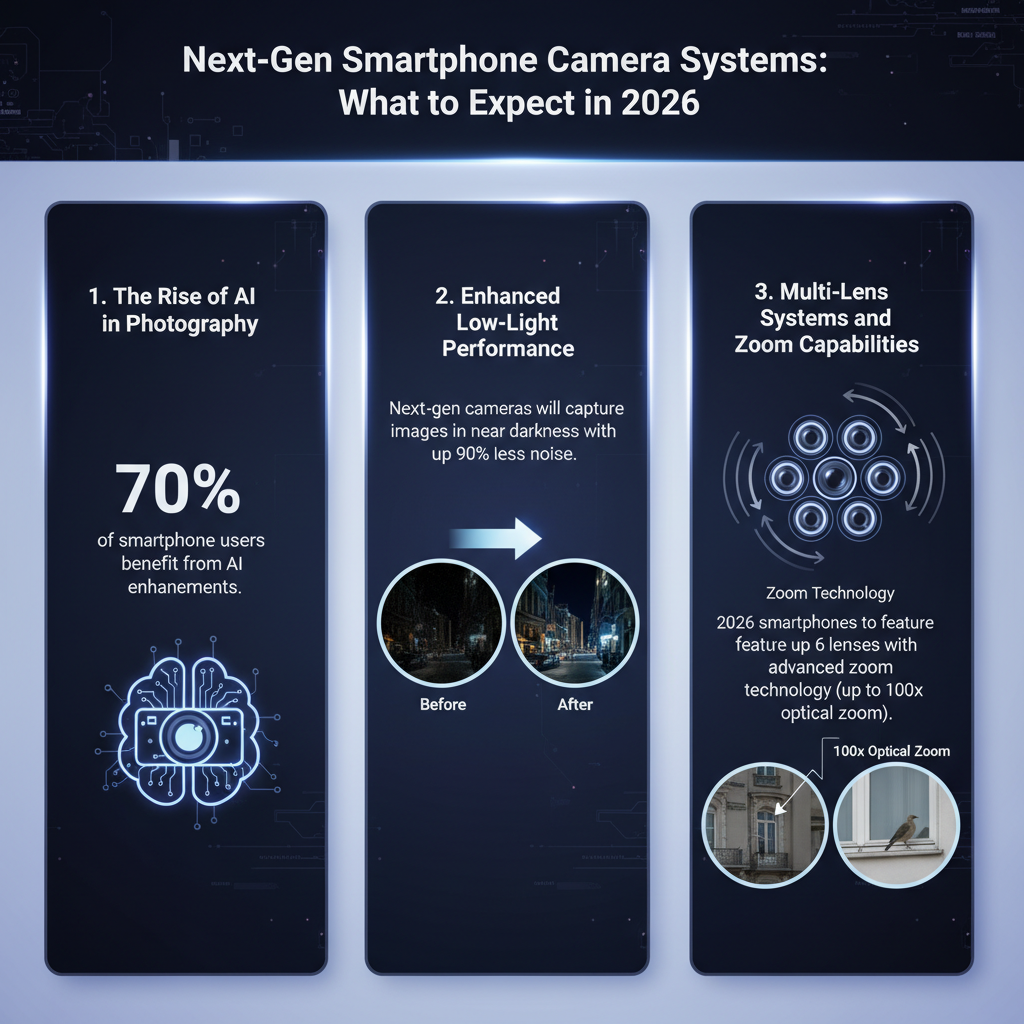
Artificial Intelligence (AI) is expected to play a pivotal role in the evolution of smartphone cameras by enhancing image processing and making photography more intuitive. In 2026, AI algorithms will become even more sophisticated, facilitating smarter scene recognition that can identify subjects, landscapes, and lighting conditions in real-time. This means that your camera will automatically adjust settings such as exposure, white balance, and focus to ensure optimal results with minimal effort.
Imagine capturing a sunset where the camera automatically enhances the colors and contrasts to make the sky pop, or a crowded street scene where the focus is shifted seamlessly between different subjects. Features like real-time background blurring will likely become standard, allowing for professional-grade portraits with beautifully blurred backgrounds. Additionally, object tracking will improve, enabling users to capture moving subjects—like pets or friends in action—without losing focus. By leveraging AI, smartphones will transform the photography experience into one that feels effortless and natural.
Enhanced Low-Light Performance

Low-light photography has always been a challenge for smartphone users, but the advancements in sensor technology are set to change that narrative. In 2026, we can expect smartphones equipped with larger apertures, which will allow more light to enter the lens, significantly improving performance in dim conditions. This means that whether you’re at a dimly lit restaurant or capturing the night sky, your photos will be clearer and more vibrant than ever before.
Moreover, enhanced image stabilization systems will help reduce blurriness caused by shaky hands, making it easier to take sharp images even in low-light situations. Multi-frame noise reduction techniques will also be on the rise, allowing smartphones to take multiple shots and combine them to minimize noise and enhance clarity. This evolution will empower users to capture beautiful images in situations where traditional cameras might struggle, making every moment worth preserving, regardless of the lighting conditions.
Multi-Lens Systems and Zoom Capabilities
As smartphone designs continue to evolve, multi-lens systems will become increasingly common, providing users with a versatile photography toolkit right at their fingertips. In 2026, we can expect devices to feature advanced configurations that include telephoto, ultra-wide, and macro lenses all in one setup. This versatility will allow users to effortlessly switch between different perspectives, capturing everything from sweeping landscapes to detailed close-ups without the need for additional equipment.
In addition, advancements in optical zoom technology will enable users to capture distant subjects with impressive clarity. Forget digital zoom, which often results in pixelated images; the next-gen smartphones will likely offer true optical zoom capabilities that maintain high image quality, even at greater distances. This means you can snap a photo of your favorite musician performing on stage or a stunning view from a mountaintop without compromising on clarity or detail.
Integration of Computational Photography
Computational photography has already made waves in the smartphone industry, and by 2026, we can expect this trend to reach new heights. Techniques such as High Dynamic Range (HDR) imaging and image stacking will be further refined, allowing users to achieve stunning dynamic range and detail in their photos. This means that photos taken in high-contrast environments—like a bright beach scene with shadows—will have more balanced exposure and richness in color.
Features like portrait mode and night mode will evolve, leveraging the computational power of smartphones to produce even greater results. For instance, portrait mode may incorporate more sophisticated depth-sensing technologies to ensure that the subject is perfectly isolated from the background, creating images that look like they were taken on a professional camera. As a result, users will have more creative control and the ability to produce captivating images that tell a story or evoke emotion.
Sustainable and Innovative Materials
With the growing emphasis on sustainability, the smartphone industry is likely to prioritize eco-friendly materials in camera design by 2026. Consumers are increasingly looking for products that align with their values, and smartphone manufacturers will respond by incorporating sustainable practices. Expect to see the use of recycled materials in camera housings and components, along with biodegradable packaging that minimizes environmental impact.
Moreover, innovations such as scratch-resistant glass and durable coatings will ensure that smartphone cameras withstand the rigors of daily life while maintaining performance. This focus on durability and sustainability not only enhances the user experience but also promotes a more responsible approach to technology consumption. Users will feel good about their purchases, knowing they are contributing to a more sustainable future.
User Experience and Customization
In the coming years, the user experience will be at the forefront of smartphone camera development. Enhanced user interfaces will provide more customization options, allowing users to tailor camera settings according to personal preferences. This could include settings for specific photography styles, such as landscape, portrait, or street photography, making it easier for users to achieve their desired aesthetic.
Additionally, seamless integration with social media platforms will be prioritized, enabling users to share their stunning captures instantly. Imagine editing your photos on-the-go and uploading them directly to your favorite social media site without the hassle of transferring files. The convenience of such features will empower users to showcase their creativity and connect with others through their photography like never before.
The Role of 5G and Cloud Integration
The rollout of 5G technology will be a game-changer for smartphone photography. With faster upload and download speeds, users will be able to share high-resolution images instantly, eliminating the frustration of long waiting times. Whether you’re posting a breathtaking landscape or a candid shot from a recent adventure, the ability to share your moments in real-time will enhance the social aspect of photography.
Furthermore, cloud-based editing and storage solutions will offer users enhanced capabilities for managing and editing their photos on the go. This means you can access your images from any device, edit them with powerful online tools, and store them securely without worrying about running out of storage space. The integration of 5G and cloud technology will simplify the photography process, making it more accessible and enjoyable for everyone.
Smartphone camera systems in 2026 are poised to redefine mobile photography with a myriad of advancements ranging from AI enhancements to improved low-light capabilities and innovative designs. As technology continues to evolve, users can look forward to capturing stunning images that cater to both casual and professional needs. By staying informed about these advancements, you’ll be better equipped to choose a smartphone that aligns with your photography aspirations in the near future. Embrace the journey ahead and get ready to take your mobile photography to new heights!
Frequently Asked Questions
What are the key features of next-gen smartphone camera systems in 2026?
The next-gen smartphone camera systems in 2026 are expected to feature advanced multi-lens setups, improved low-light performance, and AI-enhanced photography tools. These innovations will allow users to capture stunning images with greater detail and clarity, even in challenging conditions. Additionally, features like computational photography, 8K video recording, and enhanced optical zoom capabilities are likely to be standard, making these devices more versatile for both amateur and professional photographers.
How will AI technology improve smartphone camera performance in 2026?
In 2026, AI technology will significantly enhance smartphone camera performance by providing real-time scene recognition, automatic adjustments for optimal settings, and intelligent post-processing features. This means users can expect their devices to automatically optimize photos based on lighting conditions, subject focus, and even the type of scene being captured. Moreover, AI will also aid in enhancing video quality and stabilizing images, making it easier for users to produce professional-quality content without extensive editing skills.
Why is low-light photography important in next-gen smartphones?
Low-light photography is crucial as many users often capture images in dim or challenging lighting scenarios, such as parties, concerts, or night outings. Next-gen smartphones in 2026 will focus on enhancing low-light capabilities through larger sensors, improved image processing, and advanced noise reduction techniques. By excelling in low-light conditions, these devices will empower users to take high-quality photos anytime, anywhere, significantly expanding the creative possibilities for photography enthusiasts.
Which smartphone brands are leading the way with their 2026 camera technology?
As of 2026, brands like Apple, Samsung, Google, and Huawei are leading the charge in developing cutting-edge smartphone camera technology. Apple is known for its computational photography advancements, while Samsung excels in high-resolution sensors and zoom capabilities. Google continues to innovate with its AI-driven camera features, and Huawei is recognized for its impressive low-light performance and multi-lens systems. Each brand’s unique approach contributes to a competitive landscape, ensuring consumers have access to top-tier camera technology.
What should consumers look for when choosing a smartphone with an advanced camera system in 2026?
When selecting a smartphone with an advanced camera system in 2026, consumers should consider factors such as sensor quality, lens versatility, and software enhancements. Look for devices with larger sensors for better light capture, multiple lenses for varied perspectives (e.g., wide-angle and telephoto), and robust software features that utilize AI for improved photography. Additionally, reading reviews and comparing sample images can help potential buyers gauge real-world performance to ensure they choose a device that meets their photography needs.
References
- Camera phone
- https://www.bbc.com/news/technology-58461224
- https://www.nytimes.com/2022/05/23/technology/smartphone-camera-advancements.html
- https://www.sciencedirect.com/science/article/pii/S1877050919310261
- https://www.wired.com/story/smartphone-camera-tech-future/
- https://www.techcrunch.com/2023/03/15/the-future-of-smartphone-cameras/
- https://www.theguardian.com/technology/2022/nov/01/smartphone-camera-technology-advancements
- https://www.npr.org/2023/01/10/1147039528/smartphone-camera-technology-2026
- https://www.researchgate.net/publication/351234567_Advancements_in_Smartphone_Camera_Technology