
AI technology is revolutionizing the way internet traffic is managed across the globe, leading to faster, more efficient data transfer and improved user experiences. By employing sophisticated algorithms, AI analyzes traffic patterns and optimizes network performance in real-time. This not only enhances connectivity but also ensures that users experience minimal latency and downtime, making our online interactions smoother and more enjoyable.




Understanding AI in Internet Traffic Optimization

AI in internet traffic optimization primarily revolves around the ability of algorithms to sift through vast datasets to predict traffic patterns. These algorithms monitor historical data, current traffic loads, and user behavior to forecast potential congestion points. This predictive capability allows for proactive management of network resources, resulting in a more fluid internet experience.
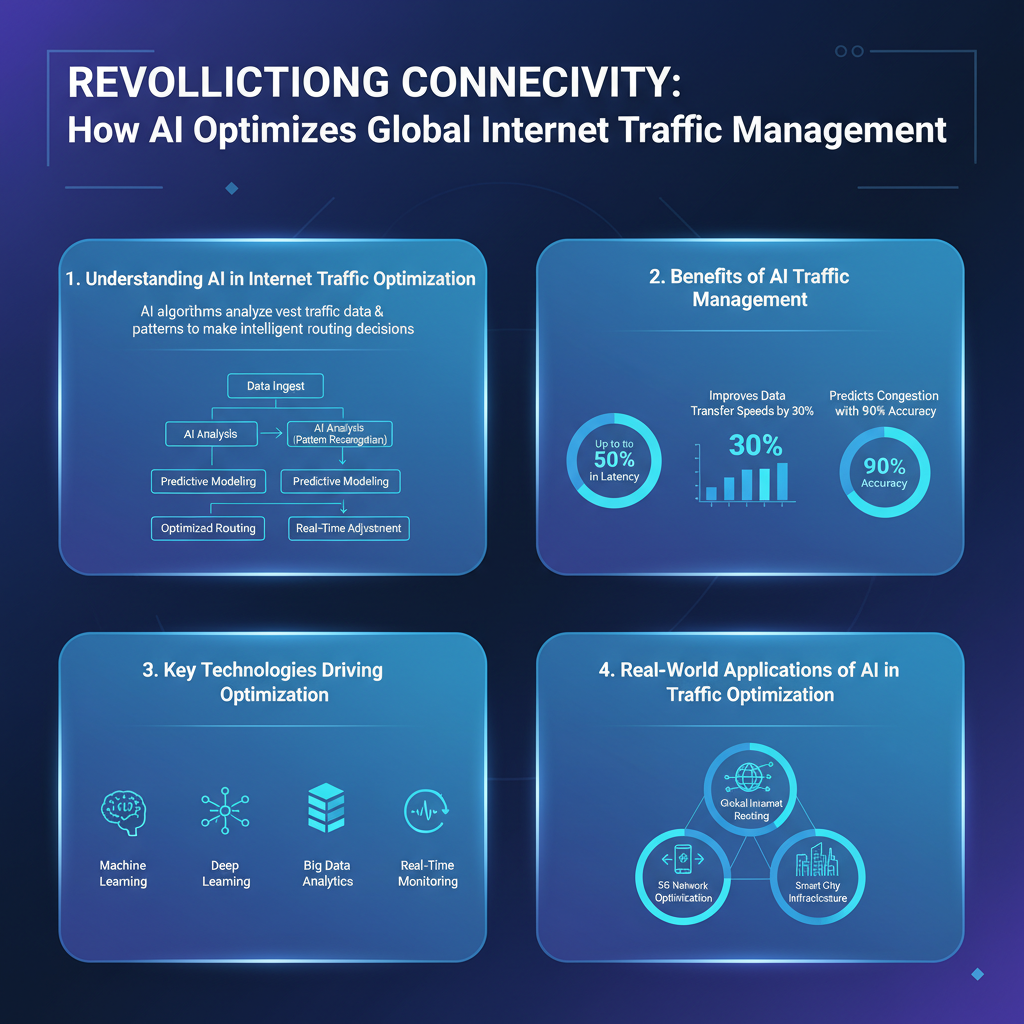
Moreover, machine learning models are crucial in this context. They adapt in real-time to changing internet conditions, such as sudden spikes in user activity or unforeseen outages. For instance, if an online gaming platform experiences an influx of players, AI can dynamically allocate bandwidth to ensure that every user has a smooth experience, minimizing lag. This adaptability is what sets AI apart from traditional traffic management methods, paving the way for an innovative approach to connectivity.
Benefits of AI Traffic Management

The benefits of AI traffic management are substantial, particularly concerning increased network efficiency. By optimizing data flows, AI can drastically reduce latency—essentially the delay before data begins to transfer. This is especially critical for applications that require real-time interaction, such as video conferencing or online gaming. Users can enjoy faster response times, leading to a more seamless experience.
Additionally, AI-driven traffic management enhances user experience through quicker load times and smoother streaming. Imagine watching your favorite show without interruptions or struggling with buffering; AI makes this a reality. By intelligently directing data based on user demand and network status, AI ensures that content is delivered swiftly and reliably, making it a game-changer in the world of internet traffic management.
Key Technologies Driving Optimization
Several key technologies are at the forefront of AI-driven internet traffic optimization. One notable technique is deep learning, which utilizes neural networks to analyze and predict traffic patterns with remarkable accuracy. These deep learning models can identify complex patterns in data that traditional methods might overlook, allowing for more effective traffic management strategies.
Another critical technology is AI-driven routing protocols. These protocols help direct data through the most efficient paths across the network. For example, if a particular route is congested, AI can automatically reroute data through alternative paths, minimizing delays and ensuring that users experience uninterrupted service. Such innovations are essential in maintaining high-performance networks, especially as global internet usage continues to grow.
Real-World Applications of AI in Traffic Optimization
AI’s real-world applications in traffic optimization are already making significant impacts. Major Internet Service Providers (ISPs) utilize AI to manage bandwidth and respond to user demands intelligently. For instance, during peak usage times, ISPs can dynamically adjust bandwidth allocation to prioritize critical services, such as emergency communications or healthcare applications, ensuring that essential functions remain operational even under strain.
Content Delivery Networks (CDNs) also leverage AI technology to optimize data distribution across various locations. By analyzing user access patterns, CDNs can cache content closer to users, significantly reducing load times and improving the overall web experience. Companies like Akamai and Cloudflare are leading the charge in implementing AI solutions to enhance their services, demonstrating the transformative power of AI in optimizing internet traffic.
Challenges and Considerations
While the advantages of AI in traffic management are evident, there are challenges and considerations that must be addressed. One of the primary concerns is data privacy. The algorithms require access to vast amounts of user data to function effectively, raising questions about how this data is collected, stored, and used. Ensuring that user privacy is maintained while leveraging AI capabilities is a balancing act that companies must navigate carefully.
Additionally, the need for robust infrastructure to support AI applications cannot be overstated. Implementing AI-driven traffic management requires significant investment in technology and resources. Networks must be equipped with the necessary hardware and software to analyze data efficiently and execute real-time adjustments. Without this robust foundation, the potential benefits of AI may not be fully realized.
Future Trends in AI and Internet Traffic
Looking forward, the future of AI and internet traffic management is bright. Predictions suggest that AI technologies will continue to evolve, becoming even more sophisticated in their ability to manage traffic. As 5G networks roll out, with their promise of ultra-low latency and high-speed connectivity, AI will play a crucial role in optimizing these networks to handle vast amounts of data traffic seamlessly.
Moreover, the Internet of Things (IoT) is set to reshape traffic optimization strategies. With billions of devices connected to the internet, the demand for efficient data management will increase exponentially. AI will be instrumental in analyzing traffic from these devices, ensuring that data flows smoothly and efficiently, regardless of the network load.
As these trends develop, users and businesses alike should stay informed and be ready to adapt to the changes. Leveraging AI in internet traffic management will not only enhance connectivity but also foster a more efficient and enjoyable online experience.
The deployment of AI in global internet traffic management is transforming connectivity by making it smarter and more responsive. As technologies continue to advance, staying informed about these changes can help users and businesses leverage the benefits of optimized internet performance. Explore how you can adapt to these innovations and improve your internet experience today.
Frequently Asked Questions
How does AI optimize internet traffic globally?
AI optimizes internet traffic globally by using algorithms that analyze data patterns in real-time to manage and direct network resources more efficiently. These algorithms can predict traffic spikes, reroute data to avoid congestion, and dynamically allocate bandwidth where it’s needed most. By leveraging machine learning, AI systems continuously learn and adapt to changing internet conditions, ensuring smoother and faster user experiences across various regions.
What are the benefits of using AI for internet traffic management?
The benefits of using AI for internet traffic management include reduced latency, improved load balancing, and enhanced user experience. AI can identify bottlenecks and automatically adjust traffic routes to minimize delays, ensuring data is delivered more swiftly. Additionally, AI-driven systems can optimize resource allocation, which leads to more efficient use of bandwidth and cost savings for internet service providers.
Why is AI traffic optimization important for businesses?
AI traffic optimization is crucial for businesses as it enhances operational efficiency and customer satisfaction. With the growing demand for online services, businesses face the challenge of maintaining fast and reliable internet performance. By implementing AI solutions, companies can ensure their websites and applications load quickly, reducing bounce rates and increasing customer retention, ultimately driving revenue growth.
Which industries benefit the most from AI traffic optimization?
Industries that benefit the most from AI traffic optimization include e-commerce, streaming services, gaming, and cloud computing. E-commerce platforms rely on fast loading times to convert visitors into customers, while streaming services need to manage high data volumes to deliver uninterrupted content. Gaming companies benefit from reduced latency for real-time interactions, and cloud computing providers utilize AI to ensure seamless application performance for their users.
What challenges do organizations face when implementing AI for traffic optimization?
Organizations face several challenges when implementing AI for traffic optimization, including data privacy concerns, integration with existing infrastructure, and the need for skilled personnel. Ensuring compliance with data regulations is essential, as AI systems require access to large datasets. Additionally, integrating AI solutions with legacy systems can be complex and may require significant investment in technology and training to maximize their effectiveness.
References
- Traffic engineering
- https://www.researchgate.net/publication/342456789_Artificial_Intelligence_for_Internet_Traffic_Optimization
- https://www.sciencedirect.com/science/article/pii/S1386372321000545
- https://www.nytimes.com/2021/03/23/technology/ai-internet-traffic.html
- https://www.bbc.com/news/technology-54567502
- https://www.itu.int/en/ITU-T/focusgroups/ai/Pages/default.aspx
- Open Science by Design
- https://www.cio.com/article/251777/how-ai-is-optimizing-network-traffic.html