

AI-powered video compression significantly reduces bandwidth costs by optimizing data sizes without sacrificing quality. This innovative technology allows businesses and consumers to enjoy high-quality video streaming while saving on data usage. As video content continues to dominate the internet landscape, the need for efficient data management becomes increasingly crucial. In this article, we’ll explore how AI achieves these advancements, the benefits it offers, and its impact on various industries.
Understanding AI Video Compression

AI video compression leverages sophisticated algorithms to analyze video content, identifying redundant data that can be eliminated without affecting the overall quality. Traditional methods often focus on compressing files through standard techniques, which can lead to significant quality loss. However, AI takes a smarter approach by utilizing predictive encoding and machine learning to enhance compression efficiency.
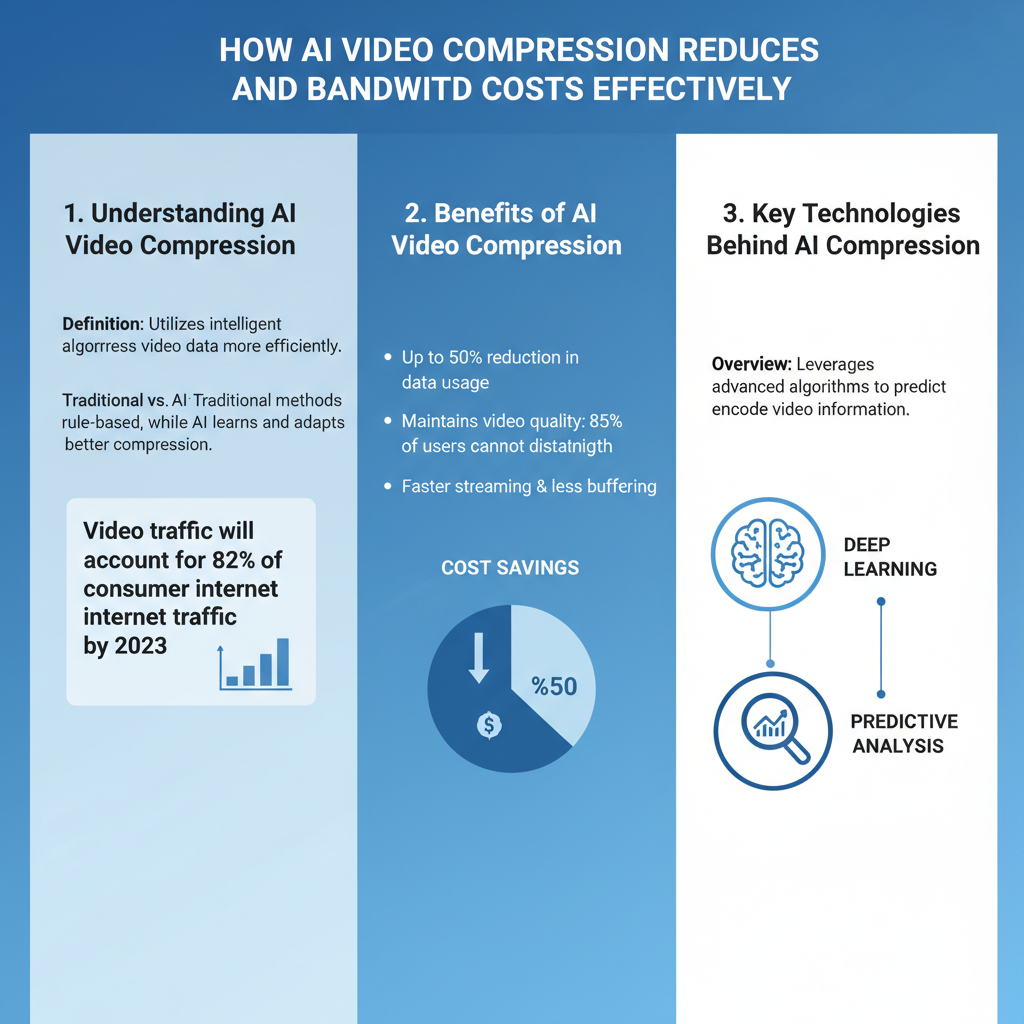
These AI algorithms examine the unique characteristics of each video frame, learning from historical data to predict which elements are essential and which can be compressed or removed. For example, if a scene has a static background with minimal movement, the AI can recognize this and reduce the data used to represent that section. This targeted compression means that users experience high-quality video playback even at lower bitrates, leading to reduced bandwidth usage.
Benefits of AI Video Compression

The benefits of AI video compression are extensive, making it an attractive option for both content providers and consumers. One of the most significant advantages is the reduction in storage needs. By optimizing video files, businesses can store more content on existing servers, minimizing the need for costly upgrades or additional hardware.
Additionally, decreased transfer times for video content mean users can start viewing their favorite shows or videos almost instantly, enhancing the overall user experience. For providers, lowering overall bandwidth consumption translates to substantial cost savings, particularly for those delivering large volumes of video content to millions of users. For instance, companies like Netflix and YouTube have reported significant reductions in their bandwidth costs after integrating AI-based compression techniques.
Key Technologies Behind AI Compression
At the core of AI video compression are advanced technologies such as deep learning and neural networks. These methods are employed to improve both encoding and decoding processes, which are crucial in determining how effectively video data is compressed.
Deep learning algorithms analyze vast amounts of video data to recognize patterns and features that can be leveraged for compression. For instance, neural networks can classify video frames based on their content—distinguishing between complex scenes that require more data and simpler ones that can be compressed without losing detail. This intelligent classification allows for more effective data handling, ensuring that every bit of information is used wisely.
Moreover, innovations in generative adversarial networks (GANs) are also making waves in the field of video compression. GANs can create high-fidelity video outputs from lower-quality inputs, enabling smoother streaming experiences and faster load times.
Industry Applications of AI Video Compression
AI video compression has found applications across various industries, revolutionizing how video content is delivered. Streaming services, for example, utilize this technology to provide high-quality content at lower costs. By optimizing video files, platforms like Hulu and Disney+ can maintain visual fidelity while serving millions of users without overwhelming their bandwidth.
Video conferencing platforms, too, have greatly benefited from AI compression. With the rise of remote work and virtual meetings, the demand for high-quality video calls has surged. AI-driven compression reduces latency and improves overall user experience, making virtual meetings smoother and more engaging. Companies like Zoom and Microsoft Teams are constantly integrating these technologies to enhance their service offerings.
Even the gaming industry is leveraging AI video compression, particularly in cloud gaming services where bandwidth is a critical factor. With games streamed directly to devices, reducing data usage while preserving graphics quality is essential for a seamless player experience.
Challenges and Limitations
Despite its numerous advantages, AI video compression is not without its challenges and limitations. One significant hurdle is the requirement for substantial computational resources. High-quality AI compression algorithms demand powerful hardware and considerable processing power, which can be a barrier for smaller companies or those with limited budgets.
Additionally, there are quality concerns that may arise if compression is not properly balanced with video fidelity. Excessive compression can lead to artifacts—visual distortions that degrade the viewing experience. Striking the right balance between compression and quality remains a challenge, requiring continuous refinement of algorithms and techniques.
Future Trends in AI Video Compression
Looking ahead, ongoing advancements in AI technology promise even greater efficiencies and capabilities in video compression. Researchers are exploring new methods that could further enhance compression rates while maintaining or even improving video quality.
The potential for real-time compression is particularly exciting, as it could revolutionize live streaming and broadcasting. Imagine being able to stream live events without any noticeable lag or buffering, regardless of the viewer’s internet connection. This would not only enhance user engagement but also open up new avenues for businesses and content creators.
Moreover, as AI technologies continue to evolve, we can expect to see more personalized content delivery. AI could analyze individual viewing habits and preferences, optimizing video streams in real-time to cater to each user’s unique experience.
AI-powered video compression not only reduces bandwidth costs but also enhances the overall viewing experience by maintaining video quality. As this technology continues to evolve, it will play a crucial role in shaping the future of video content delivery. For those looking to optimize their video strategies, considering AI compression is an essential next step. Whether you’re a content creator, a streaming service provider, or a consumer, embracing AI video compression can lead to significant benefits in cost, quality, and user satisfaction.
Frequently Asked Questions
What is AI-powered video compression and how does it work?
AI-powered video compression utilizes machine learning algorithms to analyze video content and optimize the encoding process. By understanding patterns and redundancies in video data, these advanced algorithms can reduce file sizes without compromising quality, resulting in lower bandwidth usage during streaming or transmission. This technology enhances efficiency and enables faster load times, making it particularly beneficial for online platforms and businesses reliant on video content.
How can AI video compression reduce my bandwidth costs?
By significantly lowering the size of video files, AI video compression decreases the amount of data transmitted over networks, which directly translates to reduced bandwidth costs. When streaming services compress videos intelligently, they can deliver high-quality content with less data usage, allowing companies to minimize their expenses associated with data transfer and storage. This is especially advantageous for businesses that rely on video marketing or remote communications.
Why is traditional video compression less effective than AI-powered methods?
Traditional video compression techniques often rely on fixed algorithms that don’t adapt to the specific content of a video. In contrast, AI-powered methods can learn from the video data itself, identifying which areas can be compressed more aggressively without noticeable quality loss. This adaptive approach allows for more efficient data handling, resulting in better quality at lower bitrates and ultimately saving more bandwidth.
What are the best use cases for AI video compression in business?
AI video compression is particularly useful for businesses involved in streaming services, online education, video conferencing, and marketing campaigns. Companies offering live streaming solutions can benefit from lower latency and improved user experiences, while educational platforms can deliver high-quality lectures without excessive data usage. Additionally, marketers can leverage AI compression to ensure their promotional videos load quickly across various devices, enhancing viewer engagement.
Which AI video compression tools are recommended for reducing costs effectively?
Some of the top AI-powered video compression tools include HandBrake, Zencoder, and Adobe Media Encoder, which offer advanced features for optimizing video files. Additionally, platforms like Cloudflare Stream and Mux leverage AI to automatically compress and deliver videos efficiently. Each of these tools provides unique capabilities, allowing businesses to choose the best fit based on their specific needs, ensuring effective bandwidth cost reduction while maintaining video quality.
References
- Data compression
- https://www.sciencedirect.com/science/article/pii/S1877050919316687
- https://www.nytimes.com/2020/10/15/technology/ai-video-compression.html
- https://www.techrepublic.com/article/how-ai-is-changing-the-future-of-video-compression/
- https://www.itu.int/en/ITU-T/studygroups/2022-2025/13/Pages/default.aspx
- https://www.researchgate.net/publication/343507270_AI-based_Video_Compression_Approaches_A_Survey
- https://www.npr.org/2021/04/12/985231241/how-ai-is-transforming-the-future-of-video-streaming
- https://www.bbc.com/future/article/20210112-how-ai-is-changing-video-compression
- https://www.microsoft.com/en-us/research/publication/ai-enabled-video-compression-and-delivery/