
Multimodal AI models are changing the game for enterprise workflows by seamlessly integrating various types of data—such as text, images, and audio—to enhance decision-making processes. These sophisticated models empower organizations to streamline their operations, boost efficiency, and drive innovation, making them essential tools in today’s fast-paced business environment. In this article, you’ll discover how these advanced models are reshaping the way enterprises operate and thrive.



Understanding Multimodal AI Models

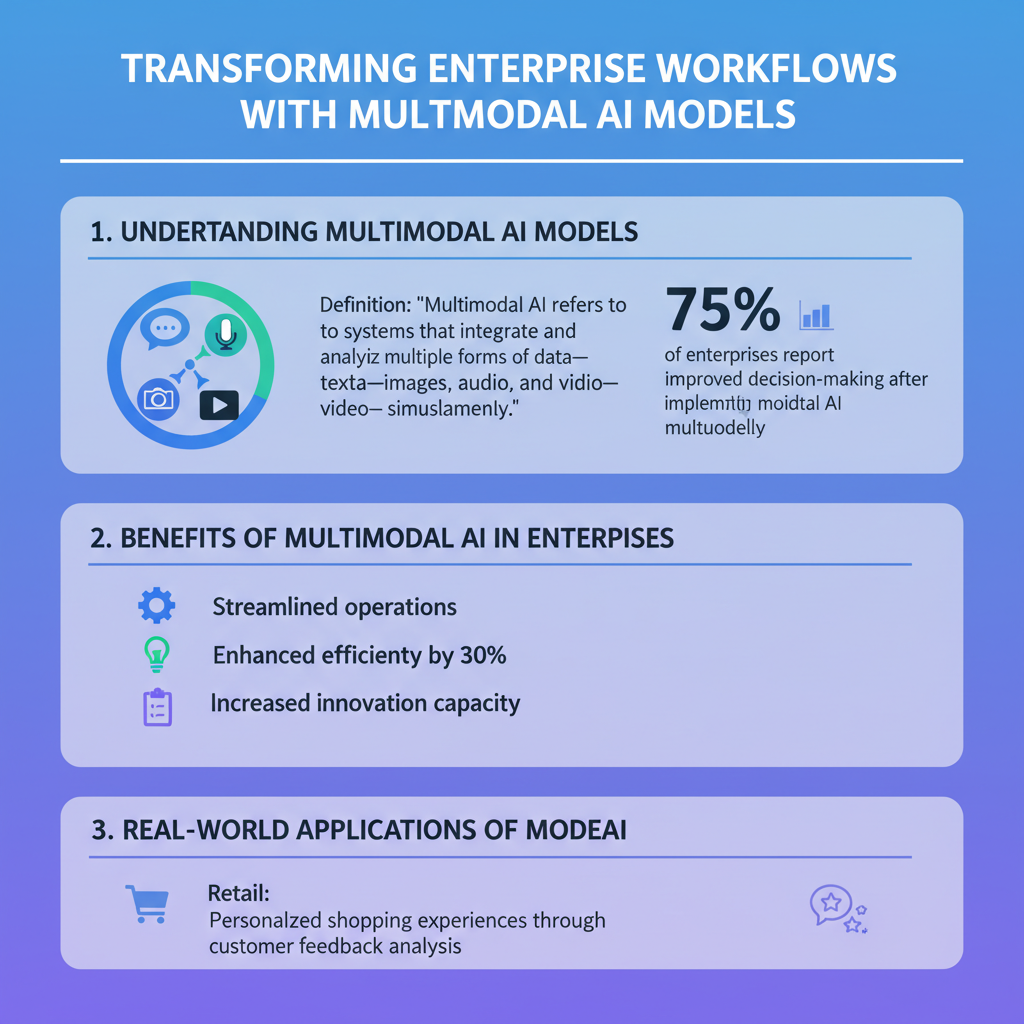
Multimodal AI refers to artificial intelligence systems that can process and analyze multiple forms of data simultaneously. Its components include text, images, audio, and even video, allowing for a more holistic understanding of information. For example, a multimodal AI model might analyze customer feedback (text) alongside images of products (visual data) and recorded conversations (audio) to derive deeper insights into customer satisfaction.
Integrating diverse data types is crucial because it enables organizations to obtain richer insights than they could achieve by analyzing each modality in isolation. By harnessing the strengths of different data types, businesses can create more accurate predictions and enhance their understanding of complex phenomena. This integration leads to more informed decision-making and a better grasp of customer needs, ultimately driving success.
Benefits of Multimodal AI in Enterprises

One of the primary benefits of multimodal AI in enterprises is enhanced decision-making through comprehensive data analysis. By combining data from various sources, organizations can gain a full picture of their operational landscape. For instance, a retail company might use multimodal AI to analyze sales data, customer reviews, and social media sentiment. This multifaceted analysis allows decision-makers to identify trends and make data-driven choices that align closely with customer expectations.
Moreover, multimodal AI significantly increases efficiency by automating routine tasks and processes. Imagine a marketing team using a multimodal AI tool that automates the generation of reports by pulling data from multiple sources, analyzing it, and presenting it in a digestible format. This automation not only saves time but also reduces the likelihood of human error, allowing employees to focus on more strategic initiatives that drive growth.
Real-World Applications of Multimodal AI
Multimodal AI has found practical applications across various sectors, particularly in customer service. For example, chatbots and virtual assistants leverage multimodal capabilities by understanding text inquiries while also analyzing customer tone and sentiment through voice data. This allows them to respond more effectively, leading to improved customer satisfaction. Companies like Amazon have employed such systems to provide personalized assistance, making customer interactions smoother and more efficient.
In marketing analytics, multimodal AI can deliver personalized content based on comprehensive user profiles. For instance, by analyzing browsing history (text), previous purchases (data), and customer demographics (visual data), companies can create tailored advertisements that resonate with individual customers. This targeted approach not only enhances engagement but also increases conversion rates, making marketing efforts more effective.
Challenges and Considerations
Despite its advantages, implementing multimodal AI comes with challenges. Data privacy and security concerns are paramount, as these systems often require access to sensitive information across various formats. Organizations must ensure that they are compliant with regulations like GDPR and take proactive measures to protect customer data.
Another critical consideration is the need for high-quality data and proper training to avoid inherent biases in AI models. If the data fed into the system is biased or incomplete, the resulting insights could lead to poor decision-making. To mitigate this risk, organizations should invest in data cleaning processes and continuously monitor the performance of their AI systems to ensure they remain fair and accurate.
Future Trends in Multimodal AI
The evolution of multimodal AI models is set to accelerate in the coming years. As advancements in machine learning and data processing technologies continue, we can expect these models to become even more sophisticated. For example, the integration of real-time data streams will allow businesses to make quick, informed decisions based on the latest information.
Moreover, the role of multimodal AI in remote work and collaboration is expected to grow significantly. With more teams working remotely, the need for tools that can analyze diverse communication forms—like video meetings, emails, and project management updates—will become essential. This evolution will help organizations maintain productivity and collaboration, regardless of physical location.
Best Practices for Implementing Multimodal AI
For businesses looking to adopt multimodal AI effectively, there are several best practices to consider. First, organizations should start by defining their goals and identifying the specific use cases for multimodal AI that can add value. Whether it’s improving customer service or enhancing operational efficiency, having a clear vision will guide the implementation process.
Additionally, fostering cross-functional teams is crucial for successful integration. By bringing together experts from various departments—such as IT, marketing, and operations—companies can ensure that the multimodal AI system is tailored to meet diverse needs and is integrated smoothly into existing workflows.
Training employees on how to leverage these advanced systems is equally important. Providing resources and training sessions can empower staff to utilize multimodal AI effectively, maximizing its potential to enhance productivity and innovation.
To harness the full potential of multimodal AI models, enterprises must embrace this technology while addressing the associated challenges. By doing so, organizations can enhance their workflows, improve productivity, and maintain a competitive edge in their industries. Explore how your business can leverage multimodal AI to drive innovation and growth—it’s time to embrace the future of enterprise workflows!
Frequently Asked Questions
What are multimodal AI models and how do they benefit enterprise workflows?
Multimodal AI models are advanced artificial intelligence systems that can process and analyze multiple types of data inputs, such as text, images, audio, and video. By integrating these diverse data streams, they provide enterprises with a more holistic view of information, enhancing decision-making and operational efficiency. This capability allows businesses to streamline workflows by automating tasks, improving collaboration among teams, and delivering personalized customer experiences.
How can businesses implement multimodal AI models to enhance productivity?
To implement multimodal AI models effectively, businesses should first assess their specific workflow needs and identify areas where integration of different data types can provide value. Next, they can invest in suitable AI platforms that support multimodal capabilities and train their teams on utilizing these tools. By incorporating multimodal AI into processes like customer support, content creation, and data analysis, companies can significantly boost productivity and reduce manual workload.
Why is it essential for enterprises to adopt multimodal AI in their operations?
The adoption of multimodal AI is essential for enterprises as it addresses the growing complexity of data in today’s digital landscape. With the ability to synthesize information from various sources, businesses can gain deeper insights, enhance customer engagement, and remain competitive in their industries. Furthermore, multimodal AI can lead to better resource allocation, reduced operational costs, and improved innovation, making it a strategic asset for future growth.
What are the best use cases for multimodal AI in enterprise settings?
Some of the best use cases for multimodal AI in enterprise settings include customer service automation, where AI can analyze both text and voice inputs to provide accurate responses, and marketing analytics, where it can evaluate visual content alongside textual data to gauge campaign effectiveness. Other notable applications include product development, where teams can leverage insights from customer feedback across various formats, and risk management, where multimodal AI can identify potential threats by analyzing diverse data signals.
Which challenges do organizations face when adopting multimodal AI models, and how can they overcome them?
Organizations often face challenges such as data silos, lack of technical expertise, and integration issues when adopting multimodal AI models. To overcome these obstacles, companies should focus on fostering a culture of data sharing and collaboration, invest in training for their workforce, and partner with AI vendors who offer comprehensive support for integration. By addressing these challenges proactively, businesses can harness the full potential of multimodal AI and enhance their overall enterprise workflows.
References
- https://en.wikipedia.org/wiki/Multimodal_AI
- https://www.sciencedirect.com/science/article/pii/S0895717721001712
- https://www.nytimes.com/2023/06/15/technology/ai-workplace.html
- https://www.bbc.com/news/technology-57606774
- https://www.forbes.com/sites/bernardmarr/2022/01/24/the-rise-of-multimodal-ai-and-why-it-matters-for-businesses/
- https://www.techrepublic.com/article/how-multimodal-ai-can-transform-business-processes/
- https://www.researchgate.net/publication/351234567_Multimodal_AI_in_Enterprise_Workflows
- https://www.aclweb.org/anthology/2021.acl-long.658.pdf
- https://www.ncbi.nlm.nih.gov/pmc/articles/PMC8266493/